
Introduction
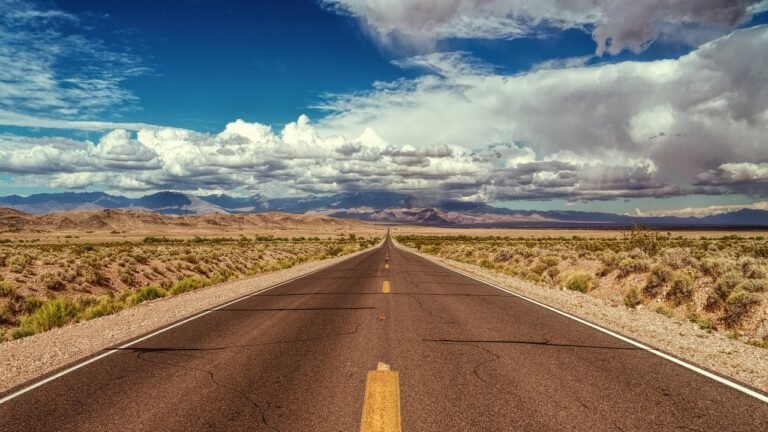
The Mojave Desert In California is one of the most remarkable desert landscapes in the American Southwest. Known for its wide open spaces, dramatic scenery, rare plants, and unique wildlife, it offers much more than dry land and heat. From dunes and lava fields to Joshua trees and star-filled skies, the Mojave is a place full of natural beauty and history. It is also a popular destination for road trips, hiking, photography, and desert exploration.
- Mojave Desert,, Californ,,ia at a Glance
- What Makes the Mojave Desert in California Special?
- Location and Geography of the Mojave Desert, California
- Main Geographic Features
- Why Geography Matters
- Map-Style Understanding of the Mojave Desert,t California
- Important Areas and Nearby Landmarks
- Simple Map Thinking
- Climate and Weather in the Mojave Desert, California
- Hot Days and Cool Nights
- Rainfall
- Seasonal Feel
- Best Time to Visit
- Landscape Features of the Mojave Desert, California
- 1. Sand Dunes
- 2. Dry Lakes and Salt Flats
- 3. Mountains and Ranges
- 4. Lava Fields and Volcanoes
- 5. Canyons and Mesas
- 6. Desert Pavement
- Plants and Flora of the Mojave Desert, California
- Common Mojave Plants
- Joshua Tree: The Signature Plant
- How Desert Plants Survive
- Wildflowers After Rain
- Wildlife and Fauna in the Mojave Desert, California
- Animals You May Find
- Birds
- Reptiles
- Desert Tortoise
- Why Wildlife Is Often Hidden
- A Simple Wildlife Viewing Table
- Human History of the Mojave Desert, California
- Indigenous History
- Travel Routes and Movement
- Mining and Resource Use
- Modern Conservation
- Mojave Desert, California, and Conservation
- Why Conservation Matters
- Desert Tortoise Protection
- Why Roads and Trails Matter
- Simple Conservation Habits for Visitors
- Best Things to Do in the Mojave Desert, California
- 1. Scenic Driving
- 2. Hiking
- 3. Photography
- 4. Stargazing
- 5. Birdwatching and Wildlife Watching
- 6. Geology Exploration
- 7. History and Route 66 Travel
- Top Places to Visit in the Mojave Desert, California
- Mojave National Preserve
- Kelso Dunes
- Cinder Cones Lava Beds
- Lava Tube
- Cima Dome
- Death Valley
- Joshua Tree Area
- Travel Tips for Visiting the Mojave Desert, California
- Before You Go
- What to Carry
- Vehicle Tips
- Time of Day Matters
- Respect Distance
- Safety Checklist for Mojave Desert, California
- Interesting Facts About the Mojave Desert, California
- Pros and Cons
- Pros
- Cons
- Who Should Visit the Mojave Desert, California?
- Why the Mojave Desert, California Matters
- FAQs
- Conclusion
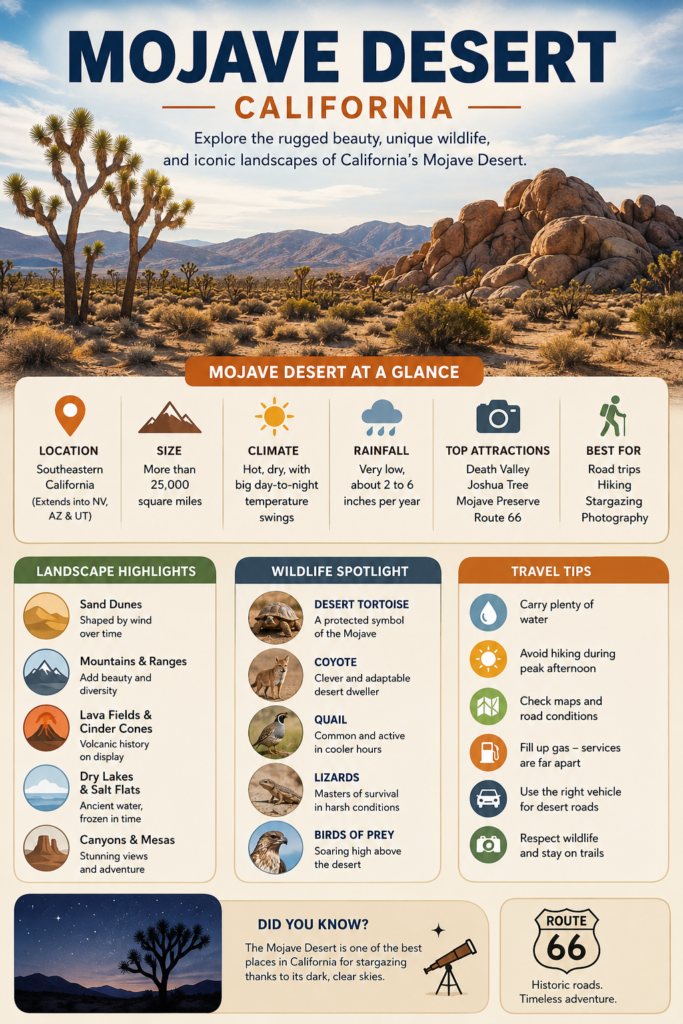
Mojave Desert,, Californ,,ia at a Glance
| Topic | Key Details |
| Location | Southeastern California, with parts extending into Nevada, Arizona, and Utah |
| Size | More than 25,000 square miles |
| Main landforms | Mountains, basins, salt flats, dry lakes, dunes, lava fields, and cinder cones |
| Famous landmarks | Death Valley, Joshua Tree region, Mojave National Preserve, Route 66 corridor |
| Climate | Hot, dry, and marked by large day-to-night temperature swings |
| Average rainfall | Very low, often around 2 to 6 inches per year |
| Travel style | Best for road trips, scenic drives, hiking, stargazing, and geology |
| Main caution | Remote roads, extreme heat, and limited services |
What Makes the Mojave Desert in California Special?
The Mojave Desert in California stands out because it is not just one flat sandy plain. It is a diverse mix of landforms, ecosystems, and travel experiences. You can find rocky ridges, open valleys, dry lakebeds, dunes, black volcanic fields, and areas where rare desert vegetation survives in difficult conditions.
This variety is one of the biggest reasons the desert feels so fascinating. In one place, the land may look ancient and harsh. In another, it may look wide, bright, and peaceful. After rainfall, the landscape can suddenly bloom with color. For a short time, the desert seems to wake up and transform.
Another reason the Mojave Desert in California is special is its connection between nature and human history. Indigenous peoples have lived in and moved through this region for thousands of years. Later, mining, railroads, old wagon routes, and highways added new layers to its story. Today, conservation efforts continue to shape how people understand and protect the desert. So when visitors come here, they are not just seeing scenery. They are entering a place with memory, meaning, and resilience.
Location and Geography of the Mojave Desert, California
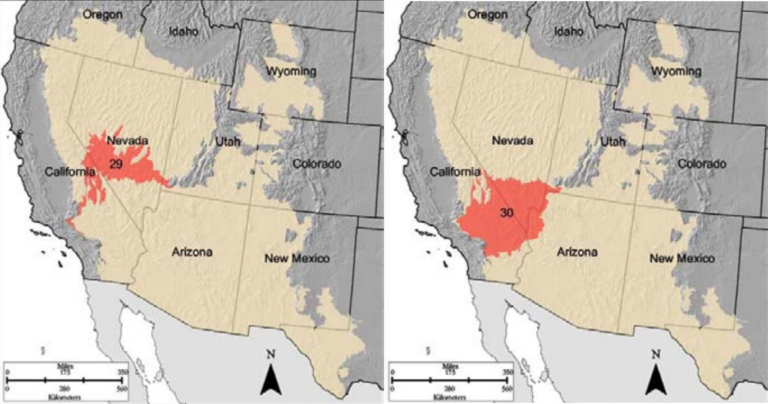
The Mojave Desert, which lies mostly in southeastern California, also reaches into nearby states. Because of that, it is often treated as a regional desert rather than a landscape limited to one state.
Geographically, it is best described as a basin-and-range desert. That means it contains mountain chains, broad valleys, dry basins, and open passes instead of one endless flat surface. The land rises and falls in dramatic ways, creating different habitats and travel conditions across the region.
Main Geographic Features
The Mojave includes:
- Mountain ranges
- Dry basins
- Salt flats
- Dry lakes
- Dunes
- Lava fields
- Cinder cone volcanoes
- Desert pavements
- Canyons and mesas
These features shape almost everything in the desert. They affect weather patterns, water movement, plant growth, animal habitat, and road access. If you want to understand the Mojave Desert in California properly, geography is the best place to begin.
Why Geography Matters
The land is not just background scenery. It determines where plants can survive, where animals can find shelter, and where people can travel safely. Higher elevations are often cooler. Low basins can be much hotter. Some roads are smooth and well-traveled, while others are rough, remote, and difficult to cross.
That is why desert travel requires more preparation than a normal city trip. In the Mojave Desert, California, distances can feel much longer than they look on a map.
Map-Style Understanding of the Mojave Desert,t California
A map of the Mojave Desert, California, reveals just how large and varied this region really is. Instead of having one central focus, it has many important zones and landmarks spread across a wide desert expanse.
Important Areas and Nearby Landmarks
Some of the most well-known places include:
- Death Valley
- Mojave National Preserve
- Joshua Tree region
- Route 66 desert corridor
- Kelso Dunes
- Cinder Cones Lava Beds
- Kelbaker Road corridor
- Cima Dome
- Clark Mountain
These sites attract travelers, photographers, hikers, road-trippers, and geology lovers. They also help show how the desert stretches across California and into surrounding states.
Simple Map Thinking
If you imagine the Mojave Desert, California, as a travel region, think of it like this:
- The western side connects to the edge of the mountains and major California population centers.
- The central area contains large preserved lands, dunes, and volcanic formations.
- The eastern and northern areas connect to Nevada and the wider Great Basin.
- Dry valleys and long roads make the distance between services feel even greater.
This layout matters because it affects planning. A place that seems close on a map may still take a long time to reach because the roads are long, quiet, and remote.
Climate and Weather in the Mojave Desert, California
The climate is one of the main reasons the Mojave Desert in California looks and feels the way it does. It is a true desert, meaning it receives very little rainfall and experiences large temperature shifts.
Hot Days and Cool Nights
One of the best-known desert weather patterns is the sharp difference between daytime and nighttime temperatures. Mornings can begin cool or mild, Afternoons may become extremely hot, and evenings often cool down quickly again.
That is why layered clothing matters so much in the desert. A day that begins comfortably can become intense by afternoon, then turn chilly after sunset.
Rainfall
The Mojave Desert in California receives very little precipitation each year. In many areas, total annual rainfall is only about 2 to 6 inches. That low rainfall is one of the biggest reasons the region stays dry, and it explains why plants and animals need specialized survival strategies.
Seasonal Feel
- Spring: Often one of the most beautiful times to visit
- Summer: Very hot, especially in lower elevations
- Fall: Comfortable and travel-friendly
- Winter: Mild by day, but cold at night
Best Time to Visit
For most travelers, spring and fall are the best seasons. Winter is also a good option for people who prefer cooler temperatures and fewer crowds. Summer can still be rewarding, but it is the most difficult season for outdoor activity unless you are extremely well prepared.
The Mojave Desert in California is beautiful throughout the year, but timing matters a great deal. Choosing the right season can make the difference between a difficult trip and an unforgettable one.
Landscape Features of the Mojave Desert, California
One of the strongest qualities of the Mojave Desert in California is the diversity of its landscapes. It is not only one kind of desert. It is a broad blend of landforms that produce different moods, textures, and travel experiences.
1. Sand Dunes
Dunes are among the most recognizable desert features. In the Mojave, dunes are real and impressive, though they are only one part of the bigger landscape. Some dune fields are especially popular with hikers, photographers, and geology fans.
Dunes show how wind slowly moves sand across the land over time. They also create important habitat for certain plants and small desert animals.
2. Dry Lakes and Salt Flats
Dry lakes and salt flats are common in the Mojave Desert, California. These flat open spaces often shine brightly in the sun and can look like giant white mirrors.
They are important because they reveal the history of water in the region. Even though the surface is dry now, the land still preserves evidence of ancient runoff, pooling, and evaporation.
3. Mountains and Ranges
The desert contains many mountain ranges and rocky ridges. These create shade, influence wind direction, and provide different ecological zones. Higher elevations may support more plant growth and slightly cooler conditions than the lower basins.
4. Lava Fields and Volcanoes
Another dramatic feature of the Mojave Desert in California is its volcanic terrain. Lava beds, cinder cones, and rugged black rock fields give the region an ancient, powerful look. These places remind visitors that the desert was shaped by both fire and water over long periods of time.
5. Canyons and Mesas
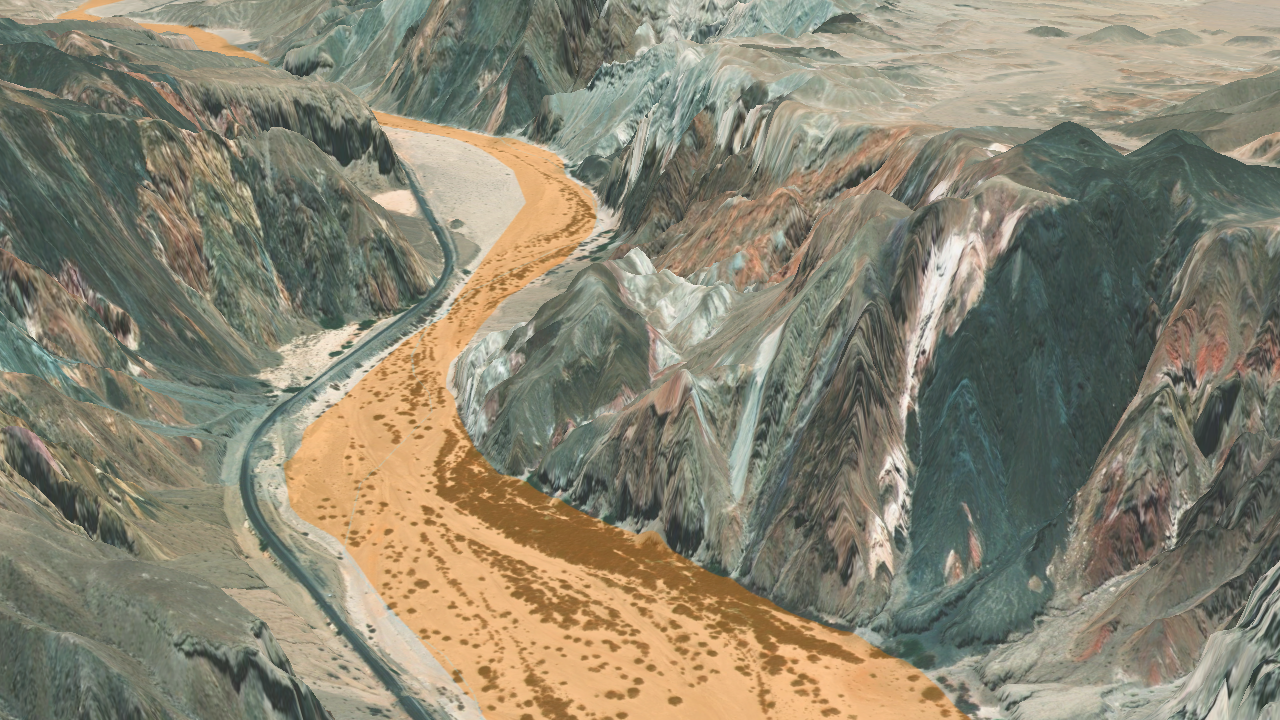
Some parts of the desert feature canyons and flat-topped mesas. These add shape, contrast, and height to the landscape. They also create excellent viewpoints and hiking opportunities.
6. Desert Pavement
Desert pavement is the hard surface covered with rocks that forms in some dry environments. It may look simple, but it is a major part of desert geology. It shows how erosion, wind, and long-term weathering shape the land slowly and steadily.
Plants and Flora of the Mojave Desert, California
Many people assume deserts have very little plant life, but the Mojave Desert in California proves the opposite. It supports plants that are specially adapted to drought, heat, and harsh conditions. These species may look small or sparse, but they are highly resilient.
Common Mojave Plants
Some of the most recognizable plants include:
- Joshua tree
- Creosote bush
- Burroweed
- Cacti
- Wildflowers after rainfall
- Other drought-tolerant shrubs and desert plants
Joshua Tree: The Signature Plant
The Joshua tree is one of the most iconic plants in the Mojave Desert, California. It has become a symbol of the desert because of its unusual shape and unforgettable presence.
Joshua trees are important not only because they are famous, but because they belong to a fragile ecosystem. They depend on specific conditions, soils, and pollination relationships. That makes them especially valuable and especially vulnerable.
How Desert Plants Survive
Desert plants survive through adaptation:
- Deep roots that search for water below the surface
- Small leaves that reduce water loss
- Thick stems that store moisture
- Waxy surfaces that protect against heat
- Fast growth after rainfall
- Dormant phases during dry periods
This makes the Mojave Desert in California a great example of natural survival and adaptation. These plants are not weak. They are specialists built for a difficult environment.
Wildflowers After Rain
One of the most beautiful surprises in the desert is the appearance of wildflowers after rainfall. In the right conditions, parts of the Mojave can suddenly turn bright with color. It is a short-lived but stunning seasonal display that many visitors hope to see.
Wildlife and Fauna in the Mojave Desert, California
The Mojave Desert in California supports more wildlife than many people expect. Even though the land can look dry and open, it is home to a wide variety of creatures.
Animals You May Find
Some of the species found in the Mojave include:
- Desert tortoise
- Coyotes
- Foxes
- Mule deer
- Desert bighorn sheep
- Bats
- Snakes
- Lizards
- Birds of prey
- Quail
- Rodents
- Insects and arachnids
Birds
Birds are among the easiest animals to observe in the Mojave Desert, California. They move through open skies, perch on rocks, and gather near water sources or shaded terrain. Birdwatching is a rewarding activity here, especially during cooler parts of the day.
Reptiles
Reptiles are a key part of desert ecosystems. Lizards and snakes are well adapted to heat and dryness. They are often active in the morning or late afternoon when temperatures are more manageable.
Desert Tortoise
The desert tortoise is one of the most important species in the Mojave. It is also one of the most recognized. This animal is slow-moving, private, and highly vulnerable to habitat loss and human disturbance.
Visitors should never touch, chase, or feed tortoises. The best practice is to observe them from a safe distance and protect their habitat.
Why Wildlife Is Often Hidden
Many animals in the Mojave Desert,, rt Califo, California avoid the hottest parts of the day. They stay in burrows, beneath rocks, or in the shade to conserve water and energy. For that reason, wildlife viewing is often best in the early morning, late afternoon, spring, or cooler months.
A Simple Wildlife Viewing Table
| Animal Group | Best Time to See | Notes |
| Birds | Morning and evening | Active during cooler hours |
| Lizards | Morning and late afternoon | Often seen on rocks or roadsides |
| Snakes | Warm but not extreme times | a Keep a distance and stay alert |
| Desert tortoise | Rare and protected | Never touch or feed |
| Coyotes and foxes | Dawn, dusk, and night | Usually avoid people |
| Bighorn sheep | Cooler mountain areas | Often seen near rugged terrain |
Human History of the Mojave Desert, California
The Mojave Desert in California has a rich human history. It is not an empty place. People have lived in, crossed through, depended on, and respected this land for thousands of years.
Indigenous History
The desert is connected to Native peoples, especially the Mojave people, along with other communities in the wider region. These groups understood the landscape deeply and practically. They knew where to find water, when to travel, how to use plants, and how to live with the desert’s changing patterns.
This history matters because any honest guide to the Mojave Desert, California, should treat the land as a cultural homeland, not simply as a sightseeing destination.
Travel Routes and Movement
Over time, the desert became an important part of travel and trade routes. Paths, tracks, and roads connected communities across the region. Later, railroads and highways brought new layers of movement and development.
Mining and Resource Use
The Mojave also became important for mining and mineral extraction. Salt, borax, and other materials were taken from desert basins. This gave economic value to a landscape that many outsiders once incorrectly viewed as empty or useless.
Modern Conservation
In later years, conservation became a major part of the Mojave story. Protected lands were established to preserve wildlife, cultural sites, scenic views, and fragile ecosystems. That shift changed the way many people see the desert: from a place to take from, to a place worth safeguarding.
Mojave Desert, California, and Conservation
The Mojave Desert in California is beautiful, but it is also fragile. Desert environments are often more sensitive than they appear.
Why Conservation Matters
The desert faces many pressures, including:
- Habitat loss
- Development near desert edges
- Vehicle damage on unmarked roads
- Invasive species
- Fire
- Wildlife disturbance
- Climate stress
- Habitat fragmentation
Desert Tortoise Protection
One of the biggest conservation concerns is the desert tortoise. This species has suffered from habitat decline, disease, and human pressure. Protecting the tortoise also protects larger parts of the desert ecosystem.
Why Roads and Trails Matter
Driving off designated routes can damage soil, plants, and wildlife habitat. In a desert, even small disturbances may take a very long time to recover. That is why staying on marked roads and trails is so important in the Mojave Desert, California.
Simple Conservation Habits for Visitors
- Stay on approved routes
- Do not disturb wildlife
- Carry out all trash
- Do not pick plants
- Respect closures
- Use roads appropriate for your vehicle
- Keep a safe distance from animals
The Mojave Desert in California depends on responsible visitors. Good travel habits protect both the environment and future access.
Best Things to Do in the Mojave Desert, California
The Mojave Desert in California offers a wide range of experiences for many different travel styles. Whether you enjoy scenic driving, hiking, photography, or quiet exploration, there is something here for you.
1. Scenic Driving
One of the easiest and most enjoyable ways to experience the desert is by car. Scenic drives allow you to move through wide landscapes and stop at viewpoints, trailheads, and historic sites.
2. Hiking
Hiking is a great way to connect with the desert more directly. But route choice, weather, and your physical condition all matter. Some trails are short and easy, while others are rugged, remote, or demanding.
3. Photography
The Mojave Desert in California is ideal for photography because of its strong light, open space, and dramatic shapes. Sunrise and sunset are especially beautiful.
4. Stargazing
Remote desert areas often have very dark, clear skies. That makes the Mojave a wonderful place for stargazing. Far from city lights, the stars can appear brighter and closer.
5. Birdwatching and Wildlife Watching
Cool mornings and spring seasons are the best times for animal watching. Birdwatchers especially appreciate the quiet parts of the desert.
6. Geology Exploration
This desert is an excellent place to learn about dunes, volcanoes, dry lakes, rock layers, and landforms. Every feature tells part of the region’s geological story.
7. History and Route 66 Travel
Route 66 and other old desert roads add a strong cultural layer to the trip. That makes the Mojave Desert, California, an especially appealing destination for road-trippers who want scenery, history, and nostalgia in the same journey.
Top Places to Visit in the Mojave Desert, California
Mojave National Preserve
This is one of the best places to understand the region. It contains dunes, mountains, lava beds, and long desert roads. It is a strong destination for both first-time visitors and returning travelers.
Kelso Dunes
The Kelso Dunes are well known for their scale and beauty. They are a classic example of how wind shapes desert land over time.
Cinder Cones Lava Beds
This area showcases the volcanic side of the desert. It is especially interesting for geology lovers and more adventurous visitors.
Lava Tube
The Lava Tube is one of the most unusual natural features in the preserve. It is usually reached by an unpaved road and requires careful trip planning.
Cima Dome
Cima Dome is another important landform. It is known for its distinct shape and the desert ecosystem around it.
Death Valley
Death Valley is one of the most famous destinations connected to the broader Mojave region. It is known for its extreme conditions and unforgettable scenery.
Joshua Tree Area
The Joshua Tree region is famous for its distinctive trees, giant rocks, and striking desert atmosphere. It is one of the most recognizable parts of the Mojave Desert, California story.
Travel Tips for Visiting the Mojave Desert, California
Traveling in the Mojave Desert, California, can be wonderful, but it requires planning. The environment can become difficult quickly if visitors are unprepared.
Before You Go
- Check weather conditions
- Check road closures
- Study a current map
- Fill your gas tank
- Bring enough water
- Tell someone your route
What to Carry
- Water
- Snacks
- Sun protection
- Sunglasses
- Hat
- Basic first aid supplies
- Phone charger or power bank
- Offline map or paper map
- Extra fuel, if possible
Vehicle Tips
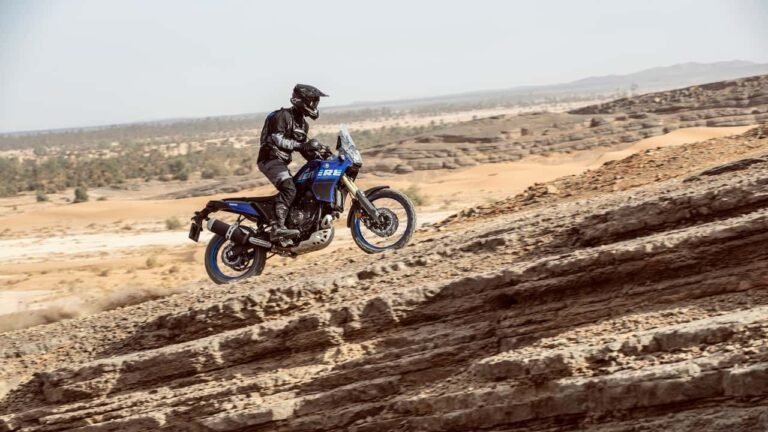
Some roads in the Mojave Desert, California, are rough, sandy, or poorly maintained. A high-clearance vehicle or 4×4 may be necessary on certain routes. Low-clearance cars are not suitable for many backcountry roads.
Time of Day Matters
Start early in the day. Avoid spending long periods outdoors during the hottest afternoon hours. Try to finish your trip before dark if you are not familiar with the area.
Respect Distance
The desert is huge, but services are not always nearby. Never assume a gas station, store, or cell signal will be close.
Safety Checklist for Mojave Desert, California
| Safety Step | Why It Matters |
| Carry extra water | Heat and distance can become dangerous |
| Check road conditions | Some roads are rough or closed |
| Use the right vehicle | Low-clearance cars may get stuck or damaged |
| Bring offline navigation | Cell service may be weak or absent |
| Share your route | Helps others know where you are |
| Avoid heat risk | Afternoon temperatures can become dangerous |
| Stay on marked trails | Protects both you and the desert |
The Mojave Desert in California is safe for many travelers when they prepare properly. But it can be dangerous for people who underestimate it.
Interesting Facts About the Mojave Desert, California
Here are some useful and search-friendly facts about the Mojave Desert, California:
- It is one of the best-known high desert regions in the United States.
- It covers a very large area and includes many different landforms.
- It is home to Joshua trees, desert tortoises, and many other desert species.
- It has deep links to Indigenous history and long human use.
- It includes famous places like Death Valley and Mojave National Preserve.
- It contains volcanic features, dunes, salt flats, and dry basins.
- It is one of the most visually varied desert landscapes in North America.
- It is an important region for conservation and outdoor travel.
These facts help explain why the Mojave Desert in California is such a strong topic for a travel page, location guide, or pillar article.
Pros and Cons
Pros
- Huge open landscapes
- Strong natural beauty
- Excellent for photography
- Rich wildlife and plant life
- Interesting geology
- Historic roads and cultural significance
- Peaceful and quiet travel experience
Cons
- Extremely hot in summer
- Remote roads can be difficult
- Limited services in many places
- The cell signal may be weak
- Travel requires careful planning
- Some areas need special vehicles
The benefits are powerful, but the drawbacks should never be ignored. In the Mojave Desert, California, preparation is part of the journey.
Who Should Visit the Mojave Desert, California?
The Mojave Desert, California, is a great fit for:
- Road trip travelers
- Nature lovers
- Hikers
- Photographers
- Birdwatchers
- Geology fans
- History readers
- Stargazers
- Adventure travelers
- Students and researchers
It may not be ideal for travelers who want urban comfort, short distances, and constant services. The desert rewards people who enjoy space, silence, and raw natural beauty.
Why the Mojave Desert, California Matters
The Mojave Desert in California matters for many reasons. It is a natural system, a cultural homeland, a travel destination, and a conservation priority all at once.
It matters because:
- It shows how life survives in dry environments
- It protects rare plants and animals
- It preserves Indigenous and regional history
- It offers scenic travel and outdoor adventure
- It teaches us about geology and climate
- It reminds us that deserts are living places, not empty spaces
That is why a strong article about the Mojave Desert, California, should always balance tourism value with ecological respect.
FAQs
No. It is mostly in southeastern California, but it also extends into Nevada, Arizona, and Utah.
It is known for Joshua trees, desert tortoises, salt flats, dry lakes, volcanic landforms, and famous places like Death Valley and Mojave National Preserve.
Yes, but only with proper preparation. It is excellent for scenic driving, hiking, photography, and stargazing.
Spring, fall, and winter are usually the best seasons. Summer can be extremely hot.
It can be if visitors are unprepared. Heat, long distances, remote roads, and limited services make planning very important.
Conclusion
The Mojave Desert in California is a place of beauty, history, and resilience. Its mountains, dunes, dry lakes, wildlife, and cultural heritage make it one of the most Fascinating desert regions in the United States. Whether you visit for adventure, learning, or quiet scenery, the Mojave leaves a lasting impression.