
Introduction
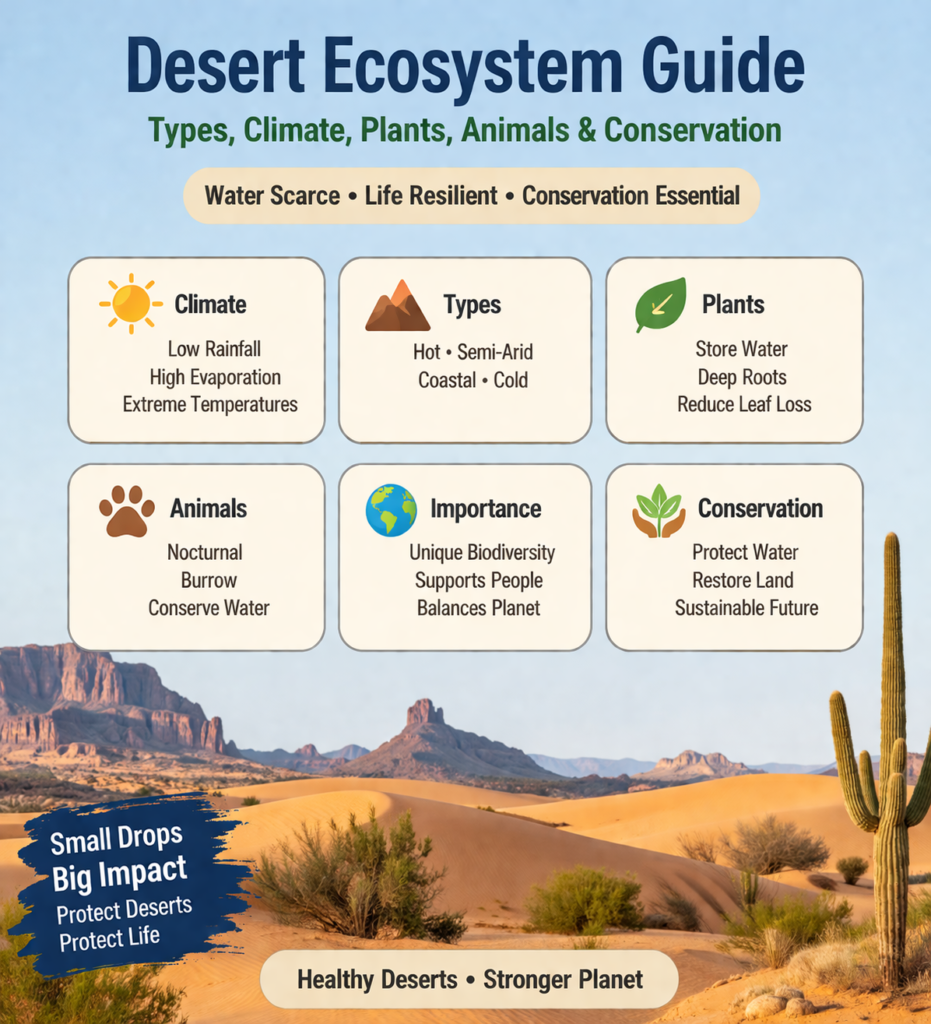
A desert ecosystem is not simply a hot, sandy wasteland—it is defined by extreme dryness and limited water availability. Found on every continent, deserts can be hot or cold, rocky or sandy. Despite harsh conditions, they support unique plants, animals, and even human life through remarkable adaptations. This guide Explains how desert ecosystems function and why they are important.
- What Is a Desert Ecosystem?
- Important Points to Understand
- Why Desert Ecosystems Matter
- Key Reasons Why Desert Ecosystems Matter
- Location and Geography of Desert Ecosystems
- Major Desert Regions
- Why Do Deserts Form?
- Climate and Weather Patterns
- Main Climate Features
- Temperature Patterns
- Rainfall Behavior
- Wind and Its Effects
- Water Sources
- Main Characteristics of a Desert Ecosystem
- Key Characteristics
- Hidden Life in Deserts
- Types of Desert Ecosystems
- Why This Classification Matters
- Landscape Features of Desert Ecosystems
- Common Features
- Dynamic Nature of Deserts
- Why Desert Landscapes Are Diverse
- Flora: Plants in the Desert Ecosystem
- Main Adaptations
- Plant Survival Strategies
- Root Systems
- Key Idea
- Common Plant Adaptations
- Fauna: Animals in the Desert Ecosystem
- Types of Desert Animals
- Common Survival Strategies
- How Desert Animals Survive
- Examples
- Desert Food Chain and Food Web
- Basic Food Chain
- Food Web
- Why the Food Web Matters
- Soil, Water, and Microorganisms
- Soil Features
- Microorganisms
- Important Insight
- Human Life in Desert Ecosystems
- How People Adapt
- Desert Livelihoods
- Culture as an Adaptation
- Pros and Cons
- Pros
- Cons
- Survival Tips and Challenges
- For Wildlife
- For Humans
- Practical Desert Travel Tips
- Tourism in Desert Ecosystems
- Popular Activities
- Famous Attractions
- Smart Travel Advice
- Interesting Facts About Desert Ecosystems
- Environmental Issues and Conservation
- Major Threats
- Impact
- What Conservation Looks Like
- Important Idea
- FAQs
- Conclusion
What Is a Desert Ecosystem?
A desert ecosystem is a natural environment where water availability is extremely limited, and this restriction controls biological activity.
The most important defining factor of any desert is low precipitation. Most deserts receive less than 250 millimeters of rainfall annually. In many cases, evaporation exceeds precipitation, making these environments even more desiccated.
Important Points to Understand
- A desert is not always hot
- A desert is not always sandy
- A desert is defined by water scarcity
Only about 20% of deserts are covered with sand. The remaining areas consist of rocky surfaces, stony ground, or gravel plains. Therefore, deserts should be understood as moisture-deficient ecosystems rather than sandy wastelands.
Why Desert Ecosystems Matter
Deserts are far from empty or useless regions. They play a crucial role in the Earth’s environmental balance and human society.
Key Reasons Why Desert Ecosystems Matter
- Cover approximately 20% of Earth’s land surface
- Drylands (including deserts) occupy over 40% of the global land
- Provide habitat for nearly 1 billion people
- Support unique and specialized biodiversity
- Offer valuable natural resources and groundwater reserves
- Preserve ancient geological and climatic history
Desert ecosystems also serve as natural laboratories for scientists studying survival under extreme stress conditions such as drought, heat, and nutrient deficiency.
However, these ecosystems are extremely delicate. Even minor changes in temperature, precipitation, or land use can lead to significant ecological disruption.
Location and Geography of Desert Ecosystems
Deserts are distributed worldwide and are not confined to a single region or climatic zone.
Major Desert Regions
- Africa – Sahara Desert
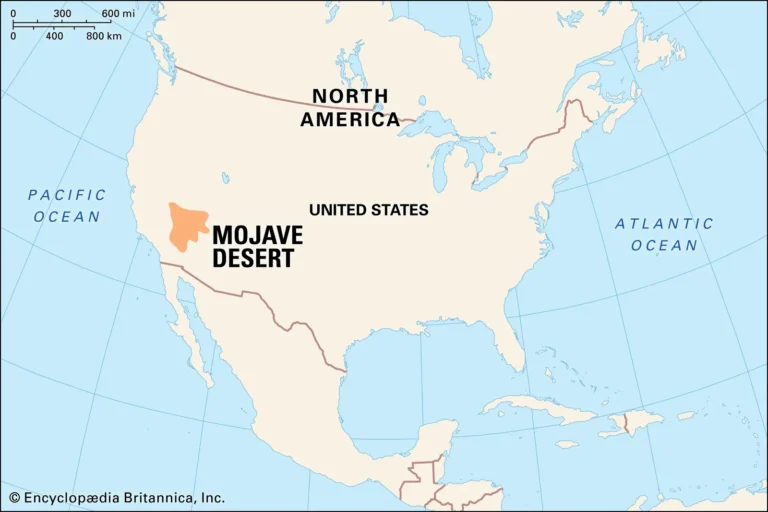
- North America – Mojave and Sonoran
- South America – Atacama Desert
- Asia – Gobi Desert
- Antarctica – Polar desert
Why Do Deserts Form?
Deserts develop due to several geographical and atmospheric processes:
1. Rain Shadow Effect
Mountain ranges block moist air, causing dry conditions on the leeward side.
2. Ocean Currents
Cold ocean currents reduce Evaporation and limit atmospheric moisture.
3. High-Pressure Systems
Descending air becomes warm and dry, preventing cloud formation and rainfall.
4. Distance from Oceans
Regions far from oceans receive minimal moisture.
This demonstrates that deserts are defined by water availability rather than temperature.
Climate and Weather Patterns
The climate of desert ecosystems is governed by dryness and atmospheric conditions.
Main Climate Features
- Minimal precipitation
- High evaporation rates
- Intense solar radiation
- Wide temperature fluctuations
Temperature Patterns
- Hot deserts: Extremely high daytime temperatures and cooler nights
- Cold deserts: Harsh winters and mild summers
Rainfall Behavior
- Irregular and unpredictable
- Occurs in short, intense bursts
- Can trigger flash floods
Wind and Its Effects
- Transports sand and shapes dunes
- Causes dust storms
- Influences landscape formation
Water Sources
Even in deserts, water exists in concealed forms:
- Underground aquifers
- Natural springs
- Oases
These sources are vital for sustaining life.
Main Characteristics of a Desert Ecosystem
Desert ecosystems exhibit several defining features:
Key Characteristics
- Low precipitation
- High evaporation
- Sparse vegetation
- Extreme temperature variation
- Nutrient-poor soil
Hidden Life in Deserts
Although deserts appear lifeless:
- Soil contains microorganisms
- Life becomes active after rainfall
- Biological processes occur slowly
Deserts are not devoid of life—they are simply slow-functioning ecosystems.
Types of Desert Ecosystems
Deserts can be categorized into four primary types:
| Type | Climate | Features | Example |
| Hot and Dry Desert | Very hot, dry | Dunes, intense heat | Sahara |
| Semi-Arid Desert | Moderate heat | Shrubs, grasses | North America |
| Coastal Desert | Cool, foggy | Low rainfall, high humidity | Atacama |
| Cold Desert | Cold and dry | Snow, freezing temperatures | Gobi |
Why This Classification Matters
Each desert type has:
- Distinct vegetation
- Unique animal species
- Different survival mechanisms
Landscape Features of Desert Ecosystems
Deserts display a wide variety of landforms.
Common Features
- Dunes
- Rocky plateaus
- Gravel plains
- Salt flats
- Canyons
- Dry riverbeds (washes)
- Oases
Oases are areas where water is accessible, supporting plant life, wildlife, and human settlements.
Dynamic Nature of Deserts
Deserts may appear static, but they are constantly evolving:
- Wind reshapes dunes
- Rain alters terrain
- Geological processes occur gradually
Why Desert Landscapes Are Diverse
Deserts contain multiple microhabitats:
- Rocky slopes (cooler environments)
- Basins (water collection zones)
- Springs (moist areas)
Each microhabitat supports different forms of life, increasing ecological complexity.
Flora: Plants in the Desert Ecosystem
Desert vegetation is highly specialized to survive water scarcity.
Main Adaptations
- Reduced leaf size
- Waxy coatings
- Thick stems for water storage
- Extensive root systems
Plant Survival Strategies
- Store water efficiently
- Minimize water loss
- Grow rapidly during rainfall
- Remain dormant during drought
Root Systems
- Shallow roots absorb surface moisture quickly
- Deep roots access underground water
Key Idea
Desert plants survive by conserving every drop of water and optimizing efficiency.
Common Plant Adaptations
- Water storage tissues
- Spines instead of leaves
- Thick protective coatings
- Seasonal growth cycles
- Reduced metabolic activity
Fauna: Animals in the Desert Ecosystem
Desert animals exhibit remarkable adaptations to cope with extreme conditions.
Types of Desert Animals
- Mammals
- Reptiles
- Birds
- Insects
Common Survival Strategies
- Nocturnal activity
- Burrowing behavior
- Efficient water retention
- Heat avoidance
How Desert Animals Survive
- Obtain water from food
- Remain inactive during the day
- Hunt at night
- Live underground
Examples
- Camels store fat for energy
- Kangaroo rats survive without drinking water
- Reptiles regulate body temperature efficiently
Survival depends on both physiological and behavioral adaptations.
Desert Food Chain and Food Web
The desert food chain illustrates energy transfer within the ecosystem.
Basic Food Chain
- Producers – plants
- Herbivores – plant-eating animals
- Carnivores – predators
- Decomposers – nutrient recyclers
Food Web
In reality, desert ecosystems form complex food webs:
- Species interact in multiple ways
- Organisms rely on diverse food sources
Why the Food Web Matters
- Maintains ecological balance
- Explains interdependence
- Helps identify environmental impacts
Even small disturbances can disrupt the entire system.
Soil, Water, and Microorganisms
Desert soil is biologically active despite its appearance.
Soil Features
- Low organic content
- Dry conditions
- Supports microbial life
Microorganisms
- Bacteria
- Fungi
- Protozoa
- Nematodes
These organisms:
- Decompose organic material
- Release nutrients
- Enhance soil fertility
Important Insight
Much of desert life exists beneath the surface.
Human Life in Desert Ecosystems
Humans have adapted to desert environments for centuries.
How People Adapt
- Utilize groundwater sources
- Wear protective clothing
- Construct climate-resistant housing
- Practice nomadic lifestyles
Desert Livelihoods
- Livestock grazing
- Limited agriculture
- Trade and commerce
- Tourism
Culture as an Adaptation
Cultural practices support survival:
- Clothing reduces heat exposure
- Diet conserves water
- Traditions manage resources sustainably
Culture plays a vital role in desert ecosystems.
Pros and Cons
Pros
- Unique biodiversity
- Stunning landscapes
- Scientific importance
- Resource availability
Cons
- Water scarcity
- Fragile environment
- Slow ecological recovery
- Harsh living conditions
Survival Tips and Challenges
For Wildlife
- Stay active during cooler periods
- Use shelter and shade
- Conserve water
For Humans
- Carry sufficient water
- Avoid extreme heat
- Monitor weather conditions
Practical Desert Travel Tips
- Always bring extra water
- Wear appropriate clothing
- Follow marked routes
- Avoid traveling alone
Deserts can be hazardous if underestimated.
Tourism in Desert Ecosystems
Deserts attract visitors due to their unique beauty.
Popular Activities
- Hiking
- Stargazing
- Photography
- Wildlife observation
Famous Attractions
- Dunes
- National parks
- Rock formations
Smart Travel Advice
- Visit during cooler seasons
- Respect the environment
- Avoid damaging fragile ecosystems
Responsible tourism helps preserve desert environments.
Interesting Facts About Desert Ecosystems
- Found on every continent
- Only 20% are sandy
- Can be hot or cold
- Support hidden biodiversity
- Depend on underground water
Environmental Issues and Conservation
Desert ecosystems face serious environmental challenges.
Major Threats
- Desertification
- Climate change
- Overgrazing
- Groundwater depletion
- Invasive species
Impact
- Loss of biodiversity
- Soil degradation
- Reduced productivity
What Conservation Looks Like
Key Strategies
- Protect water resources
- Restore degraded land
- Control invasive species
- Promote sustainable practices
Important Idea
Conservation focuses on maintaining ecological balance rather than simply protecting land.
FAQs
A desert ecosystem is defined by low rainfall and water scarcity, not temperature or sand.
No, some deserts are cold and even covered with ice.
Because water is scarce, they must conserve and store it efficiently.
Desertification, climate change, and water depletion are the biggest threats.
Yes, but recovery is very slow and requires careful management.
Conclusion
Desert ecosystems are complex, resilient, and highly sensitive to change. Understanding their climate, life forms, and challenges helps us protect these unique environments. With proper conservation, deserts can continue to support biodiversity and human life for generations to come.