
Introduction
The Mojave Wasteland in Fallout: New Vegas is one of the most immersive and dynamic settings in gaming. Unlike typical post-apocalyptic worlds, it focuses on rebuilding civilization, where factions fight for power, and every decision shapes the future.
- Overview of the Mojave Wasteland
- Why the Mojave is Unique
- Location and Geography of the Mojave Wasteland
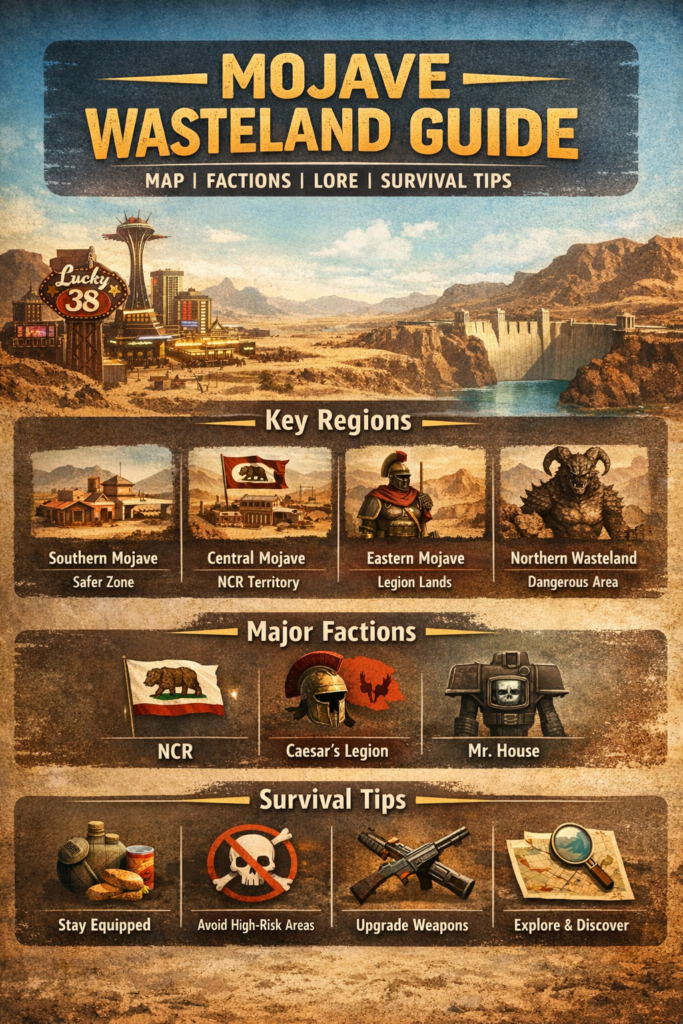
- Key Regions
- Important Locations
- Climate and Environmental Conditions
- Climate Characteristics
- Gameplay Impact
- Landscape Features of the Mojave
- Major Landscape Types
- Strategic Importance
- Flora
- Common Plants
- Uses of Plants
- Fauna
- Common Creatures
- Deadly Threats
- Human History and Culture
- Main Factions
- Faction Comparison Table
- Deep Lore of the Mojave Wasteland
- Why Mojave Survived Better
- Survival Tips and Strategies
- Essential Survival Tips
- Combat Tips
- Resource Management
- Common Challenges in the Mojave
- Tourism and Exploration
- Top Attractions
- Activities
- Travel Tips
- Mojave Wasteland vs Capital Wasteland
- Interesting Facts About the Mojave
- Environmental Issues and Conservation
- Major Issues
- Pros and Cons
- Pros
- Cons
- Best Playstyle Strategies
- Beginner Strategy
- Advanced Strategy
- Role-Playing Choices
- Hidden Secrets in the Mojave
- FAQs
- Conclusion
Overview of the Mojave Wasteland
The Mojave Wasteland serves as the central setting of Fallout: New Vegas, developed by Obsidian Entertainment. It draws inspiration from the real-world Mojave Desert but is reimagined in a post-nuclear timeline following the catastrophic Great War of 2077.
Why the Mojave is Unique
Unlike other Fallout regions, the Mojave offers a distinctive experience:
- It was not annihilated
- Several cities and infrastructures remain functional
- Trade routes and economic systems are active
- Multiple factions compete for dominance rather than mere survival
This combination creates a living, breathing ecosystem that feels vibrant, reactive, and believable rather than desolate and empty.
Location and Geography of the Mojave Wasteland
The Mojave Wasteland encompasses territories inspired by:
- Nevada
- California
- Arizona
At its core lies the iconic New Vegas Strip, a radiant hub of neon lights, casinos, and political intrigue.
Key Regions
Southern Mojave
- Safer introductory zone
- Includes Goodsprings
- Ideal for beginners
Central Mojave
- Active commerce routes
- Strong NCR influence
- Moderate threat level
Eastern Mojave
- Dominated by Caesar’s Legion
- Extremely hostile territory
Northern Zones
- Home to lethal high-level creatures
- Considered end-game regions
Important Locations
- Goodsprings – Starting settlement
- Hoover Dam – Primary energy source
- Red Rock Canyon – Great Khans’ base
- New Vegas Strip – Economic and political center
Each location is intricately designed, offering narrative depth, Environmental storytelling, and strategic significance.
Climate and Environmental Conditions
The Mojave Wasteland reflects a brutal desert ecosystem combined with lingering radioactive effects.
Climate Characteristics
- Intense daytime heat
- Chilly nights
- Low atmospheric moisture
- Occasional dust storms
Although radiation exists, it is comparatively less severe than in other Fallout regions.
Gameplay Impact
- Heat accelerates resource depletion
- Nighttime requires tactical preparation
- Radiation zones demand caution and planning
Landscape Features of the Mojave
Contrary to expectations, the Mojave is not a barren void. It showcases diverse terrain formations that influence gameplay.
Major Landscape Types
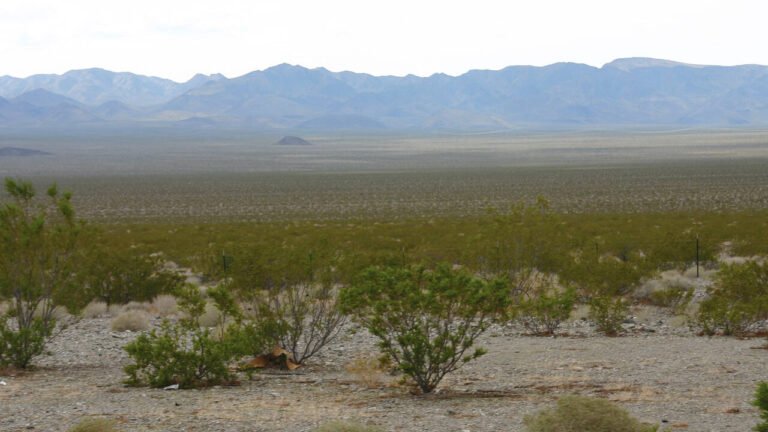
- Expansive deserts
- Rugged mountains
- Abandoned urban areas
- Dry lakebeds
Strategic Importance
- Elevated terrain provides a combat advantage
- Narrow corridors create ambush opportunities
- Open plains increase exposure to threats
This environmental diversity enhances exploration and tactical decision-making.
Flora
Despite harsh conditions, vegetation persists in adapted forms.
Common Plants
- Cacti
- Desert shrubs
- Mutated flora
Uses of Plants
- Crafting medicinal supplies
- Producing food items
- Creating survival resources
Plant life plays a vital role in sustaining players and enabling crafting systems.
Fauna
The Mojave is populated by a wide range of creatures, from manageable threats to deadly predators.
Common Creatures
- Radscorpions
- Coyotes
- Geckos
Deadly Threats
- Deathclaws – Highly aggressive and powerful
- Cazadores – Fast, venomous, and unpredictable
These adversaries demand careful planning, tactical combat, and resource management.
Human History and Culture
The Mojave Wasteland represents a complex attempt to rebuild civilization rather than merely survive.
Main Factions
New California Republic
- Democratic governance
- Large military presence
- Expansionist ideology
Caesar’s Legion
- Inspired by ancient Rome
- Strict hierarchy and discipline
- Relies on fear and control
Mr. House
- Technologically advanced ruler
- Controls New Vegas
- Seeks independence and stability
Faction Comparison Table
| Faction | Strength | Weakness | Goal |
| NCR | Organized army | Bureaucratic inefficiency | Expand democracy |
| Legion | Discipline | Brutality | Absolute control |
| Mr. House | Advanced technology | Isolation | Independent rule |
Deep Lore of the Mojave Wasteland
The Mojave’s narrative begins with the Great War of 2077, a nuclear conflict that devastated most of the world.
However, the Mojave experienced a different outcome.
Why Mojave Survived Better
- Advanced defense systems
- Strategic missile interception
- Mr. House’s foresight
As a result:
- Cities remained partially intact
- Infrastructure endured
- Society reestablished faster
This unique survival story distinguishes the Mojave from other Fallout regions.
Survival Tips and Strategies
Thriving in the Mojave requires foresight, adaptability, and efficient resource utilization.
Essential Survival Tips
- Follow main roads early in the game
- Avoid high-risk zones initially
- Maintain adequate food and hydration
- Upgrade weapons consistently
- Save progress frequently
Combat Tips
- Utilize the cover effectively
- Target enemy vulnerabilities
- Avoid unnecessary confrontations
Resource Management
- Gather valuable items consistently
- Trade intelligently
- Organize inventory efficiently
Common Challenges in the Mojave
Players face numerous obstacles, including:
- Powerful enemies
- Scarce resources
- Political conflicts
- Environmental hazards
The Mojave tests strategic thinking, patience, and adaptability.
Tourism and Exploration
Exploration is one of the most rewarding aspects of the Mojave.
Top Attractions
- New Vegas Strip – Entertainment and luxury
- Hoover Dam – Strategic battleground
- Hidden vaults – Mystery and lore
- Caves and ruins – Exploration opportunities
Activities
- Completing quests
- Discovering locations
- Trading goods
- Engaging in combat
Travel Tips
- Always carry essential supplies
- Plan routes carefully
- Avoid unknown territories early
Mojave Wasteland vs Capital Wasteland
| Feature | Mojave Wasteland | Capital Wasteland |
| Condition | Rebuilding | Destroyed |
| Society | Structured | Chaotic |
| Economy | Active | Limited |
| Factions | Complex | Survival-focused |
The Mojave feels structured and evolving, whereas the Capital Wasteland appears desolate and fragmented.
Interesting Facts About the Mojave
- Many nuclear missiles were intercepted
- Mr. House predicted the war
- Hoover Dam controls regional power
- Biodiversity is relatively higher
Environmental Issues and Conservation
The game highlights environmental concerns that mirror real-world challenges.
Major Issues
- Radiation contamination
- Water scarcity
- Resource conflicts
The struggle for the Hoover Dam underscores the importance of energy and water control.
Pros and Cons
Pros
- Rich storytelling
- Complex factions
- Realistic environment
- Strategic gameplay
Cons
- Challenging for beginners
- Dangerous enemies
- Difficult moral decisions
Best Playstyle Strategies
Beginner Strategy
- Focus on the main storyline
- Avoid dangerous regions
- Develop survival skills
Advanced Strategy
- Explore hidden areas
- Build alliances
- Optimize equipment
Role-Playing Choices
- NCR for structured governance
- Legion for dominance
- Mr. House for independence
Hidden Secrets in the Mojave
- Secret vaults
- Unique weapons
- Hidden quests
- Rare encounters
Exploration rewards curiosity with exclusive content and deeper lore.
FAQs
The real Mojave Desert inspires it but exists as a fictional setting in Fallout: New Vegas.
Because defense systems intercepted many nuclear missiles during the Great War.
It focuses on rebuilding civilization instead of just survival.
It depends on your playstyle:
NCR = order
Legion = power
Mr. House = independence
Yes, but requires careful planning and strategy.
Conclusion
The Mojave Wasteland is more than just a survival zone — it is a living world shaped by choices, power struggles, and strategy. Whether you side with factions or explore independently, every decision impacts the future of the region.