
Introduction
The Mojavewüste is one of North America’s most striking desert regions, known for its rugged landscapes, extreme climate, and unique life forms. Far from empty, it is a place of mountains, dunes, rocky valleys, and the iconic Joshua tree. This guide gives you a clear and simple overview of where the Mojavewüste is, how it works, and what makes it worth exploring.
- What Is the Mojavewüste?
- Why the Mojavewüste matters
- Mojavewüste at a Glance
- Where Is the Mojavewüste Located?
- Why location shapes the desert
- Why Is the Mojavewüste So Dry?
- The weather is not the same everywhere.
- Day and night can feel very different.
- Climate and Weather Patterns in the Mojavewüste
- Summer weather
- Winter weather
- Spring and fall
- Best travel season
- Geography and Landforms of the Mojavewüste
- Basin and range terrain
- Mountains and valleys
- Dry lakes and salt flats
- Canyons and washes
- Famous Landscape Features in the Mojavewüste
- Kelso Dunes
- Volcanic terrain and lava fields
- Salt basins and dry lakes
- Flora of the Mojavewüste
- The Joshua tree
- Creosote bush and desert scrub
- Cacti and succulents
- Higher-elevation plant communities
- Rare and endemic plants
- Why Mojave Plant Life Is So Important
- Plants shape animal life.
- Plants help show desert health.
- Fauna of the Mojavewüste
- Desert tortoise
- Birds
- Reptiles
- Mammals
- Insects and small wildlife
- How Plants and Animals Survive in the Mojavewüste
- Water-saving strategies
- Timing matters
- Shelter is key
- Human History and Cultures of the Mojavewüste
- Native peoples and early life
- Trade routes and travel paths
- Exploration and change
- Mining and railroads
- Ranching and later development
- Important Places in the Mojavewüste
- Mojave National Preserve
- Joshua Tree National Park
- Death Valley National Park
- Mojave Trails National Monument
- Mojave Air and Space Port
- Travel Tips for Visiting the Mojavewüste
- Bring more water than you think you need
- Check road conditions before you leave.
- Do not rely only on phone maps.
- Plan around temperature
- Carry basic safety gear.
- Road Trip Safety in the Mojavewüste
- Know your vehicle
- Tell someone your route.
- Respect distance
- Watch the weather
- Things to Do in the Mojavewüste
- Hiking
- Camping
- Photography
- Stargazing
- Scenic drives
- A Simple Mojave Itinerary Comparison
- Mojavewüste Wildlife and Plant Watching Tips
- Go at the right time.
- Look around plants, not just a wide view.s
- Stay patient
- Conservation in the Mojavewüste
- Fire risk
- Habitat fragmentation
- Climate stress
- Threats to Joshua trees and desert tortoises
- Protected lands help
- Why the Mojavewüste Is a Great Travel Destination
- It has a variety
- It has meaning
- It feels different from daily life.
- It offers both easy and rugged experiences.
- Pros and Cons
- Pros
- Cons
- Interesting Facts About the Mojavewüste
- The Mojavewüste in Simple Words
- FAQs
- Conclusion
What Is the Mojavewüste?
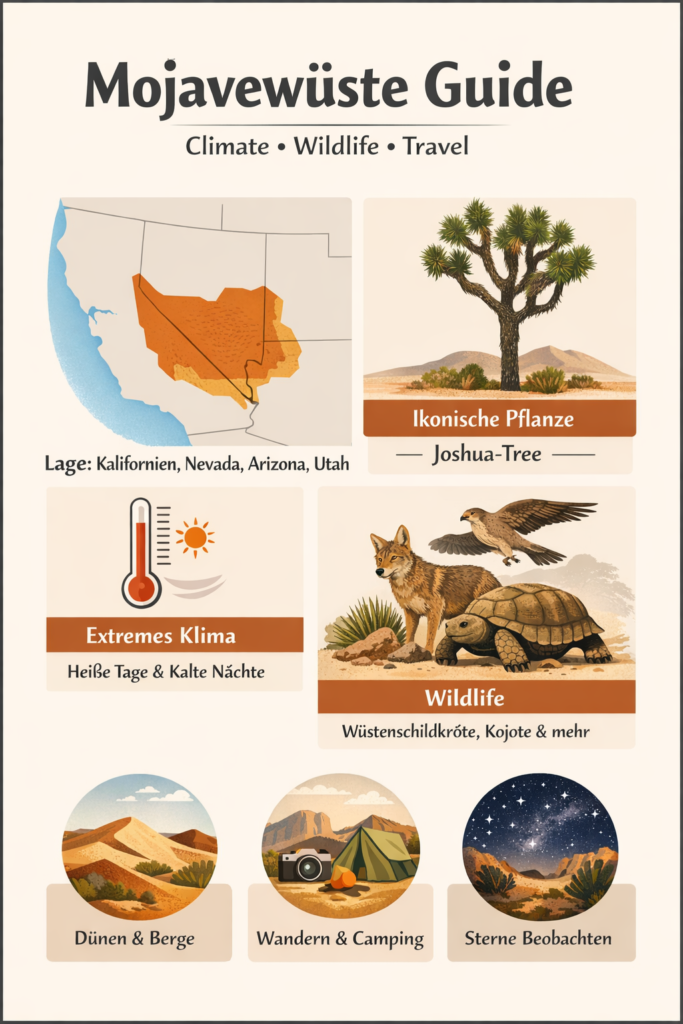
The Mojavewüste is a large arid desert region in the southwestern United States. Its core lies in southeastern California, but it also extends into Nevada, Arizona, and Utah. Because much of the region sits at relatively high elevation, people often call it a high desert.
What makes the Mojave distinct is not simply its lack of rainfall. It is also a transition zone. It links with the Great Basin to the north, the Sonoran Desert to the south and southeast, and nearby parts of the Colorado Plateau. That geographic position helps explain why the scenery, plants, and wildlife can change so much over short distances.
The Mojave does not have one single look. It is a place of contrast and variation. One area may feature open scrub and dry valleys. Another may hold steep mountains and cactus-covered slopes. Another may contain enormous dunes or dark volcanic stone. That diversity is one of the defining characteristics of the region.
Why the Mojavewüste matters
The Mojave Desert matters because it is both ecologically valuable and culturally significant. It supports rare plants, threatened animals, historic travel routes, old mining sites, and major conservation landscapes. It also helps people understand how life can persist in extremely dry environments through adaptation, resilience, and balance.
Mojavewüste at a Glance
| Topic | What to Know |
| Main location | Mainly southeastern California, with parts in Nevada, Arizona, and Utah |
| Climate | Very dry, hot in summer, cool in winter, with sharp day-night temperature swings |
| Main landforms | Mountains, valleys, dunes, lava flows, dry lakes, salt flats, and rocky outcrops |
| Famous plant | Joshua tree |
| Key wildlife | Desert tortoise, birds, lizards, foxes, coyotes, and many insects |
| Main visitor areas | Mojave National Preserve, Joshua Tree National Park, Death Valley National Park |
| Travel style | Best for road trips, hiking, photography, camping, and stargazing |
| Main risks | Heat, cold nights, remote roads, and limited services |
This simple overview shows why the Mojavewüste is much more than just a desert. It is a full environmental system made up of land, climate, living organisms, and history.
Where Is the Mojavewüste Located?
The Mojave Desert is located primarily in southeastern California. It reaches into surrounding states as well, including Nevada, Arizona, and Utah. That broad footprint makes it one of the most important desert systems in the United States.
It sits between several major physical regions. Mountain ranges to the west and southwest help shape the climate by blocking moisture-bearing air. This barrier effect is one major reason the desert remains so dry.
The Mojave also lies near important roads, rail lines, and historic travel paths. For centuries, people have moved through this region for trade, migration, work, and exploration. That means the Mojavewüste has never been just space on a map. It has long functioned as a corridor of movement and exchange.
Why location shapes the desert
Location has a major effect on the character of the Mojave. Because the desert sits in the rain shadow of nearby mountains, it receives much less precipitation than the surrounding areas. Because it also includes a wide range of elevations, the region supports very different plant communities and animal habitats. That combination of location, elevation, and exposure creates a landscape that feels layered, dynamic, and alive.
Why Is the Mojavewüste So Dry?
The main reason the Mojavewüste is so dry is the rain shadow effect. Moist air travels inland from the Pacific Ocean, but as it rises over the mountains, it cools and loses much of its water as rain or snow. By the time the air reaches the desert, it contains far less moisture.
As a result, the Mojave receives very little rainfall. In many places, annual precipitation is only a few inches. That is not enough to support dense forests or large permanent river systems. Instead, the region supports species that have evolved to survive with limited water, intense sunlight, and wide temperature variation.
The weather is not the same everywhere.
The weather in the Mojave changes with elevation. Lower areas are generally hotter and drier. Higher areas are cooler and may even receive frost in winter. This means the desert does not behave the same way everywhere. Some places feel like classic low desert. Others feel more like a cool, open high-desert environment.
Day and night can feel very different.
The Mojave is also known for dramatic temperature swings between day and night. A daytime walk may feel hot and sun-scorched, while the night can become chilly and crisp. That sharp contrast is one of the defining traits of a desert climate. Dry air and clear skies allow heat to escape quickly after sunset, producing a big shift in temperature.
Climate and Weather Patterns in the Mojavewüste
The Mojavewüste is known for dry air, hot summers, cool winters, and extremely limited rainfall. It is a desert, but not every part of it feels hot in the same way people often imagine. Some areas can be warm or even scorching during the day and then cold after dark.
Summer weather
Summer is the most challenging season for many visitors. Temperatures can become intense, especially at lower elevations. Sun exposure is strong, shade is scarce, and dehydration can happen quickly. For that reason, early mornings and evenings are often the most practical times for outdoor activity during summer.
Winter weather
Winter can be cool and sometimes frosty, especially in the higher parts of the desert. That makes the Mojave different from tropical deserts. The colder season is an important part of the desert’s ecological cycle. Some plants and animals depend on cooler temperatures to complete parts of their life processes.
Spring and fall
Spring and fall are usually the most pleasant seasons for travel. Temperatures are milder, the air is more comfortable, and the scenery can be especially appealing. In some years, wildflowers appear in response to rainfall, adding color and seasonal interest to the landscape.
Best travel season
For most travelers, the best time to visit the Mojave Desert is spring or fall. Those seasons usually provide the most balanced combination of comfort, visibility, and safety. Summer remains possible, but it requires more planning, more caution, and more respect for the environment.
Geography and Landforms of the Mojavewüste
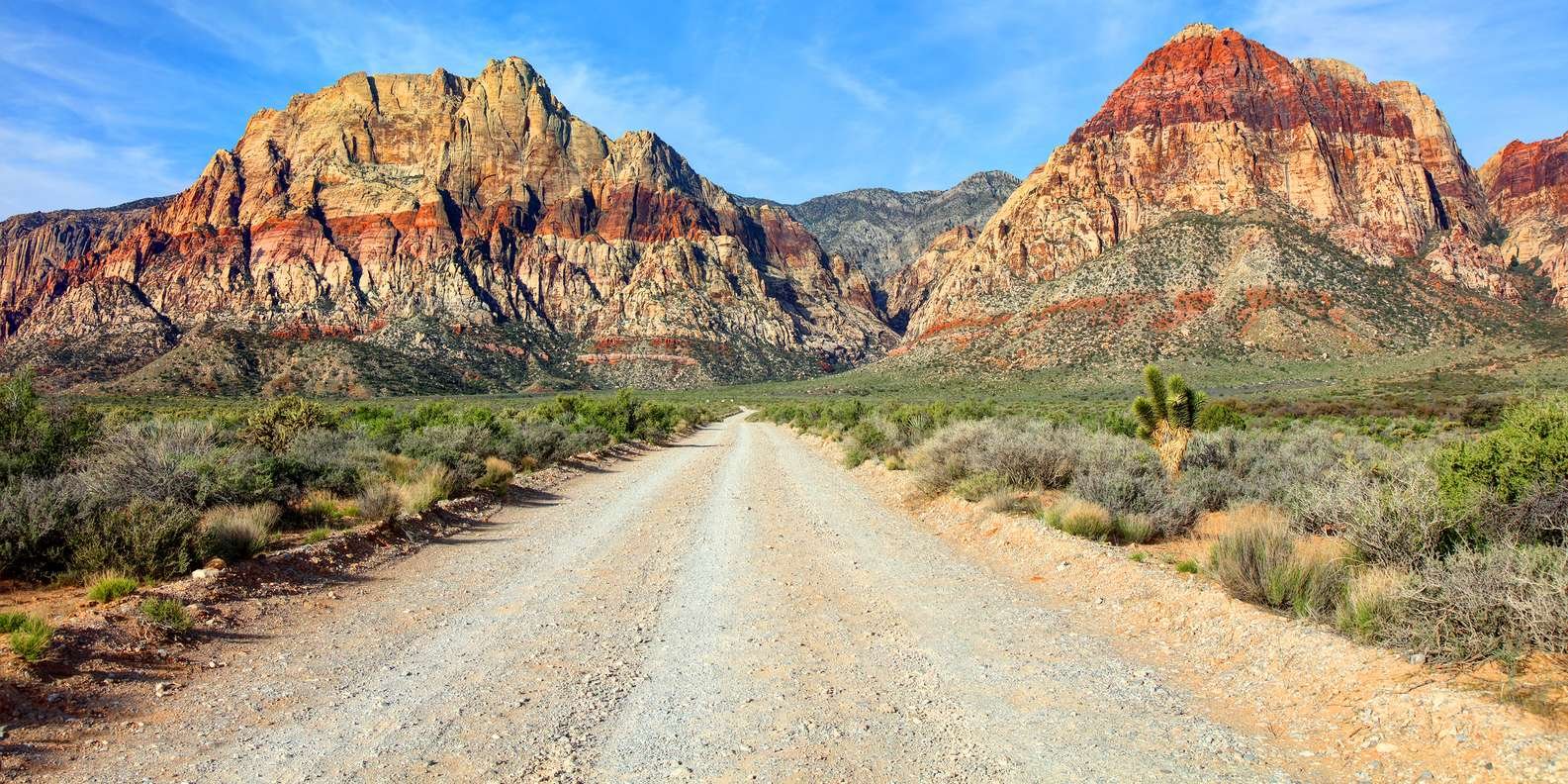
The Mojavewüste is not just sand. In fact, most of it is not a sand sea at all. It is a complex landscape of mountains, basins, rocky Exposures, volcanic fields, salt flats, canyons, and dry washes.
Basin and range terrain
A major part of the Mojave is shaped by basin-and-range topography. That means the landscape is organized into long mountain chains separated by valleys or basins. This creates a broken, dramatic terrain rather than a single smooth plain.
Mountains and valleys
Mountains play a crucial role in shaping water movement, wind, soil, and habitat. Valleys collect sediment and show evidence of ancient flow patterns. Mountain slopes expose rock layers and create microclimates that differ from the surrounding lowlands. Together, mountains and valleys produce a highly varied ecosystem.
Dry lakes and salt flats
Dry lakes and salt flats are common features in the Mojave. These are places where water once pooled before later evaporating. As the water disappeared, it left behind salt and minerals. The result is often a pale, flat, cracked surface that feels almost lunar in appearance.
Canyons and washes
Canyons and washes reveal how water still moves through the desert during storms. Even though the region is dry, flash floods can occur when heavy rain falls. These temporary flows continue to carve the land, moving sediment and shaping the desert over time.
Famous Landscape Features in the Mojavewüste
The Mojave Desert contains many iconic landforms. Among the best known are the Kelso Dunes, volcanic landscapes, lava tubes, and broad open valleys.
Kelso Dunes
The Kelso Dunes are one of the most recognized features in the Mojave National Preserve. They formed over long periods as wind transported sand and deposited it in large dunes. Their size and shape make them one of the desert’s most memorable sights. Under the right conditions, the sand can even produce a booming sound when it shifts, creating a rare and striking natural effect.
These dunes show that the desert is still active and changing. Wind continues to reshape the land today, not only in ancient geological history.
Volcanic terrain and lava fields
The Mojave also contains volcanic terrain. Some areas include lava flows, cinder cones, and dark, rugged rock fields. These environments feel very different from the dunes. They reveal the desert as a place of fire, pressure, and geological transformation, not only dust and heat.
Salt basins and dry lakes
Salt basins and dry lakebeds are another defining feature. They are often flat, bright, and cracked, with a surface that suggests ancient water and long-term evaporation. These landscapes carry a record of earlier climate conditions and changing hydrology.
Flora of the Mojavewüste
The plant life of the Mojavewüste is one of its most remarkable qualities. At first glance, the desert may appear sparse, but many plants have evolved highly effective ways to survive here.
The Joshua tree
No plant is more strongly associated with the Mojave than the Joshua tree. It is the desert’s most iconic symbol and one of the first things many people picture when they think of the region.
The Joshua tree is adapted to heat, drought, and temperature extremes. It grows slowly and requires specific conditions to thrive. It also provides habitat value by offering shade, cover, and nesting opportunities for wildlife.
Creosote bush and desert scrub
The creosote bush is another classic Mojave species. It is one of the most common desert shrubs and is extremely well-adapted to dry soil and limited water. Along with other hardy shrubs, it forms the backbone of desert scrub habitat.
Cacti and succulents
The Mojave also supports many cactus species and other water-storing plants. These plants have developed specialized features that reduce moisture loss. Some store water in thick stems, while others minimize leaf surface area or grow in ways that help them conserve energy and water.
Higher-elevation plant communities
At higher elevations, the plant world changes. You may encounter juniper, pinyon pine, and other high-desert species. This is a clear reminder that the Mojave is not a single uniform ecosystem. Elevation influences temperature, rainfall, soil, and vegetation in important ways.
Rare and endemic plants
The Mojave includes rare and endemic species as well. These are plants found only in certain places or under specific environmental conditions. Their narrow distribution makes them especially important from a conservation perspective.
Why Mojave Plant Life Is So Important
The plants of the Mojavewüste are not only attractive and distinctive. They are the foundation of the entire ecosystem. They stabilize soil, provide food and shelter, and support the survival of many animal species.
Plants shape animal life.
Healthy plant communities mean better conditions for wildlife. Birds use trees for nesting. Small mammals rely on brush cover for protection. Insects depend on flowers, stems, seeds, and other plant structures. The whole ecosystem is interconnected.
Plants help show desert health.
Plant communities also serve as indicators of environmental health. If invasive grasses spread or if fires become too frequent, native species can be damaged. That is one reason land management and conservation matter so much in the Mojave.
Fauna of the Mojavewüste
The Mojave Desert supports far more wildlife than many people expect. Although it may seem quiet, it is full of animals adapted to dryness, heat, open spaces, and limited water.
Desert tortoise
One of the most important animals in the region is the desert tortoise. It has become a symbol of Mojave conservation. It spends much of its life in burrows or sheltered spaces where temperatures are less extreme.
The desert tortoise is slow-moving but highly specialized for desert conditions. It is also threatened, which makes habitat protection especially important.
Birds
The Mojave is home to many bird species. Some use Joshua trees for nesting. Others depend on water sources, shaded areas, or seasonal migration patterns. Bird activity changes throughout the year, which makes the desert interesting for birdwatchers.
Reptiles
Lizards and other reptiles thrive in the desert because they are adapted to heat and dryness. They are often active during cooler parts of the day and retreat during the hottest hours.
Mammals
Coyotes, foxes, and small mammals also live in the Mojave. Many are nocturnal or crepuscular, meaning they move during the night or at dawn and dusk. This behavior helps them avoid extreme heat and conserve water.
Insects and small wildlife
Insects are an important part of the ecosystem, too. They pollinate plants, serve as food for birds and reptiles, and contribute to the food web in many subtle ways. Even when the desert looks still, small life is constantly moving through it.
How Plants and Animals Survive in the Mojavewüste
Survival in the Mojavewüste depends on adaptation. Plants and animals have evolved a wide range of strategies to manage heat, dryness, and resource scarcity.
Water-saving strategies
Some plants send roots deep into the soil. Some store water in thick stems or tissues. Some grow slowly, so they do not use as much moisture. Many animals avoid the hottest periods of the day and remain in burrows, shade, or protected crevices.
Timing matters
Desert life often depends on timing. Many animals are most active during cooler hours. Some plants bloom only when rainfall and temperature align in just the right way. In the Mojave, timing is not a minor detail. It is central to survival.
Shelter is key
Shelter may take the form of rock, burrow, brush, or tree cover. Anything that reduces heat exposure and water loss can be valuable. This is one reason the Joshua tree matters so much: it offers structure and refuge for other life forms.
Human History and Cultures of the Mojavewüste
The Mojave Desert has a rich and layered human history. It was never empty land. Indigenous peoples lived there, traveled through it, and built deep ecological knowledge long before modern roads, towns, or parks existed.
Native peoples and early life
The region was home to Indigenous communities such as the Chemehuevi and Mojave peoples. They used local plants, hunted animals, and navigated the land by understanding seasonal patterns, water access, and terrain.
Trade routes and travel paths
The Mojave Trail became an important route for movement and exchange. This made the desert a corridor rather than an obstacle. People crossed it, relied on it, and interpreted it in ways that later settlers often failed to appreciate.
Exploration and change
European explorers and later American travelers moved through the desert in the 18th and 19th centuries. Their arrival changed the region through new mapping, military presence, settlement, and economic development.
Mining and railroads
Mining became an important part of Mojave history. Copper, gold, iron, and silver all contributed to regional development. Railroads also connected the desert to broader industrial networks. Sites such as Kelso Depot help tell that story.
Ranching and later development
Ranching, rail labor, and town growth added additional layers to the history of the region. Over time, some locations became protected lands or heritage sites, while others remained remote and lightly developed. The result is a landscape where past and present are closely intertwined.
Important Places in the Mojavewüste
Several places are especially helpful for understanding the desert as a whole. They also matter for anyone building a strong Mojave travel guide or Mojave attractions section.
Mojave National Preserve
Mojave National Preserve is one of the best places to experience the desert in its full range. It includes dunes, volcanic areas, historical sites, scenic drives, and a powerful sense of open space.
It is also a place where nature and history come together. That combination makes it one of the most valuable entry points for understanding the Mojave story.
Joshua Tree National Park
Joshua Tree National Park is famous for its namesake trees, surreal rock formations, stargazing, and desert scenery. It is also important because it sits at the meeting point of different desert ecosystems.
This park is one of the strongest places to understand the broader Mojave and how it connects to nearby desert regions.
Death Valley National Park
Death Valley National Park gives the Mojave some of its most extreme associations. It is known for intense heat, dry basins, dunes, and dramatic landforms. It also includes mountains, canyons, oases, and surprisingly diverse life.
Mojave Trails National Monument
Mojave Trails National Monument is another important protected area. It helps preserve landscapes, travel corridors, and cultural heritage. It reinforces the idea that the Mojave is a living region shaped by ecology, movement, and memory.
Mojave Air and Space Port
The Mojave Air and Space Port represents a very modern chapter in the desert’s story. It is associated with aviation and aerospace activity, showing that the region continues to play a role in innovation and technology.
Travel Tips for Visiting the Mojavewüste
A trip to the Mojavewüste can be unforgettable, but it should be planned carefully. The desert is beautiful, yet it can also be remote, harsh, and physically demanding.
Bring more water than you think you need
Water is the first rule of desert travel. Do not bring only the minimum. Bring extra. Dry air, heat, and distance can turn small mistakes into dangerous situations.
Check road conditions before you leave.
Some roads in the Mojave are rough, sandy, or damaged by weather. Never assume that every road is suitable for a standard vehicle. Some routes require high-clearance or four-wheel-drive vehicles.
Do not rely only on phone maps.
Cell coverage can be weak or nonexistent in remote areas. Navigation apps may also direct drivers onto unsafe routes. Always check official road and travel information before entering remote desert routes.
Plan around temperature
Avoid the hottest hours when possible. Start early. Rest in shade. Wear sun protection. In cooler months, bring layers because desert temperatures can drop quickly after sunset.
Carry basic safety gear.
A spare tire, jack, flashlight, snacks, first-aid items, and emergency supplies can make a major difference. In the desert, being prepared is not optional.
Road Trip Safety in the Mojavewüste
A road trip through the Mojave Desert can be memorable, but it requires caution and planning.
Know your vehicle
Some roads are easy to drive. Others are not. Before choosing a route, understand what your vehicle can handle. A regular passenger car is not always enough for remote desert travel.
Tell someone your route.
Because the desert is so remote, it is wise to let someone know where you are going. If something goes wrong, that information can be important for response and rescue.
Respect distance
Distances in the desert can appear shorter on a map than they really are. Travel often takes longer than expected. Plan accordingly and allow extra time.
Watch the weather
Rain can create flash flood hazards in washes and low areas. Even desert terrain can become dangerous after a storm. Weather changes should always be taken seriously.
Things to Do in the Mojavewüste
The Mojavewüste offers a wide range of experiences for travelers interested in nature, history, photography, and open landscapes.
Hiking
Hiking is one of the best ways to observe landforms, plants, and wildlife up close. It gives you a stronger sense of the desert’s texture and scale, but it should always be done with enough water and careful planning.
Camping
Camping in the Mojave can be unforgettable because of the quiet surroundings and beautiful night sky. At the same time, it requires strong preparation for heat, cold, wind, and remote conditions.
Photography
The desert is excellent for photography. Light, shadow, texture, and space combine in powerful ways here. Sunrise and sunset are especially rewarding times to take photos.
Stargazing
The Mojave is known for dark skies in many areas. That makes it a great place to observe stars, planets, and the Milky Way.
Scenic drives
Scenic drives are one of the easiest ways to experience the desert. They allow visitors to see large landscapes, historic sites, and changing terrain without needing to hike far.
A Simple Mojave Itinerary Comparison
| Place | Best For | Travel Note |
| Mojave National Preserve | Dunes, lava fields, historic sites, and wide desert scenery | Check road conditions and vehicle needs first |
| Joshua Tree National Park | Joshua trees, rocks, stargazing, and easy access from Southern California | Busy during cooler seasons |
| Death Valley National Park | Extreme landscapes and dramatic desert views | Heat and flash-flood risk make planning essential |
This simple comparison helps travelers choose the destination that best matches their interests and comfort level.
Mojavewüste Wildlife and Plant Watching Tips
If you want to experience the desert more deeply, pay attention to the smaller signs of life.
Go at the right time.
Early morning and evening are often the best times to observe animals. Many species avoid the hottest hours of the day.
Look around plants, not just a wide view.s
Desert life often hides in plain sight. Birds may nest in trees. Lizards may rest near rocks. Small mammals may move near brush. The most interesting details are often the smallest ones.
Stay patient
The desert rewards slow observation. If you move too quickly, you miss the subtle patterns. If you slow down, you begin to see much more.
Conservation in the Mojavewüste
The Mojavewüste is beautiful, but it faces real pressures. Conservation is one of the most important themes in any serious Mojave guide.
Fire risk
One major issue is fire. Invasive grasses can spread and create more fuel, increasing the risk of wildfire. Many native desert plants are not adapted to frequent fire, so damage can be severe.
Habitat fragmentation
Roads, development, and human activity can break habitats into smaller pieces. That makes it harder for wildlife to move, feed, breed, and survive.
Climate stress
Climate change can alter rainfall patterns, raise temperatures, and shift the timing of growth and reproduction. That can place extra strain on plants and animals already living near the edge of their tolerance.
Threats to Joshua trees and desert tortoises
The Joshua tree and desert tortoise are especially important conservation symbols. Both depend on healthy habitat. Both are affected by environmental change and human disturbance.
Protected lands help
Protected areas such as Mojave National Preserve, Joshua Tree National Park, and Death Valley National Park help preserve the desert for future generations. They are important examples of conservation in practice.
Why the Mojavewüste Is a Great Travel Destination
The Mojavewüste is an excellent destination for travelers who enjoy nature, history, and open landscapes.
It has a variety
You do not see only one kind of scenery. You see many. Dunes, mountains, lava fields, valleys, and iconic plants all appear within the same region.
It has meaning
The desert is not only scenic. It has deep historical and cultural value. That makes every stop more meaningful.
It feels different from daily life.
The quiet, space, and sky of the desert create a distinct emotional atmosphere. Many visitors find it calming, reflective, and memorable.
It offers both easy and rugged experiences.
Some locations are easy to reach. Others are remote and adventurous. That gives travelers multiple ways to explore depending on their style and skill level.
Pros and Cons
Pros
The Mojavewüste offers dramatic landscapes, major historical significance, rich wildlife, and many opportunities for road trips, hiking, photography, camping, and stargazing.
Cons
The desert can be very remote. Roads may be rough. Services can be limited. Heat, cold nights, and sudden weather changes can make travel difficult. Some areas also require more capable vehicles and more advanced preparation.
Interesting Facts About the Mojavewüste
The Mojave Desert contains many fascinating details.
The Joshua tree is not merely famous; it also plays an important ecological role. The Kelso Dunes can “boom” when sand shifts under the right conditions. The desert also spans a range of elevations, which helps explain why it supports such different habitats.
Another interesting fact is that the Mojave has always been a corridor of movement. People crossed it for trade, mining, railroad work, ranching, and travel. Its history is connected to motion as much as to stillness.
The desert is also biologically richer than many people expect. Even in a dry place, life gathers around springs, shaded areas, rocky cover, and elevation changes.
The Mojavewüste in Simple Words
If you had to describe the Mojavewüste in a single simple sentence, you could say this:
It is a desert region full of life, history, and powerful landscapes. It is a place where survival is intelligent, scenery is dramatic, and every part of the land tells a story.
That is what makes the Mojave Desert so special. It is not just a place to pass through. It is a place to understand.
FAQs
The Mojavewüste is a large arid desert region in the southwestern United States. It is centered in southeastern California and extends into nearby Nevada, Arizona, and Utah. It is known for dry weather, high-desert scenery, Joshua trees, and major protected lands.
It is dry because of the rain shadow effect. Mountains block much of the moisture that comes from the Pacific Ocean, so the air reaching the desert contains far less water.
The Joshua tree is the most iconic plant in the Mojave Desert. It is a major symbol of the region and an important habitat feature for wildlife.
The desert supports desert tortoises, birds, lizards, coyotes, foxes, small mammals, insects, and many other species. Many are active during cooler times of day.
Yes, but it requires preparation. The scenery is impressive, but the region can be remote, hot, and difficult to navigate without careful planning.
Conclusion
The Mojavewüste is more than just a dry landscape. It is a diverse and living environment shaped by nature, history, and adaptation. From its dramatic scenery to its resilient plants and animals, the desert offers a deeper experience for those who take the time to understand it.