
Introduction
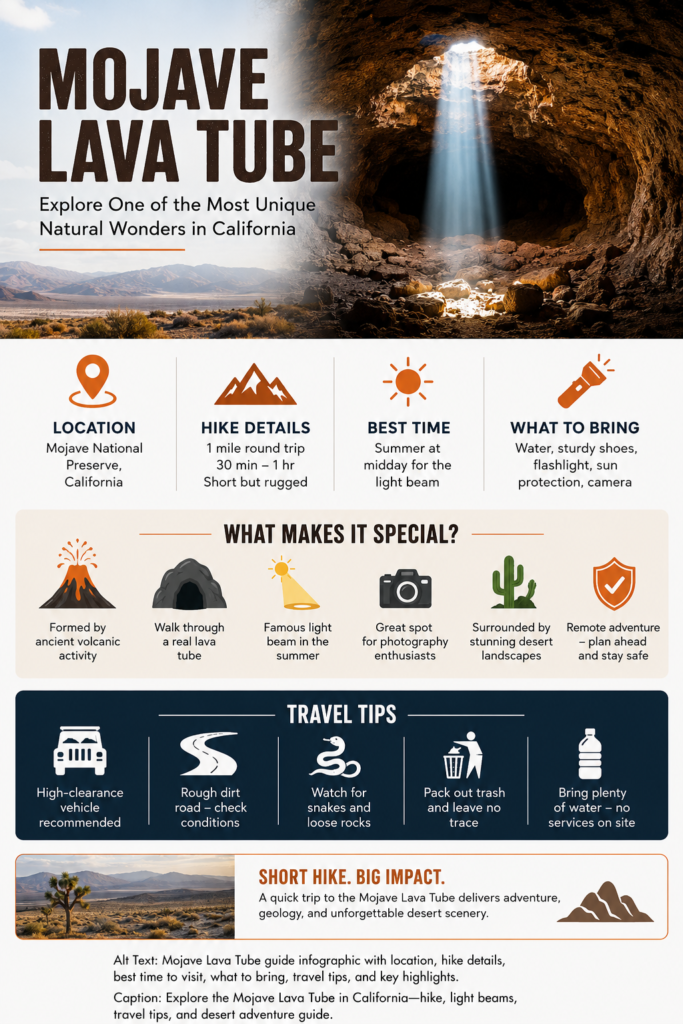
The Mojave Desert lava tube is one of the most unique stops in Mojave National Preserve. Short, rugged, and unforgettable, it offers a rare chance to walk through a natural volcanic tunnel in the middle of the desert. Visitors come for the geology, the remote landscape, and the famous summer light beam that shines through openings in the roof. Although the trail is brief, the experience feels bigger than the distance suggests. With rough road access, uneven footing, and no developed facilities, this is a destination that rewards preparation. If you enjoy desert scenery, photography, and unusual natural features, the Mojave Desert lava tube is well worth the visit.
- Overview and What Makes the Mojave Desert Lava Tube Special
- Location and Geography
- How the Lava Tube Formed
- How to Get There: Roads, Parking, and Access
- Trail Distance, Difficulty, and Accessibility
- Best Time to Visit for Photos and Light Beams
- Safety Tips Before You Enter
- What to Bring for the Hike
- The Landscape Around the Lava Tube
- Flora: Plants Around the Mojave Desert Lava Tube
- Fauna: Animals, Reptiles, Insects, and Birds
- Human History and Cultural Context
- Tourism: Nearby Attractions, Activities, and Travel Tips
- Interesting Facts About the Mojave Desert Lava Tube
- Environmental Issues and Conservation
- Pros and Cons
- Travel Tips for a Better Visit
- FAQs
- Conclusion
Overview and What Makes the Mojave Desert Lava Tube Special
The Mojave Desert lava tube is best described as a short underground journey with a surprisingly rich visual and geological payoff. It is a natural volcanic tunnel, not a man-made attraction, and that alone gives it a special character. The setting feels quiet, remote, and elemental. You are not walking through a museum display or a tourist-built cave system. You are walking into an ancient cavity created by flowing lava and preserved by the desert.
Several qualities make the site especially appealing:
The site is compact and manageable, making it ideal for a half-day desert itinerary.
The lava tube presents a fascinating geology story that is simple to understand and impressive to experience.
The destination lies within a remote desert landscape that strengthens the feeling of adventure.
The underground chamber remains cooler than the surrounding terrain, creating a noticeably different atmosphere.
The natural opening in the ceiling can create a dramatic shaft of sunlight during the right season and time of day.
The location is highly photogenic, especially for visitors who appreciate natural textures, shadow, and contrast.
The combination of these elements gives the lava tube an unusual range. A small site can still deliver multiple types of value at once: scenery, science, exploration, photography, and a strong sense of place. That is one reason it performs so well as a destination topic. Visitors may arrive expecting a quick stop, but they often leave with a richer appreciation of Mojave geology and desert travel.
It is also important to keep expectations realistic. The site is not heavily developed. There are no polished visitor amenities, and the route includes rough dirt-road travel. That means the visit is more rewarding for people who enjoy natural, low-friction adventure than for those seeking a smooth attraction with built-in convenience. In practical terms, the Mojave Desert lava tube is short in distance but high in character.
Location and Geography
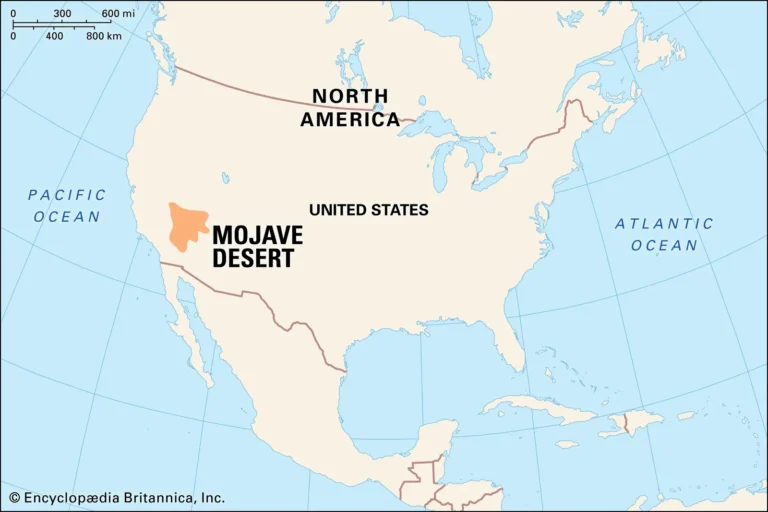
The Mojave Desert lava tube is located in the Mojave National Preserve in California. It sits within a volcanic zone of the preserve, near the Cinder Cones and Lava Flows area. The broader preserve is large, diverse, and visually dramatic, with mountains, dunes, desert basins, Joshua tree habitat, historic routes, and volcanic landforms spread across a wide desert expanse.
That geography matters because the lava tube is not an isolated curiosity. It is part of a larger volcanic landscape that explains how the land around it looks and feels. The approach is part of the experience. You drive through open country, move along rough unpaved road sections, and gradually enter a terrain shaped by ancient lava. By the time you reach the tube, you have already begun the story of the place.
The site’s location contributes to three important qualities:
First, it feels remote. You do not arrive by accident, and you do not reach it through busy commercial corridors.
Second, it feels geologically expressive. The ground itself tells a story of eruption, flow, cooling, and collapse.
Third, it feels expansive. Even though the tunnel is small, the surrounding desert gives it scale.
This contrast is one of the best things about visiting. The surface world around the tube is bright, dry, and open. The interior world of the tube is darker, cooler, and enclosed. That shift in atmosphere helps the site feel bigger than its map footprint. It also makes the tunnel feel more dramatic than many visitors expect.
How the Lava Tube Formed
A lava tube forms during a volcanic eruption when molten rock flows across the land. At the outer edges of the flow, the lava cools first and hardens into a crust. Beneath that crust, hotter lava continues moving. Over time, if the molten Material drains away, it leaves behind a hollow tunnel.
The Mojave Desert lava tube was created through that exact kind of volcanic process. In simple terms, this is how it happened:
A volcanic eruption sent lava across the desert floor.
The top layer of the flow cooled and solidified.
A strong crust formed around the moving lava inside.
The hot interior kept flowing beneath the crust.
Eventually, the lava emptied.
The empty passage remained as a tube.
That process may sound straightforward, but it is one of the most intriguing forms of landscape creation in the desert. Unlike a canyon carved by water, a lava tube is formed by fire and flow. It is not excavated by people, nor sculpted by streams. It is a natural underground corridor built by molten rock.
This volcanic origin is what gives the site its unique walls, ceiling openings, and rough interior surfaces. The famous beam of light appears because holes in the roof allow sunlight to pour into the tunnel. That visual effect is one of the reasons the site is so popular with photographers. It turns the tube into a natural stage where geology and light interact in a very direct way.
The formation story also matters because it reminds visitors that deserts are not empty spaces. They are record keepers. A desert landscape can preserve volcanic events, climate patterns, wildlife habitat, and human travel history all at once. The Mojave Desert lava tube is a perfect example of that layered reality.
How to Get There: Roads, Parking, and Access
Reaching the lava tube is part of the adventure, and it deserves as much planning as the trail itself. The final approach uses Aiken Mine Road, which is an unpaved desert road. It is narrow, rough, dusty, and often washboarded. In dry conditions, it can be slow but manageable with care. After wind or rain, the road can become even more challenging. Because of that, it is always smart to check current conditions before heading out.
The route is not complicated, but it is not effortless either. You leave the main road, drive several miles on dirt, and then park before walking the final stretch to the site. That drive should not be treated as a minor detail. In remote desert travel, access roads are often the first place where visitors encounter difficulty. The road to the lava tube is a prime example.
What to expect on the road:
Loose dirt
Rocky patches
Sandy sections
Washboard bumps
Narrow travel lanes
Slow speeds
Potential ruts or soft spots after weather changes
A higher-clearance vehicle is strongly recommended because it handles rough terrain more comfortably and reduces the risk of scraping or getting stuck. Low-clearance vehicles can struggle on roads like this, especially if conditions have changed since the last visitor report.
After parking, there is still a short walk to the tube entrance area. That final approach is not a polished path. It is more of a natural foot route leading up to the opening and ladder zone. The distance is short, but the footing can be uneven, so it helps to move carefully.
One useful mindset for this kind of destination is to think of the drive as part of the experience, not as a separate inconvenience. The road sets the tone. It filters the visit toward people who are willing to accept a little roughness in exchange for a memorable, real, desert setting.
Trail Distance, Difficulty, and Accessibility
The official trail is short, about 1 mile round trip, and many people complete it in 30 minutes to 1 hour. On paper, that makes it sound simple, and in one sense it is. Someone does not need a backpacking plan. You do not need a full day of hiking. You do not need specialized outdoor skills for the basic visit.
But distance and comfort are not the same thing.
The trail is short, yet the surface can be rocky, uneven, and awkward. The lava tube itself may involve low ceiling sections, dark interior space, and loose stone underfoot. In other words, the challenge comes less from length and more from terrain. This is why the site should be described as short but rugged, not long but easy.
Key difficulty factors include:
Uneven ground
Loose rocks
Potential crawling or ducking inside the tube
Low light conditions
Rough access-road travel
Heat outside the tube
Accessibility is limited. This is not a developed accessible attraction with smooth pavement, railings, or an engineered indoor path. It is a natural site in a remote preserve. That means it is best suited to visitors who are comfortable with basic outdoor roughness and can manage unsteady footing.
A simple way to think about the experience is this: the walk is not long, but it is not polished. If someone wants a quick desert stop with a strong visual return, the site is ideal. If someone needs a flat, fully supported, or wheelchair-friendly environment, this is not the right fit.
Best Time to Visit for Photos and Light Beams
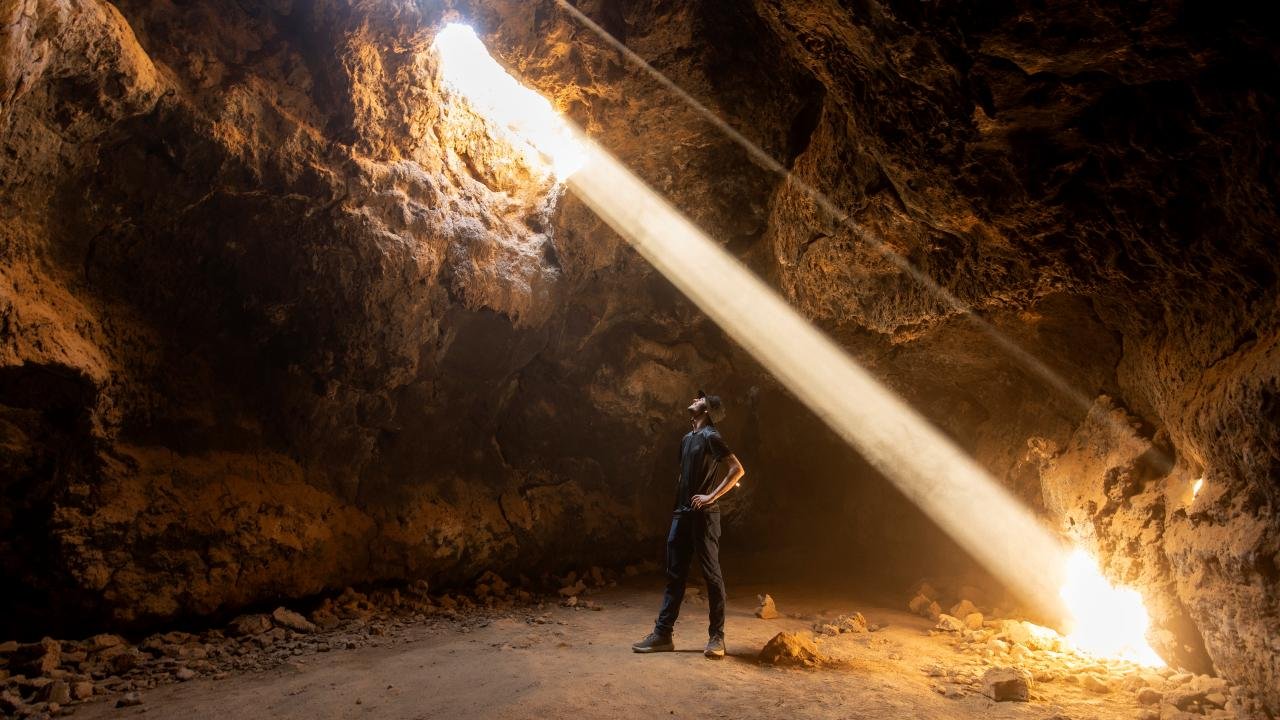
One of the most memorable reasons to visit the Mojave Desert lava tube is the light beam effect. The National Park Service notes that a beam of light may be visible at midday during the summer. That detail matters, especially for photographers and visitors who are specifically hoping to see the tunnel illuminated in a dramatic way.
The beam exists because sunlight enters through openings in the ceiling. When the sun angle, weather, and position line up correctly, the result can be striking. It feels almost theatrical. A shaft of brightness drops into the darker tunnel, creating bold contrast and a sense of depth that is difficult to ignore.
Several things influence the beam:
Season
Time of day
Cloud cover
Sun angle
Dust in the air
Your position inside the tube
Because of those variables, the beam is natural rather than guaranteed. It is not a scheduled performance, and it may appear differently from day to day. That uncertainty is part of the appeal for some visitors, especially photographers who enjoy working with changing conditions.
For the best chance at the beam, summer around midday is the key window. For more comfortable overall travel conditions, spring and fall are often better. If you are trying to balance both comfort and visual potential, those shoulder seasons can be useful for the broader desert itinerary, while summer gives you the strongest light-beam odds.
It helps to think in terms of travel intent:
Whether your goal is photography, prioritize the summer timing.
If your goal is comfort, choose a cooler season.
If your goal is general exploration, any season can work with the right preparation.
Safety Tips Before You Enter
Safety is a major part of visiting the Mojave Desert lava tube, and that is true precisely because the site is natural rather than developed. The tunnel is not regularly maintained, and the park warns visitors about loose rocks, low ceilings, crawling sections, and snakes. Visitors should treat the area as an at-your-own-risk outdoor environment.
Main safety considerations include:
Loose rocks that can shift underfoot
Uneven terrain inside and outside the tube
Dark interior space
Low ceiling sections that may require crouching or crawling
Desert wildlife, including snakes
Heat exposure on the surface
Rough road access
No on-site services
The floor can look stable and still be tricky. Small rocks can roll under shoes and create slipping or twisting hazards. Slow, deliberate movement is much better than rushing. That is especially important if you are carrying a camera, helping children, or navigating in low light.
The ceiling also deserves attention. Some sections may suddenly feel much lower than expected. Taller visitors should stay alert and be ready to bend or crawl if necessary. Even if the entrance looks open and approachable, the interior can vary more than people expect.
Wildlife awareness matters too. Snakes are one of the most common safety concerns in desert environments, and the park explicitly warns visitors to watch for them. That means you should never reach into hidden gaps, dark crevices, or spaces under rocks. The safest habit is to watch where you step and keep your hands away from concealed areas.
Just as important, do not confuse a short trail with a low-risk environment. The lava tube is simple to describe but still demands respect. That is part of what makes it adventurous. When you approach it with caution, the site is much more rewarding.
What to Bring for the Hike
Even though the trail is short, the setting is remote, dry, and rough enough that smart packing matters. A little preparation goes a long way in making the experience more comfortable and safer.
Essential items include:
Water
Sturdy closed-toe shoes
Flashlight or headlamp
Sun protection
Camera or phone for photos
Downloaded directions or a map
Snacks if you are extending the trip
Basic first-aid supplies if you are traveling far
Water is non-negotiable in the desert. The surface environment can become harsh quickly, and even a short outing can feel much tougher if you are underprepared. Footwear is equally important. Shoes with grip and protection are much better than sandals or smooth soles.
A flashlight or headlamp is important because the tube interior can be dark even on a sunny day. The beam of light from above is dramatic, but it does not illuminate every corner. If you want to move through the tube safely and comfortably, a light source is essential.
For family groups or casual travelers, a simple packing list can look like this:
Two or three bottles of water
One headlamp per person
A camera or phone with an extra battery
Hat and sunscreen
A paper map or offline directions
This kind of setup keeps the visit practical and low-stress. The goal is not to overpack. The goal is to avoid preventable discomfort in a place where basic supplies are limited.
The Landscape Around the Lava Tube
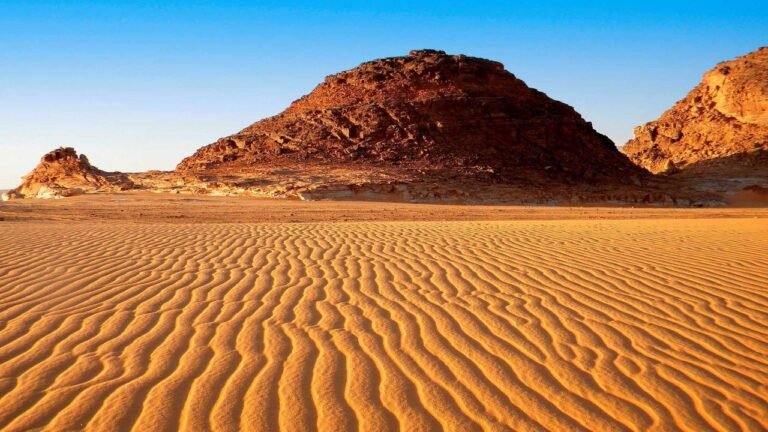
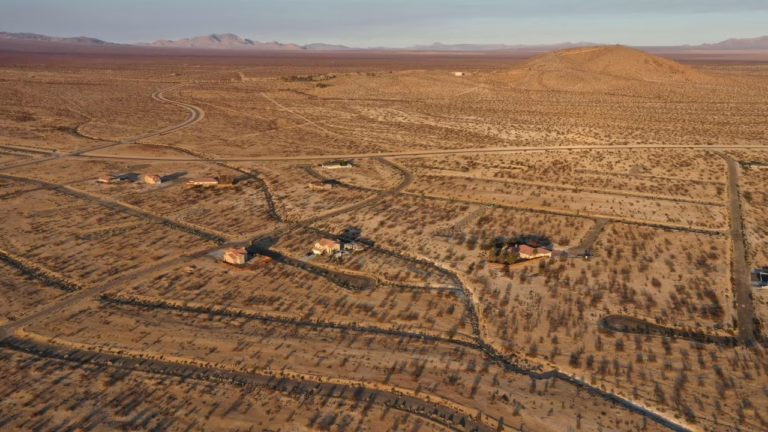
The lava tube sits inside a larger desert and volcanic environment that gives it much of its character. The nearby landscape includes lava flows, cinder cones, open flats, and the broad, sunlit topography that defines much of Mojave National Preserve. The surrounding area is part of what makes the site feel so authentic.
Mojave National Preserve includes:
Lava flows
Cinder cones
Dunes
Mountain ranges
Desert basins
Joshua tree habitat
Historic roads and routes
This variety is important because it prevents the lava tube from feeling like a one-note stop. Instead, it becomes part of a larger desert narrative. The drive itself becomes meaningful because the ground around you is a visible reminder of volcanic history. The black rock, dry air, and wide-open space all combine into a strong visual identity.
The scenic value is significant. Even before you reach the tube, the surroundings help build an atmosphere. The road stretches through a landscape that feels both raw and quiet. For many visitors, that drive becomes one of the most memorable parts of the trip.
The sense of openness also deepens the underground experience. When you step into the tube after moving through the exposed desert, the contrast is immediate. That movement from bright exterior to dark interior is one of the site’s strongest experiential qualities.
Flora: Plants Around the Mojave Desert Lava Tube
Although the area may look sparse at first, plant life is an important part of the Mojave story. The preserve supports a variety of desert plants, many of which are adapted to heat, drought, and thin soils. Around the lava tube and throughout the broader preserve, you may encounter Joshua trees, yuccas, cholla, desert shrubs, creosote-type vegetation, and seasonal wildflowers when conditions are favorable.
These plants matter because they show that the desert is alive, not empty. Each species tells part of the survival story of the region. They are proof that life can thrive in difficult conditions through adaptation, resilience, and timing.
Seasonal change makes a difference, too. In spring, good rains can produce wildflower displays that add surprising color to the landscape. That creates a vivid contrast with the dark volcanic rock and dusty road surfaces. For visitors, this can transform a simple stop into a much richer visual experience.
Plants also help define mood. A Joshua tree against an open sky, or a patch of roadside bloom near rough lava terrain, can make the entire outing feel more complete. The lava tube may be the headline attraction, but the surrounding plant life helps build the full desert scene.
Fauna: Animals, Reptiles, Insects, and Birds
The desert around the lava tube is more active than it may appear. The broader preserve supports mammals, birds, reptiles, amphibians, fish, insects, and arachnids. Many of these animals are not easy to spot because they are more active during cool hours or remain hidden during the day.
Birds and lizards are among the more commonly noticed forms of wildlife, but even then, sightings can be brief. Often, people see signs of animals before they see the animals themselves: tracks, movement in the brush, or sudden motion near rocks. That is normal for desert travel.
Wildlife awareness is especially important because of the safety reminder about snakes. The warning is not there to create fear; it reflects real conditions. Desert animals use shaded crevices, rock piles, and hidden spaces, which means visitors should be careful with where they step and what they touch.
Good desert behavior includes:
Watching your footing
Avoiding hidden spaces
Staying on the beaten path
Keeping food secure
Observing wildlife from a distance
The most accurate way to think about the desert is this: it may look still, but it is functioning all the time. Animals are part of the same landscape that created the tube. That makes the experience more alive and more ecologically meaningful.
Human History and Cultural Context
The Mojave Desert is not only a geological and ecological landscape. It is also a human one. The region has a long history of Indigenous presence, travel, trade, mining, ranching, and railroad-era development. Before modern roads and recreational visits, people moved through the desert for survival, commerce, and connection.
Indigenous communities knew the land deeply and used routes, water sources, and plant knowledge over many generations. Later, travelers, miners, and settlers added new layers to the human history of the region. Historic corridors and older routes still shape the way people understand the desert today.
This context matters because natural sites become more meaningful when they are placed inside a broader human story. The lava tube is not just a geological object. It is part of a landscape that people have crossed, inhabited, studied, and valued for a very long time.
That historical depth adds emotional weight to a visit. Standing near the tube, you are not just observing ancient lava. You are standing in a place where nature and human movement have intersected for centuries. That is one reason the Mojave has such a powerful identity.
Tourism: Nearby Attractions, Activities, and Travel Tips
The Mojave Desert lava tube works best as part of a larger day trip rather than as a standalone stop. Because the trail itself is short, visitors get more value when they combine it with nearby preserve highlights. That helps justify the drive and creates a fuller desert experience.
Nearby attractions and activities can include:
Kelso Depot
Kelso Dunes
Cinder Cones and Lava Flows
Granite Mountains viewpoint
Hole-in-the-Wall area
Scenic roadside photo stops.
Combining stops is a smart travel strategy because it balances the short duration of the lava tube with other points of interest. It also helps you experience the preserve in a more layered way. A single site can be memorable, but a route that links geology, scenery, and history is usually more satisfying.
A practical half-day plan might look like this:
Start with the lava tube.
Add a scenic volcanic stop.
Continue to Kelso Depot for context.
Finish with a dune or viewpoint stop if time allows.
This keeps the schedule focused and avoids trying to do too much in a region where distances and road conditions can slow you down. Desert travel rewards patience. A few well-chosen stops are usually more enjoyable than a packed checklist.
Interesting Facts About the Mojave Desert Lava Tube
Here are some of the most notable things to know about the Mojave Desert lava tube:
1. It formed about 27,000 years ago
That makes it ancient in human terms, but relatively young in geologic time.
2. It can produce a light beam
This is one of its most famous visual features and a major reason photographers visit.
3. It belongs to a volcanic landscape
The tube is part of a larger field of lava-related geology in Mojave National Preserve.
4. The trail is short, but the approach is not easy
That contrast surprises many first-time visitors.
5. It feels remote even though the hike is brief
The road, silence, and open terrain create that feeling.
6. It is not a polished tourist attraction
Its rawness is part of what makes it appealing.
These facts help define the site in simple, memorable terms. This is not long, but it is layered. It is not developed, but it is compelling. It is not a major tourist complex, but it still delivers a strong experience.
Environmental Issues and Conservation
The Mojave Desert lava tube is fragile, and so is the wider preserve. Desert environments recover slowly from damage, and volcanic features can be harmed by careless visitors. That makes conservation an important part of any visit.
Why conservation matters:
Loose rock formations can shift
Plants grow slowly in arid conditions.
Wildlife is easily disturbed.d
Off-path travel damages fragile grou.nd
Trash and graffiti create long-lasting harm.
The best way to protect the site is simple and practical:
Stay on the trail
Pack out all trash
Do not carve or mark the walls.
Do not move or break the rock formation.s
Avoid disturbing wildlife
Leave the site as you found .it
This is a place where stewardship matters. The lava tube survives because visitors treat it with care. Responsible travel is not separate from the experience. It is part of the experience. If you respect the site, you help preserve it for the next visitor and for the landscape itself.
Pros and Cons
A balanced view helps set expectations clearly.
Pros
Short and rewarding trail
Strong geology story
Excellent photography potential
Cool underground space
Easy to pair with other Mojave stops
Memorable, adventurous atmosphere
Cons
Rough dirt-road access
No bathrooms or trash cans
Dark, uneven interior
Low ceiling in places
The weather can strongly affect comfort.
Not a fully developed or accessible site
These tradeoffs are important. The Mojave Desert lava tube is excellent for people who like authentic outdoor places and geological features, but it is not a convenience-first destination. Understanding that difference leads to a better visit.
Travel Tips for a Better Visit
A few practical steps can make the experience smoother and more enjoyable.
1. Go early enough to avoid heat stress
The desert warms quickly, so an earlier start often feels much better.
2. Check road conditions before you leave
The dirt road can change after the wind or rain.
3. Bring a light
The tube is darker than it looks from the outside.
4. Wear shoes with traction
Closed-toe shoes are the safest choice.
5. Give the light beam time
If photography is your priority, allow enough flexibility for the sun angle.
6. Keep expectations realistic
This is a natural feature, not a developed cave attraction.
7. Respect the desert environment
Leave no trace and move carefully.
These tips are simple, but they matter a lot. In a place like this, small choices have a big effect on how comfortable and safe the visit feels.
FAQs
Yes. It is short, unusual, and visually impressive, especially if you enjoy geology, desert photography, or quick scenic stops that feel more adventurous than their mileage suggests.
The official trail is about 1 mile round trip and usually takes 30 minutes to 1 hour.
Not always. A high-clearance vehicle is recommended, and low-clearance vehicles are not advised. Road conditions can also change.
The park says a light beam may be visible at midday during the summer. It is not guaranteed every day.
No. There are no bathrooms, no pit toilets, and no trash cans at the lava tube.
It can be, but only with close adult supervision. The rocks, low ceiling sections, and dark interior mean children need extra care.
Conclusion
The Mojave Desert lava tube is a small stop with a big impact. It combines geology, adventure, and photography in a setting that feels raw and authentic. The hike is short, but the dirt-road access, dark interior, and dramatic light beam make it Memorable. With the right timing and a little preparation, it becomes one of the most rewarding quick visits in Mojave National Preserve.