
Introduction
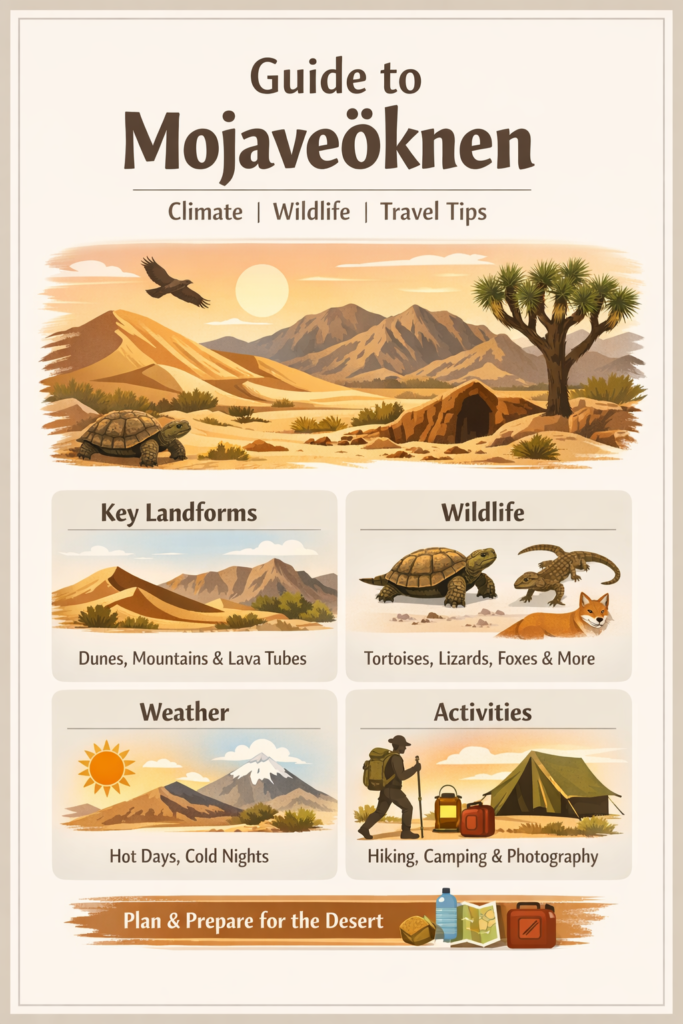
Mojaveöknen is a vast and striking desert in the southwestern United States, known for its dramatic landscapes, Joshua trees, dunes, wildlife, and changing climate. Is it not just a dry пуст? region, but a rich natural area shaped by elevation, weather, and survival. This guide gives you the essential things to know before visiting or learning about the Mojave Desert.
- Quick Overview of Mojaveöknen
- What Is Mojaveöknen?
- Geography of Mojaveöknen
- A desert of basins and mountain ranges
- Where is Mojaveöknen located?
- Why geography matters to visitors
- Climate and Weather in Mojaveöknen
- A genuine desert climate
- Summer in the Mojave
- Winter in the Mojave
- Best seasons to visit
- Why weather change by elevation
- Landscapes and Landforms of Mojaveöknen
- 1. dunes
- 2. Lava formations and lava tubes
- 3. Mountains and rocky ridges
- 4. Dry basins and salt flats
- 5. Canyons and narrow rock corridors
- Main Attractions in Mojaveöknen
- Kelso Dunes
- Lava Tube
- Teutonia Peak
- Rings Loop
- Hole-in-the-Wall
- Best Things to Do in Mojaveöknen
- Hiking
- Camping
- Scenic drives
- Photography
- Wildlife watching
- Learning geology and history
- Plants and Flora of Mojaveöknen
- Joshua trees
- Creosote bush
- Cactus and yucca species
- Pinyon-juniper woodlands
- Desert wildflowers
- Why plants survive here
- Wildlife and Fauna in Mojaveöknen
- Birds
- Lizards and reptiles
- Desert tortoise
- Mammals
- Why is wildlife hard to see
- Human History and Culture of Mojaveöknen
- Indigenous history
- Trade and travel routes
- European exploration and later transformation
- Why history matters to visitors
- Safety and Survival Tips for Mojaveöknen
- Water is the first rule.
- Protect yourself from the sun.
- Start early
- Know your route
- Fill your fuel tank first.t
- Check road conditions
- Respect the weather
- Stay on roads and trails.s
- Travel Tips for First-Time Visitors
- A practical first trip plan
- Keep the day realistic.
- Best time of day
- Best mindset
- Camping in Mojaveöknen
- Why camp here?
- Common camping areas
- What to remember
- Cam. ping safety tips
- Best Time to Visit Mojaveöknen
- Spring
- Fall
- Winter
- Summer
- Best overall choice
- Sample Itinerary for Mojaveöknen
- One-day trip
- Two-day trip
- Family-friendly version, short scenic driveLava Tubeeasy photo stopspicnic-style dayno overly long hikes
- Adventure-focused version
- Interesting Facts About Mojaveöknen
- Environmental Issues and Conservation
- Main conservation concerns
- Why conservation matters
- How visitors can help: Stay on roads and marked trailsDo not disturb wildlifeCarry out all trashavoid damaging plants or burrowsRespect camp and fire rulesTravel carefully and intentionally
- Pros and Cons
- Pros
- Cons
- FAQs
- Conclusion
Quick Overview of Mojaveöknen
| Topic | Simple Explanation | Why It Matters |
| Desert type | High desert with major elevation changes | Weather and scenery can shift quickly |
| Size | A vast regional desert | It is much larger than a single park or town |
| Main gateway | Mojave National Preserve | A strong starting point for first-time visitors |
| Common landforms | Dunes, lava tubes, mountains, basins, salt flats | These create the region’s dramatic beauty |
| Travel reality | Few services, long distances, rough roads | Planning is essential |
What Is Mojaveöknen?
Mojaveöknen is the Swedish form of the name Mojave Desert. It refers to a large arid region in the southwestern United States, stretching across parts of California, Nevada, Arizona, and Utah. The Mojave is known for its hot summers, cold winter nights in some places, extremely low rainfall, and expansive open terrain.
Yet the most important thing to understand about the Mojave is that it is not defined only by dryness. It is defined by diversity.
This is often called a high desert because many parts lie at elevations higher than people expect. That elevation changes the feel of the landscape. Some places are lower, flatter, and hotter. Others are higher, cooler, windier, and more likely to support juniper, pinyon pine, or other transitional vegetation. As a result, the Mojave is not one uniform setting. It is a mosaic of ecological zones and visual moods.
The desert also functions as a living ecosystem. It supports creosote bush, Joshua trees, wildflowers, lizards, birds, foxes, desert tortoises, and many other species that have evolved to survive with very little water. The land may appear harsh at first glance, but that hardness hides a remarkably intricate natural network.
Geography of Mojaveöknen
A desert of basins and mountain ranges
The Mojave Desert is shaped by what geographers call a basin-and-range landscape. In simple terms, this means long mountain chains rise beside broad, low-lying basins. Instead of one flat plain, the region forms a repeating pattern of uplift and depression. That topography gives the Mojave its strong sense of scale and drama.
Travelers notice this immediately. A route may begin in a Joshua tree valley, then climb through rocky foothills, then descend into a wide dry wash, and then open into a field of dunes or salt flats. The landscape feels layered, almost cinematic. Each shift in terrain creates a new visual experience.
Where is Mojaveöknen located?
Most of the Mojave lies in southeastern California and southwestern Nevada, with smaller portions reaching into Arizona and Utah. It sits between larger mountain systems and adjoining desert regions, so its edges gradually blend rather than end abruptly. That transitional quality is part of what makes it so ecologically interesting.
Why geography matters to visitors
Geography is not only a map detail. It shapes every part of the desert experience:
the weather you encounter
the plants you see
The animals you may spot
the type of road or vehicle you need
the spacing between attractions
The amount of water and fuel you should carry
Understanding the geography first makes everything else easier to interpret.
Climate and Weather in Mojaveöknen
A genuine desert climate
The Mojave has an arid desert climate with very low annual precipitation. In many places, rainfall is sparse, and the air remains dry for much of the year. Sunlight is often intense, skies are usually clear, and evaporation happens quickly.
Still, the climate is not as simple as “hot and dry.” One of the defining traits of Mojaveöknen is its temperature volatility. Daytime heat can be severe, yet nighttime temperatures may fall sharply, especially in winter or at higher elevations. In some regions, frost, strong wind, and occasional snow are part of the seasonal pattern.
Summer in the Mojave
Summer is the most demanding season for visitors. Lower elevations may become dangerously hot, and exposed hikes can quickly turn into safety risks. Heat exhaustion and dehydration are real concerns, especially for travelers who underestimate the desert environment.
If you visit during summer, the best strategy is to move early, rest often, and avoid long hikes in the brightest and hottest part of the day. Higher elevations are generally more manageable than low basins in peak heat.
Winter in the Mojave
Winter can be peaceful and beautiful, but it should not be mistaken for a warm season everywhere. Some parts of the Mojave Experience freezing temperatures at night, brisk winds, and icy mornings. Higher terrain may even receive snow. That is why the word “desert” should never be equated with constant warmth.
Best seasons to visit
The most comfortable and rewarding seasons are usually:
spring
fall
These periods often provide the best balance of pleasant temperatures, good light, and manageable hiking conditions. Spring may also bring wildflowers if rainfall and temperature patterns align favorably.
Why weather change by elevation
Elevation is one of the most important variables in the Mojave. Lower ground is typically hotter and drier. Higher areas may be cooler, breezier, and more supportive of different plant communities. That is why two destinations only a short drive apart can feel completely different.
Landscapes and Landforms of Mojaveöknen
One of the desert’s greatest strengths is its visual diversity. Mojaveöknen is not one landscape. It is many landscapes woven together.
1. dunes
The Mojave includes several iconic dune fields. The best known is Kelso Dunes, one of the most recognizable natural landmarks in the region. These dunes are not static piles of sand. Wind continuously shapes their form, producing slopes, ridges, and changing contours. Under the right conditions, they can even emit a booming sound when the sand shifts.
2. Lava formations and lava tubes
The desert also carries evidence of volcanic history. The Lava Tube is one of the most memorable examples, offering a tunnel-like underground passage formed by ancient lava flow. It provides a completely different atmosphere from the open desert above, making it a favorite stop for curious travelers.
3. Mountains and rocky ridges
Mountain ranges rise throughout the Mojave, creating dramatic contrasts with the flat basins below. These ridges produce long views, strong shadows, and dramatic sunset silhouettes. Hikes like Teutonia Peak show how rocky terrain and Joshua tree habitat can combine into a single memorable desert experience.
4. Dry basins and salt flats
Some Mojave landscapes appear pale, level, and almost featureless from a distance. These are often dry basins or salt flats. They are more than empty surfaces. They reveal older hydrological patterns and help tell the story of how water once moved across the region.
5. Canyons and narrow rock corridors
Places such as Rings Loop and Hole-in-the-Wall show the sculpted side of the Mojave. These are not broad open spaces. They are passageways of stone, shadow, and texture. Narrow canyons, weathered walls, and tight corridors create a sense of movement and adventure that contrasts sharply with the open dunes.
Main Attractions in Mojaveöknen
If you are planning a meaningful itinerary, these are the destinations that deserve the most attention.
Kelso Dunes
Kelso Dunes are one of the signature sights of the Mojave. The hike becomes more rewarding with every step because the perspective expands as you climb. The dunes feel expansive, quiet, and almost elemental. They are especially appealing in the soft light of early morning or late afternoon, when the textures become more vivid and the shadows more pronounced.
Why people love it:
huge sandscape
striking views
memorable hike
possible booming sand sound
wildflowers in good seasons
Lava Tube
The Lava Tube is a compact but exciting stop. It is especially attractive for visitors who want something unusual rather than a conventional trail. The space feels hidden and atmospheric, almost like a secret chamber carved into the earth. A flashlight is helpful, and the approach roads may be rough in places, so it is wise to plan.
Why people love it:
unique geology
family-friendly adventure
short hike
easy to combine with nearby stops
Teutonia Peak
Teutonia Peak is one of the best hikes for first-time visitors. It offers wide views, a strong desert atmosphere, and a classic Joshua tree setting. The route is manageable without being boring, and it provides an excellent introduction to the visual identity of the Mojave.
Why people love it:
Joshua trees everywhere
broad scenic views
excellent sunset light
classic Mojave character
Rings Loop
Rings Loop is a short but memorable hike known for the metal rings that help hikers navigate a narrow canyon section. The route feels playful, a little adventurous, and highly distinctive. It is the kind of trail that stays in your memory because it offers both movement and novelty.
Why people love it:
unique climbing feature
narrow canyon walls
short and engaging
strong adventure feeling
Hole-in-the-Wall
Hole-in-the-Wall is both a destination and a practical base area. It offers trail access, camping opportunities, and the classic Mojave environment in a concentrated form. It is ideal for visitors who want to stay longer and explore more than one route or viewpoint.
Why people love it:
good camping access
desert scenery
trail network
useful base for exploration
Best Things to Do in Mojaveöknen
The Mojave is not just for observing. It is a place to experience actively.
Hiking
Hiking is one of the best ways to understand the desert. On foot, you notice details that would disappear from a vehicle: the scent of the air, the texture of the soil, the shape of the rocks, the movement of shadows, and the subtle signs of life. Some Mojave hikes are short and accessible, while others require careful planning and more physical effort.
Camping
Camping is one of the most powerful ways to connect with the desert. At night, the sky often feels enormous and full of stars. The silence deepens. Temperatures fall. The land feels even more expansive than it did by day. Camping, however, works best when you arrive prepared for cold nights and limited services.
Scenic drives
A road trip is one of the easiest and most effective ways to explore the Mojave. Scenic corridors like Cima Road offer long views, wide horizons, and abundant Joshua tree scenery. Driving is especially useful for families, photographers, and visitors with limited time.
Photography
The Mojave is highly photogenic. Dunes, rocks, trees, shadows, sunrise color, sunset glow, and night skies all create compelling images. The desert rewards patience and timing. Early morning and late evening are usually the best moments for capturing depth and warmth in the landscape.
Wildlife watching
Many animals become active at dawn, dusk, or after dark. That means the best wildlife viewing often happens outside midday hours. Birds, lizards, foxes, and other species are more likely to appear when temperatures are lower and the light is softer.
Learning geology and history
The desert is also a great outdoor classroom. Rock layers, dune systems, dry washes, and historic paths all contain stories. The human history of travel, trade, Indigenous movement, railroads, and settlement adds another level of meaning to the land.
Plants and Flora of Mojaveöknen
At first glance, the desert can appear nearly empty. But the plant world of the Mojave is far richer than many visitors expect.
Joshua trees
The Joshua tree is the most iconic plant of the Mojave and the symbol many people associate with the region. Its silhouette is unusual, dramatic, and unforgettable. It thrives in the conditions of this high desert and has become a defining visual element of the landscape.
Joshua trees are not only visually significant. They also provide habitat and shelter for birds and other species, making them an important ecological component of the region.
Creosote bush
The creosote bush is one of the most widespread and resilient desert plants. It is exceptionally adapted to dryness, heat, and sparse soil moisture. Its presence may seem understated, but it is one of the true workhorses of the Mojave ecosystem.
Cactus and yucca species
Cacti and yuccas appear throughout the region. These plants are drought-adapted specialists. They store water, reduce moisture loss, and survive in conditions that would challenge most vegetation. Together, they help create the classic silhouette of the desert.
Pinyon-juniper woodlands
At higher elevations, the Mojave shifts into pinyon pine and juniper habitat. This transition shows how the region functions as more than a simple hot desert. It is a biological borderland where multiple plant communities overlap.
Desert wildflowers
One of the Mojave’s most striking seasonal surprises is the appearance of wildflowers after favorable rain. Areas that seemed muted and dry can suddenly burst with color. This bloom cycle is one of the most memorable examples of desert resilience and renewal.
Why plants survive here
Desert plants survive by adapting to scarcity rather than resisting it. Their strategies include:
deep roots
water storage
leaf reduction during drought
rapid flowering after rain
waxy or spiny surfaces for protection
These adaptations explain how such a seemingly severe landscape supports a vibrant plant system.
Wildlife and Fauna in Mojaveöknen
Animal life in the Mojave is often quiet, concealed, and highly Specialized.
Birds
Birds are among the easiest creatures to observe. Many species gather around shrubs, rocky outcrops, or any place where moisture or shelter is available. Some move quickly across open sky, while others remain close to the ground and use the landscape for cover.
Lizards and reptiles
Lizards are frequently seen in warm conditions, especially near rocks, trail edges, and sunlit surfaces. Reptiles are particularly well-suited to desert environments because they can regulate their behavior around heat and dryness more efficiently than many other animals.
Desert tortoise
The desert tortoise is one of the most significant animals in the region and one of the most protected. It spends much of its life in burrows, which help it survive extreme temperatures and dehydration. The species is an important symbol of desert conservation.
Why it matters:
threatened species
slow recovery
sensitive habitat
requires careful behavior around roads and trails
Mammals
Many desert mammals are nocturnal or crepuscular, meaning they are active at night or during low-light hours. Foxes, bats, skunks, rodents, and even larger predators such as mountain lions may inhabit the region, though they usually avoid human presence and midday heat.
Why is wildlife hard to see
Many travelers assume there is little animal life because they do not spot it immediately. In reality, many species simply avoid the heat and human activity. Early morning and evening are usually the best times to observe the desert’s living community.
Human History and Culture of Mojaveöknen
The Mojave is not only a natural landscape. It is also a human landscape with a long and layered past.
Indigenous history
People have lived in and traveled through this region for thousands of years. Indigenous communities understood the land in ways that made survival possible: where to find water, how to read the terrain, when to move, which plants were useful, and how to navigate seasonal changes.
This point is essential: the Mojave was never empty land. It was inhabited, used, understood, and respected long before modern tourism existed.
Trade and travel routes
The desert served as a corridor for travel and exchange. Routes crossed the landscape long before modern roads and highways. Movement through the Mojave required deep environmental knowledge and experience, not random wandering.
European exploration and later transformation
Later periods brought exploration, railroads, military activity, settlement, and broader outside control of the land. These developments changed the desert’s human geography and left a lasting imprint on the region.
Why history matters to visitors
When you stand beside a historic trail, an old structure, or a weathered route marker, you are looking at more than scenery. You are seeing evidence of survival, migration, contact, adaptation, and change. The desert’s history enriches the travel experience and deepens the meaning of the landscape.
Safety and Survival Tips for Mojaveöknen
The Mojave is beautiful, but it is not forgiving of carelessness. Safety is not optional here.
Water is the first rule.
Always carry more water than you think you need. Desert dehydration can happen faster than many visitors expect, especially when sun, wind, exertion, and low humidity combine.
Protect yourself from the sun.
Use:
sunscreen
sunglasses
a hat
light clothing
sturdy shoes
These are not accessories. They are basic desert survival tools.
Start early
Early morning is safer, cooler, and more comfortable. It also offers the best light for photography and reduces the risk of heat stress.
Know your route
Do not depend on cell service. In the desert, GPS and mobile coverage can be unreliable or absent. Save maps ahead of time and know your route before you leave.
Fill your fuel tank first.t
Never assume you will find convenient fuel inside remote desert areas. Start with a full tank and plan conservatively.
Check road conditions
Some roads are rough, isolated, or unsuitable for ordinary vehicles. Before you set out, understand the condition of the route and the capability of your car.
Respect the weather
Heat, wind, rain, snow, and storms can all affect your trip. Desert weather can shift rapidly, especially across elevation changes.
Stay on roads and trails.s
This protects both you and the environment. Fragile soils, plants, and habitats can be damaged easily, sometimes in ways that take years to recover.
Travel Tips for First-Time Visitors
If this is your first visit to Mojaveöknen, simplicity is the smartest approach.
A practical first trip plan
Start with Cima Road for Joshua Tree scenery.
Visit Teutonia Peak for a classic hike and viewpoint.
Go to Kelso Dunes for the signature sand experience.
Add the Lava Tube for something unusual and memorable.
Stay near Hole-in-the-Wall if you want camping or broader trail access.
Keep the day realistic.
Do not try to see everything in one day. The Mojave is too large and too varied for a rushed visit. A better trip is slower, more focused, and more enjoyable.
Best time of day
Early morning and late afternoon are usually the best periods for both comfort and visual appeal. Midday can feel harsh, especially in hot months.
Best mindset
The best way to experience the Mojave is to move patiently. Let the desert set the rhythm instead of trying to force a schedule onto it.
Camping in Mojaveöknen
Camping is one of the most rewarding ways to experience the desert in full.
Why camp here?
Because the desert changes dramatically after dark. The sky becomes immense. Temperatures cool down. Sound fades. The landscape feels more expansive and more peaceful than it does during the day.
Common camping areas
Some popular camping areas include:
Hole-in-the-Wall
Mid Hills
Black Canyon
What to remember
Some campgrounds have limited water
Some areas require reservations
Amenities may be basic.
Nights can become cold quickly
Cam. ping safety tips
Bring enough water
pack warm layers
secure food and trash
Use a flashlight
arrive before dark if possible
Camping in the Mojave is deeply rewarding when handled with preparation and care.
Best Time to Visit Mojaveöknen
Spring
Spring is one of the best seasons to visit. Temperatures are often more comfortable, and wildflowers may appear if the conditions are right.
Fall
Fall is also excellent. The air tends to be more pleasant, the skies remain clear, and hiking becomes more enjoyable.
Winter
Winter can be quiet, scenic, and uncrowded, but cold nights and weather shifts remain possible.
Summer
Summer is the most challenging season. It can still be done, but only with serious planning, conservative route selection, and strict attention to hydration and timing.
Best overall choice
Spring or fall is usually the best overall answer.
Sample Itinerary for Mojaveöknen
One-day trip
Morning: Drive through Joshua Tree country and stop at scenic viewpoints.
Late morning: Hike Teutonia Peak.
Afternoon: Visit Kelso Dunes.
Evening: Enjoy the sunset and return before dark.
Two-day trip
Day 1: Cima Road, Teutonia Peak, Kelso Dunes, sunset photography.
Day 2: Lava Tube, Rings Loop, Hole-in-the-Wall, camping or continued exploration.
Family-friendly version, short scenic drive
Lava Tube
easy photo stops
picnic-style day
no overly long hikes
Adventure-focused version
sunrise start
longer hikes
dunes
canyon routes
camping under the stars
Interesting Facts About Mojaveöknen
The Mojave is a high desert, so it is not all low, hot terrain.
The region has a long and layered human history, not just a modern tourism story.
Joshua trees are one of the strongest visual symbols of the desert.
Kelso Dunes can sometimes produce a booming sound.
The desert tortoise spends much of its life underground in burrows.
Elevation changes make the Mojave feel different from one area to another.
The desert can bloom with wildflowers after the right rain.
Environmental Issues and Conservation
The Mojave is fragile. Its surface may appear tough, but it does not recover quickly from disturbance.
Main conservation concerns
habitat loss.
road damage
off-road disturbance
climate stress
wildlife decline
water pressure
Why conservation matters
Species such as the desert tortoise depend on stable habitat. Plants need time to recover after damage. Soil crusts and fragile ground surfaces can be harmed very easily. Even a small footprint can leave a long-lasting mark in the desert.
How visitors can help: Stay on roads and marked trails
Do not disturb wildlife
Carry out all trash
avoid damaging plants or burrows
Respect camp and fire rules
Travel carefully and intentionally
The desert needs visitors who appreciate it without harming it.
Pros and Cons
Pros
huge scenic variety
strong Joshua tree landscapes
excellent hiking and camping
beautiful photography opportunities
powerful sense of silence and space
Cons
limited services
rough roads in some areas
extreme weather
long distances between stops
unreliable cell coverage
FAQs
Yes. Mojaveöknen is the Swedish name for the Mojave Desert in the southwestern United States.
Spring and fall are usually the best times because the weather is more comfortable.
Carry at least one gallon per person per day. If you are hiking or cycling, carry more.
Do not depend on it. Cell service can be weak or missing in many places.
Start with Kelso Dunes, Teutonia Peak, the Lava Tube, Rings Loop, and Hole-in-the-Wall.
Yes. Camping is one of the best ways to experience the desert, as long as you come prepared.
Yes. The Mojave has birds, lizards, mammals, reptiles, insects, and the desert tortoise.
Conclusion
Mojaveöknen is a beautiful desert filled with unique landscapes, wildlife, and outdoor experiences. With the right planning, it can be a Rewarding place to explore, camp, and photograph. Respect the land, prepare well, and the Mojave will leave a lasting impression.