
Introduction
The Mojave Desert, also called the Mohave Desert, is a vast and fascinating desert region in North America. It is known for its dry climate, Joshua trees, salt flats, rugged mountains, and unique wildlife. This desert is more than a dry landscape—it is a living ecosystem shaped by weather, geology, and adaptation.
- Mojave Desert at a Glance
- What Is the Mojave Desert?
- Where Is the Mojave Desert Located?
- Which States Does the Mojave Desert Cover?
- Why the Mojave Desert Matters on a Map
- Why Is the Mojave Desert So Dry?
- Mojave Desert Climate and Weather
- Climate Highlights
- Why Day-Night Temperature Differences Matter
- Mojave Desert Landscape and Map-Style Geography
- 1. Basins and Valleys
- 2. Mountain Ranges
- 3. Salt Flats and Dry Lakes
- 4. Dunes and Rocky Terrain
- 5. The Mojave River
- Major Places in the Mojave Desert
- Death Valley National Park
- Joshua Tree National Park
- Mojave National Preserve
- Plants of the Mojave Desert
- Joshua Trees: The Signature Species
- Creosote Bush and Other Desert Shrubs
- Animals of the Mojave Desert
- Desert Tortoise
- Bighorn Sheep
- Coyotes and Foxes
- Jackrabbits and Kangaroo Rats
- Reptiles and Small Wildlife
- Birds, Reptiles, and Smaller Wildlife in the Mojave
- Human History and Culture in the Mojave Desert
- A 10,000-Year Human Story
- Mining, Ranching, Recreation, and Military Use
- Travel Highlights in the Mojave Desert
- Joshua Tree National Park
- Death Valley National Park
- Mojave National Preserve
- Travel Safety Tips for the Mojave Desert
- Interesting Facts About the Mojave Desert
- 1. It has extreme elevation differences
- 2. It is part of a larger North American desert system
- 3. It contains iconic protected places
- 4. It supports rich biodiversity
- 5. It has a deep cultural history
- Environmental Issues and Conservation
- Habitat Disturbance
- Climate Stress
- Wildlife Pressure
- Water Scarcity
- Why Conservation Matters
- Pros and Cons of the Mojave Desert
- Pros
- Cons
- FAQs
- Conclusion
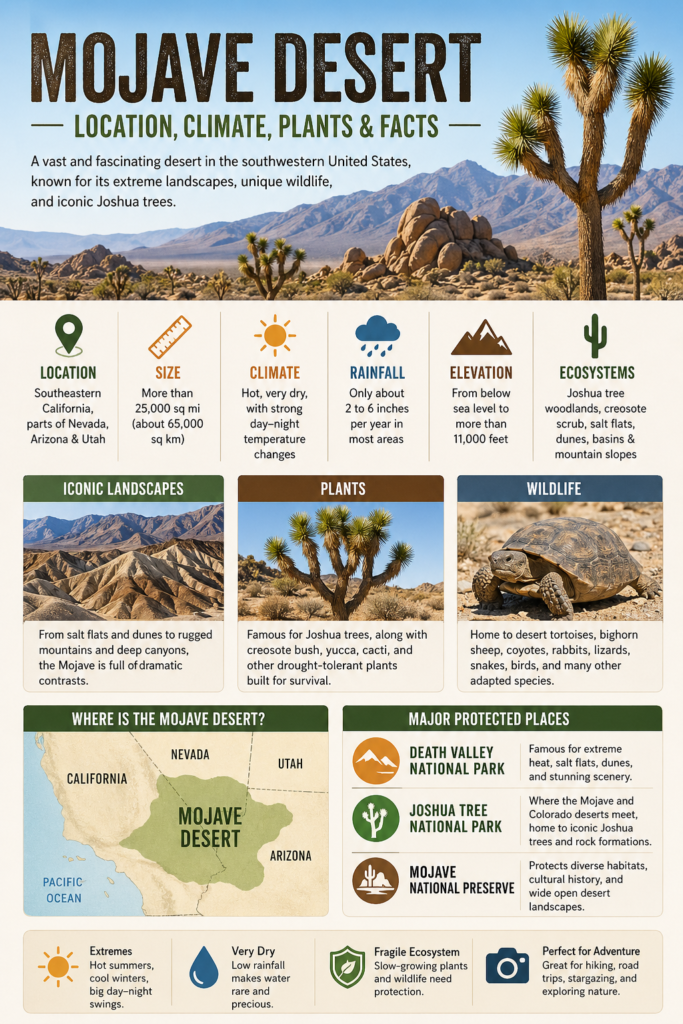
Mojave Desert at a Glance
| Topic | Quick answer |
| Location | Southeastern California, plus parts of Nevada, Arizona, and Utah |
| Size | More than 25,000 square miles, or about 65,000 square kilometers |
| Climate | Hot, very dry, and marked by strong day-night temperature changes |
| Rainfall | Much of the desert receives only about 2 to 6 inches a year |
| Elevation | From below sea level in Death Valley to more than 11,000 feet at Telescope Peak |
| Major ecosystems | Joshua tree woodlands, creosote scrub, salt flats, dunes, basins, and mountain slopes |
| Major protected places | Mojave National Preserve, Joshua Tree National Park, and Death Valley National Park |
| Biodiversity | The region supports a wide range of plants and animals, with many adapted species and endemic plants |
What Is the Mojave Desert?
The Mojave Desert is a major desert region in the southwestern United States. It belongs to the broader North American desert system and is one of the clearest examples of a hot desert environment shaped by rain shadow effects, low precipitation, and large temperature swings.
The name Mojave comes from the Mojave people. The alternate spelling Mohave is also used. That spelling variation is one reason search traffic often splits between “Mojave Desert” and “Mohave Desert,” even though both refer to the same geographical region.
What makes the Mojave stand out is not just its dryness. It is the combination of desert openness, dramatic topography, iconic plants, extreme weather, and ecological specialization. It includes basins, mountain ranges, dry channels, salt pans, volcanic features, dunes, and plant communities that are adapted to minimal water. Some parts are wide and open; others feel rugged, steep, and remote. Some places are low enough to be intensely hot. Other places rise high enough to support cooler conditions and different biological communities.
That diversity gives the Mojave a layered identity. It is a desert, but not a single uniform landscape. It is a region of contrast.
Where Is the Mojave Desert Located?
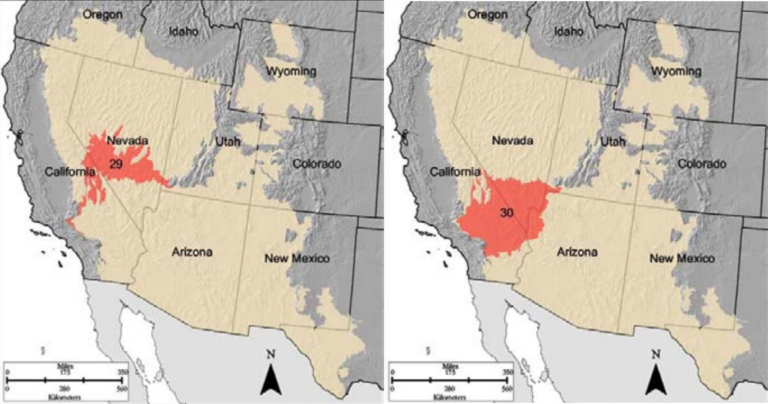
The Mojave Desert lies in the southwestern United States, mainly in southeastern California, with additional areas extending into Nevada, Arizona, and Utah. In map terms, it sits between important mountain and plateau systems and transitions into other desert regions at its edges.
A simple way to picture it is this: the Mojave occupies a large section of the interior Southwest, west of the Colorado Plateau and east of the Sierra Nevada influence, while also connecting to surrounding desert systems. It blends into the Great Basin to the north and the Sonoran Desert to the south and southeast.
This location matters because deserts are not random. They form in relation to large-scale atmospheric circulation, mountain barriers, distance from coastal moisture, and elevation. The Mojave is positioned in a place where dry air often Dominates, and incoming moisture is reduced by mountain ranges. As a result, the landscape receives little rainfall and remains persistently arid.
The desert’s location also explains why it includes both low valleys and very high peaks. The region is large enough to contain major local differences, and those differences create microclimates, habitat zones, and varied scenery.
Which States Does the Mojave Desert Cover?
The Mojave Desert spans parts of four U.S. states:
California
Nevada
Arizona
Utah
California contains the largest share, especially in the southeastern part of the state. Many of the desert’s best-known parks, preserves, roads, and scenic areas are in California, but the desert system itself does not stop at the state line. It spreads across state borders as a connected ecological and geographic region.
That is why the Mojave is often described as a regional desert rather than a state-specific one. It is defined by landscape and climate, not by political boundaries.
Why the Mojave Desert Matters on a Map
When people search for a “Mojave Desert map,” they are usually looking for more than a simple outline. They want to understand how the desert fits into the Southwest, where it sits relative to famous natural landmarks, and how to interpret its geography.
The Mojave matters on a map for several reasons:
It includes well-known protected areas such as Death Valley National Park, Joshua Tree National Park, and Mojave National Preserve. It links mountain ranges, basins, and dry valleys into one vast desert region, with conditions ranging from extremely hot lowlands to cooler high-elevation zones. This helps explain the wider pattern of North American deserts.
In practical terms, the map of the Mojave is a map of transitions. It marks where elevation changes, where water disappears underground, where rock meets sand, where salt flats form, and where desert vegetation becomes sparse or more concentrated.
Why Is the Mojave Desert So Dry?
The Mojave Desert is so dry because mountain barriers block much of the moisture that would otherwise reach it. This is a classic rain shadow pattern. When air masses move across mountain ranges, they rise, cool, and lose moisture on the windward side. By the time the air reaches the desert, it is much drier.
The Sierra Nevada is one of the most important influences in this process, but it is not the only one. Other surrounding mountain systems also help reduce incoming moisture. The result is a desert climate with very low annual precipitation.
In many parts of the Mojave, rainfall is only about 2 to 6 inches per year. That is a tiny amount of water for such a large region, and it explains why the desert vegetation is sparse, slow-growing, and highly specialized.
Dryness in the Mojave is not only about a lack of rainfall. It is also about evaporation, solar intensity, low humidity, and the way water behaves on the landscape. When rain does fall, it may arrive in brief storms, run off quickly, soak into dry soils, or evaporate before it can build lasting surface water. That means even rare precipitation does not always translate into abundant moisture for plants and animals.
So when someone asks why the Mojave is so dry, the answer is not a single factor. It is a combination of topography, atmospheric circulation, elevation, evaporation, and geographic position.
Mojave Desert Climate and Weather
The Mojave Desert has a hot desert climate, but that phrase does not fully capture the complexity of its weather. The region is known for:
very hot summers
cool to cold winters in many places
strong day-night temperature swings
low humidity
frequent drought conditions
occasional winter frost
Snow at higher elevations
This climate creates a landscape of extremes. A person can experience intense daytime heat and then a sharply cooler night. In winter, some parts of the desert may feel brisk or even frosty, especially in elevated terrain. At the same time, lower basins can remain dry, bright, and warm.
The weather pattern is important because many desert visitors imagine a desert as uniformly hot. The Mojave proves otherwise. It is a place where altitude changes everything. The lower the basin, the more severe the heat can become. The higher the mountain slope, the more the temperature can soften or drop dramatically at night.
This is one reason the Mojave supports different ecological zones. Temperature affects water retention, soil behavior, seed germination, and animal movement. The climate is not simply background information; it is a driving force behind the entire desert ecosystem.
Climate Highlights
The Mojave’s climate can be summarized this way:
Low rainfall across much of the region
Long, hot summers
Cool or cold winters in many areas
Large temperature range between day and night
Snow on high mountains while valleys remain dry
Strong solar exposure and rapid evaporation
Why Day-Night Temperature Differences Matter
The daily temperature swing is one of the defining characteristics of the Mojave. During the day, open surfaces absorb heat quickly. At night, that heat escapes, and temperatures can fall fast. This makes the desert feel thermally intense and physically demanding.
For plants, this means survival strategies matter. For animals, it means timing matters. Many desert species are nocturnal, crepuscular, or otherwise adapted to avoid the hottest hours. The climate shapes behavior as much as it shapes scenery.
Mojave Desert Landscape and Map-Style Geography
The Mojave is best understood as a basin-and-range desert. That means it is made up of alternating mountain ranges and low basins rather than one continuous flat plain.
The landscape includes:
dry valleys
alluvial fans
rocky slopes
salt flats
dune fields
lava flows
canyon systems
desert pavement
underground water routes
intermittent washes and dry channels
This mix gives the Mojave a strong visual identity. It is open, but not simple. It may look bare from a distance, yet it contains a complex structure that becomes visible once you travel through it.
1. Basins and Valleys
The basins are the low-lying sections between mountain blocks. Some basins are broad and dusty. Others hold ancient lakebeds or salt flats. These areas often receive runoff from the surrounding highlands but may not retain surface water for long.
2. Mountain Ranges
Mountain ranges give the Mojave its shape and altitude diversity. These higher zones can produce slightly different temperatures, soils, wind patterns, and vegetation communities. Some mountains even hold snow while the nearby valley floor stays dry and scorching.
3. Salt Flats and Dry Lakes
Salt flats are among the most distinctive Mojave features. They form where water once gathered or still accumulates temporarily after storms. As the water evaporates, minerals remain behind. Over time, this creates bright, flat, often reflective surfaces that feel both empty and geologically rich.
4. Dunes and Rocky Terrain
Although the Mojave is not defined only by dunes, it does include dune systems. Other areas are dominated by gravel, boulders, exposed bedrock, and desert pavement. This variety is one reason the landscape supports multiple habitat types rather than a single vegetation pattern.
5. The Mojave River
The Mojave River is a key part of the desert’s hidden hydrology. Much of the time, it flows underground rather than as a visible surface river. That underground movement is a reminder that desert water systems are often concealed, intermittent, or seasonal rather than obvious and permanent.
The Mojave River helps shape local ecology, soil moisture, and historical travel routes. Even in a dry environment, water remains the central organizing force.
Major Places in the Mojave Desert
The Mojave Desert includes several world-famous protected areas that help define the region for the public. These destinations are essential to the Mojave story because they show different faces of the desert.
Death Valley National Park
Death Valley is one of the most iconic parts of the Mojave. It is famous for extreme heat, very low elevation, salt flats, canyons, dunes, and stark mountain backdrops. It is one of the clearest examples of desert extremity in North America.
But Death Valley is not just a symbol of harshness. It is also a living landscape with oases, wildlife, rare blooms after rainfall, and remarkable geological variety. Its importance lies in contrast: the valley floor is severe, while the surrounding ranges reveal how elevation changes the entire desert experience.
The area is also historically significant and continues to be one of the strongest examples of how desert environments can be both dangerous and beautiful.
Joshua Tree National Park
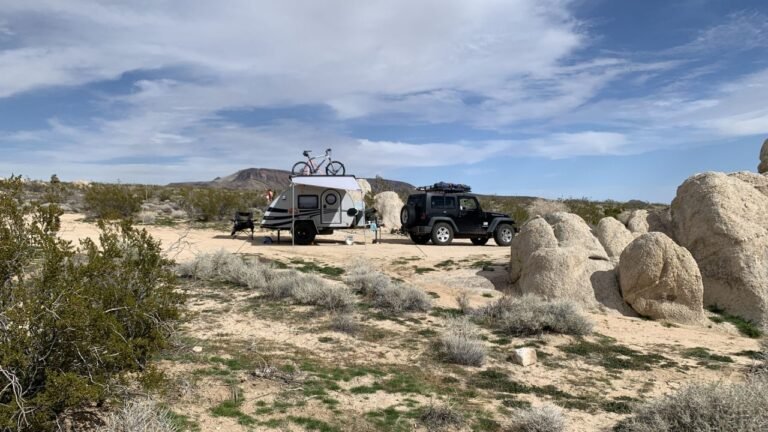
Joshua Tree National Park sits at the meeting point of two desert ecosystems: the Mojave and the Colorado. That ecological junction is part of what makes it so famous. The park is known for its boulder formations, dramatic night skies, strong winds, cultural history, and, of course, Joshua trees.
For many people, Joshua Tree is the visual shorthand for the Mojave Desert. The park is highly useful for understanding the region because it integrates geology, botany, ecology, and recreation into a single landscape.
Mojave National Preserve
Mojave National Preserve is especially valuable for understanding the desert as a connected system. It protects a wide array of habitats, landforms, and cultural resources. It also preserves a long history of human connection to the desert, including travel routes, traces of settlement, historical use, and modern conservation.
The preserve shows that the Mojave is not just scenery. It is a place with layered meaning: ecological, archaeological, recreational, and educational.
Plants of the Mojave Desert
The Mojave Desert does not support lush forests or thick grasslands over most of its area, but it does have a highly specialized plant community. These plants are not random survivors. They are adaptations in living form.
Common Mojave desert vegetation includes:
Joshua tree
creosote bush
Mojave yucca
blackbrush
shadscale
cacti in suitable areas
other drought-tolerant shrubs and perennials
These species are important because they are built for water scarcity, temperature stress, and open exposure. Many have deep root systems, grow very slowly, and reduce water loss through specialized leaf structures.
Sometimes their growth is around rare rainfall events. Others remain dormant for long periods and awaken only when conditions improve.
The plant world of the Mojave is an example of resilience through specialization. The desert may appear sparse, but each plant is part of a survival strategy shaped by climate and geology.
Joshua Trees: The Signature Species
Joshua trees are the most recognizable plant in the Mojave. Their strange shape, upright branches, and sculptural presence make them visually iconic. They have become a symbol of desert identity and an important indicator of Mojave habitat.
Joshua trees are not just famous. They are ecologically important. They depend on specific environmental conditions, and they play a role in the structure of the desert ecosystem. Because climate pressure can affect their future range and survival, they are also a conservation concern.
For many readers, Joshua trees are the emotional center of the Mojave. They make the desert feel both surreal and alive.
Creosote Bush and Other Desert Shrubs
Creosote bush is one of the Mojave’s most widespread and durable shrubs. It is associated with dry slopes, open flats, and harsh desert conditions. Blackbrush, shadscale, and Mojave yucca also contribute to the region’s vegetation mosaic, each occupying a slightly different ecological niche.
These plants are not decorative extras. They help stabilize soils, provide shelter, feed wildlife, and contribute to the overall structure of the ecosystem.
Animals of the Mojave Desert
The Mojave is rich in animal life, even though many of its species are easy to overlook. Desert animals often hide during the day, move at night, live in burrows, or rely on heat avoidance instead of constant visibility.
Common Mojave desert animals include:
desert tortoise
bighorn sheep
coyotes
black-tailed jackrabbits
desert foxes
rattlesnakes, including sidewinder rattlesnakes
chuckwallas
kangaroo rats
birds, reptiles, insects, and many small mammals
These animals have adapted in different ways. Many avoid temperature extremes, store moisture efficiently, and find protection underground, while others rely on speed, camouflage, nocturnal behavior, or efficient water extraction from food.
Desert Tortoise
The desert tortoise is one of the Mojave’s best-known species. It survives by burrowing and avoiding extreme heat. Its life cycle is tightly tied to desert conditions, which makes it especially sensitive to habitat changes.
Bighorn Sheep
Bighorn sheep are strong, agile desert mammals that can move through steep terrain and go long periods without water. They are a reminder that the Mojave is not just flat ground. Its mountains and cliffs are essential wildlife habitat.
Coyotes and Foxes
Coyotes are highly adaptable and can live across many desert environments. Desert foxes use cooler hours and sheltered spaces to manage the heat. Both show how flexible predators can be in a dry environment.
Jackrabbits and Kangaroo Rats
Black-tailed jackrabbits are common herbivores in desert systems. Kangaroo rats are especially famous for their ability to live without drinking water in the ordinary sense. These are classic examples of desert evolutionary adaptation.
Reptiles and Small Wildlife
Rattlesnakes, sidewinders, lizards, insects, and smaller mammals all play crucial roles in the food web. Many are active at night or during cooler windows of the day. Others remain underground for much of the time.
The main point is simple: the Mojave is not lifeless. It is full of species that are simply adapted to a low-water environment.
Birds, Reptiles, and Smaller Wildlife in the Mojave
Many of the Mojave’s most important animals are small, discreet, and highly specialized. Birds use thermal timing, reptiles use basking and shade, and insects often respond quickly to brief moisture pulses.
The region supports a surprising level of biodiversity because it contains multiple habitat types. A rocky slope supports different species than a dune field. A salt flat supports different organisms than a mountain wash. A riparian area or hidden water corridor creates even more ecological variation.
This is why desert biodiversity should never be judged by surface appearance alone. The Mojave may look quiet, but beneath that quiet is an active ecological network.
Human History and Culture in the Mojave Desert
The Mojave Desert has a long and meaningful human history. Indigenous communities have lived in or traveled through the region for thousands of years. Later, the desert became a setting for exploration, trade, ranching, mining, military use, scientific research, road travel, and modern tourism.
The desert is named for the Mojave people, and the alternate spelling Mohave remains recognized. That naming history matters because it connects the geography of the land to the identity of the people who have long been linked to it.
A 10,000-Year Human Story
The human story of the Mojave is ancient. It includes travel routes, habitation, resource use, and cultural knowledge that developed over millennia. This makes the region more than a scenic destination. It is also a place of archaeology, heritage, and continuity.
Mining, Ranching, Recreation, and Military Use
Like many deserts in the American West, the Mojave has been used for multiple purposes over time. These include mining, ranching, recreation, transport, and military training. Each use has left a mark on the landscape and created tension between development and preservation.
The modern challenge is balancing human activity with ecological protection. That balance is especially important in a desert, where recovery can be slow, and disturbance can last a long time.
Travel Highlights in the Mojave Desert
The Mojave is one of the best desert regions for scenic travel, photography, geology, road trips, and stargazing. Visitors are drawn to its silence, open spaces, dramatic rock forms, and large protected areas.
Joshua Tree National Park
Joshua Tree offers classic Mojave scenery. It is one of the best places to see Joshua trees in their natural context, along with massive rock formations and desert skies. It is popular with climbers, hikers, photographers, campers, and nature lovers.
Death Valley National Park
Death Valley is the place to experience the most extreme side of the Mojave. Its salt flats, dunes, canyons, badlands, and broad views make it one of the most dramatic landscapes in the United States.
Mojave National Preserve
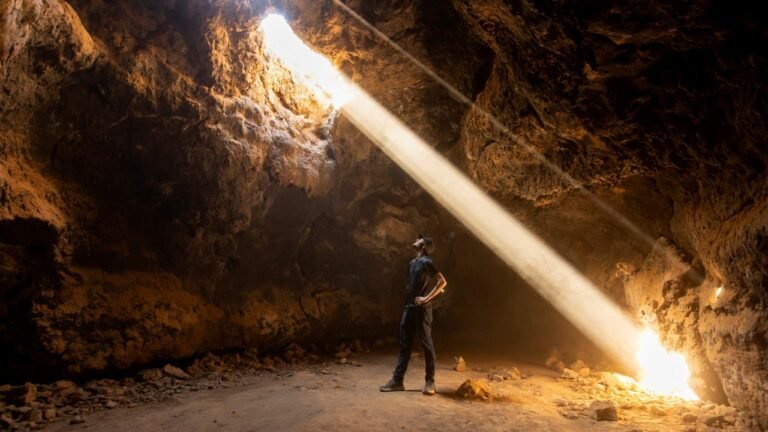
This preserve is excellent for travelers who want a quieter and more remote experience. It includes backcountry roads, rugged terrain, lava formations, dunes, and old desert routes. It is ideal for people interested in the more rugged, less developed side of the Mojave.
Travel Safety Tips for the Mojave Desert
The Mojave looks open and manageable, but it can be dangerous if visitors underestimate it. The distance between services, the intensity of the heat, and the dry climate all make preparation essential.
Important safety tips include:
Carry extra water.
Check fuel before entering remote areas.
Stay on marked roads and routes.
Avoid the hottest part of the day.
Expect cold nights, especially outside the peak of summer.
Check weather and road conditions before backcountry travel.
The reason these rules matter is simple: the desert is large, remote, and physically demanding. Heat exhaustion, dehydration, vehicle trouble, and disorientation can become serious very quickly.
The Mojave rewards careful planning. It punishes casual assumptions.
Interesting Facts About the Mojave Desert
1. It has extreme elevation differences
The Mojave reaches from below sea level in Death Valley to more than 11,000 feet at Telescope Peak. That means one desert region can include a vast range of environmental conditions.
2. It is part of a larger North American desert system
The Mojave is one of several major deserts in North America. It connects conceptually with the Sonoran, Great Basin, and Chihuahuan deserts, which together help define the continent’s arid zones.
3. It contains iconic protected places
Death Valley, Joshua Tree, and Mojave National Preserve are among the most famous desert destinations in the United States. They help define the public image of the Mojave.
4. It supports rich biodiversity
Even though the desert is dry, it contains a strong and varied ecosystem. Multiple habitat types allow a surprising number of plants and animals to coexist.
5. It has a deep cultural history
The human story of the Mojave spans thousands of years. Indigenous use, historic routes, and modern conservation all form part of the same long narrative.
Environmental Issues and Conservation
The Mojave is a fragile ecosystem because it operates on a narrow margin of water, temperature, and biological resilience. Disturbance can have long-lasting effects.
Habitat Disturbance
Road building, development, vehicle activity, and heavy foot traffic can disrupt plant cover, soil crusts, and animal movement. Since many desert systems recover slowly, even small impacts can become significant over time.
Climate Stress
Climate change is a major concern for species like Joshua trees. As temperatures shift and moisture patterns change, suitable habitat may shrink, move, or become more fragmented.
Wildlife Pressure
Species such as the desert tortoise need active monitoring and protection. Their survival depends on intact habitat, reduced disturbance, and long-term ecological planning.
Water Scarcity
Water scarcity is part of the desert’s natural character, but it also makes the ecosystem more vulnerable. Rare rain events can trigger growth and life, but long dry periods remain the norm.
Why Conservation Matters
Conservation in the Mojave is not about freezing the landscape in time. It is about maintaining ecological balance, protecting habitat, reducing unnecessary disturbance, and preserving both natural and cultural resources.
The desert is resilient, but not indestructible. Its survival depends on respect, research, and stewardship.
Pros and Cons of the Mojave Desert
Pros
The Mojave offers spectacular natural scenery, including mountains, dunes, basins, and salt flats.
It includes iconic destinations like Joshua Tree, Death Valley, and Mojave National Preserve, supports a unique and specialized ecosystem, offers strong educational value in geography, ecology, and history, and provides memorable experiences for hikers, photographers, and stargazers.
Cons
Summer heat can be severe and dangerous.
Rainfall is extremely limited.
Remote areas may have few services.
Some roads are rough or difficult to navigate.
The ecosystem is fragile and sensitive to disturbance.
FAQs
Both spellings are used. Mojave is the most common modern spelling, while Mohave is also recognized as an alternate form.
It covers parts of California, Nevada, Arizona, and Utah.
It is famous for Death Valley, Joshua trees, extreme dryness, dramatic elevation change, and its iconic desert landscapes.
Common plants include Joshua tree, creosote bush, Mojave yucca, shadscale, blackbrush, and some cacti.
Notable animals include the desert tortoise, the bighorn sheep, coyotes, jackrabbits, foxes, rattlesnakes, chukwallas, and kangaroo rats.
Conclusion
The Mojave Desert is one of the most important desert regions in North America. Its dramatic landscapes, adapted plants and animals, and rich natural history make it a Remarkable place to study and explore.