
Intoduction
Mojave National Preserve is one of the most striking desert landscapes in the American Southwest. With its dunes, lava fields, Joshua trees, canyons, and historic routes, it offers a mix of scenery, wildlife, and history that feels both remote and unforgettable. This guide covers everything you need to know, from maps and trails to camping, travel tips, and safety advice.
- What Is Mojave National Preserve?
- Mojave National Preserve Map and Location
- Where Is Mojave National Preserve Located?
- Why the Map Matters
- Geography and Landscape
- A Desert of Contrasts
- Major Landforms You Should Know
- Climate and Weather
- What the Weather Feels Like
- Best Time to Visit Mojave National Preserve
- Seasonal Travel Tips
- Flora: Plants of Mojave National Preserve
- A Desert Rich in Plant Diversity
- Joshua Trees
- Wildflowers
- Riparian Plants
- Fauna: Wildlife in Mojave National Preserve
- Animals You May See
- Birdwatching
- Reptiles
- Desert Tortoise
- Smaller Desert Life
- Geology and Land Formation
- Why the Preserve Looks So Dramatic
- Kelso Dunes
- Volcanic Features
- Lava Tube
- Ancient Rock Layers
- History and Human Story
- A Landscape People Have Used for Thousands of Years
- Indigenous History
- The Mojave Road
- Railroad History
- Ranching and Mining
- Zzyzx History
- Things to Do in Mojave National Preserve
- The Best Things to Do at a Glance
- Kelso Dunes
- Teutonia Peak
- Lava Tube
- Hole-in-the-Wall
- Zzyzx
- Best Hikes in Mojave National Preserve
- Easy Hikes
- Moderate Hikes
- Longer Trail Options
- Which Hike Should You Choose First?
- Camping in Mojave National Preserve
- Why Camping Is So Popular Here
- Developed Campgrounds
- What to Expect at Campgrounds
- Backcountry and Roadside Camping
- Camping Safety Tips
- Travel Tips for Mojave National Preserve
- Why Planning Matters
- Important Travel Tips
- Survival Tips and Safety Advice
- What Makes Mojave National Preserve Challenging?
- Top Safety Concerns
- Simple Desert Safety Rules
- Environmental Issues and Conservation
- Why Protection Matters
- Desert Tortoise Conservation
- Fire Damage
- Visitor Responsibility
- Interesting Facts About Mojave National Preserve
- Pros and Cons
- Pros
- Cons
- FAQs
- Conclusion
What Is Mojave National Preserve?
Mojave National Preserve is a vast protected desert area in southern California. It covers a large portion of the Mojave Desert and safeguards a landscape important for ecological, geological, and historical reasons. It is one of the largest units in the National Park System outside Alaska, which helps explain why it feels so open, quiet, and seemingly endless.
The preserve stands out because of its diversity. Many people picture deserts as bare, level, and lifeless. Mojave National Preserve challenges that assumption immediately. It includes dunes, rocky uplands, lava flows, valleys, springs, canyons, dry basins, and groves of Joshua trees. It also preserves a long human narrative shaped by Indigenous travel, mining, ranching, railroads, and overland routes.
That mix of natural and cultural elements is what gives the preserve such depth. You can spend one day focused on geology, another on hiking, another on wildlife viewing, and another on historical landmarks. The landscape is large enough that no single trip shows everything, which is part of the appeal. It invites return visits and deeper exploration.
Mojave National Preserve Map and Location
Where Is Mojave National Preserve Located?
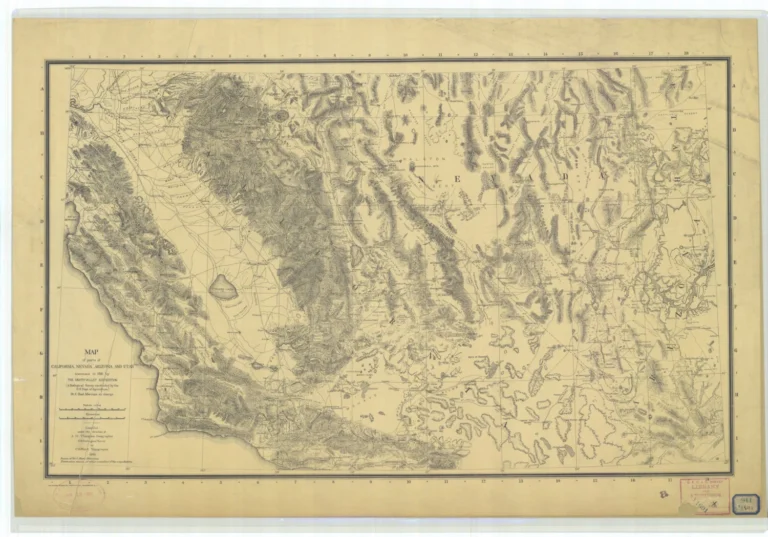
Mojave National Preserve is located in southeastern California, between Interstate 15 and Interstate 40. It is not a compact park with one entrance and one central loop. Instead, it is a broad desert region with several access roads, scenic corridors, trailheads, and points of interest spread across a wide area.
Because the preserve is so extensive, it is helpful to think of it as a network of zones rather than one single destination. Some of the most useful access areas include Kelbaker Road, Cima Road, Hole-in-the-Wall, the Kelso Depot area, Zzyzx, and the Mojave Road corridor. Each one leads to a different experience and a different style of travel.
That is why the map matters so much. A route that looks efficient on a screen may be slow, rough, or unsuitable in reality. A route that looks indirect may actually be the smoothest and safest option. When you understand the layout in advance, you can build a trip that matches your vehicle, your schedule, and your comfort level.
Why the Map Matters
The preserve is remote enough that navigation is not something to leave to chance. Some roads are paved and easy to follow, while others are graded dirt or more demanding backcountry routes. Some can be driven in a standard passenger vehicle under the right conditions. Others may require high clearance or four-wheel drive. Smartphone navigation is not always dependable in a landscape with weak connectivity and limited infrastructure.
That means a physical map or offline map is extremely useful before you enter the preserve. Once you know how the major areas connect, you can make smarter choices about where to begin, what to skip, and how much time to allow for each stop. A good map does not just prevent confusion; it improves the quality of the entire journey.
Geography and Landscape
A Desert of Contrasts
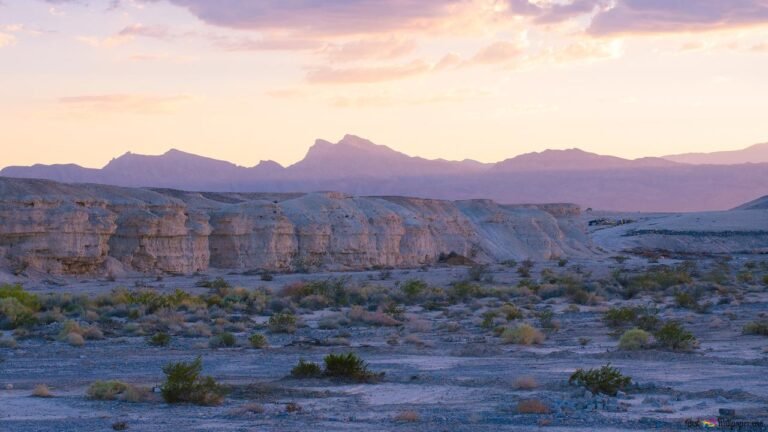
The geography of Mojave National Preserve is one of the reasons it feels so alive. It is not a flat, monotonous expanse. Instead, it contains low basins, rugged mountain slopes, volcanic ridges, sandy dune fields, dry lake beds, and washes that cut through the land in irregular patterns. Elevation shifts can be dramatic, and those changes shape temperature, vegetation, and scenery.
This variation creates multiple habitat types across the preserve, Including creosote bush scrub, Joshua tree woodland, pinyon-juniper slopes, cactus and yucca communities, riparian corridors near water, dune systems, and lava fields. Each habitat contributes something different to the experience, so the landscape never feels repetitive.
The preserve is also a place where open space feels tangible. Sky, light, and distance all play a strong role here. In the early morning and late evening, the land can feel almost painterly, with long shadows, glowing ridges, and soft colors that shift by the minute.
Major Landforms You Should Know
Kelso Dunes
The Kelso Dunes are among the preserve’s most recognizable features. They rise dramatically from the desert floor and stretch across a broad expanse of sand. Their size alone makes them striking, but they are also famous for the unusual booming sound that can occur under the right conditions when the sand shifts.
Climbing the dunes is a memorable experience. The ascent is physical, especially in heat, but the reward is a sweeping view of one of the most iconic dune fields in the region. At sunrise and sunset, the dunes can look especially dramatic, with light and shadow defining every contour.
Lava Fields and Cinder Cones
The volcanic terrain near Kelbaker Road gives the preserve a distinct and almost otherworldly character. Here, old lava flows, black rock, and cinder cones create a stark contrast with the lighter sand and shrubland elsewhere in the park. The result is a landscape that feels raw and geological, almost lunar in certain stretches.
These volcanic features are more than scenic curiosities. They are evidence of powerful ancient processes that shaped the region long before modern settlement or tourism existed. For visitors, they add a dramatic visual layer to the preserve’s natural story.
Lava Tube
The Lava Tube is one of the most memorable stops in the preserve because it shifts the experience from open desert to underground geology. Formed when molten lava cooled on the outside while continuing to flow beneath the surface, the tube is a preserved volcanic tunnel that visitors can walk into.
The transition is striking. Outside, the desert is bright, hot, and expansive. Inside, the tube is cool, dark, and enclosed. That contrast makes the site especially appealing to families, curious travelers, photographers, and anyone interested in the preserve’s geologic history.
Salt Flats and Dry Basins
Low-lying areas of the preserve can flatten into dry basins and pale, barren flats that emphasize how limited water is in this environment. These places may appear empty at first glance, but they speak volumes about the region’s hydrology and climate. They also illustrate how specialized desert ecosystems become when water is rare and highly localized.
Mountain Ranges and High Country
Higher elevations in the preserve often feel cooler and support different vegetation than lower desert floors. That variation creates a landscape that blends desert harshness with mountain atmosphere. In a single day, you can move through several ecological zones and experience markedly different conditions.
Climate and Weather
What the Weather Feels Like
The climate in Mojave National Preserve is arid, sun-drenched, and often extreme. But it is not the same everywhere. Elevation, exposure, and time of day all affect how the desert feels. Low areas can be noticeably hotter than higher ground. Winter nights can be cold, especially in elevated campgrounds. Summer sun can be intense and punishing on exposed trails.
Because of that range, timing matters. The preserve is technically visitable all year, but the experience changes significantly by season. A trip that feels pleasant in March may feel dangerous in July unless you adjust your pace, route, and expectations.
Best Time to Visit Mojave National Preserve
For most visitors, the best seasons are spring and fall. Spring is ideal for wildflowers, fresh desert color, and comfortable hiking temperatures. Fall offers similar comfort with cooler air and fewer weather extremes. Winter can be peaceful and beautiful, especially if you prefer solitude. Summer is possible, but it requires strict attention to heat, hydration, and route selection.
Seasonal Travel Tips
Spring
Spring is one of the best times to visit because temperatures are usually manageable and the landscape often looks vibrant after winter rain. This is the season when wildflowers can brighten roadsides, washes, and open desert areas. Photography is especially rewarding during this period.
Summer
Summer is the most demanding season. Heat can become serious very quickly, especially on exposed routes with little shade. Early departures, short hikes, abundant water, and conservative decision-making are essential. Midday outings should be approached with caution.
Fall
Fall is a sweet spot for many travelers. The worst heat has usually passed, but the air is still mild enough for long drives and comfortable hiking. This is a strong season for camping as well.
Winter
Winter can be remarkably serene. Crowds are lighter, the landscape feels spacious and crisp, and the night sky can be exceptional. At the same time, temperatures may drop sharply after dark, so warm layers are important.
Flora: Plants of Mojave National Preserve
A Desert Rich in Plant Diversity
The plant life in Mojave National Preserve is far more varied than many first-time visitors expect. Different elevations, soils, and moisture conditions support different plant communities, which gives the preserve a surprisingly layered botanical profile.
Common plant communities include creosote bush scrub, Joshua tree woodland, cactus and yucca scrub, pinyon-juniper woodland, desert riparian zones, and dune-associated vegetation. These plants do more than make the desert beautiful. They stabilize soil, provide shelter, support pollinators, and help the ecosystem function.
Joshua Trees
Joshua trees are the signature plant of the preserve for many visitors. Their twisting forms, spiky silhouettes, and sculptural branches make them instantly recognizable and deeply photogenic. At sunrise and sunset, they cast dramatic shadows and contribute to the desert’s distinctive visual identity.
They are also ecologically important. Joshua trees support insects, birds, and small animals, making them a central part of the habitat rather than merely an iconic image.
Wildflowers
Wildflowers are one of the great seasonal surprises of the preserve. In a good year, spring blooms can transform stretches of road and open ground into bright, colorful displays. Even in a generally dry environment, brief periods of rain can produce striking bursts of life.
Wildflowers remind visitors that deserts are not static. They respond quickly to weather patterns, and their presence can shift from year to year depending on rainfall and temperature.
Riparian Plants
Where water is present, the vegetation changes again. Springs and wetter corridors support greener, denser plant growth. These areas are vital for birds, insects, and other wildlife, and they often feel dramatically different from the drier slopes and basins elsewhere in the preserve.
Fauna: Wildlife in Mojave National Preserve
Animals You May See
Mojave National Preserve supports a diverse range of wildlife adapted to arid conditions. Some animals are easy to spot, while others remain hidden or are active mostly at night. That pattern is normal in a desert ecosystem, where avoiding heat often matters as much as finding food.
The preserve is home to many types of mammals, birds, reptiles, amphibians, fish, insects, and arachnids. The diversity may be easy to overlook at first, but once you slow down, you begin to notice signs of life everywhere.
Birdwatching
Birdwatching is one of the best low-impact activities in the preserve. Springs, riparian zones, and greener patches can attract a variety of species, especially during migration seasons. Spring and fall are particularly favorable for birding.
Places with water or dense vegetation, such as Zzyzx, often become birding hotspots because they provide rare desert resources that many species need for resting and feeding.
Reptiles
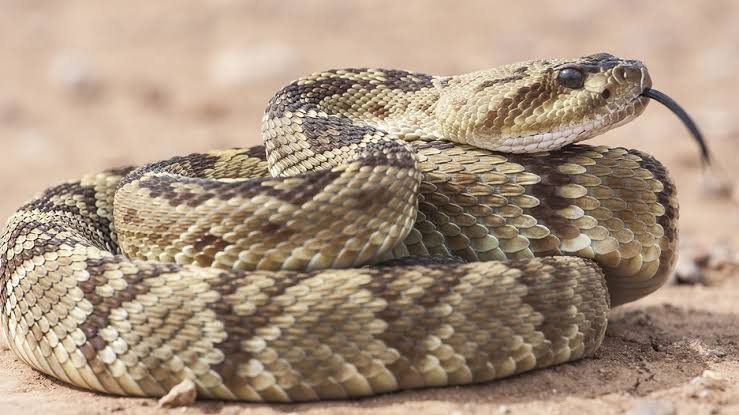
Reptiles are a major part of desert life in the preserve. Lizards, snakes, and other sun-loving species are part of the ecosystem, even if they are not always easy to observe. They often move quickly and stay near cover, which makes spotting them a rewarding surprise.
Desert Tortoise
The desert tortoise is one of the preserve’s most important wildlife species. It is also one of the most vulnerable. Visitors rarely see it because it spends much of its time in burrows or hidden from the heat. If you do see one, keep your distance and do not attempt to touch, pick up, or relocate it. Observing it respectfully is the best way to protect it.
Smaller Desert Life
The preserve is also full of smaller life forms such as insects, spiders, beetles, and other invertebrates. These creatures often go unnoticed, but they play major ecological roles. Pollination, decomposition, and food-web support all depend on them. A close look at the ground, flowers, or shrubs often reveals a surprisingly active miniature world.
Geology and Land Formation
Why the Preserve Looks So Dramatic
The geology of Mojave National Preserve is one of its greatest strengths. The land has been shaped over immense spans of time by volcanic activity, uplift, erosion, wind, and shifting environmental conditions. What visitors see today is the result of countless geological processes unfolding across millions of years.
That deep time is part of the experience. The preserve does not just look old; it feels old. Its cliffs, dunes, lava, and basins all seem to carry evidence of a long and dynamic history.
Kelso Dunes
The Kelso Dunes are a major example of wind-built geology. Sand carried by the wind accumulated into a massive dune field over time, creating one of the most impressive sand formations in the region. The dunes are both beautiful and educational, showing how powerfully wind can shape a landscape.
Volcanic Features
Volcanic features are another defining element of the preserve. Cinder cones, hardened lava flows, and volcanic rock stretches create a rugged terrain that contrasts sharply with the sandy and shrub-filled portions of the park. These features add both visual drama and scientific interest.
Lava Tube
The Lava Tube is especially valuable because it gives visitors direct access to a rare geologic feature. It offers an immediate, bodily experience of how volcanic processes shaped the preserve. Walking through it helps make abstract geologic history feel real and physical.
Ancient Rock Layers
Some of the rocks in the preserve are extremely old and tell stories from deep geological time. That makes the area important not only as a scenic destination but also as a site of scientific significance. Researchers study these formations to better understand the changing history of the region.
History and Human Story
A Landscape People Have Used for Thousands of Years
Mojave National Preserve is not just a natural landscape. It is also a cultural one. People have lived in, crossed through, and relied on this desert for thousands of years. The preserve preserves traces of those relationships in routes, structures, place names, and historic corridors.
Indigenous History
Indigenous peoples were the original inhabitants and travelers of this land. They understood the desert in ways modern visitors often overlook: where water could be found, how to move safely through difficult terrain, and how to live with seasonal change. Their presence is foundational to the preserve’s story and should always be recognized as such.
The Mojave Road
The Mojave Road is one of the most important historic travel routes in the preserve. It reflects the challenge of crossing a harsh, resource-scarce environment before modern highways and navigation tools existed. Today, it remains a powerful symbol of desert movement and endurance.
Railroad History
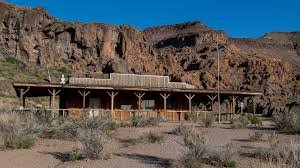
Railroads played a significant role in the preserve’s development, especially around Kelso. The Kelso Depot became a major point of service and transportation, and it remains one of the most recognizable historic sites in the area. It helps tell the story of commerce, travel, and settlement in the desert.
Ranching and Mining
Ranching and mining were also central to the region’s human history. In a place where water is limited, springs and routes mattered enormously. People depended on the land for survival, labor, transport, and commerce, and those uses left lasting marks on the landscape.
Zzyzx History
Zzyzx is one of the most unusual and memorable names in the preserve, and its history is just as unusual. Over time, it has served different purposes, evolving from earlier uses into a modern site associated with education, ecology, birdlife, and desert history. It is one of those places that stays in memory because it feels so distinct.
Things to Do in Mojave National Preserve
The Best Things to Do at a Glance
Here is a simple overview of some of the best activities and stops in Mojave National Preserve:
| Stop / Activity | Best For | Why It Stands Out |
| Kelso Dunes | Big views, sand hiking | Iconic dune field and classic desert scenery |
| Teutonia Peak | Joshua trees, views | Strong short hike with excellent payoff |
| Lava Tube | Geology, adventure | Unique underground volcanic tunnel |
| Hole-in-the-Wall | Camping, hiking | Great base for trails and desert exploration |
| Zzyzx | Birding, history | Water, wildlife, and unusual desert history |
Kelso Dunes
Kelso Dunes are among the most popular destinations in the preserve. The trail is memorable because the scale of the landscape feels enormous and open. The hike can be strenuous, especially in the heat, but the feeling of standing on the dunes and looking across the desert is worth the effort.
Teutonia Peak
Teutonia Peak is an excellent option if you want Joshua tree scenery and a hike that is shorter than some of the preserve’s larger routes. The trail combines views, texture, and a strong sense of the desert’s shape and structure.
Lava Tube
The Lava Tube is an ideal stop for anyone looking for something unusual and memorable. It offers a rare underground perspective on the preserve’s volcanic past and adds variety to a trip that might otherwise be dominated by open desert.
Hole-in-the-Wall
Hole-in-the-Wall is one of the most practical and rewarding areas for visitors who want both hiking and camping. It serves as a useful base for exploration and gives access to several trail options in one area.
Zzyzx
Zzyzx is a fascinating stop because it brings together history, water, and birdwatching. It feels different from the more rugged sections of the preserve and provides a welcome contrast to the harsher, drier terrain elsewhere.
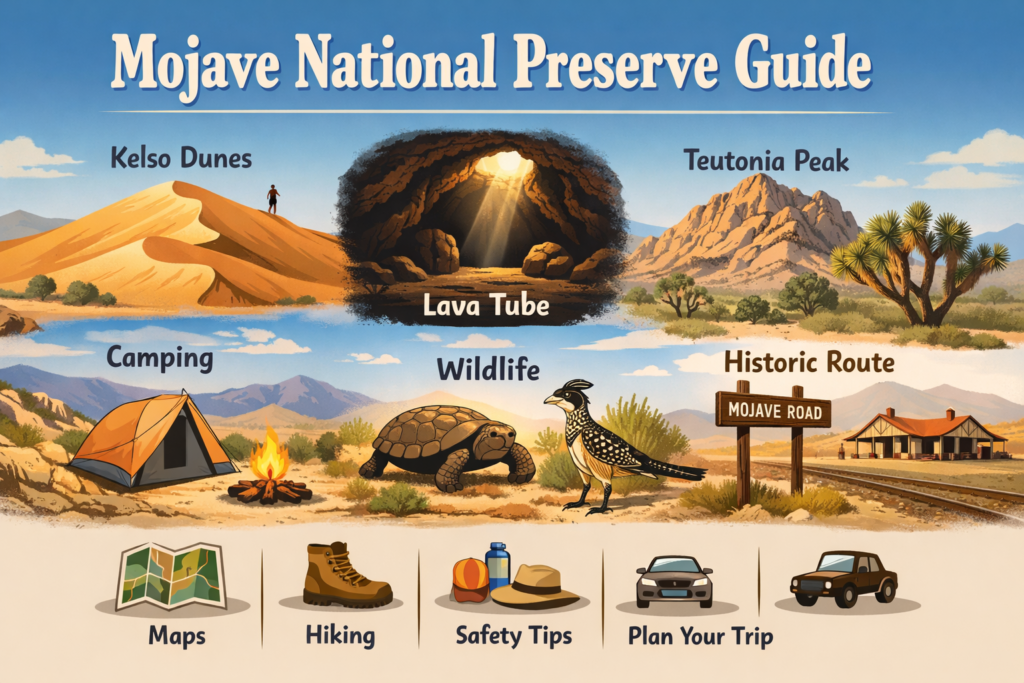
Best Hikes in Mojave National Preserve
Easy Hikes
If you are looking for low-effort or shorter walks, consider these options:
Hole-in-the-Wall Nature Trail
Lava Tube
Rock Springs Trail
These are great for visitors who want to enjoy the landscape without committing to a long or technical hike.
Moderate Hikes
For something with a bit more challenge and stronger views, try:
Kelso Dunes
Teutonia Peak
Rings Loop
Barber Peak
These routes usually offer a more immersive desert experience and are especially satisfying when temperatures are mild.
Longer Trail Options
For hikers who want more distance and time on the ground, the Mid Hills to Hole-in-the-Wall trail is one of the more substantial options. It requires planning, water, and stamina, but it gives a deeper sense of the preserve’s scale and character.
Which Hike Should You Choose First?
If it is your first time in the preserve, a balanced sequence would be:
Teutonia Peak
Kelso Dunes
Lava Tube
Hole-in-the-Wall Nature Trail
That combination gives you Joshua trees, dune scenery, volcanic geology, and an accessible shorter walk, all in one trip.
Camping in Mojave National Preserve
Why Camping Is So Popular Here
Camping is one of the most rewarding ways to experience Mojave National Preserve because night transforms the atmosphere. The silence becomes deeper, the temperature becomes more comfortable, and the dark sky creates a powerful sense of scale and stillness. A camping trip often feels very different from a day visit.
Developed Campgrounds
The preserve includes several developed camping areas for travelers who want a more structured stay.
Mid Hills
Mid Hills sits at a higher elevation, which often makes it cooler than the lower desert campgrounds. That can be a major advantage in warmer seasons.
Hole-in-the-Wall
Hole-in-the-Wall is a popular campground because it offers access to trails and a practical base for exploration. It is a strong choice for hikers and general desert travelers.
Black Canyon
Black Canyon is especially useful for group and equestrian camping. It is one of the more serviceable options for visitors who need a campground with certain basic conveniences.
What to Expect at Campgrounds
Campgrounds in the preserve are generally simple and functional rather than fully developed. Visitors should expect a true desert camping experience, which often means basic amenities such as vault toilets, picnic tables, fire rings, trash receptacles, and limited water availability in some areas.
That simplicity is part of the appeal, but it also means planning is essential. Bring what you need, and do not assume that services will be nearby.
Backcountry and Roadside Camping
Backcountry and roadside camping are possible in some parts of the preserve, but these options require more preparation and more awareness of conditions. You need to understand the rules, know the roads, and protect fragile desert surfaces. The desert may look durable, but it can be very sensitive to disturbance.
Camping Safety Tips
Bring your own water.
Know where you are going before you.k
Carry enough fuel
Check road conditions
Keep food secure
Follow Leave No Trace practice.s
Camping here can be wonderful, but it works best when approached with respect and preparation.
Travel Tips for Mojave National Preserve
Why Planning Matters
Traveling through Mojave National Preserve is not difficult when you are prepared. It becomes challenging when you assume it functions like a normal roadside attraction. It does not. Distances are larger than they seem, roads can be rough, temperatures can be unforgiving, and services are limited or absent.
Important Travel Tips
Bring More Water Than You Think You Need
Water is the single most important item in the preserve. Dry air and heat can dehydrate you much faster than expected, especially if you are hiking or spending long periods outside.
Start Early
An early start helps in three ways. It lowers your heat exposure, gives you better light for photos, and leaves more time if a road, trail, or stop takes longer than expected.
Check Road Conditions
Some routes may be sandy, rough, or unsuitable for standard passenger cars. Before leaving a main road, it is wise to confirm current conditions and make sure your vehicle is appropriate.
Use Offline Maps
In a place with weak or absent cell coverage, offline maps can be invaluable. They reduce stress, help with route clarity, and keep you from depending on a signal that may disappear.
Tell Someone Your Plans
When traveling in remote terrain, it is always prudent to let someone know where you are going and when you expect to return. That simple step can matter a great deal if plans change.
Respect the Desert
Stay on marked roads and trails whenever possible. Avoid damaging plants or soil. Do not collect rocks, disturb wildlife, or leave trash behind. The preserve’s beauty depends on its fragility being respected.
Survival Tips and Safety Advice
What Makes Mojave National Preserve Challenging?
The preserve is beautiful, but it is also a serious desert environment. Many travelers underestimate it because the scenery is so inviting. The main risk is not the landscape itself so much as misreading the scale, heat, and isolation of the place.
Top Safety Concerns
Heat
Heat is the most obvious danger during warm months. Exposed terrain, limited shade, and strong sun can create hazardous conditions quickly.
Distance
Everything can feel farther apart than expected. What looks like a short drive on a map may take significantly longer in reality, especially if roads are rough or if you stop frequently.
Road Conditions
Some roads are not maintained for standard vehicles. Sand, washboard surfaces, and uneven grades can make travel more difficult than anticipated.
Cell Service
In many parts of the preserve, cell service is weak or nonexistent. That is normal here and should be assumed rather than hoped against.
Water
Natural water is limited and should never be relied on casually. Bring your own supply and carry more than you think you will need.
Simple Desert Safety Rules
Carry extra water
Keep the fuel tank full.
Know your route
Watch the weather
Avoid a risky midday hike.s
Stay with your vehicle if you become lost
Do not enter roads that are clearly unsafe for your car
These habits are simple, but they can make all the difference in a desert setting.
Environmental Issues and Conservation
Why Protection Matters
Mojave National Preserve protects a fragile desert ecosystem. The landscape may appear rugged, but it is highly sensitive. Many desert plants grow slowly, soils are easily damaged, and wildlife depends on small and scattered water sources. Recovery from disturbance can take a long time.
Desert Tortoise Conservation
The desert tortoise is one of the strongest symbols of conservation in the preserve. It faces threats from habitat loss, disease, and human impact. Protecting its habitat is one of the preserve’s central conservation goals, and visitors play a role in that protection by traveling responsibly.
Fire Damage
Fire can significantly alter desert habitats, especially where Joshua tree communities are affected. Because recovery in desert systems can be slow, the consequences of fire may last far longer than they would in greener environments. This makes prevention and care especially important.
Visitor Responsibility
Each visitor has a role in preserving the landscape. Staying on existing roads and trails, avoiding damage to plants or soil, packing out trash, and camping only in legal areas all help protect the preserve for future travelers.
Interesting Facts About Mojave National Preserve
It covers about 1.6 million acres of desert land.
It is one of the largest protected areas in the National Park System outside Alaska.
It is free to enter.
It contains dunes, lava fields, Joshua tree woodland, canyons, and springs.
It has a deep human history reaching back thousands of years.
It is home to a wide range of birds, reptiles, mammals, and desert plants.
It offers excellent stargazing because of its dark skies.
It is much more diverse than many first-time visitors expect.
These facts help explain why the preserve is so distinctive. It is not a single-type desert. It is a mosaic of desert environments, each with its own mood, ecology, and visual identity.
Pros and Cons
Pros
Huge variety of desert scenery
Free entrance
Great hiking and camping options
Strong sense of solitude
Rich wildlife and geology
Excellent photography and stargazing opportunities
Cons
No gas or charging inside the preserve
Weak or absent cell service
Many roads require high clearance or four-wheel drive.
Summer heat can be dangerous.
Careful planning is essential.
These are not reasons to avoid the preserve. There are reasons to visit thoughtfully. For travelers who appreciate wild places, those same challenges are part of what makes the experience so rewarding.
FAQs
Yes, Mojave National Preserve is free to enter.
Spring and fall are usually the most comfortable seasons. Spring is also the best time for wildflowers.
Not everywhere, but many roads do need high clearance or 4WD. Always check road conditions before you go.
The best first-time stops are Kelso Dunes, Teutonia Peak, Lava Tube, Hole-in-the-Wall, and Zzyzx.
Yes. The preserve has developed campgrounds, plus some backcountry and roadside camping options in specific areas.
Yes, especially if you choose easier stops like the Lava Tube, Hole-in-the-Wall Nature Trail, and Zzyzx. Family visits work best when the weather is mild and the route is simple.
It can be safe only if you plan carefully. Start early, carry lots of water, avoid long midday hikes, and never underestimate the heat.
A one-day visit can cover a few highlights, but 2 to 3 days is better if you want to enjoy hiking, camping, and scenic drives without rushing.
Conclusion
Mojave National Preserve is a place of vast horizons, quiet beauty, and remarkable natural variety. Whether you come for hiking, camping, photography, or simply to experience the desert at its most dramatic, careful planning will help you make the most of your visit. With the right preparation, the preserve offers an experience that is both rewarding and memorable.