
Introduction
The Mojave Desert is a vast and striking desert region in the southwestern United States. Known for its high elevation, dry climate, unique wildlife, and famous landmarks, it is one of North America’s most fascinating landscapes. This guide covers its map, location, climate, plants, animals, history, and travel essentials.
- Mojave Desert at a Glance
- Mojave Desert Map and Location
- Where Is the Mojave Desert Located?
- How to Read a Mojave Desert Map
- Major Regions Around the Mojave Desert
- Important Places on the Mojave Desert Map
- Mojave Desert Geography
- High Desert Landscape
- Major Landforms in the Mojave
- Why Terrain Matters
- Mojave Desert Climate
- What Is the Climate Like?
- How Much Rain Does the Mojave Get?
- Why the Mojave Is Called a High Desert
- Weather Challenges in the Mojave
- Mojave Desert Landscapes and Natural Features
- Sand Dunes
- Salt Flats
- Rocky Mountains and Slopes
- Dry Valleys and Washes
- Why the Landscape Matters
- Plants of the Mojave Desert
- The Joshua Tree
- Other Common Mojave Plants
- Plant Communities in the Mojave
- Why Mojave Plants Are Special
- Wildlife of the Mojave Desert
- Mojave Desert Wildlife Is More Diverse Than Many People Expect
- Common Animals in the Mojave
- The Desert Tortoise
- Reptiles and Small Animals
- Birds in the Mojave
- How Desert Animals Survive
- Human History in the Mojave Desert
- Indigenous Presence
- Trade and Travel Routes
- The Mojave Road
- Mining, Ranching, and Expansion
- Why History Matters
- Top Mojave Desert Landmarks
- 1. Death Valley National Park
- 2. Joshua Tree National Park
- 3. Mojave National Preserve
- 4. Badwater Basin
- 5. Mojave Trails National Monument
- 6. Mojave Road
- 7. Panamint Mountains
- Mojave Desert Travel Tips
- 1. Carry Enough Water
- 2. Check Road Conditions
- 3. Travel During Cooler Hours
- 4. Stay on Marked Routes
- 5. Respect Wildlife
- 6. Bring Navigation Support
- 7. Prepare for Temperature Changes
- Travel Safety Table
- Pros and Cons
- Pros
- Cons
- Interesting Facts About the Mojave Desert
- Environmental Issues and Conservation
- Why Conservation Matters
- Main Threats to the Mojave
- Joshua Trees and Fire Risk
- Why the Mojave Needs Protection
- FAQs
- Conclusion
Mojave Desert at a Glance
| Fact | Details |
| Location | Southeastern California, plus parts of Nevada, Arizona, and Utah |
| Size | More than 25,000 square miles |
| Climate | Very dry desert climate with large temperature swings |
| Elevation | From low basins to high mountain areas |
| Famous landmarks | Death Valley, Joshua Tree National Park, Mojave National Preserve, Badwater Basin, Mojave Road, Mojave Trails National Monument |
| Best known plant | Joshua tree |
| Well-known wildlife | Desert tortoise, reptiles, birds, mammals |
Mojave Desert Map and Location
Where Is the Mojave Desert Located?
The Mojave Desert is located in the southwestern United States. Most of it lies in southeastern California, but it also extends into Nevada, Arizona, and Utah. This four-state spread is one reason the region is so large, varied, and geographically interesting.
A Mojave Desert map usually includes state boundaries, major highways, national parks, preserves, mountain ranges, basins, dry lake beds, dunes, and towns. That kind of map is useful because the Mojave is not a single uniform expanse. It is a network of landscapes tied together by climate and landform.
Some parts are broad and open, with long views and pale valley floors. Other parts are rugged, broken, and mountainous. You may move from salt flats to rocky hills, from wide basins to forested higher elevations, and from dry plains to canyon systems. That variation is one reason the Mojave feels so different from many other deserts.
How to Read a Mojave Desert Map
A strong Mojave Desert map should show more than a border. It should present the land as an interconnected system. Useful map layers include:
- State boundaries
- National parks and preserves
- Major roads and highways
- Mountain ranges
- Salt flats and basins
- Dunes and dry lake areas
- Towns, settlements, and travel stops
- Desert transition zones
This is important because the Mojave is defined by overlap. Some maps define it by climate. Others define it by botanical zones or protected areas. Others emphasize road access or geological features. All of these viewpoints are valid because the Mojave is large enough to support more than one way of seeing it.
Major Regions Around the Mojave Desert
The Mojave sits among other large desert systems, and its edges gradually blend into neighboring regions. To the north, it transitions toward the Great Basin Desert. To the south and southeast, it connects with the Sonoran Desert. These borders are not hard walls. They are transition areas where plant communities, animal populations, and climate conditions begin to shift.
That blending is one reason the Mojave contains such a wide variety. It is not a sealed container. It is a geographic bridge between desert worlds.
Important Places on the Mojave Desert Map
Some of the most notable places to identify on a Mojave Desert map include:
- Death Valley National Park
- Joshua Tree National Park
- Mojave National Preserve
- Mojave Trails National Monument
- Badwater Basin
- Mojave Road
- Panamint Mountains
These locations help reveal the size, structure, and identity of the region. They also show how the desert is divided by mountains, protected lands, and travel corridors.
Mojave Desert Geography
The Mojave is a desert of basins and ranges. That means it is not flat and monotonous. Instead, it contains high ridges, deep valleys, rocky slopes, broad troughs, dry plains, and scattered mountain chains. This gives the landscape a Dramatic, almost cinematic quality.
High Desert Landscape
The phrase high desert refers to desert land at a greater elevation. Elevation influences temperature, rainfall, wind, and vegetation. Higher terrain is often cooler and can support different ecosystems from low basins. Because of this, the Mojave can feel like several deserts in one.
For example:
- Lower zones can be intensely hot and extremely dry.
- Higher zones may be cooler and breezier.
- Some areas are ideal for Joshua trees.
- Other areas support shrubs, cactus species, or pinyon-juniper woodlands.
That vertical variation is part of what makes the Mojave so ecologically important.
Major Landforms in the Mojave
The Mojave contains a wide collection of landforms, including:
- Salt flats
- Dunes
- Dry washes
- Rocky hills
- Mountain ranges
- Volcanic formations
- Canyons
- Desert valleys
Each landform changes how water moves, how plants grow, how animals travel, and how people move through the landscape. The result is a region that is visually diverse and environmentally layered.
Why Terrain Matters
Terrain matters because desert life depends on microhabitats. Animals hide in burrows, under shrubs, or among rocks. Plants grow where moisture accumulates. Roads follow passes or valleys. Historic routes were chosen based on water access and safe crossing points. Even tourist experiences are shaped by terrain because every section of the Mojave has a different mood and texture.
The Mojave is therefore not a void. It is a finely arranged environment where geology, ecology, and human movement intersect.
Mojave Desert Climate
What Is the Climate Like?
The Mojave Desert climate is arid, severe, and highly variable. Rainfall is limited, the sun is intense, and temperatures can rise dramatically during the day before dropping sharply at night. In winter, some areas can even experience frost.
This temperature contrast is one of the defining characteristics of the Mojave. A visitor might need lightweight clothing during the afternoon and warm layers after sunset. That sharp shift is part of the desert’s identity.
How Much Rain Does the Mojave Get?
The Mojave receives very little precipitation each year. In practical terms, this means plants and animals must survive with limited and often unpredictable water. Rain may come in short bursts, and some locations can go long periods with very little moisture.
Because water is scarce, the desert ecosystem must be efficient. Species that live here often conserve energy, use shade, remain inactive during extreme heat, or time their activity around cooler parts of the day.
Why the Mojave Is Called a High Desert
The Mojave is called a high desert because much of it lies at considerable elevation. That matters because elevation affects weather. Higher places are generally cooler and may receive different precipitation patterns than lower basins.
This explains why the Mojave can support a range of habitats. Some areas are hot and open. Others are cooler, more sheltered, and more plant-rich. In mountains and upper slopes, moisture and temperature conditions can support communities that look very different from those in the basin floors.
Weather Challenges in the Mojave
The climate brings several challenges:
- Intense heat
- Extremely low rainfall
- Sudden weather changes
- Cold nights in some seasons
- Dehydration risk
- Dry winds
- Wildfire danger in certain zones
These conditions make the desert beautiful, but also demanding. Anyone traveling there must plan carefully and respect the environment.
Mojave Desert Landscapes and Natural Features
The Mojave is not one endless sand sea. It is a mosaic of landforms, textures, and ecological zones. That complexity makes it one of the most visually compelling desert regions in the United States.
Sand Dunes
The Mojave includes dunes shaped by wind. These dunes may appear smooth from a distance, but close up they reveal ripples, ridges, and changing shadows. Dunes are popular with photographers because they look elegant, quiet, and timeless. They also remind visitors that the desert is constantly being reshaped by natural forces.
Salt Flats
Salt flats are broad, open surfaces where water once pooled and later evaporated, leaving salt and mineral deposits behind. They often look bright, flat, and almost otherworldly. Badwater Basin is the most famous example and is widely known as the lowest point in North America.
Rocky Mountains and Slopes
The Mojave also has mountainous terrain, rough slopes, and rocky ridges. These areas provide shade, shelter, and cooler microclimates. Many animals rely on these places to escape the heat or find cover. Mountains also influence rain shadows and create diversity in nearby habitats.
Dry Valleys and Washes
Dry washes are channels that normally remain dry but can carry water during rare rain events. These features may look empty most of the time, but they are crucial for runoff, soil movement, seed dispersal, and occasional bursts of plant growth. They are quiet pathways of energy and water across the desert floor.
Why the Landscape Matters
The landscape matters because it determines where life can thrive. It shapes plant communities, animal ranges, road placement, tourism, and historic travel paths. The Mojave is therefore a living geographic system, not just a scenic backdrop.
Plants of the Mojave Desert
The Joshua Tree
The Joshua tree is the most iconic plant associated with the Mojave Desert. It is tall, unusual in form, and instantly recognizable. For many people, it is the visual symbol of the desert itself. Even though it is not an animal, it is often among the first things people think of when they imagine Mojave Desert wildlife and scenery.
Joshua trees are ecologically significant because they help define the character of the region. They also attract attention in conservation discussions because they are vulnerable to drought, climate shifts, and wildfire pressure.
Other Common Mojave Plants
The Mojave also supports a variety of other plants, such as:
- Creosote bush
- Cactus species
- Yucca plants
- Desert shrubs
- Pinyon-juniper woodland in higher regions
- Riparian plants near springs or streams
- Desert wildflowers after rainfall
Plant Communities in the Mojave
The desert contains several recognizable plant communities. These are groups of species that tend to grow in similar environmental conditions.
| Plant Community | Description |
| Creosote bush scrub | Common in dry open areas |
| Joshua tree woodland | Found in parts of the Mojave with suitable elevation and climate |
| Cactus yucca scrub | Includes hardy desert plants that tolerate heat well |
| Pinyon-juniper woodland | Found in higher and cooler locations |
| Desert riparian zones | Plants near springs, streams, or wet areas |
| Desert dunes | Specialized plants adapted to shifting sand |
Why Mojave Plants Are Special
Mojave plants are built for survival. They conserve water, grow slowly, and adapt to intense sun and dry conditions. if have deep roots. Some have waxy surfaces. Some bloom only after rainfall. Their strategies show how life can persist in an environment that appears hostile at first glance.
Wildlife of the Mojave Desert
Mojave Desert Wildlife Is More Diverse Than Many People Expect
Desert landscapes are often misunderstood as empty, but the Mojave Desert wildlife community is surprisingly rich. The region supports birds, reptiles, mammals, insects, and other organisms that have developed specialized ways to endure heat, drought, and changing conditions.
Common Animals in the Mojave
The Mojave is home to:
- Desert tortoises
- Lizards
- Snakes
- Coyotes
- Small rodents
- Foxes
- Rabbits
- Raptors and other birds
- Insects and pollinators
The Desert Tortoise
The desert tortoise is one of the Mojave’s most famous animals. It is adapted to harsh, dry conditions and spends much of its life in burrows that offer protection from temperature extremes. This helps it survive in a place where water and shade are limited.
The tortoise is also a major conservation symbol because its populations have been affected by habitat loss, roads, disease, and climate pressure. Its vulnerability reminds us that desert ecosystems can be fragile even when they seem tough.
Reptiles and Small Animals
Reptiles are especially important in the Mojave because they are well-suited to heat and aridity. Lizards and snakes often remain near rocks, shrubs, or burrows. Small mammals frequently emerge at night when temperatures are cooler. This rhythm of hidden daytime survival and nighttime activity is one of the desert’s most fascinating natural patterns.
Birds in the Mojave
Birdlife in the Mojave is also diverse. Some birds live there year-round, while others move through the region seasonally during migration. Birds often rely on water sources, shrubs, trees, and open hunting areas for food and shelter.
How Desert Animals Survive
Mojave animals survive through a combination of behavioral and biological adaptations:
- Staying active during cooler hours
- Living underground
- Nocturnal movement
- Feeding on seasonal resources
- Conserving water efficiently
- Seeking shade and shelter
- Reproducing during favorable conditions
These strategies show how finely tuned desert life can be.
Human History in the Mojave Desert
Indigenous Presence
People have lived in the Mojave Desert for thousands of years. Native communities used the region for travel, hunting, gathering, trade, and settlement long before modern highways or national parks existed.
The desert was never empty. It was home, a network of pathways, and a cultural landscape with knowledge passed down through generations.
Trade and Travel Routes
Indigenous people developed routes through the desert based on reliable water sources, safe passage, and environmental understanding. That knowledge became essential in a region where survival depended on knowing where to go and when to move.
Later travelers, explorers, and settlers often depended on similar information, even if they did not always recognize its origin.
The Mojave Road
The Mojave Road became an important travel corridor in the nineteenth century. It linked California with other parts of the Southwest and played a major role in overland movement, exploration, and transport through difficult terrain.
Mining, Ranching, and Expansion
Over time, the Mojave also became a place of mining, ranching, military activity, and settlement. Roads, camps, and supply routes reshaped the region. Some remain today as historical traces that reveal earlier patterns of use and development.
Why History Matters
The Mojave Desert is not just a natural environment. It is a cultural and historical landscape. It contains old trails, ancestral homelands, and places that preserve the memory of movement, adaptation, and survival. Understanding that the human story makes the desert far more meaningful.
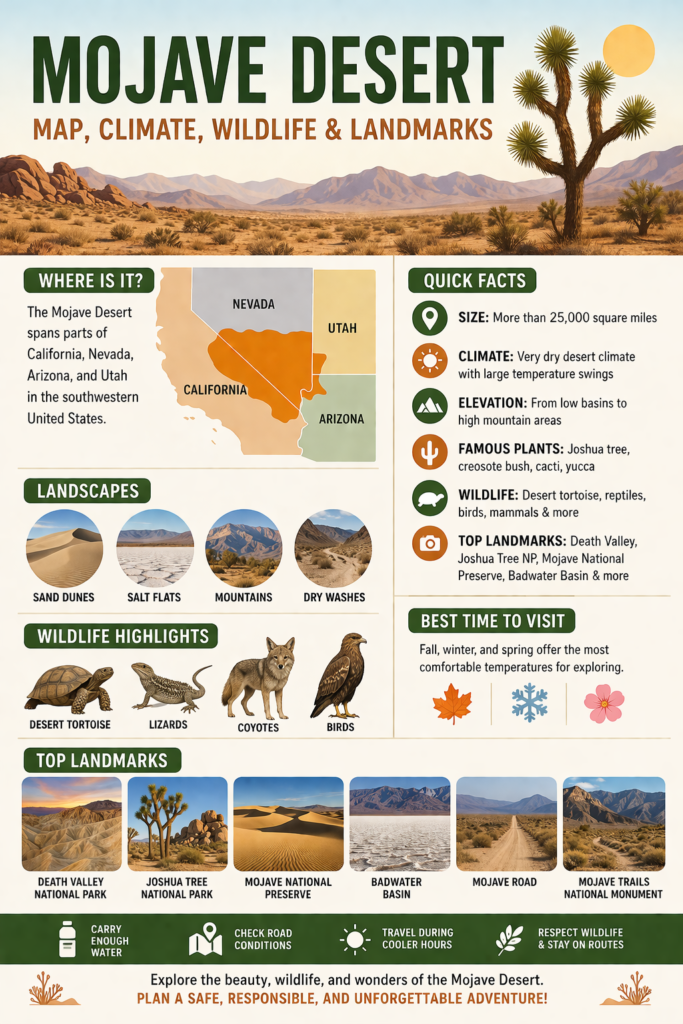
Top Mojave Desert Landmarks
If you are looking for the most famous Mojave Desert landmarks, these are the sites that stand out the most.
1. Death Valley National Park
Death Valley is one of the most famous desert parks in the world. It is known for extreme heat, salt flats, rugged peaks, dramatic views, and the lowest point in North America. After rare rain, it can also produce brilliant wildflower displays. Death Valley reveals the severe and spectacular side of the Mojave.
2. Joshua Tree National Park
Joshua Tree is celebrated for its unusual trees, boulder-strewn terrain, and striking desert scenery. It is one of the best places to understand how the Mojave and Colorado Desert regions interact. The park is popular with hikers, photographers, climbers, campers, and anyone drawn to distinctive desert landscapes.
3. Mojave National Preserve
The Mojave National Preserve offers a wide, quiet, and rugged desert experience. It contains dunes, volcanic formations, open roads, wildlife habitat, and historic features. It is one of the most effective places to experience the scale and silence of the Mojave.
4. Badwater Basin
Badwater Basin is one of the most iconic desert locations in North America. It is famous for its salt flats and for being the lowest point on the continent. The bright, pale surface creates an unforgettable, surreal visual effect.
5. Mojave Trails National Monument
This protected landscape includes mountain ranges, lava fields, dunes, and open wilderness. It is important both ecologically and visually because it contains key habitats and dramatic scenery.
6. Mojave Road
The Mojave Road is a historic route that represents travel, trade, and movement through challenging desert terrain. It is a powerful reminder of how people navigated the region before modern infrastructure.
7. Panamint Mountains
The Panamint Mountains illustrate the dramatic elevation differences within the broader Mojave region. Their presence creates a stunning contrast with the valleys and basins below.
Mojave Desert Travel Tips
A trip to the Mojave can be unforgettable, but it should be approached with preparation and care.
1. Carry Enough Water
This is the most important rule. The desert air is dry, dehydration can happen quickly, and water is essential.
2. Check Road Conditions
Some desert roads are rough, isolated, or unsuitable for standard vehicles. Always check conditions before driving.
3. Travel During Cooler Hours
Early morning and late afternoon are generally better than midday, especially during hot months.
4. Stay on Marked Routes
Following designated routes protects both visitors and the environment. It also reduces damage to fragile land surfaces.
5. Respect Wildlife
Animals should never be disturbed. Give them space, especially reptiles, tortoises, and birds.
6. Bring Navigation Support
Cell service can be weak or absent in remote zones. Offline maps, GPS devices, and printed directions are smart precautions.
7. Prepare for Temperature Changes
The day can be very warm, while evenings and winter nights may become unexpectedly cold.
Travel Safety Table
| Travel Tip | Why It Matters |
| Carry water | Prevents dehydration |
| Check roads | Avoids delays and getting stuck |
| Travel early or late | Reduces heat exposure |
| Stay on routes | Protects you and the land |
| Watch wildlife | Prevents harm to animals |
| Use offline maps | Helps in remote areas |
Pros and Cons
Pros
- Huge scenic variety
- Famous national parks
- Excellent desert photography opportunities
- Rich wildlife and plant interest
- Deep history and cultural significance
- Quiet, spacious, memorable landscapes
Cons
- Extreme heat
- Very dry conditions
- Long gaps between services
- Rough roads in some places
- Risk for unprepared travelers
- Sensitive ecosystem that needs protection
A visit to the Mojave is rewarding, but it works best when visitors plan and respect the environment.
Interesting Facts About the Mojave Desert
Here are some simple but important facts about the Mojave Desert:
- The Mojave extends across four states: California, Nevada, Arizona, and Utah.
- It is known as a high desert because of its elevation.
- Joshua trees are the most recognizable plant in the region.
- Badwater Basin is the lowest point in North America.
- The Mojave contains many habitat types, not just sand.
- The desert supports reptiles, birds, mammals, and pollinators.
- People have lived in the region for thousands of years.
- Conservation is critical because the Mojave faces drought, fire, and climate stress.
Environmental Issues and Conservation
Why Conservation Matters
The Mojave may appear resilient, but it is also vulnerable. Its plants and animals are adapted to specific environmental conditions. When those conditions change too fast or too severely, the ecosystem can begin to break down.
Main Threats to the Mojave
The largest threats include:
- Climate change
- Drought
- Wildfire
- Invasive grasses
- Habitat fragmentation
- Development
- Road impacts
- Water stress
Joshua Trees and Fire Risk
Joshua trees are especially threatened when invasive grasses spread through the desert. These grasses can increase fire frequency in places that historically did not burn often. That creates a serious problem because Joshua trees and many other desert species are not adapted to repeated fire events.
Why the Mojave Needs Protection
The Mojave is important because it contains:
- Rare habitats
- Cultural heritage
- Wildlife corridors
- Scenic parks
- Scientific value
- Historic travel routes
Protecting the Mojave is not only about saving land. It is about preserving an ecosystem, a historical record, and a living landscape that cannot be replaced once damaged.
FAQs
The Mojave Desert is in the southwestern United States, mostly in southeastern California, with parts in Nevada, Arizona, and Utah.
It is called a high desert because much of it sits at a higher elevation, which affects temperature, rainfall, and plant life.
The Joshua tree is the most famous plant in the Mojave Desert.
The most famous Mojave Desert landmarks include Death Valley National Park, Joshua Tree National Park, Mojave National Preserve, Badwater Basin, and the Mojave Road.
It can be dangerous if you are not prepared. Heat, dry air, long distances, and rough roads can create serious problems, so planning is essential.
Conclusion
The Mojave Desert is more than a dry landscape. It is a rich desert ecosystem with unique scenery, wildlife, history, and protected landmarks. Whether you are studying its geography or planning a visit, the Mojave offers a Remarkable look at the beauty and resilience of desert life.