

Introduction
The Sahara often looks empty at first glance — a broad sweep of sand, brilliant sun, and seemingly endless skyline. Yet the Animals Of The Sahara Desert are in shock. Minute ants sprint under the noon heat, small nocturnal foxes slip between dunes, and rare antelopes keep on on sparse tufts of grasses — life is abundant wherever you know how and where to look. This field guide explains the mechanisms of organism survival in the desert, describes significant Saharan life, and provides teaching or traveling resources, which are empirical maps, photographs, and classroom-friendly. You will be presented with brief species descriptions, a clear description of the types of habitat (ergs, regs, hamadas, oases), ethical guidelines in watching wildlife, and tips on how you can help conserve it.
- Quick facts: the Sahara at a glance
- How life survives — core strategies
- 1. Timing and nocturnality
- 2. Water economy and diet
- 3. Heat-deflecting body shapes and coloration
- 4. Burrows and microclimates
- 5. Camouflage and cryptic behavior
- Flagship species — short profiles
- Addax (Addax nasomaculatus) — the most threatened big mammal
- Dromedary camel (Camelus dromedarius) — human partner of the desert
- Fennec fox (Vulpes zerda) — the little desert fox
- Saharan silver ant (Cataglyphis spp.) — the midday forager
- Saharan cheetah
- North African ostrich
- Representative species table
- Where they live: main ecoregions & map ideas
- Ecoregion types and what they host
- Map pins to include on a website
- Map idea
- Major threats & conservation status
- Main threats to the Sahara wildlife
- Conservation actors & common solutions
- How readers can help — clear, practical actions
- How to see Sahara wildlife — traveller’s checklist & ethics
- Best seasons & times
- Sample micro-itineraries
- Ethical guidelines
- Flora that supports fauna — short notes
- Human history & culture — animals and people together
- Survival tips & challenges
- For field researchers
- For travellers
- Tourism: attractions, activities & practical tips
- Top activities
- Practical tips
- Interesting facts
- Table: Representative species by group
- Downloads & classroom resources
- FAQs
- Final notes
Quick facts: the Sahara at a glance
- Area & extent: about 3,320,000 sq miles ([?]8.6 million km2).
- Core nations: Algeria, Libya, Mali, Niger, Mauritania, Chad, Sudan, Egypt, Morocco, and Tunisia, with some of Western Sahara.
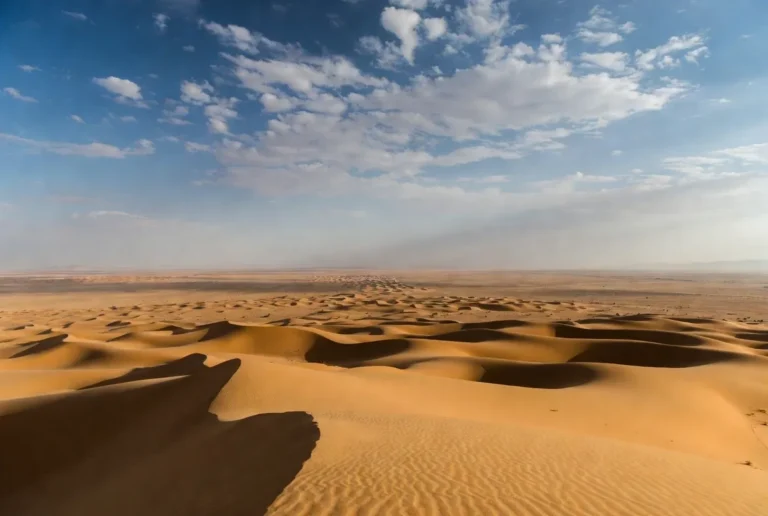
- Internal habitats of the Sahara: sand seas (ergs), stony plains (regs), rock plateaus (hamadas), salt pans (sabkhas), mountain oases, serial wadis.
- Biodiversity snapshot: Less final species richness than humid regions, but a wide range of specialists – species adapted to razor-thin food and water margins.
- Conservation points of interest: Some autograph species (such as the addax) are on the verge of extinction and only through special conservation and reintroduction have survived.
How life survives — core strategies
Desert animals combine behavior, body design, and clever habits to persist in an environment where water and shade are scarce.
1. Timing and nocturnality
Many species avoid daytime heat by being active at night. Small carnivores like the fennec fox hunt after dusk. Nocturnal timing reduces water loss and exposure to peak temperatures.
2. Water economy and diet
Some animals extract moisture from the plants and prey they eat; others have physical adjustments to hold onto water tightly. Contrary to popular myth, camels do not store large reservoirs of water in their humps — humps store fat that can be integrated into energy and water when needed. Many herbivores feed on moisture-rich succulents or passing plants that bloom after sporadic rains.
3. Heat-deflecting body shapes and coloration
Pale coats reflect sunlight; elongated wings lift the body further from the hot root. The Saharan silver ant has a silvery, pensive coat that reduces heat absorption and enables foraging in very warm hours when competitors are sheltering.
4. Burrows and microclimates
Underground burrows or shelter under rocks provide cooler, slightly more humid microclimates than the open surface. Rodents, some reptiles, and arthropods use these microrefuges to escape heat and predators.
5. Camouflage and cryptic behavior
The camouflage with the sand or broken rocks matches the visibility with the predators and prey. Both coloration and behavior establish high survivability capabilities in lizards, rodents, and ground-nesting birds.
Flagship species — short profiles
Each mini-profile below is intentionally short so it can be embedded as linkable cards on a pillar page.
Addax (Addax nasomaculatus) — the most threatened big mammal
- Status: Critically Endangered. The wild populations are very small and broken; most of the regions record low numbers or single-digit animals, where present at all.
- Adaptations: Hooves that are broad and splayed to walk on the soft sand of dunes; a pale coat to reflect heat; a very efficient water economy, and usually acquires water by drinking plants.
- Where to visit: Wild sites are very few and far between. The only sure ones are conservation reserves and reintroduction stations in certain areas of Niger and Chad.
Dromedary camel (Camelus dromedarius) — human partner of the desert
- Status: Domesticated; actually, wild groups have probably become extinct or live as feral populations.
- Modifications: Hump is fat (energy), moist airways, wide feet to travel the sand, and behavioral capacity to live in scarce water.
- Where to visit: All places where people live or pass through the Sahara – along the caravan routes, as well as the oasis towns.
Fennec fox (Vulpes zerda) — the little desert fox
- Status: Not globally endangered but faces local pressures from the pet trade and habitat loss.
- Adaptations: Exceptionally large ears that aid in dissipating heat; dense fur that insulates at night and shields from daytime sun; crepuscular/nocturnal habits reduce daytime exposure.
- Where to see: Dune systems and margins in North Africa — Morocco, Algeria, Tunisia, and nearby regions.
Saharan silver ant (Cataglyphis spp.) — the midday forager
- Status: Studied intensively for thermal tolerance; not listed like large vertebrates, but ecologically iconic.
- Adaptations: Silvery hairs that reflect visible radiation and promote radiative cooling; behavioral patterns that let them forage in extreme surface heat.
- Where to see: Open salt flats and hard-packed flats across the central Saharan regions during intense midday foraging bursts.
Saharan cheetah
- Status: Regionally critically endangered or locally extirpated; extremely small remnant populations or none in many parts of the range.
- Where to see: Only during specialized surveys and in isolated conservancies; virtually never on casual wildlife trips.
North African ostrich
- Status: Regionally threatened; extirpated in parts of its former range.
- Where to see: Protected reserves and some reintroduction sites; captive-breeding programs exist.
Representative species table
| Common name | Scientific name | Group | IUCN status | Range (countries) | Quick note |
| Addax | Addax nasomaculatus | Mammal (antelope) | Critically Endangered | Historic: wide Sahara; now tiny pockets | Reintroduction focus |
| Dromedary camel | Camelus dromedarius | Mammal | Domesticated/feral | North Africa & Sahara margins | Cultural partner, transport |
| Fennec fox | Vulpes zerda | Mammal | Least Concern (regional pressures) | North Africa | Large ears for heat loss |
| Dorcas gazelle | Gazella dorcas | Mammal | Vulnerable | Saharan margins | Small, drought-tolerant gazelle |
| Saharan silver ant | Cataglyphis spp. | Insect | Not assessed | Central Sahara | Midday forager, reflective hairs |
| Saharan cheetah (relict) | Acinonyx jubatus (regional) | Mammal | Critically Endangered (regional) | Isolated pockets | Very rare, fragmented |
Where they live: main ecoregions & map ideas
The Sahara is not uniform. It is a patchwork of habitats — each hosting its own set of specialists.
Ecoregion types and what they host
- Ergs (sand seas): Vast dune fields that shift with wind; home to Specialist lizards, small mammals, sand foxes, and specialized insects.
- Regs (Stony Plains): Gravel-bearing plains that sustain larger-tracked mammals in places and are traversed by migratory routes for some antelopes.
- Hamadas (rock plateaus): Hard, rocky surfaces with sparse soil. These hold cryptic plants and reptiles and are often biological refuges because they don’t shift like sand.
- Sabkhas & salt pans: Saline flats where halophyte plants and salt-adapted invertebrates thrive.
- Mountain oases & plateaus (e.g., Ennedi): Canyons, springs, and cliffs that concentrate life and often harbor species absent from surrounding lowlands.
- Saharan–Sahel transitional zones: Seasonal productivity, and many migrating birds and mammals use this zone as a corridor.
Map pins to include on a website
- Ennedi Plateau (Chad): Oasis canyons, rock art, and higher biodiversity pockets.
- Termit & Tin-Toumma (Niger): Known for reintroduction programs and protected areas for antelopes.
- Tenéré (Niger): Iconic open flats with specialist fauna.
- Souss-Massa & Draa Valley (Morocco margins): Birding hotspots and desert-edge species.
- Mauritanian coastal dunes: Unique coastal desert species mixed with shorebird stopovers.
Map idea
Use an interactive Leaflet or Mapbox map with layers for ecoregions, pins for recommended ‘where to see’ locations, downloadable SVGs for print, and toggles to show conservation status overlays. Include pop-ups with short species notes and links to species cards.
Major threats & conservation status
Main threats to the Sahara wildlife
- Overhunting & illegal trade: Large mammals have been driven down historically by intense hunting and illegal markets.
- Habitat loss & fragmentation: Mining, linear infrastructure (roads and pipelines), and expanding pastoral land break up habitats and hinder movement.
- Climate change: Reduced and shifted rainfall patterns make food and water unpredictably available.
- Small population effects: Inbreeding, random demographic events, and low genetic diversity make relict populations fragile.
Conservation actors & common solutions
- Local groups and international NGOs often run captive-breeding programs, anti-poaching patrols, and reintroductions.
- Protected areas and community reserves can guard key oases and migration routes.
- Community-based tourism — when designed responsibly — provides local income and creates incentives for protection.
How readers can help — clear, practical actions
- Donate to reputable Sahara/ Sahel conservation organizations and verified NGOs working on the ground.
- Support community tourism — choose guides and operators who share revenue with residents.
- Refuse illegal wildlife products — don’t buy wild-caught pets or souvenirs made from endangered species.
- Share educational resources — species cards, classroom activities, and maps can spread awareness.
- Report suspicious wildlife trade to local authorities or recognized hotlines when you encounter it.
How to see Sahara wildlife — traveller’s checklist & ethics
Best seasons & times
- Cool season (late autumn–early spring): More comfortable for people and more active wildlife behaviorally.
- Dawn and dusk: Prime moments to spot mammals.
- Midday on open flats: Unique opportunity to observe insects that forage in extreme heat (e.g., silver ants).
Sample micro-itineraries
- 3-day Morocco desert loop: Sunrise over dunes, oasis visit, guided dusk and night walks for small mammals and owls.
- 7-day plateau & oasis trip: Combine coastal birding, desert-edge habitats, and protected reserves.
- Conservation trip: Participate in conservation NGO tours of the reintroduction sites that are controlled.
Ethical guidelines
- Contract with local guides who are licensed, especially the nomadic and local populations, who know best how to navigate the whereabouts of animals.
- Do not feed or chase wildlife. Keep a distance and take long lenses.
- Abide by leave-no-trace principles and observe sacred local places.
- Do not purchase items of endangered species.
Flora that supports fauna — short notes
Vegetation is the framework for animal life. Plants shape what animals can eat, where they can hide, and how far they can travel.
- Acacia and tamarisk trees: Provide shade, forage, and nesting for birds in wadis and oases.
- Halophytes: Tolerant of salty soils, these plants support salt-adapted invertebrates and birds around sabkhas.
- Succulents & ephemeral plants: Burst into life after rare rains and feed insects and rodents — a pulse of productivity in a mostly lean system.
- Oases and river valleys: Permanent or semi-permanent water bodies that concentrate biodiversity and often support agriculture and people.
Human history & culture — animals and people together
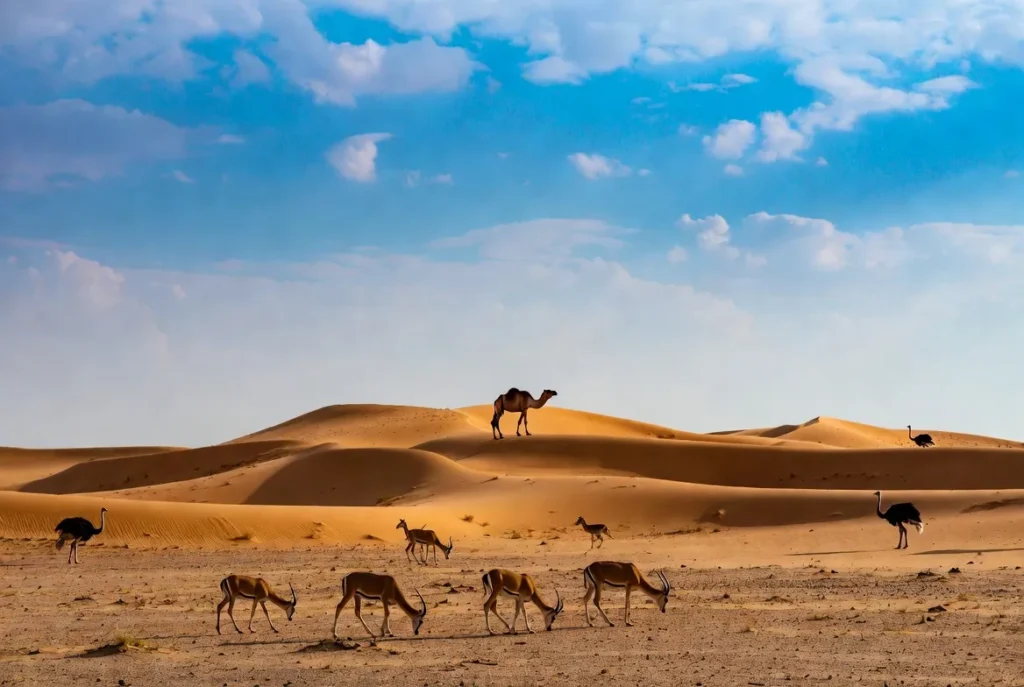
People and animals in the Sahara have coexisted for millennia. Nomadic tribes have managed grazing, used camels as transport, and developed cultural attachments to certain species. Ancient rock art (for instance, in the Ennedi Massif and other plateaus) documents the long relationship between people and animals. Successful conservation initiatives are often linked to local customs and community leadership.
Survival tips & challenges
For field researchers
- Plan for massive daily temperature swings and remote logistics.
- Ensure reliable water supplies, satellite communications, and permits.
- Coordinate with local authorities and on-the-ground conservation groups.
For travellers
- Check security advisories; parts of the Sahara overlap with areas of unrest.
- Hire licensed operators and local guides.
- Bring sun protection, a first-aid kit, spare water, and, in very remote work, a satellite device.
Tourism: attractions, activities & practical tips
Top activities
- Guided wildlife surveys with approved researchers.
- Birdwatching at migration stopovers.
- Night drives (where legal) for small nocturnal mammals and owls.
- Visits to oases, cultural sites, and rock art.
Practical tips
- Carry extra water and a small first-aid kit.
- Respect protected area rules and local customs.
- Use long lenses for photography and avoid approaching animals.
Interesting facts
- Silver ants forage during the hottest hours and use specialized reflective hairs to manage heat — a striking example of evolution meeting physics.
- Camels are metabolic specialists — humps store fat, not water — and their nasal and digestive systems are tuned to conserve moisture.
- Biodiversity islands: Rock outcrops such as plateaus and massifs act as refuges in dry times, holding species not found in the surrounding sand seas.
Table: Representative species by group
Mammals: Fennec fox, Addax, Dorcas gazelle, Dromedary camel, Sand cat
Birds: North African ostrich (historical), Larks, Desert wheatear, Migratory passerines at stopovers
Reptiles: Desert monitor, Fringe-toed lizards, Agamid lizards in rocky zones
Insects & arachnids: Saharan silver ant, Tenebrionid beetles, scorpions, solifuges
Downloads & classroom resources
Suggested ready assets to publish or offer as downloads:
- 25 printable species cards (photo + five facts + IUCN status + “Where to see” blurb).
- SVG ecoregion + ‘where to see’ map (embeddable, Leaflet-ready).
- Sortable HTML table + CSV of 80+ Sahara species, ready for site import.
- Embeddable Leaflet map with pins, short “what you can see” notes, and mobile-friendly popups.
- Three classroom worksheets: thermoregulation experiment (linked to silver ant), track ID activity, and species matching game.
FAQs
A combination: fennec fox, sand cat, addax (in the past), desert larks, wheatears, monitors, fringe-toed lizards, and a variety of insects and arachnoids. Most of the species are not easily observed, yet they are important components of the food web.
Yes. One of the most iconic examples is the addax, which is on the verge of extinction and the focus of captive-breeding and reintroduction initiatives. There are also highly threatened species of cheetah and subspecies of ostriches.
Yes, but on special localities and at certain times of the year, and more often with local guides. The best opportunity for sightings is in the oases, plateaus, and protected reserves.
Because species evolved specialized adaptations: behavioral (timing activity), physiological (water-saving mechanisms), and morphological (camouflage, limb shape). These allow them to occupy ecological niches that are inhospitable to less-specialized species.
No. Much of the Sahara is rocky plateaus, gravel plains, and salt flats; dunes are a visible and iconic part of the landscape, but only one habitat among many.
Final notes
This document is designed as a shareable pillar article: clear headings for scanning, bolded keywords for CTR, Downloadable assets for linkability, and a species table that is easy to update. If you’d like, I can now generate the 25 species cards PDF and the SVG map — or start by producing the full CSV of 80+ species for site import. Which asset should I produce first?