
Introduction
Desert Plants are specially adapted to survive in hot, dry, and low-rainfall environments. From cacti and succulents to shrubs, trees, and wildflowers, these plants use smart survival strategies such as water storage, deep roots, waxy coatings, and fast growth after rain. This guide explains the main types of desert plants, how they survive, where they grow, and why they are important.
- Overview and Introduction
- A quick comparison of major desert plant types
- Location and Geography
- Where desert plants grow best
- Climate and Weather Patterns
- How desert weather shapes plant design
- Landscape Features: Sand Dunes, Rocks, Valleys, Salt Flats, and More
- Flora: Plants
- 1) Cacti
- 2) Succulents
- 3) Shrubs
- 4) Trees
- 5) Ephemerals and wildflowers
- The Key Survival Strategies of Desert Flora
- Water storage
- Roots that match the rain
- Smaller leaves and waxy surfaces
- Spines, hairs, and folded leaves
- Fauna: Animals, Reptiles, Insects, and Birds
- Human History and Cultures
- Survival Tips and Challenges
- Practical care tips for desert plants
- Common challenges
- Tourism: Attractions, Activities, and Travel Tips
- Travel tips for plant-focused desert visits
- Interesting Facts About Desert Plants
- Environmental Issues and Conservation
- Pros and cons
- FAQs
- Conclusion
Overview and Introduction
At the simplest level, a desert plant is any plant adapted to life in a very dry environment. Britannica describes a xerophyte as a plant suited to dry or physiologically dry habitats and notes that succulents such as cacti and agaves store water in thick, fleshy stems or leaves. Britannica also highlights common dry-climate adaptations such as waxy surfaces, leaf drop, leaf folding, and hairy coverings that help plants reduce moisture loss.
The Desert Museum explains desert survival in three broad ways: succulence, drought tolerance, and drought avoidance. Succulents hold water in their tissues. Drought-tolerant plants can persist through long dry periods. Drought-avoidance plants sidestep the harshest conditions by growing rapidly after rain, setting seed, and then going dormant again. This is why desert ecosystems may appear quiet for months and then suddenly erupt into color, growth, and activity after a rare shower.
Desert plants are often misunderstood as fragile because they live in severe conditions. In reality, they are highly specialized organisms with fine-tuned survival tools. They are built to manage heat, dryness, solar stress, and sudden environmental shifts. That is exactly why they are so important in drylands, gardens, conservation projects, and natural landscapes.
A quick comparison of major desert plant types
| Plant type | Main survival strategy | Common examples | Why it matters |
| Cacti | Store water in thick stems; leaves become spines | Saguaro, prickly pear, barrel cactus | Iconic desert survivors and important wildlife plants |
| Succulents | Store water in leaves, stems, or roots | Agave, aloe, elephant tree | Popular in low-water gardens and landscaping |
| Shrubs | Drought tolerance, small leaves, deep roots | Creosote bush, brittlebush, desert sage | Add cover, shade, and soil stability |
| Desert trees | Deep roots, drought-deciduous growth, shade | Mesquite, palo verde, desert willow | Create habitat and cooler microclimates |
| Ephemerals/wildflowers | Dormant seeds, rapid growth after rain | Desert marigold, poppies, penstemon | Turn dry land into short-lived bloom displays |
These groups are not just botanical categories. They are the living framework of the desert.
Location and Geography
Desert plants grow on every continent, including in hot deserts and cold deserts. The defining feature of a desert is not temperature but water scarcity. National Geographic notes that deserts receive fewer than 25 centimeters, or 10 inches, of precipitation annually, and many experts also describe deserts as places where evaporation greatly exceeds rainfall. Britannica similarly states that regions with about 250 millimeters, or 10 inches, of annual precipitation are generally classified as deserts.
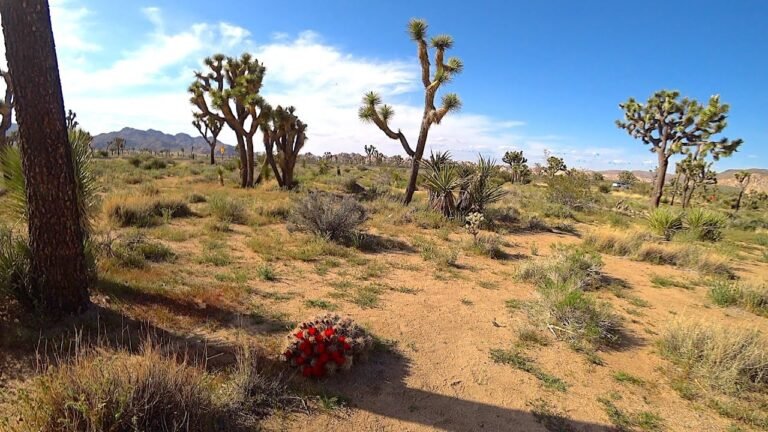
That means desert plants are found in regions such as the Sonoran, Mojave, Chihuahuan, and Great Basin deserts in North America; the Sahara and Namib in Africa; the Arabian Desert; the Atacama; the dry zones of Australia; and even cold deserts such as the Antarctic Dry Valleys. What changes from one desert to another is the mix of species, soil type, elevation, rainfall timing, and temperature range.
This is why the phrase desert plants covers a very wide range. A cactus in a low, hot basin, a yucca on a rocky slope, and a shrub in a cold, high plateau are all responding to the same environmental pressure: not enough water. Their appearance may differ dramatically, but the survival logic is shared.
Where desert plants grow best
Desert plants often succeed in:
- rocky slopes and canyons, where roots can reach cracks and sheltered pockets
- dry washes and valleys, where brief runoff provides extra moisture
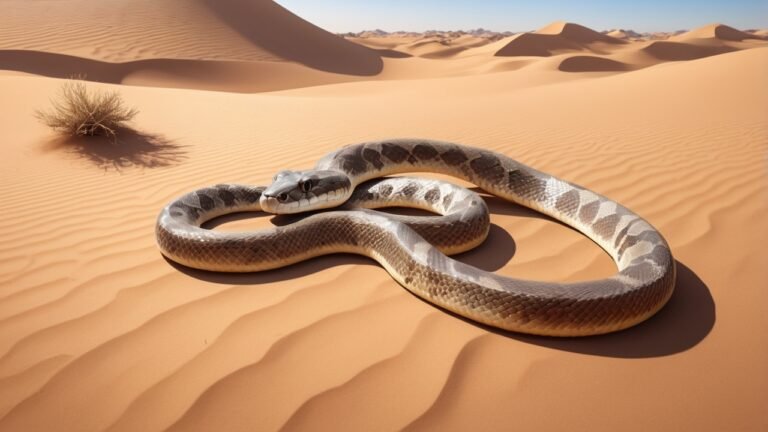
- sand plains and dunes, where only highly specialized species can handle shifting soil
- salt flats and saline soils, where only salt-tolerant plants can survive
- mountain deserts and cold deserts, where dryness matters more than heat alone
Climate and Weather Patterns
Desert climate is not only about heat. It is about water stress. Rainfall is low, evaporation is high, and moisture can vanish from the soil quickly. Some deserts are hot during the day and cold at night. Others are cold for much of the year but remain very dry. NASA explains that desert regions may experience extreme daytime temperatures followed by much cooler nights, which is another reason plants there must be highly flexible.
For desert plants, weather patterns matter as much as total rainfall. A desert may receive a sudden shower and then remain dry for weeks or months. Several plants store water before conditions become severe. Others stay as seeds until rain arrives, while others shed leaves or slow their growth to conserve energy and moisture.
The Desert Museum notes that desert aridity is the core stress plants must adapt to, and that survival usually falls into the categories of succulence, drought tolerance, and drought avoidance.
This is why desert plants are masters of timing. They do not simply survive dryness; they respond rapidly when conditions improve. In desert ecology, one brief rain event can transform the landscape for a short period.
How desert weather shapes plant design
| Weather pressure | Plant response | Example |
| Long dry periods | Water storage in stems or leaves | Cactus, agave, aloe |
| Intense sunlight | Small leaves, leaf folding, hairs, or spines | Xerophytes in arid zones |
| Hot winds | Waxy surfaces and reduced leaf area | Yucca, desert shrubs |
| Sudden rainfall | Fast-germinating ephemerals | Desert wildflowers |
| Cool nights in some deserts | Flexible growth timing and tissue protection | Cold-desert shrubs |
The idea is straightforward: desert plants are not designed for comfort. They are designed for survival.
Landscape Features: Sand Dunes, Rocks, Valleys, Salt Flats, and More
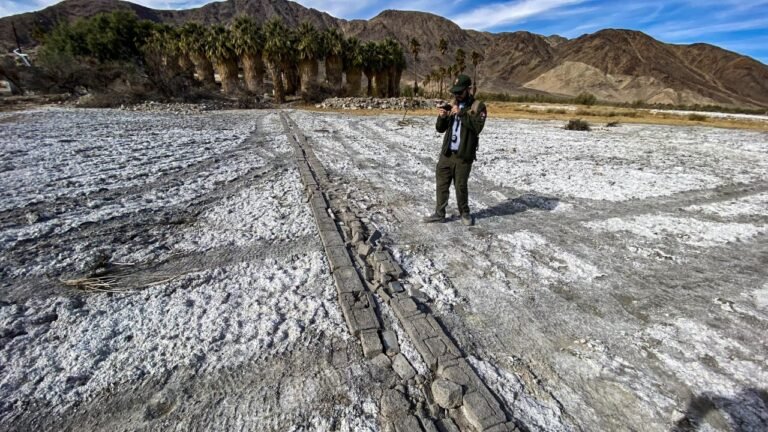
Deserts are not just endless sand. They are mosaics of landforms, and each one affects which plants can live there. Many desert plant communities occupy rocky hillsides, gravel plains, dry valleys, washes, alluvial fans, and salt-tolerant flats. The land itself influences where water gathers, how quickly it drains, and how much shade or wind protection a plant receives.
Dunes may seem empty, but they still support species that can cope with shifting soil and unstable moisture. Rocky slopes often support shrubs, agave, yucca, and other tough plants because cracks in the stone can hold water and shelter roots. Dry washes can sustain larger shrubs and trees because runoff briefly raises moisture levels after rainfall. Salt flats are even harsher and usually permit only the most specialized species.
This patchwork of habitats is one reason desert biodiversity is richer than many people assume. Different microhabitats support different plant Communities, and those communities support different animals. That is also why desert parks and botanical gardens often arrange displays by habitat rather than by a simple label such as “cactus” or “non-cactus.”
Flora: Plants
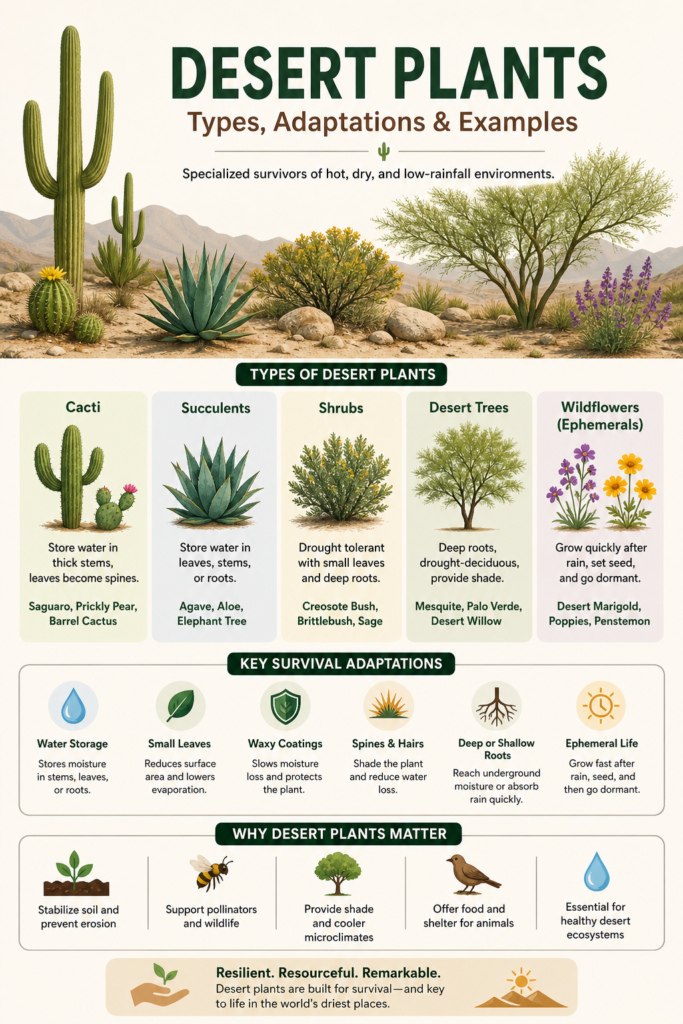
Desert flora becomes easier to understand when it is grouped into five major categories: cacti, succulents, shrubs, trees, and ephemeral wildflowers. These categories represent the most common survival strategies and the most visible roles in the landscape. The Desert Museum and Britannica both show that desert plants rely on a toolkit of water storage, drought tolerance, and drought avoidance rather than a single isolated trait.
1) Cacti
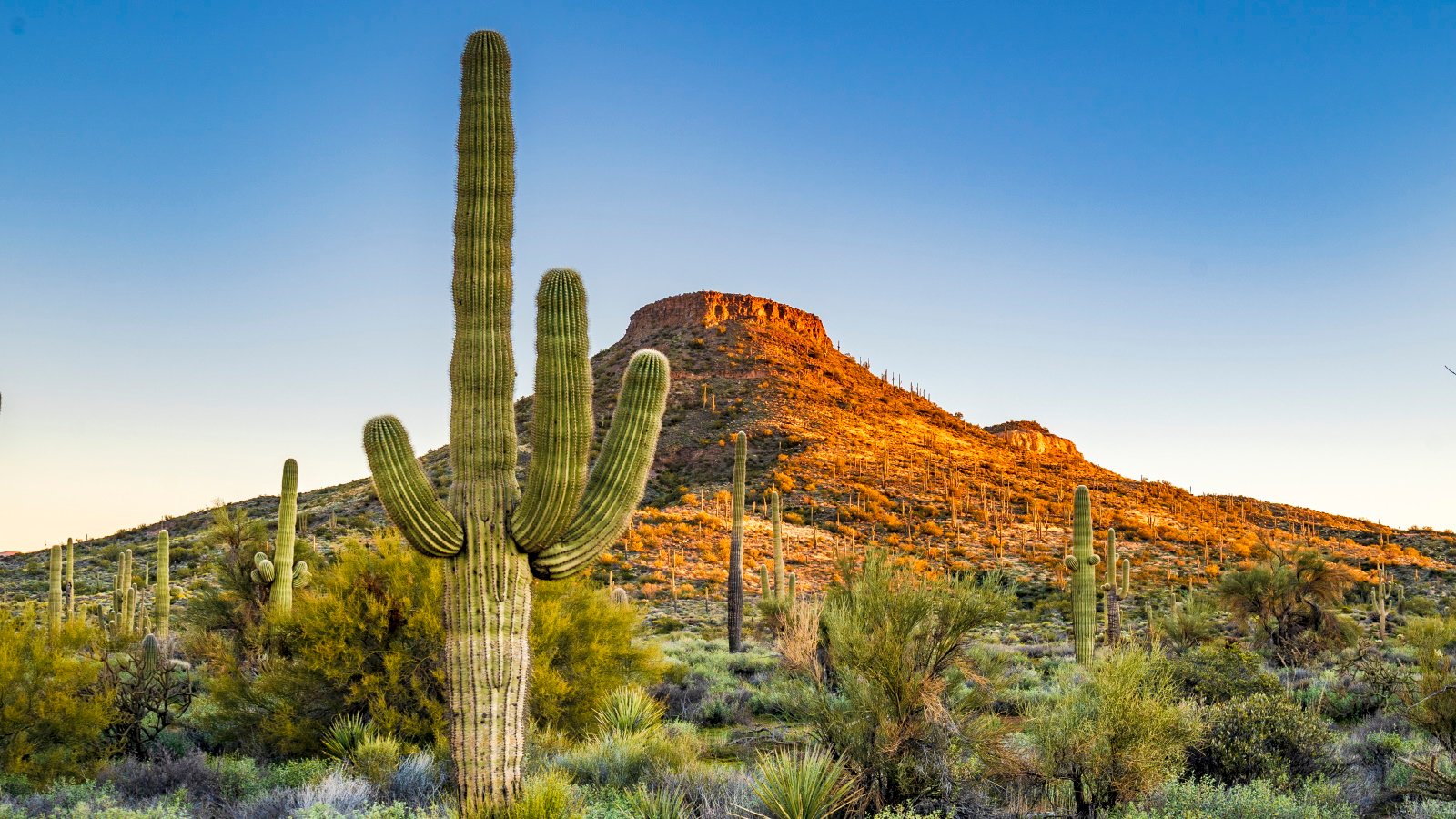
Cacti are the most familiar desert plants because their adaptations are easy to see. They store water in thick stems, and many species have ribs or pleats that allow expansion after rainfall and contraction during drought. Their leaves are reduced to spines, which help shade the plant, reduce water loss, and protect it from herbivores.
Common examples include saguaro, prickly pear, and barrel cactus. These plants are often slow-growing, but they can live for many decades and sometimes much longer. They also provide shelter, food, and nesting places for wildlife. In desert ecosystems, a large cactus is more than a plant; it is a living structure that supports other species.
2) Succulents
Succulents store water in fleshy leaves, stems, or roots. Britannica notes that succulents such as cacti and agaves have thick, water-holding tissues, and the Desert Museum adds that agave, aloe, elephant trees, and many euphorbias also belong to this broader group. Many succulents have shallow root systems, so they can quickly absorb brief rainfall before the ground dries again.
Well-known examples include agave, aloe, and lechuguilla. In gardens, succulents are popular because they are visually striking and fit low-water landscapes. In natural settings, they are survival specialists that bridge long dry intervals by storing moisture in their tissues.
3) Shrubs
Desert shrubs are the backbone of many dry ecosystems. They commonly have small leaves, deep roots, woody stems, and growth forms that reduce water demand. Examples include creosote bush, brittlebush, and desert sage. These plants create structure, shade, soil protection, and cover for wildlife.
Shrubs are important because they often hold the ecosystem together. They reduce erosion, create cooler ground-level spaces, and provide nectar, seeds, and nesting sites. In many deserts, shrubs are the first plants that reveal how alive the landscape really is.
4) Trees
Desert trees create some of the most valuable shade in arid regions. Examples include mesquite, palo verde, desert willow, and Joshua tree. The USDA plant guide for desert willow says it is heat-tolerant, performs well in full sun, prefers well-drained sites, and is valued for rapid growth, drought tolerance, and relatively easy care.
Trees in dry climates often depend on deep roots, drought-deciduous behavior, or a combination of both. Some lose their leaves during drought and regrow them when water returns. This makes trees especially important in desert communities because they create cooler microclimates for plants, animals, and people.
5) Ephemerals and wildflowers
Ephemeral plants are the dramatic stars of the desert bloom season. They survive harsh conditions as seeds, then grow quickly when rain arrives. The Desert Museum explains that drought-avoidance plants often invest heavily in seed production and then complete their life cycle rapidly when moisture becomes available. That is why desert wildflowers can appear suddenly after rain and disappear almost as fast.
Examples include desert marigold, poppies, and penstemon. These plants can transform dry terrain into a temporary burst of color, which is why photographers, hikers, and gardeners watch desert bloom seasons so closely.
The Key Survival Strategies of Desert Flora
The main lesson of desert plants is that adaptation works as a system, not as a single feature. The same plant may combine several survival tools. Britannica describes water storage, leaf drop, leaf folding, waxy coatings, and hair-like coverings as common xerophytic adaptations. The Desert Museum organizes desert survival into succulence, drought tolerance, and drought avoidance.
| Strategy | How it works | Why it helps |
| Water storage | Stores moisture in stems, leaves, or roots | Helps plants survive long dry stretches |
| Small leaves | Reduces surface area | Lowers evaporation |
| Waxy coatings | Slows moisture loss and protects tissues | Helps plants stay cooler and drier |
| Spines or hairs | Shade the plant and discourage grazing | Reduces water loss and damage |
| Deep roots | Reach underground moisture | Accesses hidden water |
| Shallow spreading roots | Catch the brief rain quickly | Makes fast use of short rainfall |
| Leaf drop | Removes water-hungry leaves in drought | Saves energy and moisture |
| Ephemeral life cycle | Grows and seeds fast after rain | Avoids the harshest dry period |
These survival strategies explain why desert plants can seem unusual, rugged, or even extreme. Their forms are shaped by the environment rather than by chance.
Water storage
Water storage is one of the best-known desert adaptations. Succulents keep water inside thick plant tissue, which functions like a built-in reservoir. Cacti and agaves are the most famous examples, but the same principle also appears in other desert species.
Roots that match the rain
Some desert plants develop deep roots to reach groundwater, while others spread shallow roots near the surface so they can absorb a quick rainstorm before it disappears. The Desert Museum notes that saguaro roots are mostly shallow and spread broadly, allowing the plant to capture water from the upper soil layer after brief rainfall.
Smaller leaves and waxy surfaces
Smaller leaves lose less water, and waxy coatings act like a shield against evaporation. Britannica highlights both traits as common xerophyte adaptations. These features are simple, but they are incredibly effective in dry environments.
Spines, hairs, and folded leaves
Spines are not only defense structures. They can also shade the plant surface and reduce airflow around it. Leaf hairs and folded leaves work in a similar way by limiting direct sun exposure. These traits help desert plants keep precious moisture inside their tissues for longer periods.
Fauna: Animals, Reptiles, Insects, and Birds
Although this article focuses on plants, desert plants cannot be separated from desert animals. Plants feed wildlife, shelter wildlife, and shape the movement of animals through the landscape. Without plants, many desert animals would lose food, shade, nesting space, and protection from heat.
The Desert Museum explains that native desert plants support pollinators, including wild bees, and notes that bees in the Sonoran Desert are often better adapted to native Sonoran plants than to plants from other regions. It also states that native plantings support many other forms of wildlife.
Birds use trees and shrubs for nesting and shade. Reptiles rest under plants or close to them, where the ground is cooler. Insects visit flowers for nectar and pollen. Seeds and fruits feed birds and rodents. This is why a healthy desert is not just a collection of plants. It is a complex, interdependent living network.
Human History and Cultures
Desert plants have helped people survive in dry regions for thousands of years. They have been used for food, fiber, medicine, tools, shelter, and ceremony. The Desert Museum and heritage sources show that many native desert plants have long cultural and practical value, especially in the Sonoran region.
Agave is one strong example. The Desert Museum describes agaves as native New World succulents that have been important for food and for fibers used in rope and baskets. Mesquite, yucca, and cactus fruits also have deep histories of use in desert communities. These plants belong to ecology and culture at the same time.
In the modern era, desert plants have become symbols of resilience, low-water living, and climate-smart landscape design. They are used in native gardens, public landscapes, botanical collections, and xeriscaping projects because they are both beautiful and functional.
Survival Tips and Challenges
If you are growing desert plants, the main rule is to imitate the desert without over-stressing the plant. The University of Arizona Extension says xeriscape plants are drought-resistant and can survive extended drought with little or no supplemental irrigation. It also says these plants are suitable for low humidity, low rainfall, and alkaline soils.
NMSU explains that xeriscape is not a barren style and not a “no maintenance” landscape. It is a water-conserving method that uses locally adapted, drought-tolerant plants, efficient irrigation, mulch, and ongoing maintenance. AMWUA also notes that xeriscapes save water, time, and money when properly designed and cared for.
Practical care tips for desert plants
- Use well-drained soil, so roots do not sit in water.
- Water deeply but less often, so roots grow stronger.
- Give most desert plants full sun or the light they naturally need.
- Avoid excess fertilizer, because weak growth can reduce drought tolerance.
- Use mulch wisely to reduce evaporation and protect the soil.
- Match the plant to the climate, soil type, and winter temperature range.
Common challenges
The biggest danger for many desert plants is not only drought. It is overwatering, which can cause root problems in poorly drained soil. Another problem is climate mismatch. A plant may tolerate heat and dryness but still fail in high humidity, excessive winter cold, or the wrong soil. Urban expansion, invasive species, and soil compaction can also make life harder for native desert plants.
Tourism: Attractions, Activities, and Travel Tips
Desert plants are a major reason people visit desert parks, gardens, and nature preserves. Visitors come to see cactus forests, spring wildflower blooms, scenic trails, botanical collections, and photography-worthy desert views. In many cases, the plants are what give a desert its identity and atmosphere.
The Desert Museum’s gardens show how rich a desert display can be, with thousands of plants representing Sonoran Desert communities. Places like that are popular because they combine education, scenery, and conservation in a single experience.
Travel tips for plant-focused desert visits
Visit early in the morning or late in the afternoon. Bring water, sun protection, and sturdy walking shoes. Stay on marked trails so you do not damage young plants or fragile soil. Desert ecosystems recover slowly from disturbance, so even a small shortcut can leave a long-lasting scar.
Interesting Facts About Desert Plants
Desert plants are full of surprises. Several plants survive for months with very little water. Others bloom only after rain. A number resemble cacti even though they are not, while others that look small and plain support entire ecosystems.
One important fact is that desert plants do not all use the same method to survive. Several plants store water. Others avoid drought by existing as seeds until conditions improve, while others use leaves that fold, shrink, or drop away.
That is why desert survival is really a toolkit of many adaptations rather than one simple trick.
Another key fact is that deserts are not empty. National Geographic describes deserts as dry ecosystems with distinctive plants and animals specially adapted to harsh conditions. That is the central point: life is present, but it is optimized for scarcity.
Environmental Issues and Conservation
Desert plants face pressure from climate change, habitat loss, urban development, off-road vehicle damage, invasive species, and shifting rainfall patterns. Because desert life already operates close to its limits, even small environmental changes can have large effects. National Geographic notes that drylands can lose more moisture than they receive, making them especially vulnerable to stress.
Conservation matters because desert plants do far more than survive in isolation. They support wildlife, reduce erosion, store carbon, and protect soil structure. When native shrubs, cacti, or trees disappear, the entire ecosystem becomes weaker. That is why habitat protection and native restoration are so important.
Xeriscaping can help. The University of Arizona, NMSU, and AMWUA all describe xeriscape as a water-conserving approach that uses drought-tolerant and locally adapted plants. That makes it useful for homes, schools, parks, and cities that want attractive landscapes with lower water use.
Pros and cons
| Pros | Cons |
| Low water needs once established | Poor drainage can cause root problems |
| Strong visual variety in shape and texture | Some species are climate-specific |
| Good for xeriscaping and water-wise design | Slow growth can look sparse at first |
| Support pollinators and wildlife | Young plants may need careful establishment |
These trade-offs are normal. The best results come from matching the right plant to the right place.
FAQs
A desert plant is any plant adapted to survive in dry places with very limited rainfall. Many desert plants are xerophytes, meaning they reduce water loss or store water to remain alive in harsh conditions.
No. Desert plants also include succulents, shrubs, trees, grasses, and wildflowers. Cacti are only one group, even though they are the most famous.
They survive with water storage, deep or shallow roots, waxy coatings, small leaves, spines, hairs, leaf drop, and fast growth after rain. Some also avoid drought by living quickly as seeds until conditions improve.
Yes. Many desert plants work well in xeriscaping because they are drought-tolerant and need less supplemental water once established. They still need the right soil, sunlight, and drainage.
They stabilize soil, support wildlife, provide food and cultural resources, and help desert ecosystems stay healthy under harsh conditions. They are also useful in water-wise landscaping.
Conclusion
Desert plants are Remarkable examples of nature’s ability to adapt to extreme conditions. Their survival strategies help them thrive with very little water while supporting wildlife, stabilizing soil, and adding beauty to dry landscapes.