
- Key Takeaways
- Start With the Bathroom’s Daily Job
- Questions to Answer First
- Check the Space Before Choosing a Fixture
- Compare Bathing Options by Lifestyle
- Build Safety Into the Layout
- Plan for Future Needs Without Making the Room Feel Clinical
- Choose Materials That Simplify Cleaning
- Choose the Right Project Scope
- Look Beyond the Finished Walls
- Create a Realistic Budget and Hiring Plan
- Questions to Ask Before Hiring
- Use 2026 Trends as Ideas, Not Rules
- Final Checklist Before Work Begins
Key Takeaways
- Start with the way your household actually uses the bathroom each day.
- Measure the room, plumbing locations, clearances, and access path before choosing a tub or shower.
- Build in safety through lighting, nonslip surfaces, reachable storage, and properly installed grab bars.
- Choose materials and layouts that make cleaning, maintenance, and future adjustments easier.
- Compare estimates based on the full scope of work, not the lowest initial price alone.
A successful bathing-area update should solve daily problems before it follows a design trend. Whether the goal is easier cleaning, a more comfortable soak, safer entry, or better use of a compact bathroom, the best plan begins with the people who use the room and the limitations of the existing space.
Homeowners considering bathtub replacement can review options from Zintex Remodeling Group, a family-owned remodeling company with more than 25 years of installation experience. Its bathtub replacement information covers replacement tub styles, wet-area updates, installation planning, and service for homeowners in Texas, Florida, Missouri, and other service areas, making it a useful starting point when comparing a focused bath update with a larger remodel.
Start With the Bathroom’s Daily Job
Before selecting finishes or fixtures, spend a week noticing how the bathroom works. Consider who bathes there, whether children or guests use it, and whether anyone has mobility concerns. Identify the point of friction: perhaps the tub wall is difficult to step over, the shampoo has nowhere convenient to go, or the room feels crowded during morning routines.
Questions to Answer First
- Is the space mainly used for quick showers, baths, or both?
- Does the household need a bathtub for children, pets, or personal preference?
- What is difficult to clean, reach, enter, or store today?
- Could the room need to serve changing needs over the next several years?
Check the Space Before Choosing a Fixture
A fixture that looks ideal in a showroom may not fit the existing room. Measure the current tub or shower opening, wall height, ceiling height, doorway, vanity, toilet clearance, and nearby cabinets. Note where the drain, water lines, windows, electrical outlets, and exhaust fan are located.
Take wide photos of the entire bathroom, as well as close-ups of the plumbing and wall conditions. Wide photos can reveal door swings, narrow walkways, and storage conflicts that are easy to miss when looking only at the bathing area.
Compare Bathing Options by Lifestyle
- Standard alcove tub: Often practical for compact bathrooms and households that still want a tub-and-shower combination.
- Soaking tub: May suit people who regularly take baths and have adequate floor space, water capacity, and room for comfortable access.
- Walk-in tub: Can provide a low-threshold entry and built-in seat for users who prioritize seated bathing.
- Tub-to-shower conversion: Can make sense when a household rarely uses the tub and would benefit from a more open shower entry.
- Refinishing: May be an option when a tub is structurally sound but its finish is worn.
No single choice works for every household. Bathing habits, room dimensions, mobility, plumbing, budget, and home plans should guide the decision.
Build Safety Into the Layout
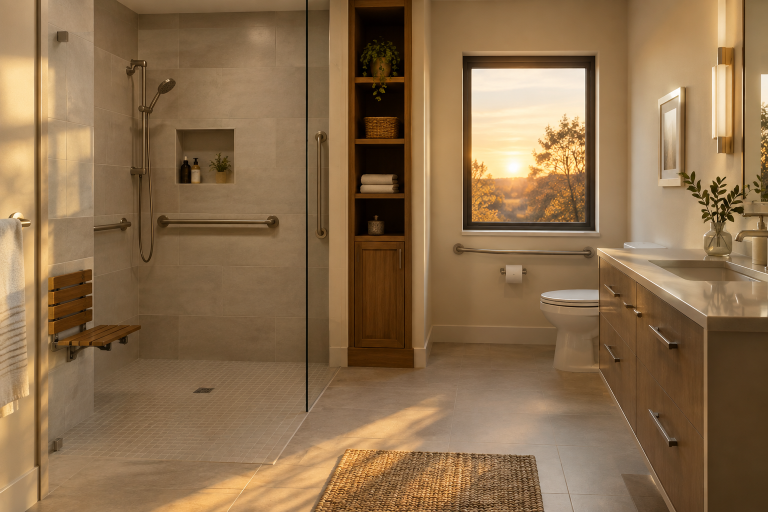
Safety works best when it is part of the design rather than an afterthought. The CDC’s fall-prevention guidance encourages practical home changes such as removing trip hazards, improving lighting, and using grab bars near tubs, showers, and toilets.
- Select slip-resistant flooring and bathing surfaces.
- Use bright, even lighting that limits glare and dark corners.
- Keep soap, towels, and daily products within easy reach.
- Consider a handheld showerhead for flexible, seated, or assisted use.
- Install grab bars into suitable wall structure or approved reinforcement.
- Do not rely on a towel bar as a weight-bearing support.
Plan for Future Needs Without Making the Room Feel Clinical
Many accessible choices can look polished and intentional. A lower-threshold shower entry, lever-style handles, contrasting control colors, and a layout with room for a future seat can improve usability without changing the room’s overall character.
For example, a homeowner may not need a shower seat now but can choose a shower layout that has enough space for one later. Adding wall blocking before the new surround is installed can also make future grab-bar installation simpler and less disruptive.
Choose Materials That Simplify Cleaning
Material choice affects the amount of routine care a bathroom needs. Smooth wall panels generally have fewer grout lines than a tile-heavy surround, while seams, corners, caulk joints, and heavily textured surfaces may require closer attention to cleaning. Before selecting a finish, review the manufacturer’s cleaning directions and ask how repairs or replacement parts are handled.
Good ventilation also matters. Use the exhaust fan during bathing and afterward as needed to help manage humidity. Promptly address leaks, damaged caulk, or loose seals before moisture reaches areas behind the finished walls.
Choose the Right Project Scope
- Surface refresh: May fit a sound tub with worn caulk, minor cosmetic damage, or an outdated appearance.
- Bathtub replacement: May be appropriate when the existing fixture is damaged, unstable, hard to maintain, or no longer meets household needs.
- Tub-to-shower conversion: May fit households that prefer easier entry and use showers far more often than baths.
- Full bathroom remodel: May be necessary when the project includes major layout changes, flooring replacement, plumbing relocation, or ventilation upgrades.
Look Beyond the Finished Walls
Appearance is only one part of a durable bathing-area project. Once an old tub or surround is removed, the installer may need to assess the subfloor, framing, plumbing connections, drain, overflow, and waterproofing. Hidden water damage or movement in the floor can change the work required.
A clear written estimate should explain what is included, how unforeseen repairs are handled, and who approves added work. Before final cleanup, confirm that water drains properly, temperature controls work, and seals are complete.
Create a Realistic Budget and Hiring Plan
Project costs can vary based on fixture materials, demolition, disposal, plumbing changes, wall systems, repairs, accessories, permits, labor, and warranty coverage. Compare written estimates that describe the same scope. A lower price may not include necessary waterproofing, structural repairs, finish materials, or cleanup.
Questions to Ask Before Hiring
- Who handles demolition, plumbing, installation, cleanup, and permit coordination?
- What materials, accessories, and repairs are included?
- How will hidden damage or requested changes be priced?
- What product and workmanship warranties apply?
- How long will the bathroom be unavailable?
Use 2026 Trends as Ideas, Not Rules
Warm finishes, layered lighting, comfort-focused showers, visible storage, and low-maintenance surfaces can all provide useful inspiration. Still, lasting decisions should come first: a functional layout, reliable waterproofing, sufficient lighting, and a bathing fixture that suits the household. Accessories and paint can change more easily than plumbing locations or room dimensions.
Final Checklist Before Work Begins
- Daily goals and must-have features are written down.
- Measurements and fixture fit have been confirmed.
- Safety, waterproofing, and ventilation are included in the plan.
- The estimate identifies labor, materials, repairs, and cleanup.
- Warranty terms, product timing, and bathroom downtime are clear.
A better bathing area does not require every trend or a complete bathroom overhaul. By planning around real routines, safe movement, accurate measurements, manageable maintenance, and future flexibility, homeowners can create a space that remains comfortable and useful for years.