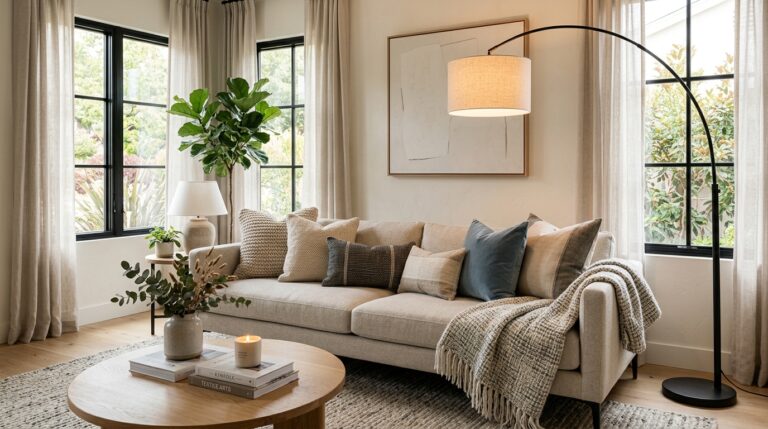

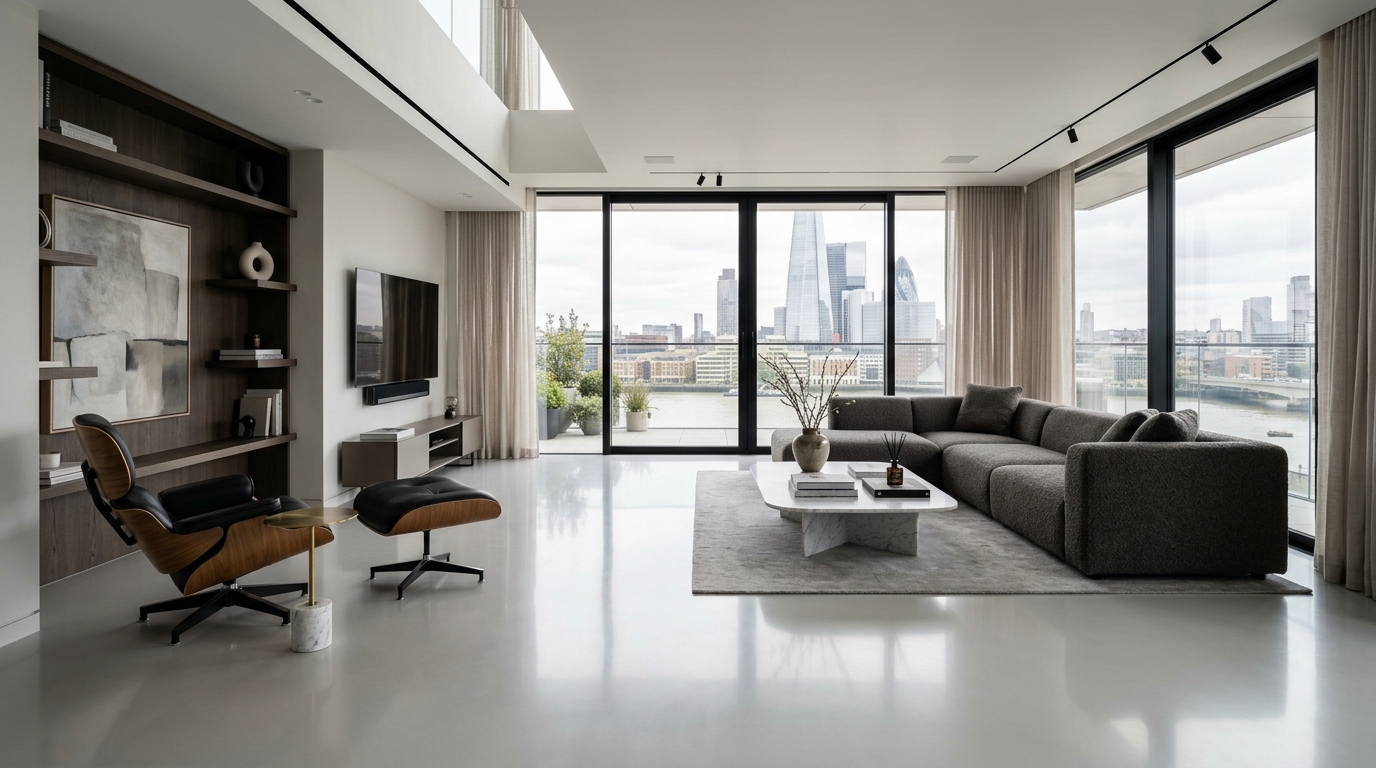
The living room is often one of the most frequently used spaces in a home. It may serve as a place for relaxing, entertaining, watching television, reading, working, or spending time with family. Because the room performs so many roles, it can start to feel tired or cluttered long before the furniture actually needs replacing.
A successful living-room refresh does not always require a complete renovation or an entirely new set of furniture. Rearranging the layout, improving lighting, updating soft furnishings, reducing clutter, and making better use of existing pieces can create a noticeable transformation at a much lower cost.
- Start by Identifying What Feels Wrong
- Remove Unnecessary Items First
- Rearrange Before You Replace
- Use Home-Goods Inspiration Selectively
- Measure the Room Carefully
- Identify a Focal Point
- Improve the Lighting
- Make Better Use of Natural Light
- Refresh the Walls
- Consider a More Personal Wall Display
- Use Interior Images for Layout Inspiration
- Update Soft Furnishings
- Choose a Rug With the Furniture in Mind
- Refresh an Existing Sofa
- Consider Sofa Covers for a Practical Update
- Use Color Through Smaller Elements
- Mix Textures
- Do Not Buy Matching Sets Automatically
- Use Side Tables Strategically
- Review the Coffee Table
- Create Better Storage
- Hide Visual Clutter
- Organize Cables
- Keep Shelves Balanced
- Add Plants Where Conditions Are Suitable
- Think About Everyday Comfort
- Create Separate Zones in Larger Rooms
- Make Small Rooms Feel More Open
- Do Not Overdecorate
- Decorate Gradually
- Choose Durable Materials for Everyday Use
- Review the Room From Different Angles
- Refresh Seasonally Without Redesigning Everything
- Create a Living Room That Evolves With You
Start by Identifying What Feels Wrong
Before buying anything, spend some time looking at the room objectively. Ask whether it feels too dark, crowded, empty, outdated, uncomfortable, or difficult to use.
Different problems require different solutions. A room that lacks storage needs a different approach from one that simply needs better color balance or a more functional furniture arrangement.
Remove Unnecessary Items First
It is difficult to judge a room accurately when every shelf, surface, and corner is full. Remove items that no longer serve a practical or decorative purpose before making larger design decisions.
A simpler starting point makes it easier to understand what the room actually needs rather than adding more objects to an already crowded space.
Rearrange Before You Replace
Furniture placement can dramatically change how a living room feels. A sofa that blocks a natural walkway or chairs that are too far apart can make the room uncomfortable even when the furniture itself is perfectly usable.
Try several arrangements before assuming new furniture is necessary. Creating a clearer conversation area or opening the path between doors may improve the room immediately.
Use Home-Goods Inspiration Selectively
Decorating resources can provide ideas for colors, storage, furniture, textiles, and accessories. The most useful inspiration is usually the kind that can be adapted to the home rather than copied exactly.
During broader home-improvement research, homeowners may encounter resources such as Revamp Home Goods. Browsing different home products and decorating concepts can help clarify preferences, but every purchase should still be evaluated according to room size, function, durability, and existing furniture.
Measure the Room Carefully
Even small decorating changes benefit from accurate measurements. Rugs, side tables, lamps, shelves, and replacement furniture can all look very different in a room than they do online or in a showroom.
Keep a simple record of important dimensions before shopping so that new items do not create unnecessary crowding.
Identify a Focal Point
A living room usually feels more organized when one element acts as the visual center. This might be a fireplace, large window, artwork, television wall, or another architectural feature.
Arrange furniture and decorative elements so they support that focal point rather than competing with several equally dominant features.
Improve the Lighting
Lighting can completely change the appearance of existing furniture and colors. A room relying only on one ceiling fixture may feel flat or harsh.
Consider using a combination of general lighting, table lamps, floor lamps, and task lighting where appropriate. Different lighting levels can also make the room more useful for different activities.
Make Better Use of Natural Light
Heavy furniture or window treatments can reduce the amount of daylight entering the room.
Where privacy and practical needs allow, keep windows visually open and avoid placing oversized furniture directly in front of them. Mirrors can also help reflect available light deeper into the room.
Refresh the Walls
Paint is one of the most effective ways to change a room without altering its structure. A lighter or warmer color can dramatically influence the mood of a living space.
Always test paint in the actual room before committing, because natural and artificial lighting can make colors appear very different from small samples.
Consider a More Personal Wall Display
Artwork, photographs, prints, and decorative wall objects can make a living room feel more personal.
Rather than filling every wall, create one or two intentional displays and leave enough open space around them so individual pieces can have greater impact.
Use Interior Images for Layout Inspiration
Photographs of completed interiors can be helpful when trying to understand scale, furniture spacing, color combinations, and decorative balance.
Homeowners looking through visual decorating resources may come across sites such as The Home Picz. Interior images can provide useful inspiration, but the best layout for a photograph may not work in another property because room proportions, windows, doors, and household needs are different.
Update Soft Furnishings
Cushions, throws, rugs, and curtains can introduce new colors and textures without requiring expensive permanent changes.
These items are especially useful when homeowners want to experiment with trends because they can usually be changed more easily than large furniture pieces.
Choose a Rug With the Furniture in Mind
A rug should help connect the seating arrangement rather than appear like an isolated rectangle in the middle of the floor.
Consider the dimensions of the sofa, chairs, and coffee table when selecting a rug size. A larger rug may sometimes make a small room feel more visually connected.
Refresh an Existing Sofa
The sofa is often the largest piece of furniture in the living room, so its appearance strongly influences the rest of the space. If the frame and cushions are still in good condition, replacement may not always be necessary.
Cleaning, changing cushions, adding throws, or updating the outer appearance can sometimes give the sofa a noticeably fresher look.
Consider Sofa Covers for a Practical Update
Sofa covers can be useful when the upholstery is worn, the color no longer fits the room, or homeowners want additional protection from pets or everyday use.
People researching these options may encounter specialist resources such as Best Sofa Covers. When choosing a cover, homeowners should pay attention to dimensions, fabric, fit, washing instructions, and whether the design is suitable for the shape of the particular sofa.
Use Color Through Smaller Elements
If the main furniture and walls are relatively neutral, smaller items can provide color without overwhelming the room.
Cushions, artwork, ceramics, lamps, and throws can introduce seasonal or changing colors while keeping large investments more flexible.
Mix Textures
A room with only smooth or similar materials can feel visually flat even when the colors work well.
Combining wood, fabric, woven materials, glass, ceramics, and metal can add depth without requiring many different colors.
Do Not Buy Matching Sets Automatically
A full matching furniture set can be convenient, but living rooms often feel more interesting when pieces coordinate without being identical.
Look for connections through color, scale, material, or shape instead of requiring every table and chair to come from the same collection.
Use Side Tables Strategically
Side tables improve both function and visual balance. They provide surfaces for lamps, drinks, books, and other everyday items.
Choose sizes that fit comfortably beside seating without blocking movement.
Review the Coffee Table
The coffee table should work with the seating arrangement rather than dominate it. An oversized table can make movement difficult, while a very small one may be inconvenient.
Storage coffee tables can also help reduce visible clutter in smaller living rooms.
Create Better Storage
Living rooms often collect remote controls, toys, cables, books, blankets, and many other objects.
Baskets, drawers, cabinets, shelving, and multifunctional furniture can provide storage without making the room feel overly utilitarian.
Hide Visual Clutter
Not everything needs to be displayed. Closed storage can be useful for everyday items that would otherwise make shelves and surfaces appear untidy.
A combination of open display and concealed storage often creates a good balance between personality and organization.
Organize Cables
Televisions, speakers, chargers, lamps, and other devices can create visible cable clutter.
Simple cable-management solutions can make entertainment areas look cleaner and reduce the number of loose wires around furniture.
Keep Shelves Balanced
Bookshelves can quickly become overcrowded when every available space is filled.
Mix books with a smaller number of decorative objects and leave some empty space so the arrangement feels intentional rather than simply used for storage.
Add Plants Where Conditions Are Suitable
Plants can introduce natural shapes and soften a room filled with furniture and hard surfaces.
Choose plants according to available light and realistic maintenance requirements rather than selecting them purely according to appearance.
Think About Everyday Comfort
A living room should not become less comfortable simply to look more stylish. Seating height, cushion support, table placement, lighting, and room temperature all affect how pleasant the space is to use.
Design decisions should support the activities that actually take place in the room.
Create Separate Zones in Larger Rooms
A large living room may work better when divided into smaller functional areas.
One zone might support conversation, another reading, and another television or entertainment. Rugs, furniture placement, and lighting can help define these zones without physical partitions.
Make Small Rooms Feel More Open
Compact living rooms benefit from careful furniture selection and clear pathways.
Avoid choosing every item at maximum size. Furniture with visible legs, lighter visual weight, and useful storage can sometimes make a smaller room feel less crowded.
Do Not Overdecorate
Decorative accessories can add personality, but too many small objects can make a room feel busy.
Choose fewer items with stronger meaning or visual value rather than filling every available surface.
Decorate Gradually
A room does not need to be completed in one weekend. Making changes gradually gives homeowners time to understand whether the space actually needs another item.
This approach can also prevent impulsive purchases made simply because one corner temporarily feels empty.
Choose Durable Materials for Everyday Use
Living rooms often experience heavy daily use, especially in homes with children or pets.
Fabrics, rugs, finishes, and furniture should be selected according to practical maintenance requirements as well as appearance.
Review the Room From Different Angles
A layout can look balanced from one seat but awkward from the doorway or another part of the home.
Walk around the room and consider how furniture, artwork, lighting, and open space appear from several viewpoints.
Refresh Seasonally Without Redesigning Everything
Small seasonal updates can prevent a room from feeling stagnant.
Changing throws, cushions, flowers, artwork, or a few decorative items can create variety without replacing permanent elements.
Create a Living Room That Evolves With You
A living room does not need a complete renovation every time tastes change. Many of the most effective updates involve reusing what already works and improving the way individual pieces relate to one another.
By rearranging furniture, improving lighting, reducing clutter, updating textiles, refreshing the sofa, introducing thoughtful storage, and decorating gradually, homeowners can make an existing living room feel significantly newer without replacing everything. A successful refresh should make the room easier to use, more comfortable to spend time in, and more reflective of the people who live there.