
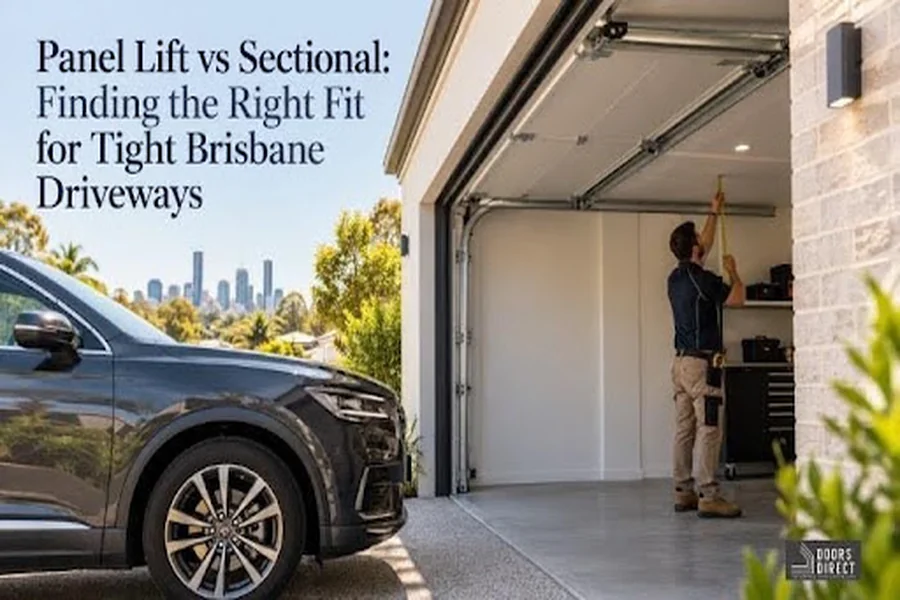
If you’ve been searching “panel lift vs sectional” trying to pick a winner, here’s the twist: there’s no winner. After all, they’re the same garage door, just named after two different things. In Practice, panel lift describes the motion, while sectional describes the panels.
So why do both terms show up everywhere, from brochures to tradie quotes? Well, manufacturers and installers often default to whichever term fits their region or habit. But Doors Direct lists this door as one product line, regardless of which name you search.
Once that confusion is out of the way, the question becomes whether this door suits your driveway. To answer that, this guide breaks down how the door works, why tight Brisbane blocks often favour it, and what to check before you choose one.
Keep reading to find out if it’s the right call for your driveway.
Panel Lift and Sectional: Actually the Same Door
Honestly, the confusion comes from how manufacturers, installers, and homeowners refer to the same garage door design. For example, some use the term panel lift garage door, while others call it sectional, so buyers often assume they’re comparing two different products.
Now, let’s see where each name actually comes from, and what Doors Direct calls it when you get a quote.
Where the Two Names Come From
“Panel lift” describes how the door operates, while “sectional” describes its horizontal panel construction. So when comparing garage doors, check the specifications rather than assuming the two names refer to different designs.
You may also notice different prices for doors advertised under these two names. Those differences usually relate to the door’s material, insulation, panel thickness, or hardware rather than its name.
This similarity counts most when you’re comparing quotes for sectional garage doors or panel lift doors. Two tradies might call the same door by different names, and that shouldn’t change what you’re actually paying for.
What Doors Direct Calls It
Doors Direct lists this door under one product line, which covers both the panel lift and sectional naming. On our website, you won’t find two separate listings or two different price points hiding behind the terms.
The simplest way to prevent confusion between the two names is to check the actual panels and track of the door (no matter which name shows up on the quote). This saves confusion later, especially when reading reviews or comparing brochures from different suppliers.
How These Doors Work: Step by Step
The door lifts in one motion, with panels folding flat against the ceiling as they travel up the track. Many homeowners never think about this until they’re standing in the driveway watching it happen for the first time.
Generally, the door starts flat, covering the full opening with its horizontal panels locked in place. Rollers on each panel edge then guide the panel along a track as it lifts. From there, the track curves upward, pulling the panels flat against the garage ceiling as it opens.
However, most setups run on an automatic opener now, so you’re pressing a button rather than lifting anything by hand on the garage door opener. And the hinges connecting each panel are also pinch-free by design (a small detail that counts for kids).
Once you know how the mechanism works, the next question is obvious: does it actually suit a tight driveway?
Why They’re a Good Fit for Tight Driveways
They suit tight driveways because the door never swings outward, which leaves the full driveway length free. This advantage makes a sectional door particularly useful when you need to park close to the garage entrance, and it’s worth understanding before you measure anything.
Here’s what the missing swing path actually means for your driveway:
- No Swing Path to Clear: The panels travel straight up into the ceiling, so there’s no door arc eating into the space in front of your car. By contrast, a swinging door needs clearance equal to roughly its own height, which a tight driveway simply doesn’t have.
- Narrow Car Spacing Stops Counting: Short driveways and tight side clearance stop being a problem once that swing path is gone. You can then park right up to the door without worrying about it clipping a bumper or bonnet on the way out.
- Ceiling Space Becomes the Real Limit: Double garages with low ceilings run into this more often than single garages do, as there’s more roof area to clear. If the ceiling height falls short, the fix usually sits with the track setup rather than the driveway itself.
We’ve seen plenty of Brisbane homes where the driveway was never the issue. Mostly, the problem starts with the ceiling, and once that’s measured properly, the rest of the decision gets a lot easier.
Once you’ve checked the ceiling clearance, you can then focus on design. Sectional garage doors come in different panel styles, colours, and finishes, so you can choose an option that suits your home.
Other Garage Door Types If Sectional Doesn’t Fit
If your garage ceiling is too low for a sectional door, you still have other options to consider. Fortunately, tilt doors and roller garage doors cover most of these cases.
In practice, tilt doors use a single solid panel that swings outward before lifting into the garage. That swing path needs driveway clearance, the exact trade-off sectional doors avoid. Meanwhile, roller doors coil into a compact drum above the opening, which needs very little ceiling space to operate.
Check how the three door types stack up on the factors for a tight block:
| Door Type | Ceiling Space Needed | Swing Path | Best For |
| Sectional / Panel Lift | Moderate to high | None | Tight driveways, better insulation |
| Roller | Low | None | Very low ceiling height |
| Tilt | Low | Yes, outward | Simple setups, open driveway space |
Sectional doors generally hold the edge on insulation, with foam-filled panels giving a tighter seal and thermal insulation than a roller door manages. They can also operate silently because their rollers move along guided tracks.
On the other hand, roller doors tend to cost less upfront and require less maintenance overall (choose them when budget is your deciding factor over ceiling space). Durability also holds up well, though sectional doors edge ahead thanks to fewer exposed parts and stronger security against forced entry.
Many Brisbane specialists like Doors Direct install sectional and panel lift doors. They also supply roller and tilt options, so you’ve got a real alternative if ceiling space rules one out.
Remember, every door you choose needs to meet AS/NZS 4505, the Australian standard covering garage door design, construction, and wind safety. And for expert advice on which setup suits your property, a proper measure beats guessing from a brochure.
Your Next Move: Picking a Door That Actually Fits
So the “panel lift vs sectional” question was never really a competition. It’s one door, two names, and now you know exactly what’s behind both.
What actually decides the right choice (and the right door for your place) is your ceiling space and driveway length. If your garage has the clearance, a panel lift garage door keeps your driveway fully usable every time it opens.
Not sure what your new garage door needs to clear? Get in touch with Doors Direct for a proper measure and a straight answer on what fits your place.