
Outdoor lighting plans often begin with the front elevation. Homeowners imagine how the house should look from the street, choose matching fixtures, and stop there. That approach can produce a tidy photograph, but it may not help when someone is carrying groceries from the car, searching for a gate latch, or taking the rubbish out on a wet evening.
A more useful plan starts with ordinary routines. Walk around the property after sunset and pay attention to the places where you slow down, reach for something, or change direction. Those small moments reveal where light is genuinely needed.
- Begin with the routes you use every week
- Put light where your hands are working
- Give side doors and utility areas their own plan
- Use the wall to shape the beam
- Do not ask one bright fixture to do every job
- Separate everyday lighting from occasional lighting
- Check the view from indoors
- Choose for the actual weather exposure
- Plan first, then choose the appearance
Begin with the routes you use every week
Think about movement rather than individual fixtures. The route from the driveway to the front door might include a step, a narrow path, and a porch. The journey to a side gate may pass a hose reel or an uneven patch of paving. A single bright porch light rarely covers all of these points well.
Make a quick evening walk with the existing lights switched on. Note where shadows hide the edge of a step and where glare makes it harder to see beyond the fixture. You may discover that the darkest area is not the doorway itself, but the final few feet leading to it.
Put light where your hands are working
At an entrance, the useful area is usually around hand and waist height. You need to see the keyhole, keypad, door handle, parcel, and perhaps a visitor’s face. A light mounted too high may illuminate the wall beautifully while leaving the lock in shadow.
Before fixing the mounting position, ask someone to hold a temporary work light near the proposed spot. Stand where a guest would stand and check whether the beam reaches the handle without shining directly into the eyes. Also look at the house number from the pavement. It should be readable without turning the entrance into a miniature sports field.
Give side doors and utility areas their own plan
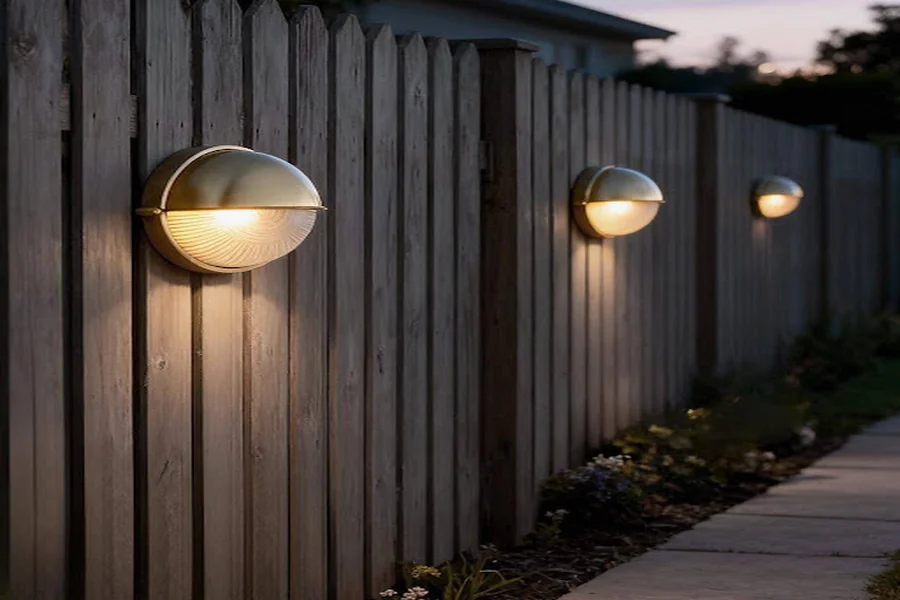
The side of a home tends to collect practical things: bins, tools, bicycles, meters, an outdoor tap, or the path to a shed. It is also frequently treated as an afterthought. A compact wall fixture near a side door or fence can be more helpful than another decorative light at the front.
In a narrow passage, avoid a fixture that projects far from the wall. People carrying boxes or moving a bin can easily knock into it. A covered or diffused light is also kinder in a tight space because the source is less likely to sit directly in your line of sight.
Use the wall to shape the beam
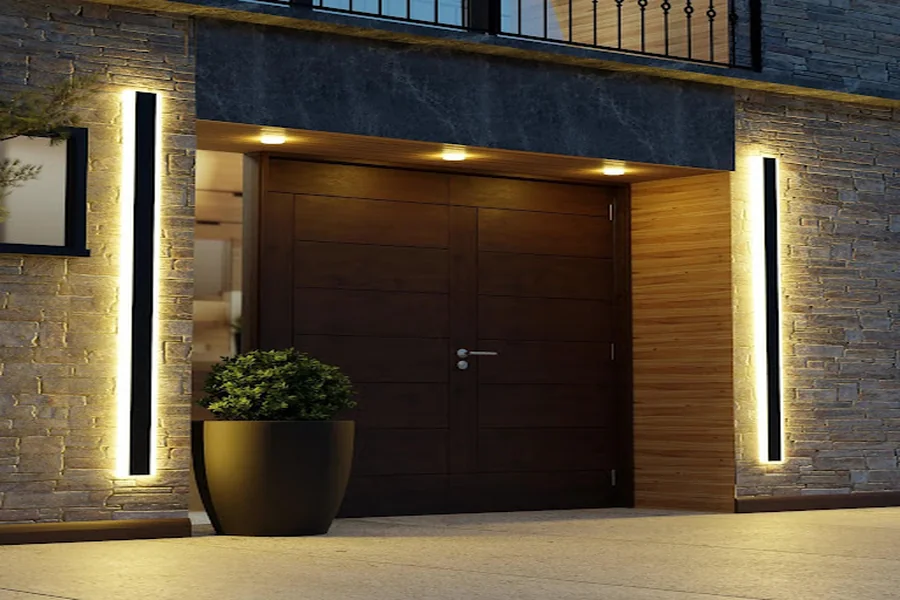
Exterior walls are not merely mounting surfaces. Their color, texture, and position affect the way light behaves. Pale render reflects more illumination than dark brick, while a rough stone wall creates deeper pockets of shadow. A downward beam can clarify the ground near a doorway, and an up-and-down design can add softer architectural interest where functional light is already available.
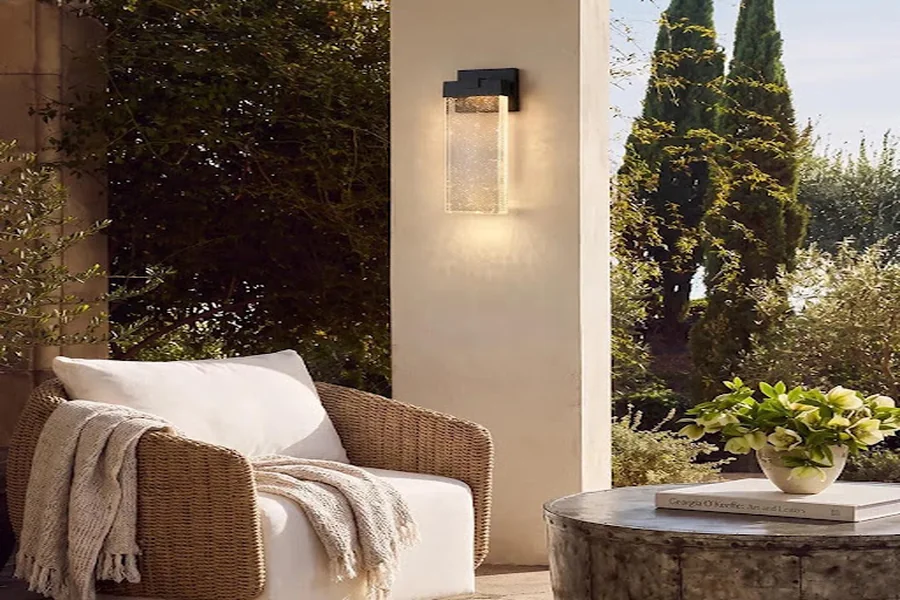
When comparing outdoor wall lighting, look beyond the daytime shape of the fitting. Product dimensions, beam direction, color temperature, and the position of the light source will have a much greater effect after dark.
Do not ask one bright fixture to do every job
One oversized light above the garage may seem economical, but it often creates a bright center surrounded by heavy shadows. Several moderate sources usually make steps, doors, and changes in level easier to understand. The result can feel calmer as well.
This does not mean installing lights everywhere. It means separating tasks. A porch light can serve the lock and doorstep. A second fixture can cover the garage-side path. A small light near the gate can reveal the latch. Each source has a clear purpose, so none needs to overpower the entire yard.
Separate everyday lighting from occasional lighting
Some areas need illumination every night. Others are used only when friends visit or when someone is cooking outside. Putting them all on one switch wastes energy and makes the house brighter than necessary.
Consider separate controls for the entrance, side passage, and patio. A timer or dusk-to-dawn control can suit a regularly used doorway, while a carefully positioned motion sensor may be better near bins or a garage. Sensor range matters: if passing cars, branches, or pedestrians constantly trigger the light, it will quickly become irritating.
Check the view from indoors
Before making the installation permanent, look through nearby windows. A fixture that seems gentle from the garden can reflect strongly in glass or throw light across a bedroom ceiling. Pay particular attention to upper-floor rooms and neighboring windows.
Glare is often solved by changing the angle, choosing a shielded design, reducing brightness, or moving the fixture a short distance. These are easier changes to make during planning than after holes have been drilled and wiring completed.
Choose for the actual weather exposure
A light beneath a deep porch roof faces different conditions from one installed on an open gatepost. Check the manufacturer’s stated outdoor or wet-location suitability rather than assuming that every exterior-style fixture offers the same protection. In coastal or humid areas, the construction and finish deserve extra attention because salt and moisture can be hard on metalwork.
Maintenance should also be realistic. Textured glass may need occasional cleaning, while a very intricate frame can trap dust, insects, and windblown debris. If a fixture sits above a difficult stairway, consider how safely the lamp or light source can be serviced.
Plan first, then choose the appearance
Once the routes, tasks, mounting positions, and controls are clear, selecting a style becomes much easier. Collections from retailers such as Dazuma lighting can provide useful visual references, but measurements and installation details should be checked carefully before ordering. Hardwired work should be completed in accordance with local requirements, with a qualified electrician involved where necessary.
A successful outdoor lighting plan does not make every corner equally bright. It helps you see the next step, find the key, close the gate, and carry shopping indoors without thinking about the lighting at all. That quiet usefulness is usually the best sign that the plan is working.