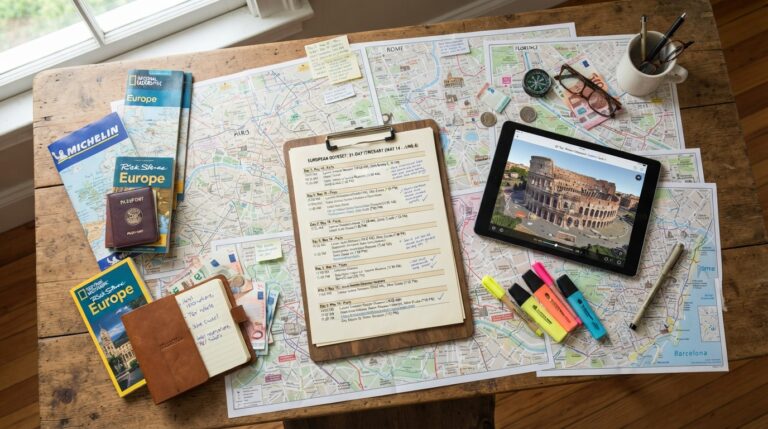


Planning a trip has become much easier because travelers can research destinations, compare options, organize reservations, and discover useful ideas before leaving home. At the same time, the enormous amount of information available online can make travel planning confusing. Reviews may conflict, recommendations can become outdated, and travelers may spend hours researching details that ultimately have little effect on their journey.
A smarter approach is to use online resources selectively. Instead of trying to discover everything about a destination, focus on the information that helps you make practical decisions while leaving enough flexibility to enjoy unexpected experiences after arrival.
- Start With the Basic Structure of the Trip
- Explore the Web for Broad Travel Inspiration
- Compare Destinations Based on Your Priorities
- Research Transportation Before Booking Accommodation
- Use Maps as a Planning Tool
- Use Digital Resources Without Becoming Overdependent
- Read Reviews for Patterns, Not Individual Opinions
- Check When Information Was Published
- Keep Your Research Organized
- Make Important Information Available Offline
- Understand the Online Services You Depend On
- Compare Prices Carefully
- Research Neighborhoods, Not Just Hotels
- Separate Inspiration From Verification
- Avoid Researching Every Detail
- Review Essential Details Shortly Before Departure
- Use Technology to Support the Journey
Start With the Basic Structure of the Trip
Before researching individual attractions, establish the basic framework of the journey. Decide approximately when you want to travel, how long you can stay, what budget is realistic, and which destinations are possible within those limits.
Once these fundamentals are clear, online research becomes much more focused. Instead of browsing hundreds of unrelated possibilities, you can concentrate on destinations and experiences that genuinely fit your plans.
Explore the Web for Broad Travel Inspiration
Some travelers begin with a specific destination, while others simply know that they want to take a vacation. When the destination has not yet been decided, broad online exploration can help generate ideas.
General-interest websites can be part of this discovery process because useful inspiration may come from subjects beyond traditional travel content. While browsing different topics online, readers may encounter resources such as Web Wooky. An article about culture, technology, food, history, or lifestyle may unexpectedly introduce a place or experience worth researching for a future journey.
Compare Destinations Based on Your Priorities
A beautiful destination is not automatically the right destination for every traveler. Someone looking for nightlife may have completely different priorities from a family seeking quiet beaches or a traveler interested in museums and historical sites.
Create a short list of the features that matter most to you. Weather, transportation, accommodation costs, food, outdoor activities, accessibility, entertainment, and travel time can all influence the decision.
Research Transportation Before Booking Accommodation
A hotel may look ideal until you discover that reaching the attractions you want to visit requires long and expensive journeys every day. Before confirming accommodation, examine the destination’s transportation network.
Check the approximate distance between airports, train stations, neighborhoods, and major attractions. Understanding these relationships can help you choose a location that reduces unnecessary travel during the vacation.
Use Maps as a Planning Tool
Digital maps are useful for much more than navigation. Saving potential attractions, restaurants, parks, markets, and neighborhoods on a map can reveal which places are located close together.
This makes itinerary planning considerably easier. Activities in the same area can be grouped on one day, reducing the amount of time spent traveling back and forth across a city.
Use Digital Resources Without Becoming Overdependent
Phones and online services can simplify almost every stage of travel. Travelers can store reservations, navigate unfamiliar streets, translate phrases, check transportation, communicate with accommodation providers, and organize important documents digitally.
General technology and online content may also introduce travelers to tools or ideas they had not previously considered. During broader research, readers might come across resources such as Digital Lard. When a particular digital service appears useful for travel, check its current features, privacy practices, costs, and official information before depending on it during an important journey.
Read Reviews for Patterns, Not Individual Opinions
Reviews can provide valuable information about hotels, attractions, restaurants, and transportation services, but individual experiences vary considerably. One extremely positive or negative review should rarely determine an entire decision.
Look instead for recurring observations. If many recent travelers mention the same cleanliness issue, transportation difficulty, noise problem, or useful feature, that pattern may deserve more attention than an isolated complaint.
Check When Information Was Published
Travel information can become outdated quickly. Restaurants close, ticket systems change, attractions introduce new opening hours, transportation routes are modified, and entry requirements can change.
Whenever practical information affects a booking or important part of the itinerary, check the publication date and confirm the details through a current authoritative source.
Keep Your Research Organized
Useful information can quickly become scattered across browser tabs, screenshots, emails, social media posts, and messaging applications. Without a simple organization system, travelers may struggle to find important details later.
Create one central place for essential information. This might contain accommodation details, transportation reservations, attraction tickets, saved maps, possible restaurants, and a short list of optional activities.
Make Important Information Available Offline
Internet access should not be assumed at every stage of a journey. Mobile coverage can disappear, roaming may be unavailable, and a hotel or public Wi-Fi network may not work when needed.
Save essential addresses, booking confirmations, tickets, transportation information, and other important details offline. Downloading relevant maps before departure can also provide additional security when navigating an unfamiliar destination.
Understand the Online Services You Depend On
Many parts of modern travel depend on websites and digital infrastructure. Accommodation reservations, transportation tickets, travel research, maps, and activity bookings may all involve online platforms.
Travelers researching the broader online world may encounter general resources such as Hosting22. Although technical subjects may not appear directly related to a vacation, understanding that online services can experience outages or technical problems is a useful reminder not to keep every essential travel detail accessible through only one website or application.
Compare Prices Carefully
Price comparison is one of the biggest advantages of online travel planning, but the cheapest advertised option is not necessarily the least expensive overall.
Check baggage fees, taxes, transportation to the accommodation, cancellation policies, resort charges, breakfast costs, and other possible expenses. A slightly more expensive booking may provide better overall value when important extras are included.
Research Neighborhoods, Not Just Hotels
Accommodation reviews usually focus on the property itself, but the surrounding neighborhood can have an equally important effect on the experience.
Research nearby transportation, restaurants, shops, attractions, and walking distances. Consider whether the location remains practical in the evening and whether it suits the type of trip you are planning.
Separate Inspiration From Verification
Blogs, videos, discussions, social media, and general websites can be excellent sources of inspiration. They may introduce travelers to destinations, neighborhoods, foods, attractions, or experiences that would otherwise remain undiscovered.
However, inspiration and verification serve different purposes. When information affects visas, border requirements, transportation schedules, safety, opening hours, ticket prices, or other important decisions, verify it through current official or authoritative sources.
Avoid Researching Every Detail
There is a point at which additional research stops improving a trip. Reading dozens of restaurant reviews or watching every available video about a destination can remove some of the excitement of discovery.
Research the decisions that matter, prepare for major practical issues, and allow smaller choices to happen naturally after arrival.
Review Essential Details Shortly Before Departure
Information collected several months earlier should not automatically be assumed to remain accurate. A final review shortly before departure can identify changes while there is still time to respond.
Confirm transportation times, accommodation reservations, important attraction bookings, expected weather, and any relevant entry requirements. This final check can prevent outdated information from creating unnecessary problems.
Use Technology to Support the Journey
Online resources are most valuable when they make travel simpler. Maps can improve navigation, comparison tools can support budgeting, digital reservations can reduce paperwork, and broad online reading can provide inspiration for experiences worth exploring.
The goal, however, is not to plan every moment through a screen. By researching selectively, comparing reliable information, organizing essential details, maintaining offline backups, and leaving room for spontaneous discoveries, travelers can use the internet as a practical planning tool while still allowing the destination itself to remain the most important part of the journey.