

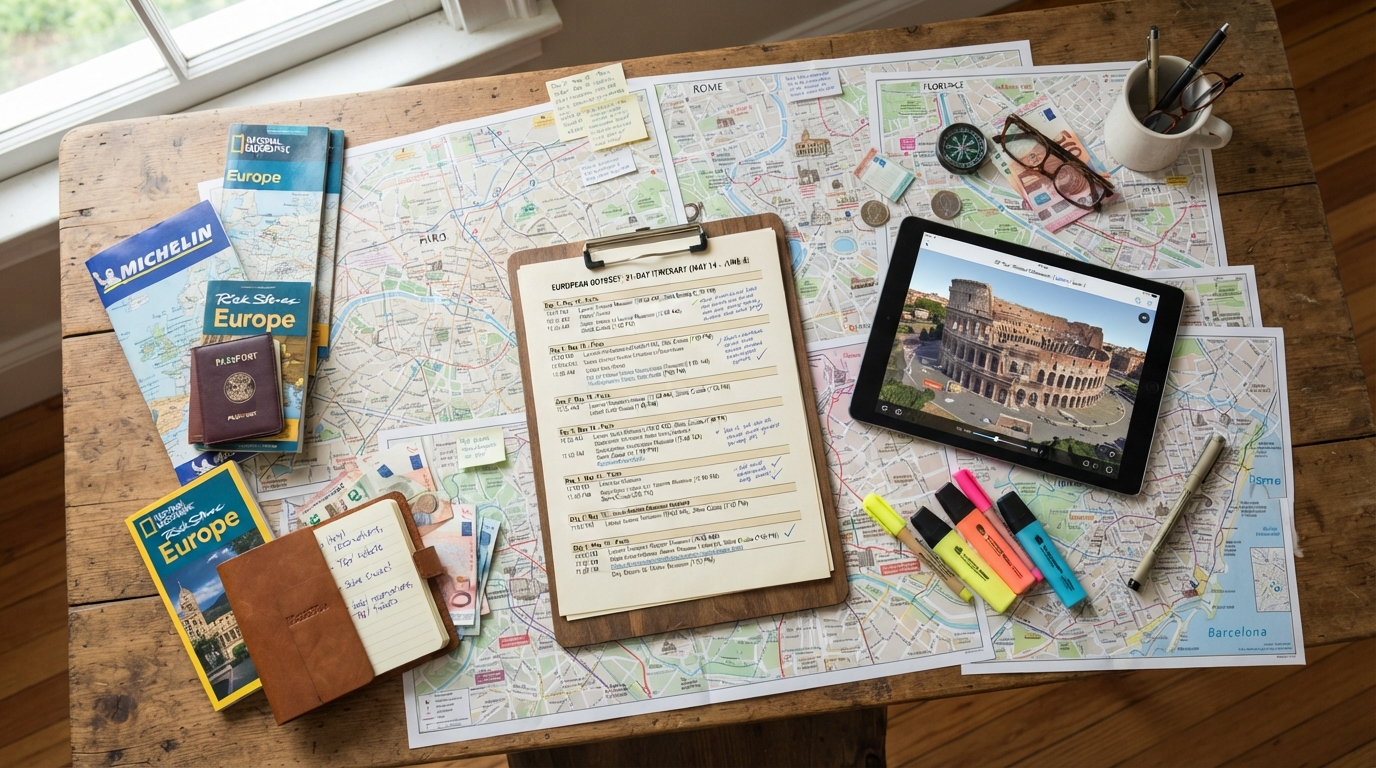
Travel today is closely connected with information. Travelers check weather forecasts, transportation schedules, local events, attraction hours, accommodation updates, and destination news before and during a journey. Access to current information can make a trip easier, but constantly monitoring every possible update can also make travel feel unnecessarily complicated.
The most practical approach is to focus on information that can actually change a decision. Travelers do not need to follow every headline or update about a destination. They simply need reliable awareness of the issues that affect transportation, accommodation, safety, weather, and important reservations.
- Research the Destination Before Departure
- Use General Information for Broader Context
- Identify Which Updates Actually Matter
- Check Transportation Before Important Journeys
- Keep the Itinerary Flexible
- Check Weather According to Your Activities
- Use Broader News as a Starting Point
- Avoid Making Decisions Based on Headlines Alone
- Understand Geographic Relevance
- Check Attraction Information Directly
- Keep Alternative Activities Available
- Review Tomorrow’s Plans Each Evening
- Do Not Constantly Refresh Updates
- Keep Essential Information Organized
- Save Important Information Offline
- Use Notifications Selectively
- Keep Some Financial Flexibility
- Understand Cancellation and Change Policies
- Separate Significant Problems From Minor Inconveniences
- Leave Room for Positive Changes Too
- Verify Critical Information Through the Right Source
- Stay Informed Without Letting Information Control the Journey
Research the Destination Before Departure
Before traveling, develop a broad understanding of the destination. Learn about its main neighborhoods, transportation system, seasonal conditions, local customs, and the attractions that matter most to you.
This background makes later updates easier to interpret because travelers already understand how the destination is organized.
Use General Information for Broader Context
Travel guides are excellent for practical destination research, while broader news and information sources can provide additional context about communities, events, culture, and regional developments.
During wider online research, readers may encounter general-interest resources such as BBC World Service Trust. General content can introduce subjects worth exploring further, while information affecting actual travel arrangements should be confirmed through current and directly relevant sources.
Identify Which Updates Actually Matter
Not every development involving a destination needs to influence a travel itinerary. Prioritize information that could affect transportation, accommodation, planned activities, severe weather, or other important arrangements.
If an update has no practical effect on your journey, it may not require immediate attention.
Check Transportation Before Important Journeys
Flights, trains, buses, and ferries can experience schedule changes. Check important journeys shortly before leaving for the airport, station, or terminal.
When possible, rely on information from the transportation provider responsible for the service.
Keep the Itinerary Flexible
A rigid itinerary makes it difficult to respond when conditions change. Instead of filling every hour with reservations, create a structure around a few important commitments and keep additional activities flexible.
This gives travelers more freedom to respond to weather, delays, or new opportunities.
Check Weather According to Your Activities
A weather forecast is most useful when considered alongside the itinerary. Rain may have little effect on a museum day but could significantly change plans involving beaches, hiking, viewpoints, or outdoor sightseeing.
Keep weather-dependent activities movable whenever possible.
Use Broader News as a Starting Point
General reporting can draw attention to local or regional developments that may deserve further research. The key is to determine whether those developments actually affect the specific places and activities on your itinerary.
During broader online browsing, travelers may come across resources such as Newsline World. If a story appears relevant to a trip, travelers should confirm its location, timing, and practical impact through the authority, operator, venue, or organization directly involved.
Avoid Making Decisions Based on Headlines Alone
Headlines are designed to summarize stories quickly, but they may not contain enough detail for an important travel decision.
Before changing transportation, canceling accommodation, or abandoning a planned destination, understand exactly what has happened and whether it affects your actual itinerary.
Understand Geographic Relevance
A development in one part of a large city or region may have no effect on another area. Travelers should pay attention to exact locations rather than assuming that every event applies to an entire destination.
Maps can be useful for comparing reported locations with accommodation and planned activities.
Check Attraction Information Directly
Museums, landmarks, parks, and other attractions may change opening hours because of maintenance, seasonal schedules, private events, or other circumstances.
If an attraction is one of the main priorities of the trip, check its current information shortly before visiting.
Keep Alternative Activities Available
A flexible itinerary should include several options that can replace plans if conditions change. Museums, markets, galleries, shopping areas, cafés, and cultural spaces can serve as useful alternatives to outdoor activities.
These backup options do not need to be formal reservations.
Review Tomorrow’s Plans Each Evening
A brief evening review can prevent many avoidable problems. Check tomorrow’s weather, important transportation, attraction opening hours, and fixed reservations.
If something has changed, adjust optional activities while protecting the parts of the schedule that matter most.
Do Not Constantly Refresh Updates
There is a difference between staying informed and spending the entire vacation monitoring a phone. Most ordinary travel days do not require continuous checking.
Set sensible moments to review important information, such as in the morning or evening, and spend the rest of the time experiencing the destination.
Keep Essential Information Organized
Travelers should be able to access important reservations quickly when plans change. Keep accommodation information, transportation bookings, tickets, addresses, and important contacts in one organized location.
This reduces unnecessary stress during disruptions.
Save Important Information Offline
Internet connectivity may become unreliable during a journey. Travelers should not depend entirely on online access for essential details.
Save important tickets, accommodation addresses, transportation information, and maps offline before they are needed.
Use Notifications Selectively
Transportation and booking services may offer useful notifications when schedules or reservations change. These alerts can reduce the need to check manually throughout the day.
Enable notifications only for services that genuinely matter to the journey so that important information is not buried among unnecessary alerts.
Keep Some Financial Flexibility
Unexpected travel changes can sometimes create additional costs. Alternative transportation, replacement tickets, or another activity may become necessary.
A modest financial buffer can make these changes easier to manage without disrupting the rest of the vacation budget.
Understand Cancellation and Change Policies
Before making expensive bookings, review whether they can be changed or canceled. Flexibility can become valuable when transportation or local conditions change.
The cheapest booking is not always the best value if it provides no practical options when plans need to move.
Separate Significant Problems From Minor Inconveniences
Not every disruption should receive the same response. A delayed local bus is very different from a canceled international flight.
Prioritize issues involving essential transportation, accommodation, important reservations, or major changes to the trip. Smaller inconveniences can usually be handled with simple alternatives.
Leave Room for Positive Changes Too
Not every change is a problem. A local event, unexpected recommendation, or interesting neighborhood discovered after arrival may provide a reason to adjust the itinerary.
Travelers with some open time can respond to these opportunities more easily.
Verify Critical Information Through the Right Source
Different sources are useful for different purposes. General websites can provide context and inspiration, while critical practical information should come from the organization responsible for it.
Transportation operators, accommodation providers, attractions, local authorities, and other relevant official sources are usually more appropriate when the information directly affects a booking or important decision.
Stay Informed Without Letting Information Control the Journey
Travelers benefit from current information because it provides options. Knowing about a transportation change before leaving the hotel or checking weather before an outdoor activity can save time and reduce frustration.
However, the purpose of staying informed is to support the journey, not to replace it. By checking only relevant developments, confirming important details, keeping backup options available, and maintaining a flexible itinerary, travelers can remain prepared without spending the entire vacation following updates. Good information should make travel easier and leave more time for the destination itself.