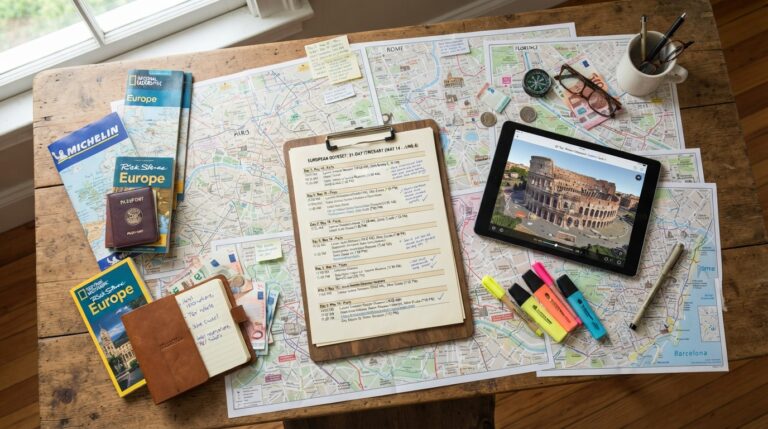


International travel can offer a powerful change of perspective. A few days in a different country can introduce travelers to new landscapes, architecture, food, languages, customs, and ways of organizing everyday life. Yet a successful vacation requires more than choosing an attractive destination and booking a flight.
The best trips balance preparation with freedom. Travelers need enough planning to avoid preventable problems with transportation, accommodation, documents, money, and local logistics, while still leaving room for slower mornings, unexpected discoveries, and changes in weather or energy.
- Begin With the Experience You Want
- Separate Must-Haves From Preferences
- Choose a Destination That Fits the Available Time
- Think About Pace
- Research the Season Carefully
- Understand Peak Season
- Consider Shoulder-Season Travel
- Research Island Destinations Thoroughly
- Plan Santorini According to Your Travel Style
- Do Not Choose Accommodation Only for the View
- Check the Exact Property Location
- Understand the Terrain
- Ask About Luggage Access
- Compare Room Categories Carefully
- Check Whether Breakfast Is Included
- Understand Cancellation Rules
- Create a Complete Vacation Budget
- Estimate Daily Spending
- Keep an Emergency Reserve
- Compare Flights by Total Journey Quality
- Check Airport Locations
- Allow Enough Connection Time
- Be Careful With Separate Tickets
- Review Baggage Rules Before Packing
- Pack Essential Items in Carry-On Luggage
- Avoid Overpacking
- Build a Simple Packing List
- Check the Weather Before Final Packing
- Pack Layers
- Choose Comfortable Shoes
- Keep Travel Documents Organized
- Check Passport Validity Early
- Verify Entry Requirements Through Official Sources
- Check Health Requirements
- Consider Travel Insurance
- Understand Medical Coverage
- Save Insurance Information Offline
- Build an Itinerary Around Priorities
- Leave Open Time
- Group Attractions by Area
- Allow Time for Meals
- Build Rest Into Hot Days
- Plan Sunrise and Sunset Activities Selectively
- Arrive Early at Popular Viewpoints
- Respect Private Property
- Explore Beyond Iconic Photo Spots
- Use Local Transportation Where Practical
- Check the Last Return Service
- Understand Ferry Travel
- Arrive at Ports Early
- Keep Motion Sickness in Mind
- Consider Renting a Vehicle Only When It Adds Value
- Research Local Driving Rules
- Inspect Rental Vehicles
- Understand Insurance Options
- Travel Slowly Enough to Understand a Place
- Explore Cultural Travel Resources
- Learn the Basic History of the Destination
- Learn Several Local Phrases
- Download Translation Tools Offline
- Understand Local Etiquette
- Dress Appropriately at Religious Sites
- Observe Before Photographing
- Ask Before Making Individuals the Main Subject
- Try Local Food
- Research Dietary Needs
- Do Not Book Every Restaurant
- Visit Local Markets
- Carry Some Local Currency
- Understand the Exchange Rate
- Keep Backup Payment Methods Separate
- Be Careful With Currency Conversion Offers
- Protect Your Passport
- Keep Copies of Important Identification
- Protect Your Phone
- Prepare Mobile Connectivity Before Traveling
- Save Maps Offline
- Save Accommodation Addresses Offline
- Download Tickets Before Leaving
- Carry a Power Bank
- Bring the Correct Power Adapter
- Do Not Carry Too Many Gadgets
- Back Up Travel Photos
- Do Not Experience the Entire Trip Through a Screen
- Use Public Wi-Fi Carefully
- Protect Financial Accounts
- Notify Financial Providers if Required
- Keep Emergency Contacts Accessible
- Share the Itinerary With Someone Trusted
- Check In During Solo Trips
- Use Reputable Tour Providers
- Understand What the Tour Price Includes
- Check the Physical Demands
- Plan Weather-Dependent Tours Early in the Stay
- Do Not Ignore Local Safety Instructions
- Avoid Dangerous Photo Locations
- Respect Beaches and Natural Areas
- Do Not Remove Natural Souvenirs Where Prohibited
- Support Local Businesses
- Buy Souvenirs Thoughtfully
- Avoid Overloading the Final Day
- Confirm Flight Details Again
- Know the Departure Terminal
- Allow Appropriate Airport Time
- Keep Important Items Accessible During the Journey Home
- Review the Trip After Returning
- Save Useful Travel Notes
- Build Trips Around Experiences Rather Than Checklists
Begin With the Experience You Want
Before comparing destinations, decide what kind of vacation would actually feel rewarding.
Some travelers want beaches and scenic views, others prefer food, museums, historic streets, nightlife, hiking, photography, or quiet time away from work. A destination should match the experience rather than simply being popular online.
Separate Must-Haves From Preferences
A successful trip rarely satisfies every possible preference within one budget and schedule.
Create a short list of essential requirements such as warm weather, direct flights, walkability, beach access, cultural attractions, or family-friendly activities. Treat everything else as optional.
Choose a Destination That Fits the Available Time
A destination requiring several long flight connections may not make sense for a four-day break.
Consider door-to-door travel time, not just the length of the flight. Airport transfers, immigration, connections, and local transportation all reduce the usable vacation time.
Think About Pace
Some destinations reward rapid sightseeing, while others are best experienced slowly.
Island vacations, coastal towns, historic regions, and countryside stays often become more enjoyable when travelers avoid moving accommodation every night.
Research the Season Carefully
Destination photographs rarely show uncomfortable temperatures, strong winds, heavy rainfall, seasonal closures, or extreme crowds.
Check typical conditions for the exact month of travel before making nonrefundable bookings.
Understand Peak Season
Peak travel periods can provide ideal weather and a full range of activities, but they may also bring higher prices and crowded attractions.
Travelers who value quiet surroundings may prefer shoulder season if transportation and businesses still operate normally.
Consider Shoulder-Season Travel
The weeks immediately before or after the busiest tourism period can sometimes provide a useful balance between weather, prices, and crowds.
However, ferries, tours, restaurants, or seasonal accommodations may reduce their schedules, so verify important services.
Research Island Destinations Thoroughly
Island vacations often look simple because distances appear small on a map. In reality, terrain, roads, ferry schedules, limited parking, and seasonal crowds can make transportation slower than expected.
Research how travelers actually move between the airport, accommodation, beaches, villages, and attractions.
Plan Santorini According to Your Travel Style
Santorini is known for dramatic coastal scenery, whitewashed architecture, sunsets, beaches, villages, and volcanic landscapes, making accommodation location an important part of the experience.
Travelers comparing island stays and destination information may encounter resources such as Santorini Resort. Accommodation-oriented resources can help narrow options, but current prices, transport access, cancellation terms, room details, and exact property locations should always be confirmed before booking.
Do Not Choose Accommodation Only for the View
A beautiful view can be memorable, but location affects every day of the trip.
Consider stairs, walking distances, nearby restaurants, road access, public transport, luggage handling, and how easily you can reach the places you intend to visit.
Check the Exact Property Location
Hotels sometimes use the name of a famous town or region even when the property is several kilometers away.
Open the location on a map and calculate realistic travel time to your priority attractions.
Understand the Terrain
Picturesque destinations can involve steep paths, stairs, cobbled streets, and uneven surfaces.
Travelers with mobility concerns, heavy luggage, young children, or other accessibility needs should investigate the physical environment carefully.
Ask About Luggage Access
Some historic or hillside accommodations cannot be reached directly by vehicle.
Confirm whether luggage assistance is available and how far guests need to walk from the nearest road or drop-off point.
Compare Room Categories Carefully
Hotels may offer several rooms that appear similar online but differ substantially in view, terrace, size, privacy, floor level, or amenities.
Read the exact description of the room being booked rather than assuming every photograph applies to it.
Check Whether Breakfast Is Included
Breakfast can provide useful convenience in destinations where restaurants open later or require travel.
Compare room rates with and without meals rather than assuming an inclusive rate automatically offers better value.
Understand Cancellation Rules
Lower prepaid rates can be attractive, but they reduce flexibility when flights, health, or plans change.
For expensive international trips, cancellation flexibility may be worth paying slightly more for.
Create a Complete Vacation Budget
The hotel and flight may represent only part of the total cost.
Local transportation, meals, attraction tickets, tours, tips, baggage, mobile data, insurance, shopping, and taxes can add substantially to the final amount.
Estimate Daily Spending
A rough daily budget can make spending easier to control without tracking every small purchase obsessively.
Separate expected costs for food, transportation, activities, and discretionary shopping.
Keep an Emergency Reserve
Unexpected expenses can include missed connections, medical needs, replacement transport, extra accommodation, or damaged luggage.
A financial buffer can prevent one problem from disrupting the entire trip.
Compare Flights by Total Journey Quality
The cheapest flight may involve difficult departure times, long layovers, separate tickets, distant airports, or expensive baggage fees.
Compare convenience, total travel time, luggage allowance, and airport transfers as well as fare.
Check Airport Locations
Some destinations are served by airports far from the city or resort areas.
A lower fare can lose its advantage if ground transportation adds significant cost and time.
Allow Enough Connection Time
International airports can require security checks, immigration, terminal transfers, and long walks.
A connection that technically meets the airline’s minimum may still feel stressful, especially for unfamiliar airports.
Be Careful With Separate Tickets
When flights are purchased independently, a delay on the first airline may not protect the next booking.
Leave substantially more connection time when the itinerary is not issued as one protected journey.
Review Baggage Rules Before Packing
Airlines differ in carry-on dimensions, checked baggage allowances, weight limits, and fees.
Check the exact fare conditions rather than assuming the same rules apply across airlines.
Pack Essential Items in Carry-On Luggage
When permitted, keep medication, travel documents, chargers, valuables, and basic personal items accessible during the journey.
This can reduce inconvenience if checked luggage is delayed.
Avoid Overpacking
Heavy luggage creates difficulties with stairs, public transportation, ferries, small hotel rooms, and frequent transfers.
Choose clothing that can be combined easily and consider laundry options on longer trips.
Build a Simple Packing List
Separate the list into documents, clothing, electronics, toiletries, medication, and destination-specific gear.
A reusable checklist can make future trips faster to prepare.
Check the Weather Before Final Packing
Seasonal averages are not enough when actual weather can change significantly.
Review the short-range forecast shortly before departure and adjust clothing accordingly.
Pack Layers
Even warm destinations can become cool in the evening, on ferries, near the coast, or inside heavily air-conditioned spaces.
Layered clothing provides more flexibility than packing completely different outfits for every temperature.
Choose Comfortable Shoes
International trips often involve far more walking than ordinary daily life.
Comfortable footwear can make a greater difference to enjoyment than carrying several fashionable but impractical options.
Keep Travel Documents Organized
Passports, visas, reservations, boarding passes, insurance information, and transport tickets should be easy to access.
Keep secure digital copies where appropriate and consider a separate backup of essential information.
Check Passport Validity Early
Some countries require passports to remain valid beyond the planned departure date.
Verify the requirement well before booking nonrefundable arrangements.
Verify Entry Requirements Through Official Sources
Visa rules and entry conditions can vary according to nationality, trip purpose, and length of stay.
Travel blogs can offer useful experiences, but official government or consular sources should be used to confirm current requirements.
Check Health Requirements
Some destinations may involve vaccination recommendations, medication documentation, or other health considerations.
Use appropriate professional and official guidance when these issues are relevant.
Consider Travel Insurance
Insurance can cover different combinations of medical treatment, cancellations, delays, lost baggage, and other events.
Read the actual policy rather than assuming all travel insurance works the same way.
Understand Medical Coverage
Travelers sometimes assume their ordinary health insurance automatically provides full international coverage.
Check the details before departure and understand how emergency treatment or claims would be handled.
Save Insurance Information Offline
An emergency is not the ideal time to search through an email account for a policy number.
Keep key contact details accessible even without an internet connection.
Build an Itinerary Around Priorities
A long list of attractions can create pressure to rush.
Choose one or two major priorities per day and treat additional activities as optional.
Leave Open Time
Unexpected cafés, markets, viewpoints, conversations, and recommendations are part of the value of travel.
An itinerary scheduled from breakfast until bedtime leaves no room for discovery.
Group Attractions by Area
Repeatedly crossing a city or island wastes time.
Use a map to combine places that are geographically close whenever practical.
Allow Time for Meals
Travelers often treat meals as something that will somehow fit between attractions.
In many destinations, food is part of the cultural experience and deserves enough time to be enjoyed.
Build Rest Into Hot Days
In warm climates, midday sightseeing can become physically exhausting.
A slower lunch, café break, swim, or hotel rest can make the evening much more enjoyable.
Plan Sunrise and Sunset Activities Selectively
Early mornings and sunsets can provide beautiful conditions, but repeating both every day can reduce sleep significantly.
Choose the locations where timing genuinely matters.
Arrive Early at Popular Viewpoints
Famous sunset or scenic locations can become extremely crowded.
Arriving earlier can make it easier to find a comfortable viewing position and explore the area before peak crowds arrive.
Respect Private Property
Picturesque towns often contain private homes alongside hotels and restaurants.
Do not climb onto roofs, enter private terraces, or block residential entrances for photographs.
Explore Beyond Iconic Photo Spots
The most famous viewpoint rarely represents the entire destination.
Quieter streets, local cafés, coastal walks, markets, and smaller villages can provide equally memorable experiences with fewer crowds.
Use Local Transportation Where Practical
Public buses, ferries, trains, and other systems can reduce driving and parking stress.
Research payment methods, operating times, and frequency before relying on them.
Check the Last Return Service
Transportation may become much less frequent in the evening.
Know the final practical bus, ferry, or train back to accommodation before staying somewhere late.
Understand Ferry Travel
Island and coastal itineraries may rely on ferries that are affected by schedules and weather.
Do not create impossibly tight connections between ferries and flights.
Arrive at Ports Early
Ports can be busy and confusing, with multiple ships, ticket offices, and boarding areas.
Allow enough time to identify the correct departure point.
Keep Motion Sickness in Mind
Rough sea conditions can make ferry travel uncomfortable for some passengers.
Travelers who are prone to motion sickness can seek appropriate medical guidance before the trip.
Consider Renting a Vehicle Only When It Adds Value
A rental car can improve access to remote beaches, villages, and countryside areas.
In crowded destinations with limited parking, however, it can become more inconvenient than useful.
Research Local Driving Rules
Road signs, speed limits, parking regulations, required documents, and driving customs differ between countries.
Review basic rules before collecting a rental vehicle.
Inspect Rental Vehicles
Photograph existing damage according to the rental company’s process and confirm the fuel policy.
Ask how roadside assistance works before leaving the pickup location.
Understand Insurance Options
Rental agreements may include different levels of liability and damage coverage.
Read exclusions and deductibles rather than choosing an option based only on a short sales description.
Travel Slowly Enough to Understand a Place
International travel becomes more meaningful when travelers spend time observing everyday life rather than moving constantly between major attractions.
Markets, parks, public transport, neighborhood restaurants, and ordinary streets can reveal as much about a destination as formal sightseeing.
Explore Cultural Travel Resources
Regional travel resources can be particularly useful when planning trips beyond the most heavily promoted destinations.
Travelers interested in discovering culturally varied destinations may encounter resources such as Bamboo Compass. Independent travel content can help generate ideas, while current transportation, entry requirements, safety conditions, prices, and opening hours should still be verified before relying on them.
Learn the Basic History of the Destination
A small amount of historical context can make buildings, museums, monuments, and local traditions much more meaningful.
Travelers do not need to become experts; even a basic timeline can improve understanding.
Learn Several Local Phrases
Greetings, thanks, numbers, and simple polite expressions can make everyday interaction easier.
Even imperfect attempts often communicate respect and willingness to engage.
Download Translation Tools Offline
Translation applications can help with signs, menus, and basic conversations.
Download relevant language packs before departure in case mobile data becomes unavailable.
Understand Local Etiquette
Expectations involving clothing, greetings, public behavior, tipping, religious sites, and photography vary significantly between cultures.
Research important customs before arrival rather than expecting local residents to accommodate every visitor habit.
Dress Appropriately at Religious Sites
Some places of worship require shoulders, knees, heads, or other areas to be covered.
Keep suitable clothing available when religious sites are part of the itinerary.
Observe Before Photographing
Museums, temples, ceremonies, and other cultural spaces may restrict photography.
Look for signs or ask before taking photographs.
Ask Before Making Individuals the Main Subject
A street or market scene may include many people naturally, but close personal portraits deserve more consideration.
Ask permission where appropriate.
Try Local Food
Regional dishes often reflect geography, history, agriculture, migration, and trade.
Trying local food can become one of the most memorable parts of international travel.
Research Dietary Needs
Travelers with allergies, intolerances, religious restrictions, or other dietary requirements should learn useful local terminology before arrival.
Translation cards or written explanations can sometimes help.
Do Not Book Every Restaurant
Reservations are useful for particularly popular restaurants, but booking every meal removes flexibility.
Leave space for places discovered while exploring.
Visit Local Markets
Markets can provide insight into everyday ingredients, crafts, clothing, and community life.
Move respectfully and remember that some markets exist primarily for residents rather than tourists.
Carry Some Local Currency
Card payments may be common while small shops, transport, or markets still prefer cash.
The appropriate amount depends on local payment habits.
Understand the Exchange Rate
Knowing the rough value of the local currency makes purchasing decisions easier.
Account for card fees and cash withdrawal charges when comparing payment methods.
Keep Backup Payment Methods Separate
Keeping every card and all cash in one wallet creates unnecessary risk.
Where practical, store one backup payment method separately.
Be Careful With Currency Conversion Offers
Payment terminals sometimes offer to charge foreign cards in the traveler’s home currency.
Review the rate and fees before accepting convenience-based conversion automatically.
Protect Your Passport
Passports can be difficult to replace while abroad.
Store them securely and carry them according to local identification requirements and actual need.
Keep Copies of Important Identification
A secure digital or paper copy can help when reporting a lost document.
Copies do not replace the original where official identification is required.
Protect Your Phone
Travelers rely on phones for navigation, communication, banking, translation, photography, and tickets.
Use a strong lock screen and appropriate device-location features before departure.
Prepare Mobile Connectivity Before Traveling
International roaming can be expensive if activated without understanding the plan.
Compare roaming packages, local SIM cards, eSIMs, and destination Wi-Fi availability.
Save Maps Offline
An offline map can prevent an inconvenient connectivity problem from becoming a navigation problem.
Download the relevant region before leaving reliable Wi-Fi.
Save Accommodation Addresses Offline
Keep the address in both the local language and a familiar language when useful.
This can help when communicating with drivers or asking for directions.
Download Tickets Before Leaving
Do not wait until standing at an attraction or station to discover the mobile connection is weak.
Save QR codes and booking confirmations locally where possible.
Carry a Power Bank
Navigation, photography, and mobile data can use much more battery during travel than an ordinary day at home.
A suitable portable charger provides useful backup.
Bring the Correct Power Adapter
Plug shapes and electrical standards vary internationally.
Check destination requirements before packing electronics.
Do Not Carry Too Many Gadgets
Every additional device requires charging, storage, security, and attention.
Take technology that genuinely improves the trip rather than recreating an entire home setup in the suitcase.
Back Up Travel Photos
Phones, cameras, and memory cards can be lost or damaged.
For important trips, periodically create another copy of photographs rather than waiting until returning home.
Do Not Experience the Entire Trip Through a Screen
Photography can preserve memories, but constantly filming every moment can reduce attention to the destination.
Capture what matters and give yourself time to simply look around.
Use Public Wi-Fi Carefully
Airports, cafés, hotels, and stations frequently provide internet access.
Exercise caution when accessing sensitive accounts on unfamiliar networks and keep important devices updated.
Protect Financial Accounts
Use official banking applications and avoid responding to unexpected messages requesting urgent login or payment.
International travel can make fraudulent messages seem more believable because travelers expect unusual transactions.
Notify Financial Providers if Required
Some banks no longer require travel notifications while others may provide relevant settings or advice.
Check before departure and make sure contact information is current.
Keep Emergency Contacts Accessible
Store local emergency numbers, insurance contacts, accommodation details, and relevant consular information somewhere accessible without internet service.
A small paper backup can also be useful.
Share the Itinerary With Someone Trusted
Someone at home should know basic flight, accommodation, and destination information, particularly for solo or longer international travel.
This does not require sending an hour-by-hour schedule.
Check In During Solo Trips
A simple message at agreed intervals can provide useful reassurance.
Choose a routine that fits the destination and travel style.
Use Reputable Tour Providers
Boat trips, hikes, adventure activities, transfers, and guided excursions deserve careful provider selection.
Review recent feedback, inclusions, safety information, cancellation policies, and meeting-point details.
Understand What the Tour Price Includes
A low advertised rate may exclude entry fees, food, equipment, transportation, or taxes.
Compare complete costs before booking.
Check the Physical Demands
A tour described as easy may still involve stairs, heat, rough paths, swimming, or long periods on foot.
Ask questions when mobility or health considerations are important.
Plan Weather-Dependent Tours Early in the Stay
Boat trips and outdoor excursions can be cancelled by weather.
Scheduling them before the final day creates room to reschedule.
Do Not Ignore Local Safety Instructions
Sea conditions, cliffs, hiking trails, extreme heat, and other environments can create risks unfamiliar to visitors.
Follow barriers, warning signs, guides, and current local guidance.
Avoid Dangerous Photo Locations
A dramatic photograph is not worth stepping onto unstable cliffs, entering restricted areas, or obstructing roads.
Use designated viewpoints and safe positions.
Respect Beaches and Natural Areas
Remove rubbish, follow access rules, and avoid disturbing wildlife or protected vegetation.
Travel should not leave a destination worse for the next visitor.
Do Not Remove Natural Souvenirs Where Prohibited
Sand, shells, rocks, plants, and other natural materials may be protected or restricted.
Check local rules before taking anything from natural environments.
Support Local Businesses
Independent restaurants, cafés, guides, guesthouses, and shops can make a trip more distinctive.
Spending locally can also direct more tourism revenue into the communities being visited.
Buy Souvenirs Thoughtfully
Choose items that are practical, meaningful, or locally produced rather than purchasing objects simply because they are displayed in a tourist district.
Check customs restrictions on food, plants, wildlife products, and antiques.
Avoid Overloading the Final Day
A departure day should contain enough margin for packing, transportation, and airport procedures.
Do not schedule a distant excursion immediately before an international flight.
Confirm Flight Details Again
Departure times, gates, terminals, and schedules can change.
Check the latest information before traveling to the airport.
Know the Departure Terminal
Large airports may have terminals separated by considerable distance.
Verify the correct one before arranging transport.
Allow Appropriate Airport Time
International departures may involve check-in, baggage drop, security, immigration, and long terminal walks.
Follow current airport and airline guidance rather than relying on one universal rule.
Keep Important Items Accessible During the Journey Home
Passports, boarding passes, medication, chargers, and payment methods should not be buried beneath the contents of a checked suitcase.
Organize the final travel day before leaving accommodation.
Review the Trip After Returning
Consider which parts of the itinerary worked well and which felt rushed, expensive, or unnecessary.
These lessons can make future travel significantly easier to plan.
Save Useful Travel Notes
Keep brief notes about good accommodation areas, restaurants, transportation methods, packing lessons, and mistakes worth avoiding.
Personal experience becomes a valuable planning resource for future trips.
Build Trips Around Experiences Rather Than Checklists
A successful vacation does not require collecting every famous landmark or filling every hour with activity.
The strongest trips often combine beautiful places, cultural curiosity, good food, comfortable pacing, and enough flexibility to respond to the destination itself. By choosing accommodation carefully, organizing logistics, protecting important documents, researching local customs, and leaving room for unexpected discoveries, travelers can create international vacations that feel both relaxing and meaningful.