
Introduction
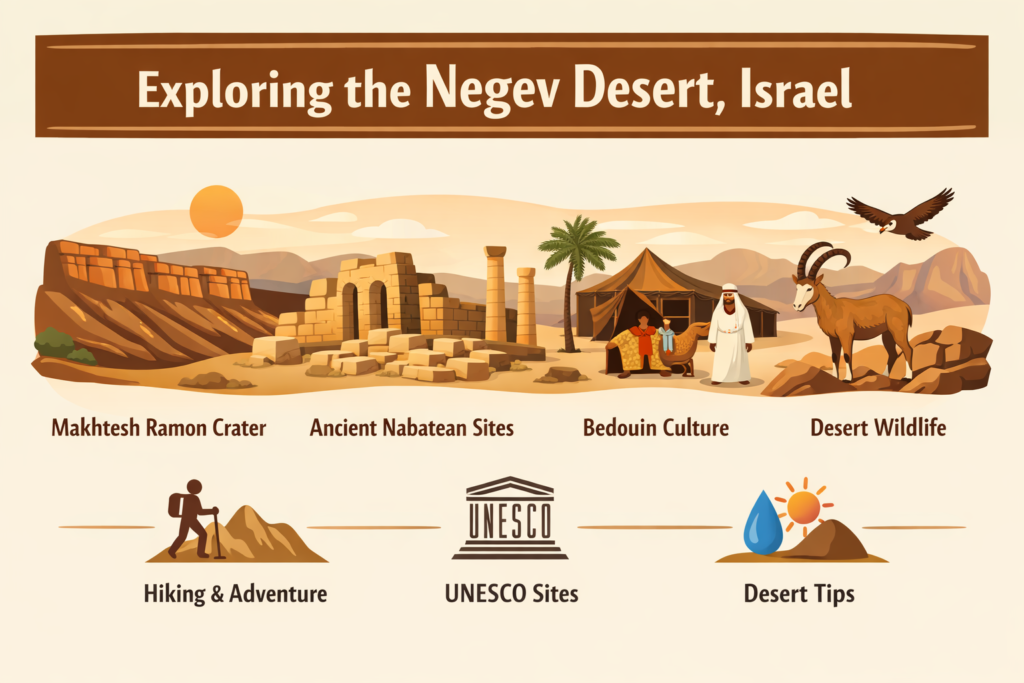
The Negev Desert In Israel is one of the country’s most striking regions, known for dramatic crater landscapes, ancient ruins, desert wildlife, and Bedouin culture. It offers a rare mix of nature, history, and adventure, making it a rewarding destination for travelers who want more than just scenery.
- Location and Geography of the Negev Desert
- Why Geography Matters
- Climate and Weather Patterns
- Best Time to Visit
- Simple Travel Tip
- Landscape Features: Sand Dunes, Craters, Canyons, and Oases
- Makhtesh Ramon: The Great Desert Crater
- Sand Dunes and Open Desert Areas
- Canyons and Springs
- Timna’s Open Formations
- Flora: Plants That Survive the Desert
- Why the Flora Is Important
- Fauna: Animals, Reptiles, Birds, and Desert Adaptations
- Best Places to See Wildlife
- Human History and Cultures
- Ancient Trade and the Incense Route
- Nabatean Desert Cities
- Bedouin Culture
- Modern History
- UNESCO Sites in the Negev Desert
- The Incense Route – Desert Cities in the Negev
- Key UNESCO Towns
- Why UNESCO Matters
- Top Attractions in the Negev Desert in Israel
- 1. Makhtesh Ramon
- 2. En Avdat
- 3. Avdat
- 4. Timna Park
- 5. Shivta
- 6. Mamshit
- 7. Ben-Gurion’s Tomb
- 8. Bedouin Hospitality Experiences
- Timna Park: Desert Adventure, History, and Family Travel
- En Avdat: One of the Best Hiking Sites in the Negev
- Avdat, Shivta, and Mamshit: The Heart of the Ancient Desert Route
- Avdat
- Shivta
- Mamshit
- Why These Sites Matter for SEO and Travel
- Bedouin Culture and Desert Hospitality
- How to Travel in the Negev Desert
- Plan by Zones
- Start Early
- Carry Water
- Check Site Hours
- Respect Flash Flood Warnings
- Suggested Negev Itinerary Ideas
- 1-Day Desert Sample
- 2-Day Desert Trip
- 3-Day Desert Trip
- 4 to 5 Days
- Travel Tips for a Better Negev Experience
- Interesting Facts About the Negev Desert
- Environmental Issues and Conservation
- Water Scarcity
- Flash Flood Risk
- Sensitive Habitats
- Protected Site Management
- Why Conservation Matters
- Pros and Cons
- Pros
- Cons
- FAQs
- Conclusion
Location and Geography of the Negev Desert
The Negev Desert occupies the southern part of Israel and forms a large arid and semi-arid region that stretches across a wide range of terrain types. Although it is often described as a desert, that label can be misleading if it creates the impression of sameness. The Negev is not a flat, empty expanse. It is a varied desert landscape with rocky uplands, open plateaus, dry riverbeds, erosion basins, canyons, dunes, and geological formations that shift dramatically from one area to another.
Geographically, the region transitions from relatively milder northern sections to harsher southern zones. This gradual change in dryness affects vegetation, landform character, and the type of travel experience each area offers. The north tends to feel more accessible and slightly greener, while the south is more rugged, more remote, and more extreme. That contrast is part of the Negev’s appeal. It allows visitors to experience multiple desert moods without leaving the same broad region.
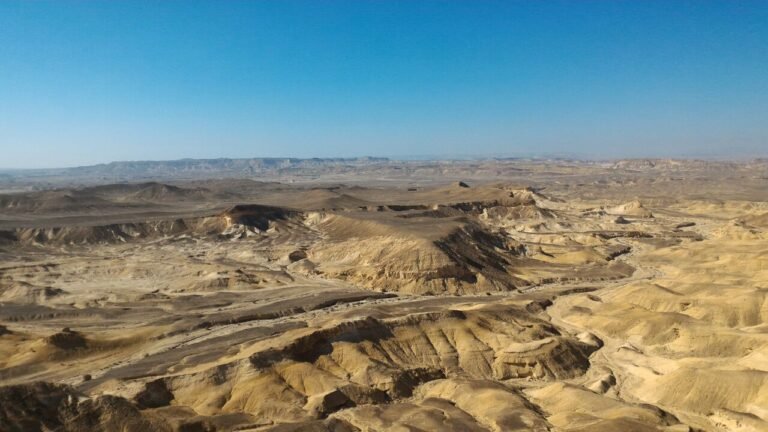
Another reason the Negev Desert in Israel is so interesting is its topographic diversity. In one part of the region, you may encounter limestone ridges or rocky escarpments. In another, you may see long open plains and dry valleys. Elsewhere, the land drops into a crater-like depression or narrows into a canyon where springs create pockets of vegetation. The landscape is highly textured, and that texture makes the desert feel alive, not empty.
This geography also shapes the travel experience. Be’er Sheva often acts as the northern gateway to the region, while Mitzpe Ramon, Sde Boker, and the route toward Eilat provide access to the central and southern sections. Because of this layout, the Negev is suitable for both shorter visits and longer overland itineraries. It can function as a day trip, a weekend route, or a multi-day desert exploration.
Why Geography Matters
The physical geography of the Negev Desert in Israel matters because it gives the region depth, variety, and strong informational value. Travelers are not coming here for one single attraction. They are coming for a network of experiences: landscape photography, geology, archaeological exploration, hiking, wildlife observation, road travel, and cultural encounters.
From an SEO perspective, this means the Negev naturally supports many related keywords and semantic clusters. The topic includes desert landforms, craters, canyons, springs, oases, ancient trade routes, Bedouin culture, nature reserves, and travel logistics. That makes it ideal for an article that is both comprehensive and topically authoritative.
Climate and Weather Patterns
The climate of the Negev Desert in Israel is dry, sunny, and often intense. Rainfall is limited, evaporation is strong, and temperatures can rise sharply during the day, especially in summer. Yet the climate is not simply a hardship factor. It is also one of the reasons the region looks and feels the way it does. The dryness shapes the rock surfaces, plant life, animal behavior, and travel rhythm of the entire desert.
Summer in the Negev can be hot enough to make midday hiking uncomfortable or unsafe in exposed areas. For that reason, many travelers choose to begin early in the morning, pause during the hottest hours, and save late afternoon for sightseeing or photography. Winter, by contrast, is usually the most comfortable season for extended outdoor travel. Spring and autumn often provide an excellent balance of pleasant temperatures and manageable crowds.
One of the most important weather-related realities in the Negev is flash flood risk. Even though the landscape may appear dry and stable, rain in distant catchment areas can send sudden surges of water through wadis, canyons, and low-lying channels. This can turn a peaceful hiking route into a dangerous zone very quickly. Because of this, checking weather conditions before entering canyons or dry riverbeds is not optional; it is essential.
Best Time to Visit
The best time to visit the Negev Desert in Israel is generally during the cooler months, especially late autumn through early spring. This is the ideal season for walking, driving, camping, and visiting open-air sites without excessive heat stress. Summer is still possible, but it requires more preparation, more water, more caution, and a reduced expectation of long midday hikes.
Simple Travel Tip
A good desert strategy is to plan around three variables at once: heat, hydration, and timing. In the Negev, those three factors determine how Comfortable, safe, and rewarding the day will be.
Landscape Features: Sand Dunes, Craters, Canyons, and Oases
One of the biggest reasons travelers are drawn to the Negev Desert in Israel is the sheer visual power of its landscapes. The desert does not present a single uniform image. Instead, it offers a sequence of distinct terrain types that create a rich and varied visitor experience.
Makhtesh Ramon: The Great Desert Crater
Makhtesh Ramon is the signature landscape of the Negev and one of the most remarkable geological features in the region. It is often called a crater, but it is more accurately an erosion basin, formed by natural processes over immense spans of time. The result is a huge, dramatic, bowl-shaped depression with exposed rock layers, sweeping views, and a strong sense of geological depth.
For many visitors, Makhtesh Ramon is the emotional centerpiece of the desert journey. Its scale is overwhelming, its silence is powerful, and its scenery changes with light and weather. At sunrise and sunset, the rock colors become especially vivid. During the day, the vast open space creates a sense of isolation and grandeur that few landscapes can match. It is a favorite for hikers, stargazers, geology enthusiasts, and photographers.
Sand Dunes and Open Desert Areas
The Negev also includes dune areas that feel softer and more playful than the crater landscapes. Dunes are associated with movement, texture, and wind-shaped curves. They are excellent for desert photography, sandboarding, family-friendly activities, and jeep excursions. While they may not be as visually severe as the crater zones, they add essential variety to the region’s overall landscape profile.
Canyons and Springs
Canyon environments are another defining feature of the Negev Desert in Israel. These narrow, layered spaces often surprise visitors because they contain water-fed pockets of life amid otherwise dry surroundings. En Avdat is one of the most famous examples. Its canyon walls, spring areas, and vegetation create a striking contrast with the surrounding desert and help demonstrate how water can transform the environment.
Timna’s Open Formations
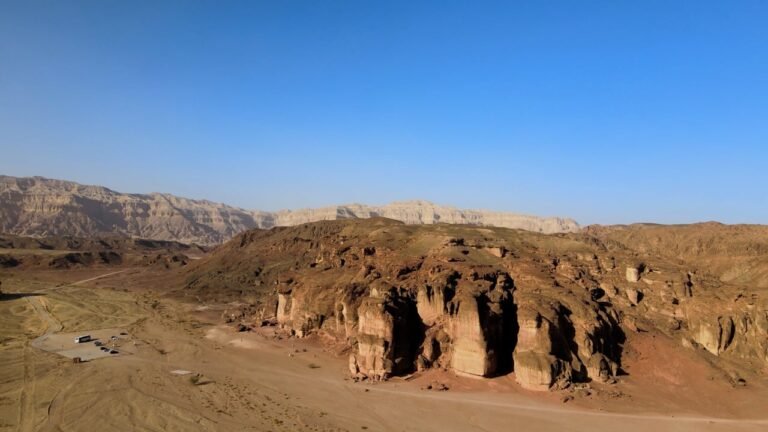
Timna Park adds another landscape dimension. Here, broad valleys, colored sandstone, sculpted rock formations, and ancient mining remains merge into one visually dramatic area. Timna has a more expansive and open feel than a canyon, but it is equally memorable. It is one of the best examples of how the Negev can combine natural beauty with human history in a single place.
The result is a desert region that feels multidimensional rather than repetitive. That diversity makes the Negev Desert in Israel ideal for multi-stop itineraries and strong informational search content.
Flora: Plants That Survive the Desert
At first glance, the Negev may appear sparse, but this impression changes once you begin to notice the plant life. The flora of the Negev Desert in Israel is highly adapted to aridity, high temperatures, limited rainfall, and difficult soil conditions. The ecosystem is built on resilience, efficiency, and survival strategies that allow vegetation to endure where many other species could not.
Some desert plants grow deep root systems to reach underground moisture. Others store water in thick stems or leaves. Some reduce surface area by developing tiny leaves, while others rely on thorns or tough outer layers to minimize water loss. Some species respond quickly to rainfall, sprouting during favorable conditions and then conserving energy when the environment becomes harsh again.
Acacia trees are among the best-known desert plants in the region, along with hardy shrubs, seasonal herbs, and other specialized native species. In conservation areas and nature reserves, plant life is often protected because it plays a foundational role in the ecosystem. These plants stabilize soil, provide shade, support pollinators, and create habitat for birds, insects, and mammals.
Why the Flora Is Important
The flora of the Negev Desert in Israel is important not just biologically but also narratively. In travel writing and SEO terms, plants help build the semantic field around ecology, biodiversity, adaptation, conservation, and environmental resilience. For visitors, noticing the vegetation adds depth to the experience. The desert begins to feel less like a blank stage and more like a living system with its own quiet logic.
Fauna: Animals, Reptiles, Birds, and Desert Adaptations
The Negev Desert in Israel supports a surprising amount of animal life. Despite its dry climate, the region is home to mammals, reptiles, birds, insects, and other desert-adapted species. Much of this wildlife is hidden, nocturnal, or active during cooler periods, which makes it less obvious to casual visitors but all the more fascinating once discovered.
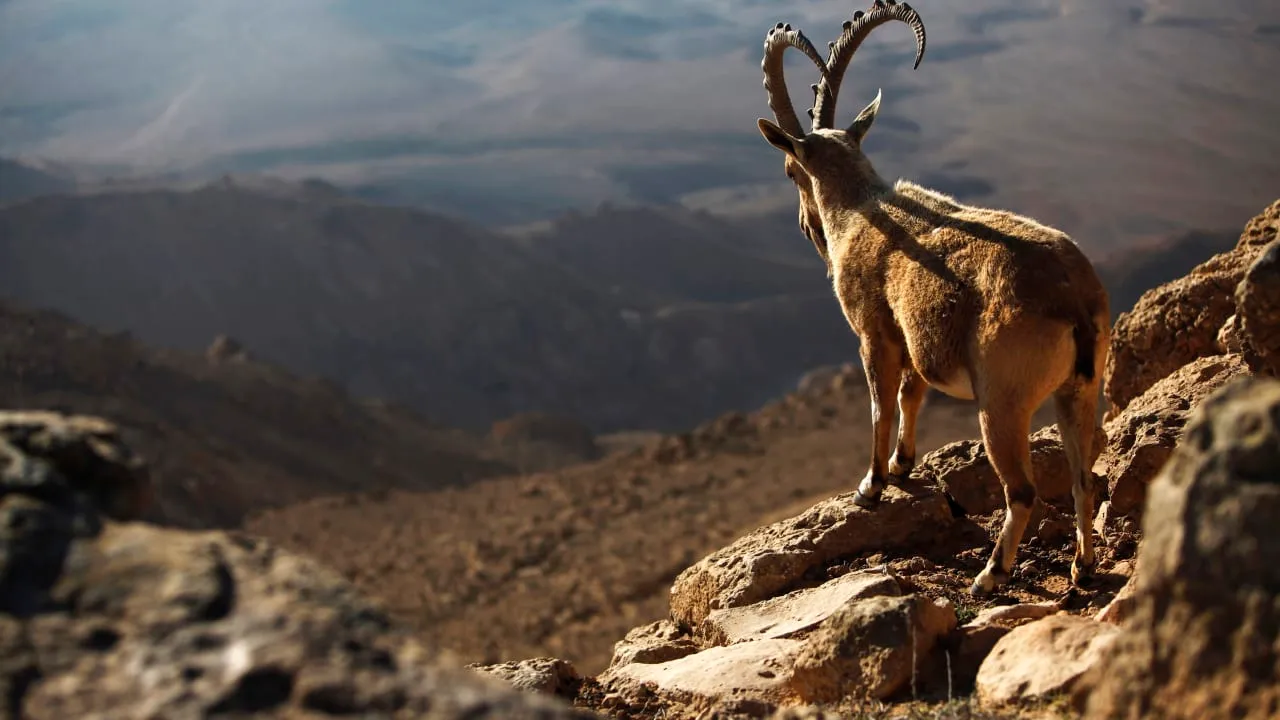
Among the animals associated with the Negev are ibex, foxes, wolves, hedgehogs, lizards, snakes, turtles, porcupines, sand rats, and many bird species. The presence of such varied fauna shows that the desert is not empty. It is an ecosystem with complex survival patterns and carefully balanced relationships between predator, prey, water source, and terrain.
Animals in the desert must manage heat and water scarcity in careful ways. Many species become active at night or during dawn and dusk, when temperatures are lower. Birds often gather near cliffs, springs, and protected valleys. Reptiles use rocks for warmth in the morning and shade in the middle of the day. Larger mammals tend to move with caution, often using remote terrain or cooler hours to travel and feed.
Best Places to See Wildlife
Protected parks, canyons, and nature reserves offer the best chances of spotting wildlife in the Negev Desert in Israel. En Avdat is particularly well known for ibex and birds of prey. Other reserves provide additional opportunities to observe reptiles, desert mammals, and other species in their natural environment.
The wildlife dimension adds strong value to the region as a nature destination. It also gives the Negev a broader appeal for ecotourism, family travel, and educational exploration.
Human History and Cultures
The human history of the Negev Desert in Israel is extensive and deeply layered. This region has never been merely a barrier between places. It has been a corridor, a settlement zone, a trade network, and a cultural landscape for thousands of years. People have traversed, inhabited, farmed, defended, and creatively adapted to it across many eras.
Ancient Trade and the Incense Route
One of the most important historical themes tied to the Negev is the ancient Incense Route. This network carried valuable goods such as frankincense and myrrh from Arabia toward the Mediterranean world. The route passed through harsh desert territory, which made water management, caravan infrastructure, and strategic settlement placement essential.
The UNESCO heritage sites in the Negev are tied to this trade system. They show how ancient communities used engineering, agriculture, and administrative organization to function in a difficult environment. The desert was not passive; it was actively inhabited and strategically used.
Nabatean Desert Cities
The Nabateans played a central role in this story. They built cities, maintained trade links, and developed sophisticated methods for capturing and storing water. Sites such as Avdat, Shivta, Mamshit, and Haluza help reveal how these desert cities operated and why they mattered. Their remains are not only archaeological artifacts; they are evidence of adaptation, commerce, and cultural intelligence.
Bedouin Culture
Bedouin culture is another essential part of the Negev’s human story. The Bedouin have long been associated with desert life, mobility, hospitality, and practical knowledge of arid terrain. Today, visitors to the Negev Desert in Israel can still encounter Bedouin traditions through food, tent stays, cultural visits, camel rides, storytelling, and guided experiences.
For many travelers, the Bedouin layer is one of the most meaningful parts of the journey. It brings warmth, hospitality, and human continuity into a landscape that might otherwise feel purely geological. It reminds visitors that the desert is lived in, not just viewed.
Modern History
The Negev also has modern national significance. Ben-Gurion’s Tomb, for example, connects the region to the state-building story of modern Israel. The wider development of the south has become part of the Negev’s identity as well. These modern associations give the desert added cultural and political weight, even though most travelers experience the region primarily through its nature and heritage.
UNESCO Sites in the Negev Desert
The Negev Desert in Israel is especially strong as a heritage destination because it is linked to UNESCO-listed sites associated with the ancient Incense Route. These locations are more than archaeological stops. They are part of a broader historical network that demonstrates how people lived, traded, and organized society in one of the driest parts of the region.
The Incense Route – Desert Cities in the Negev
The UNESCO inscription covers a set of desert cities and related infrastructure that collectively tell the story of trade, water management, and survival. These places reveal the practical intelligence of ancient societies and the importance of strategic route control in the desert world.
Key UNESCO Towns
Avdat
Avdat is one of the most famous Nabatean sites in the Negev. Set on elevated ground, it offers both archaeological significance and sweeping desert views. Its ruins help visitors imagine how a desert city once functioned as part of a major international trade system.
Shivta
Shivta is another crucial heritage location. It provides insight into how ancient communities managed agriculture and daily life in an arid environment. It is especially valuable for understanding how settlement and water use intersect.
Mamshit
Mamshit adds another layer to the heritage route. Though it may be smaller or less famous than some other sites, it remains important for reconstructing the broader trade and settlement pattern of the Negev.
Haluza
Haluza contributes to the same historical network and helps complete the story of the incense trade route across the desert.
Why UNESCO Matters
UNESCO matters here because it protects not only ruins, but an entire knowledge system. The sites in the Negev Desert in Israel preserve evidence of ancient adaptation, engineering, commerce, and survival. For readers and search engines alike, that combination of heritage, story, and place is a powerful content asset.
Top Attractions in the Negev Desert in Israel
The Negev is best experienced as a multi-stop travel region. Its main attractions combine landscape, archaeology, history, and cultural immersion. Each place adds a different dimension to the larger desert story.
1. Makhtesh Ramon
Makhtesh Ramon is one of the strongest natural landmarks in Israel and the defining visual icon of the Negev Desert. Its scale, geological significance, and dramatic scenery make it a must-see for travelers who want a true desert experience.
2. En Avdat
En Avdat offers one of the best hiking environments in the region. The canyon, springs, and wildlife create a memorable contrast with the surrounding dry land.
3. Avdat
Avdat is among the most important heritage sites in the Negev. It connects archaeology, trade history, and scenic desert elevation in one stop.
4. Timna Park
Timna Park is a highly versatile destination that combines geology, history, open desert space, and recreational opportunities. It works well for families, photographers, and history lovers.
5. Shivta
Shivta deepens the historical narrative of the region and shows how ancient desert settlements functioned.
6. Mamshit
Mamshit is a valuable archaeological stop that helps complete the heritage map of the southern desert route.
7. Ben-Gurion’s Tomb
Ben-Gurion’s Tomb adds symbolic and national significance to the travel experience, along with excellent desert views.
8. Bedouin Hospitality Experiences
Camel rides, desert meals, tent stays, and cultural gatherings turn the Negev from a landscape into a living human experience.
Timna Park: Desert Adventure, History, and Family Travel
Timna Park deserves special attention because it sits at the intersection of geology, archaeology, adventure, and family-friendly tourism. It is one of the most flexible and rewarding destinations in the Negev Desert in Israel.
The park is known for striking rock formations, ancient copper mining remains, and wide, open scenery that feels both remote and accessible. Visitors can hike, bike, explore archaeological elements, learn about mining history, and enjoy a desert environment that changes dramatically with time of day and season.
What makes Timna especially useful from a travel standpoint is its broad appeal. It works for active travelers, educational visitors, families, road-trippers, and photographers. It also helps demonstrate that the desert was never truly empty. Human industry existed here for a long time, and Timna is one of the clearest examples of that fact.
En Avdat: One of the Best Hiking Sites in the Negev
En Avdat is one of the most iconic hiking destinations in the Negev Desert in Israel. It offers a powerful combination of canyon scenery, spring water, rock walls, and desert wildlife. The contrast between the lush canyon corridor and the surrounding desert landscape is one of its most appealing qualities.
Travelers appreciate En Avdat because it feels both dramatic and refreshing. The route gives you movement, elevation change, and natural texture. It is also one of the best places to understand how a spring can sustain life in an otherwise harsh environment.
In addition to scenery, En Avdat may offer chances to see ibex, birds, and other wildlife. Since it is a protected site, visitors should always confirm current entry conditions, operating hours, and any access restrictions before arrival. That planning step becomes even more important in a desert region where weather and flood conditions can change rapidly.
Avdat, Shivta, and Mamshit: The Heart of the Ancient Desert Route
These three sites form a core historical triangle in the Negev Desert in Israel. They are particularly valuable because they connect the visitor to the ancient world of the Nabateans, the incense trade, and desert settlement.
Avdat
Avdat is often the most memorable of the three because of its hilltop location and its clear association with Nabatean heritage. It gives travelers a strong sense of elevation, history, and desert command.
Shivta
Shivta highlights the agricultural and practical side of ancient desert life. It reveals how communities could survive and thrive through water management and careful planning.
Mamshit
Mamshit contributes another perspective on trade, settlement, and route connectivity. It may be smaller, but it fills out the narrative of the desert network in important ways.
Why These Sites Matter for SEO and Travel
These heritage sites matter because they address multiple user intents at once: archaeology, history, UNESCO travel, desert cities, and Nabatean culture. For a pillar page, they strengthen topical depth and help the article cover both broad and niche search phrases.
Bedouin Culture and Desert Hospitality
A complete guide to the Negev Desert in Israel must include Bedouin culture because it provides the human and cultural dimension that makes the region feel alive. Bedouin experiences often add warmth, hospitality, and a sense of tradition to the more visually dramatic parts of the trip.
Visitors may encounter camel rides, traditional meals, tea, storytelling, tent stays, and communal desert evenings. These experiences offer a different pace and a different perspective. They move the focus from scenery alone to daily life, memory, and cultural continuity.
Bedouin culture is also important because it demonstrates that the Negev is not only a landscape of the past. It remains inhabited, adapted, and meaningful in the present. From a content standpoint, this enriches the semantic range of the article and improves its ability to satisfy searches related to desert culture, local traditions, and authentic travel.
How to Travel in the Negev Desert
Traveling through the Negev Desert in Israel can be deeply rewarding, but it requires thoughtful preparation. The region is large, the environment can be demanding, and the distances between major sites may be greater than first-time visitors expect.
Plan by Zones
A zone-based approach often works best:
Northwestern Negev: Useful for arrival access and routes from Be’er Sheva.
Central Negev: Ideal for Sde Boker, En Avdat, and nearby heritage stops.
Crater Area: Best for Makhtesh Ramon and Mitzpe Ramon.
Southern Route: Good for Timna Park and extensions toward Eilat.
This kind of route planning helps reduce wasted time and creates a more logical, comfortable travel flow.
Start Early
Early starts are especially important in hot seasons. The sun is less severe, the trails are cooler, and sightseeing becomes more manageable.
Carry Water
Water is one of the most important parts of desert travel. Even a short hike can become tiring if you underestimate the heat and dryness.
Check Site Hours
Some parks and heritage sites have fixed schedules or reservation requirements. A flexible itinerary is much safer and more efficient than a tightly packed one.
Respect Flash Flood Warnings
Never enter a canyon or dry streambed if rain is in the forecast or if flood warnings are active. Desert water can move quickly and unexpectedly.
Suggested Negev Itinerary Ideas
A trip to the Negev Desert in Israel can be adjusted to fit your available time.
1-Day Desert Sample
If time is limited, focus on one major highlight such as Makhtesh Ramon or Timna Park.
2-Day Desert Trip
Day 1: Makhtesh Ramon and nearby viewpoints
Day 2: En Avdat and Avdat
3-Day Desert Trip
Day 1: Arrival via Be’er Sheva and a scenic desert drive
Day 2: Makhtesh Ramon
Day 3: En Avdat, Avdat, and a Bedouin cultural experience
4 to 5 Days
Add Shivta, Mamshit, Ben-Gurion’s Tomb, and Timna Park for a broader, slower, and more immersive journey.
Travel Tips for a Better Negev Experience
A good visit to the Negev Desert in Israel usually comes down to a few practical habits.
Dress for the desert with light clothing, sturdy shoes, a hat, and sun protection.
Bring more water than you think you will need.
Use a car or guided tour for better access and flexibility.
Choose cooler months whenever possible for hiking and outdoor exploration.
Move at a slower pace so you can actually absorb the landscape rather than just pass through it.
The desert rewards patience. It is not a region that needs to be rushed. The distance, silence, and openness are part of the experience.
Interesting Facts About the Negev Desert
The Negev Desert in Israel has several fascinating qualities that make it a strong topic for travelers and content creators.
It is not empty. The region contains wildlife, heritage sites, farms, settlements, and living communities.
Makhtesh Ramon has one of the most unusual crater-like landscapes in the world.
It links ancient trade systems to modern tourism, creating a rare blend of past and present.
The area
supports specialized desert plants and animals that have adapted to harsh environmental conditions.
It blends nature, archaeology, and culture in a way that few destinations can match.
These facts make the Negev useful for educational content, travel inspiration, and long-form SEO strategy.
Environmental Issues and Conservation
The beauty of the Negev Desert in Israel comes with fragility. The ecosystem is sensitive, and its long-term health depends on responsible management.
Water Scarcity
Water scarcity is one of the central environmental challenges in the region. Rainfall is low, and the desert remains dry for much of the year.
Flash Flood Risk
The same dryness that defines the desert can also make it dangerous when rain does arrive. Sudden flood events can reshape canyons and put travelers at risk.
Sensitive Habitats
Desert plants, reptiles, birds, and smaller mammals can be vulnerable to disturbance. Even minor carelessness can damage habitats that took a long time to form.
Protected Site Management
Many attractions in the Negev are managed with conservation rules, timed entry, or limited access. These measures are not obstacles. They are what keep the region viable for future visitors.
Why Conservation Matters
Without conservation, the landscape, wildlife, and heritage resources that make the Negev special could be weakened or lost. Responsible tourism helps preserve the region while still allowing people to experience it.
Pros and Cons
Pros
The Negev Desert in Israel offers striking landscapes, ancient heritage, wildlife interest, and cultural depth in one region. It combines crater views, canyon hikes, UNESCO sites, and Bedouin hospitality in a way that feels unique and memorable. It is also excellent for photography, road trips, and nature-based travel.
Cons
Heat and dryness can make the region challenging, especially in summer. Some places require careful scheduling or reservations. Distances between attractions can be longer than expected. Weather risks, especially flash floods, demand more preparation than a typical urban trip.
FAQs
The Negev Desert in Israel is famous for Makhtesh Ramon, UNESCO sites, ancient Nabatean cities, desert hiking, Timna Park, and Bedouin culture.
Yes. It offers a rare blend of scenery, history, and living culture. It is one of the best places in Israel for travelers who want natural beauty and meaningful heritage in the same journey.
Makhtesh Ramon is the best-known natural landmark. It is widely regarded as the most impressive crater-like feature in the region.
A short trip can work in two days, but three to five days is better if you want to enjoy craters, canyons, heritage sites, and desert culture at a relaxed pace.
Yes, if you plan carefully, start early, carry water, and avoid canyons during rain or flood warnings.
The most important ones include Avdat, Shivta, Mamshit, and Haluza, which are part of the broader story of the incense route.
Yes. The region has ibex, birds, reptiles, foxes, and other desert animals, especially in protected parks and canyon areas.
Conclusion
The Negev Desert in Israel is far more than an empty stretch of land. With its unique landscapes, UNESCO heritage sites, wildlife, and cultural experiences, it offers a rich and memorable journey for every type of traveler.