
Introduction
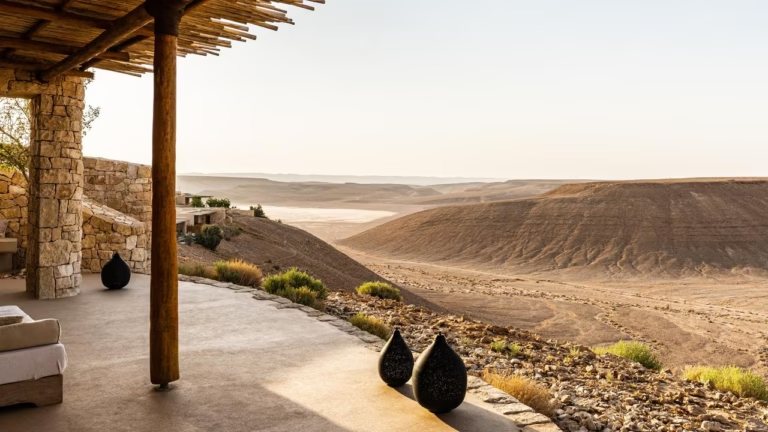
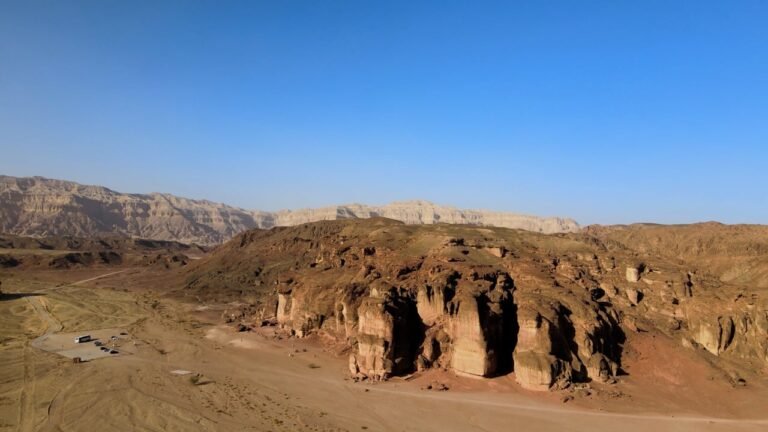
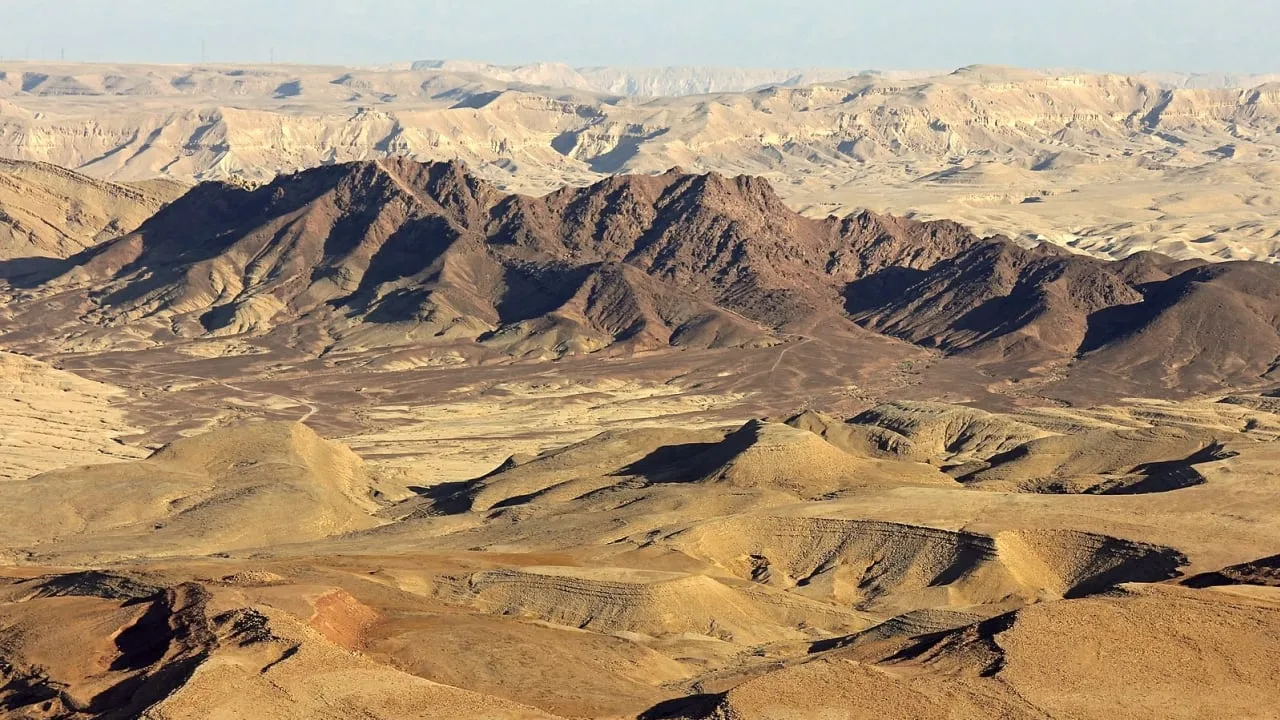
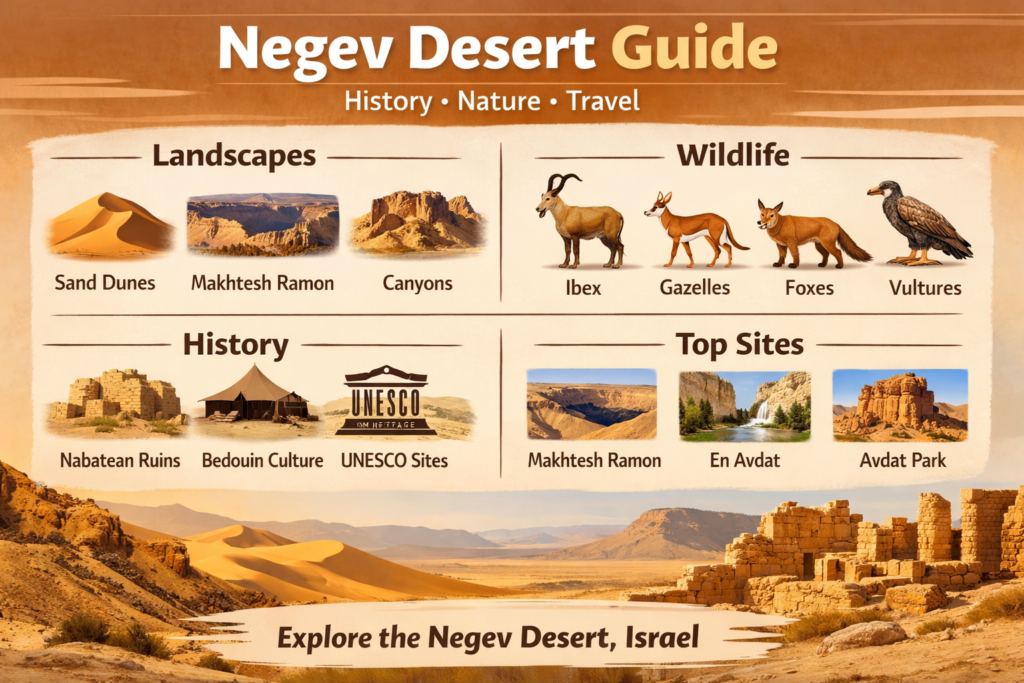
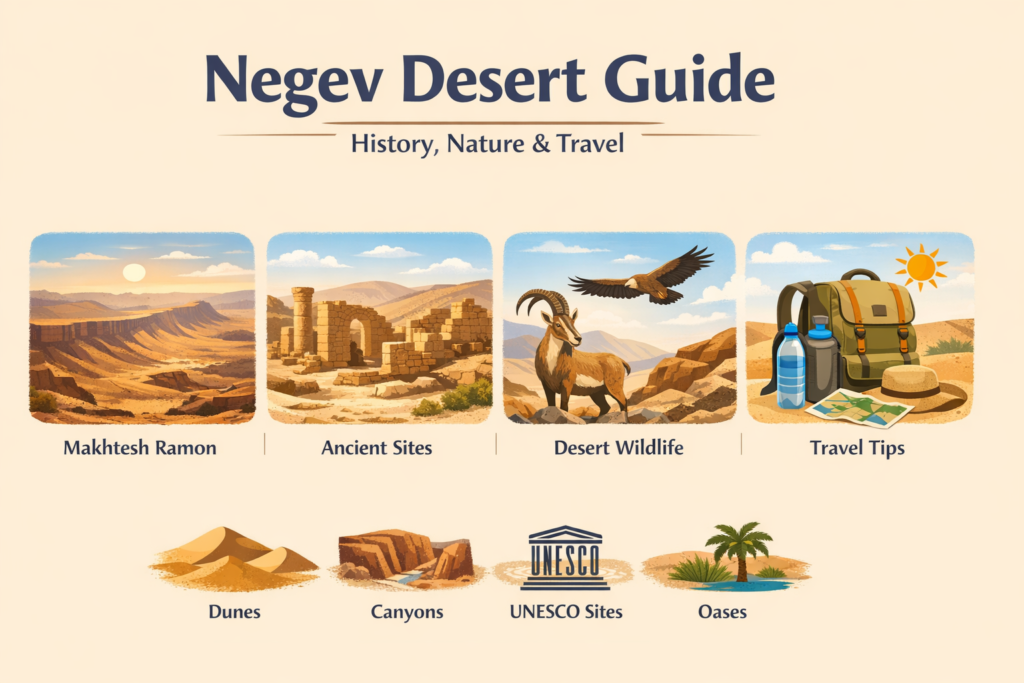
The Negev Desert is one of Israel’s most striking regions, known for its craters, canyons, wildlife, and ancient heritage. From Makhtesh Ramon to Avdat and En Avdat, it offers a rich mix of nature, history, and desert adventure. This guide covers the key landscapes, cultural highlights, and practical travel tips you need to plan a memorable visit.
- Overview of the Negev Desert
- Negev Desert at a Glance
- Location and Geography
- Main Geographic Zones
- What the Negev Looks Like
- Climate and Weather Patterns
- Climate Features That Matter to Travelers
- Best Way to Travel in the Climate
- Landscape Features: Sand Dunes, Rocks, Valleys, and Craters
- 1) Sand Dunes
- 2) Rocks, Cliffs, and Sandstone Hills
- 3) Valleys and Wadis
- 4) Erosion Craters
- 5) Open Desert Plains
- Flora: What Grows in the Negev?
- Key Plant Types
- Why Plant Life Matters
- Fauna: Animals, Reptiles, Insects, and Birds
- Mammals
- Birds
- Reptiles
- Why Wildlife Matters in the Negev
- Human History and Cultures
- The Negev in Ancient Times
- The Nabateans
- Bedouin Culture
- Why History Matters for Travelers
- UNESCO Sites in the Negev Desert
- What UNESCO Recognizes
- Why This Site Matters
- Avdat as a Key UNESCO-Linked Site
- Simple Takeaway
- Best Things to Do in the Negev Desert
- Stand at Makhtesh Ramon
- Base Yourself in Mitzpe Ramon
- Visit En Avdat
- Explore Avdat National Park
- Spend Time in Timna Park
- Add Cultural Stops in Beersheba
- Quick Itinerary Table
- Travel Tips for the Negev Desert
- 1) Start Early
- 2) Carry Enough Water
- 3) Use Sun Protection
- 4) Choose the Right Base
- 5) Plan for Distance
- 6) Respect Park Rules
- 7) Stay Overnight if Possible
- Best Time to Visit the Negev Desert
- Cooler Season
- Hot Season
- Daily Timing Also Matters
- Simple Rule
- Tourism, Attractions, Activities, and Travel Style
- Adventure Travelers
- Family Travelers
- History Lovers
- Nature Lovers
- Slow Travel
- Interesting Facts About the Negev Desert
- Pros and Cons
- Pros
- Cons
- Environmental Issues and Conservation
- Why Conservation Matters
- What Visitors Should Do
- Simple Truth
- Sample Travel Route for the Negev Desert
- Day 1: Beersheba and Northern Negev
- Day 2: Mitzpe Ramon and Makhtesh Ramon
- Day 3: En Avdat and Avdat
- Day 4: Timna Park
- FAQs
- Conclusion
Overview of the Negev Desert
The Negev Desert is the principal desert region in southern Israel. It is broad, varied, and historically significant. In a general sense, it covers about 12,000 square kilometers and occupies a large portion of the southern half of the country. Its shape is often described as triangular, with the broader section in the north and the narrower end stretching southward toward Eilat and the Red Sea region.
What distinguishes the Negev from many other desert landscapes is its diversity. It does not present one uniform face. Instead, it changes from place to place. In one zone, you may see open sandy expanses. Elsewhere, hard rock and exposed cliffs dominate the scene. In other areas, the land folds into canyons, dry valleys, and erosion basins that resemble natural amphitheaters carved by time.
Negev Desert at a Glance
| Feature | What It Means | Why It Matters |
| Location | Southern Israel | It is the country’s main desert zone |
| Size | Around 12,000 sq km | Large enough to contain many distinct landscapes |
| Landforms | Craters, wadis, cliffs, canyons, sandstone hills, dunes | Creates the region’s dramatic visual character |
| Famous crater | Makhtesh Ramon | The most iconic natural landmark |
| Heritage value | Incense Route desert cities | Adds exceptional historical and UNESCO importance |
Location and Geography
The Negev Desert lies in southern Israel and extends toward the Arava and Eilat in the south. Its northern boundaries merge gradually with more populated and cultivated areas, while the western side is tied to the Sinai direction,n and the eastern side opens toward the Jordan Valley.
Geographically, the Negev is best understood as a land of transitions rather than a single featureless desert floor. It shifts as you move through it. The northern Negev is more accessible and closely linked to Beersheba, while the central zone contains the most famous crater scenery and the most iconic desert views. Farther south, the land becomes wider, drier, and more open, producing a quieter and more remote desert atmosphere.
This geographic variety is one reason the Negev works so well for road trips. Within one region, you can move from urban edge to wilderness, from archaeology to geology, and from wildlife observation to desert photography. The Negev Desert, Israel, offers a full spectrum of experiences without requiring you to leave the same broad area.
Main Geographic Zones
1. Northern Negev
This part of the region lies closer to Beersheba and is generally easier to access. It is often the first introduction travelers get to the desert. The northern Negev is useful for food, local culture, and a smoother transition into more remote terrain.
2. Central Negev
This is the scenic core of the desert experience. Here you find Makhtesh Ramon, Mitzpe Ramon, and the most visually iconic crater landscapes. This area is typically the most photographed and the most emotionally striking for visitors.
3. Southern Negev
The farther south you travel, the more spacious and arid the setting becomes. The route toward Eilat and the Arava creates a stronger sense of openness, scale, and desert silence. The landscape here often feels vast and sun-blasted, with long sightlines and a more remote feel.
What the Negev Looks Like
The Negev is not a flat void. It is a sculpted environment shaped by geological layers, wind, erosion, and ancient water movement. In Different locations, you may encounter:
- dry river valleys
- jagged cliffs
- sandstone formations
- open dunes
- rocky plateaus
- enormous erosion craters
- narrow canyons
- seasonal wadis
These varied forms give the region a powerful visual identity. The Negev is not a single desert image; it is a whole sequence of desert images, each with its own texture, color, and mood.
Climate and Weather Patterns
The Negev Desert has a desert climate characterized by abundant sunlight, low rainfall, and sharp seasonal changes. It is not useful to think of it as simply “hot all the time.” The climate shifts with the season, altitude, and time of day, which is important for travelers to understand.
One of the region’s most defining climate traits is the clarity of its skies. Sunshine is common, and the light is often crisp, bright, and excellent for photography. This makes the Negev especially appealing for road trips, outdoor exploration, and sunrise or sunset viewing.
At the same time, the climate should never be taken lightly. Heat can become intense, especially in warmer months and in exposed locations with little shade. Hiking during the middle of the day is usually a poor choice in open desert environments. Early morning and late afternoon are far more comfortable and safer for most activities.
Climate Features That Matter to Travelers
- The desert is dry for most of the year.
- Rainfall is limited and often irregular.
- Sunshine is strong and consistent.
- Temperatures can rise quickly during the day.
- Nighttime temperatures can feel much cooler, especially in elevated or inland areas.
Best Way to Travel in the Climate
If you are visiting the Negev Desert, Israel, it helps to plan with the weather in mind. A smart desert traveler will:
- Start hikes early
- bring more water than expected
- Use sunscreen, a hat, and sunglasses
- schedule breaks in shaded areas
- Avoid long exposure during the hottest hours
- remain flexible if the heat becomes stronger than expected
The climate is part of the Negev’s appeal. It sharpens the colors, creates dramatic contrasts, and makes the desert scenery feel vivid and expansive. But the beauty of the environment comes with a demand for respect and preparation.
Landscape Features: Sand Dunes, Rocks, Valleys, and Craters
The landscape is the soul of the Negev Desert. It is the reason people pause, look again, and often fall silent in front of the scenery. Some deserts feel monotonous after a while. The Negev does not. Its landforms vary so much that each area seems to tell a different story.
1) Sand Dunes
The dunes reveal the softer, more flowing side of the desert. They provide the classic golden desert image many people imagine, and at sunrise or sunset, they can appear almost luminous. Dunes are especially attractive to photographers because they catch the changing light in elegant, curved forms.
They also broaden the identity of the Negev. The region is not only stone and rock. In places, the sand creates a cinematic, quiet, and contemplative atmosphere.
2) Rocks, Cliffs, and Sandstone Hills
As you move deeper into the region, hard rock becomes more prominent. Cliffs, stony ridges, and layered sandstone formations rise from the ground, shaped by ages of erosion and weathering. These forms make the land seem carved rather than merely worn.
This is one of the most distinctive qualities of the Negev. The area resembles a giant natural sculpture field, where time itself has acted as the artist.
3) Valleys and Wadis
Wadis are dry riverbeds that usually remain empty except after rainfall. In the Negev, they are essential to understanding the landscape. Even when dry, they reveal the routes water once followed through the region.
For travelers, wadis often create excellent hiking corridors. They may lead to springs, hidden canyons, wildlife habitats, or scenic bends in the terrain. These narrow routes can feel sheltered and intimate compared to the broad open desert around them.
4) Erosion Craters
The most famous landform in the Negev is the makhtesh, a distinctive erosion crater. The best-known example is Makhtesh Ramon, the largest and most spectacular of the makhteshim.
A makhtesh is not the result of volcanic activity. It is a geological depression created by erosion and structural processes over vast spans of time. This makes it rare, scientifically interesting, and visually unforgettable.
5) Open Desert Plains
In some areas, the land opens into broad, empty-looking plains. These zones create a strong feeling of distance and quiet. They are ideal for road travel, panoramic views, and wide-angle photography. Even when the area seems still, the sense of space is powerful and immersive.
Flora: What Grows in the Negev?
Plant life in the Negev Desert is shaped by adaptation, endurance, and survival strategy. The desert does not have thick vegetation or lush greenery. Instead, it supports a resilient plant community that has evolved to deal with heat, scarcity, and irregular water supply.
Many desert plants in the Negev are designed to conserve water efficiently. Some have deep root systems that reach hidden moisture. Others grow rapidly after rainfall and then go dormant again. Some remain small and sparse to reduce evaporation. Their success depends on timing, efficiency, and survival intelligence.
Key Plant Types
Desert Scrub
This is one of the most common plant forms in the region. It grows in scattered patches and helps stabilize the ecosystem in difficult conditions.
Acacia Trees
Acacia trees are especially important in desert ecology. They can access underground water and survive in dry environments that would challenge many other tree species. They also provide shade, shelter, and ecological support for many animals.
Seasonal Plants
After rain, the desert can transform quickly. Small plants may appear in places that seemed barren only a short time before. This sudden bloom creates a sense of surprise and makes the Negev feel more dynamic than many visitors expect.
Why Plant Life Matters
Plants in the Negev are not merely decorative. Plant life supports the entire ecosystem. They provide food, shelter, shade, and continuity for wildlife. They influence animal movement, habitat quality, and even where people historically chose to live or travel.
The result is a desert that may look sparse at first glance but is actually a finely balanced ecological system.
Fauna: Animals, Reptiles, Insects, and Birds
The Negev Desert, Israel, is not empty. It supports a surprising range of animals that have adapted to drought, heat, and limited water. This is one of the most rewarding aspects of exploring the region. Visitors often arrive expecting a lifeless environment and leave with a new understanding of how abundant desert life can be.
Mammals
Some mammals associated with the region include:
- Nubian ibex
- gazelles
- jackals
- foxes
- hares
- wolves
- hyenas
The Nubian ibex is one of the most iconic desert mammals. Its strength, agility, and ability to move across steep rocky slopes make it a perfect symbol of Negev wildlife.
Birds
The Negev is also a strong bird region. Many desert birds live here year-round, while others pass through during migration. Birds such as vultures and wheatears are commonly linked with desert cliffs, open spaces, and thermal air currents.
Reptiles
The region also supports a wide variety of reptiles, including:
- lizards
- geckos
- vipers
- spiny-tailed lizards
These creatures are often most active during cooler parts of the day or at night, when the desert environment becomes more manageable for them.
Why Wildlife Matters in the Negev
Wildlife changes the entire meaning of the desert. It proves that the Negev Desert is not a dead zone but a living system where every species has found a way to adapt. Plants, insects, birds, reptiles, and mammals all form part of a complex survival network.
That is also why areas such as En Avdat and Timna Park are especially fascinating. They are not just scenic places. They are ecological zones where geology, water, and wildlife intersect.
Human History and Cultures
The Negev Desert has a deep and layered human story. It is not simply a landscape; it is a place where movement, survival, adaptation, trade, and cultural memory have all left their mark.
Britannica describes the region as pastoral in biblical times and notes that it later became important for grain production. It also explains that following the Arab conquest in the 7th century, much of the area became far less populated for a long period, leaving only small Bedouin communities in place. That historical arc matters because it shows how the desert has been used, abandoned, and reoccupied in different eras.
The Negev in Ancient Times
In antiquity, the Negev was connected to survival routes, caravan movement, and desert settlement. Travelers crossed it, merchants used it, and communities lived in places where water could be managed carefully. The desert was demanding, but it was never irrelevant.
The Nabateans
The Nabateans are among the most important historical groups in the story of the Negev. They built trade routes and desert cities tied to the incense trade. Their ability to harvest, store, and direct water allowed them to thrive in a harsh environment where most people would struggle.
Their legacy still shapes the region’s identity. When you walk among Nabatean ruins, you are not just looking at stones. You are seeing evidence of engineering skill, trade intelligence, and a sophisticated understanding of desert life.
Bedouin Culture
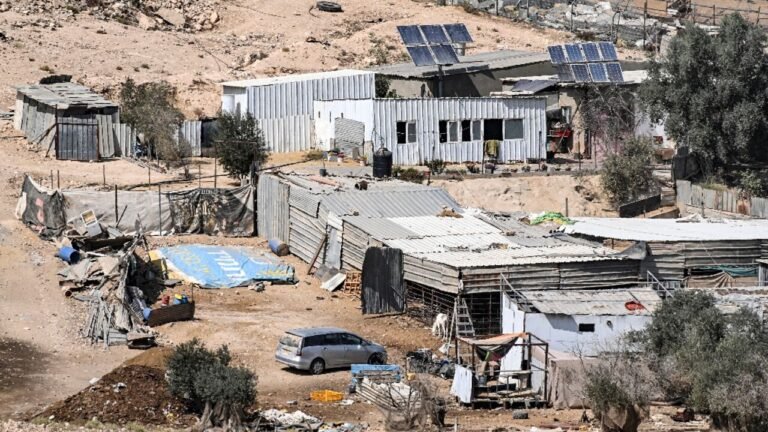
Bedouin communities are essential to the living cultural identity of the Negev Desert, Israel. They represent hospitality, traditional knowledge, oral memory, and an intimate relationship with the desert environment. Their presence reminds visitors that the region is not only about ancient archaeology; it is also about present-day human life and continuity.
Why History Matters for Travelers
A journey through the Negev becomes much richer when you understand its past. The ruins, routes, and heritage sites stop being isolated attractions and begin to read like chapters in one long human story. The desert becomes legible as a place of movement and adaptation rather than emptiness.
UNESCO Sites in the Negev Desert
One of the most important heritage features of the region is the Incense Route – Desert Cities in the Negev, a UNESCO World Heritage site. This designation gives the Negev international recognition for its historical and archaeological significance.
What UNESCO Recognizes
The UNESCO inscription includes the Nabatean desert cities of:
- Haluza
- Mamshit
- Avdat
- Shivta
It also includes fortresses and agricultural landscapes connected to the ancient incense trade.
Why This Site Matters
The significance of this heritage lies in the way it changes the historical narrative of the desert. The Negev was not a blank or empty zone in ancient times. It was part of an important trade network that moved frankincense and myrrh from southern Arabia toward the Mediterranean world.
This means the Negev Desert, Israel, was integrated into a much larger cultural and economic system. It functioned as a corridor of passage, exchange, and innovation.
Avdat as a Key UNESCO-Linked Site
Avdat is one of the best locations for understanding this history in a physical way. It combines archaeological remains, elevated views, and a strong desert setting. Walking there gives visitors a direct sense of how people adapted to arid conditions and organized water use in a difficult landscape.
Simple Takeaway
UNESCO recognition gives the Negev more than prestige. It anchors the region in a global story of commerce, engineering, and desert resilience. The area matters not only because it is beautiful, but because it played a real role in the history of civilization.
Best Things to Do in the Negev Desert
The Negev Desert works well for many kinds of travelers.Some come to hike, others are drawn to archaeology, while many seek family-friendly activities, silence, photography, or a slower style of desert travel.The region accommodates all of these styles.
Stand at Makhtesh Ramon
This is the most iconic natural site in the region. The crater is immense, dramatic, and unlike most landscapes visitors have encountered before.
Why go:
- unforgettable desert views
- enormous geological scale
- excellent photography opportunities
- powerful sunrise and sunset scenes
Base Yourself in Mitzpe Ramon
Mitzpe Ramon is the best-known base for crater exploration. It overlooks the surrounding area and offers good access to viewpoints, hikes, and overnight stays.
Why it works:
- close to Makhtesh Ramon
- ideal for sunrise and sunset
- practical for short or extended trips
- Convenient for travelers who want a scenic desert base
Visit En Avdat
En Avdat is one of the most beautiful canyon landscapes in the Negev Desert, Israel. Springs, rock walls, and wildlife combine here to create an oasis-like atmosphere.
Why go:
- impressive canyon scenery
- ibex and vultures
- a spring-fed desert environment
- strong appeal for nature lovers
Explore Avdat National Park
Avdat is one of the region’s most important historical sites. It offers ruins, archaeology, and a direct connection to Nabatean civilization.
Why go:
- ancient city remains
- UNESCO-linked heritage
- desert archaeology
- scenic elevated surroundings
Spend Time in Timna Park
Timna Park is one of the most versatile attractions in the broader Negev region. It is well-suited to families, casual visitors, and people who enjoy a mix of geology and activities.
Why go:
- striking geology
- family-friendly experience
- guided tours
- biking
- pedal boating
- desert-oasis feel
- camping and glamping options
Add Cultural Stops in Beersheba
Beersheba is a practical urban gateway to the Negev. It gives travelers access to food, services, culture, and an easier entry point into the desert.
Why go:
- urban base
- food and cultural stops
- useful start for a desert trip
- convenient access to nearby routes
Quick Itinerary Table
| Stop | Best For | Why It Belongs in the Trip |
| Makhtesh Ramon | Landscapes and photography | The region’s most iconic crater |
| Mitzpe Ramon | Base town and viewpoints | Best overnight hub for crater access |
| En Avdat | Canyon and wildlife | Canyon, springs, ibex, and vultures in one place |
| Avdat | History and archaeology | Nabatean ruins and UNESCO-linked heritage |
| Timna Park | Family activities and geology | Park sites, tours, biking, boating, and scenery |
| Beersheba | Urban base and culture | Food, history, and easy access to the desert |
Travel Tips for the Negev Desert
A trip to the Negev Desert is deeply rewarding, but it becomes much smoother when you plan with care. Desert travel is all about preparation, timing, and awareness of the environment.
1) Start Early
Heat rises quickly in exposed landscapes. Early morning is usually the best time for hiking, sightseeing, and outdoor photography.
2) Carry Enough Water
Do not wait until thirst becomes obvious. In desert conditions, hydration should be planned before you begin your route.
3) Use Sun Protection
A hat, sunscreen, sunglasses, and breathable clothing can make a major difference in comfort and safety.
4) Choose the Right Base
Beersheba works well if you want a city base with desert access. Mitzpe Ramon is better if your focus is crater scenery and overnight stays in the central desert.
5) Plan for Distance
The Negev may appear compact on a map, but attractions can be farther apart than expected. Driving time matters.
6) Respect Park Rules
Some sites require reservations, visitor guidance, or trail discipline. These rules are part of both safety and conservation.
7) Stay Overnight if Possible
One night in the desert can transform the whole experience. Sunset, sunrise, and the star-filled sky are often the most memorable parts of the journey.
Best Time to Visit the Negev Desert
The best time to visit the Negev Desert, Israel, is generally during the cooler months. This is when hiking, sightseeing, and road travel are more comfortable and less physically demanding.
Cooler Season
This is the ideal period for:
- hiking
- wildlife viewing
- road trips
- canyon walks
- crater exploration
Hot Season
Summer visits are still possible, but they require careful planning. Early departures, plenty of water, shade breaks, and a realistic schedule become essential.
Daily Timing Also Matters
Even in a good season, the time of day matters. Mornings and late afternoons are often far better than midday, when the sun is strongest, and the desert feels most exposed.
Simple Rule
For the most comfortable and rewarding visit, choose cooler weather and schedule outdoor activities for the early or late parts of the day.
Tourism, Attractions, Activities, and Travel Style
The Negev Desert is powerful because it fits so many travel styles at once. It is not a one-note destination. It can be adventurous, family-friendly, historical, contemplative, and scenic all at the same time.
Adventure Travelers
You can enjoy:
- crater walks
- canyon hikes
- desert viewpoints
- off-road exploration
- guided desert experiences
Family Travelers
You can enjoy:
- Timna Park
- short scenic walks
- wildlife viewing
- easy desert stops
- accommodation and activity options
History Lovers
You can enjoy:
- Avdat
- Haluza
- Mamshit
- Shivta
- UNESCO heritage routes
- Nabatean civilization
Nature Lovers
You can enjoy:
- En Avdat
- ibex
- desert birds
- Rocky Canyon Systems
- acacia and other hardy plants
Slow Travel
You can enjoy:
- sunsets
- desert silence
- overnight stays
- Bedouin hospitality
- road-trip flexibility
This versatility is one of the strongest reasons the Negev works so well as a pillar topic. It offers multiple kinds of value within one destination.
Interesting Facts About the Negev Desert
Here are some memorable facts that help the Negev stand out:
- It covers about 12,000 square kilometers.
- Its name comes from a Hebrew root meaning “to dry.”
- Makhtesh Ramon is the best-known crater in the region.
- The makhteshim are rare geological landforms.
- The Incense Route connected the Negev to major ancient trade systems.
- The region is home to desert-adapted animals like ibex, gazelles, foxes, wolves, and vultures.
- It supports both wild natural landscapes and living human traditions.
These facts are useful because they make the region easier to remember and give your article more authority and depth.
Pros and Cons
Pros
- The landscape is highly varied.
- It combines nature, archaeology, and heritage.
- It suits hikers, photographers, families, and culture lovers.
- It has strong sunlight and beautiful desert light.
- It can be explored through short stays or longer road trips.
Cons
- Heat can be intense.
- Distances between attractions may be greater than expected.
- Some places require planning or advance arrangements.
- Water, timing, and shade must be taken seriously.
- Conservation rules need to be respected.
Environmental Issues and Conservation
The Negev Desert is fragile in ways that are not always obvious. It may appear tough and unchanging, but it can be damaged by careless tourism, waste, off-trail walking, and pressure on habitats.
Why Conservation Matters
- Plants in dry environments grow slowly.
- Animals depend on limited water and shelter.
- Soil and rock formations can be harmed by damage or erosion.
- Heritage sites can be worn down by weather and heavy visitation.
What Visitors Should Do
- Stay on marked trails
- Respect park regulations
- Do not disturb wildlife
- carry out waste
- avoid damaging plants
- Use reservations when required
Simple Truth
The beauty of the Negev Desert, Israel, depends on responsible care. The best visitors are those who appreciate the desert while protecting its balance.
Sample Travel Route for the Negev Desert
If you want a simple route, here is one practical way to experience the region:
Day 1: Beersheba and Northern Negev
Begin in Beersheba, explore the city, and ease into the desert atmosphere at a comfortable pace.
Day 2: Mitzpe Ramon and Makhtesh Ramon
Spend the day at crater viewpoints, absorb the desert scenery, and stay overnight near the crater for the full experience.
Day 3: En Avdat and Avdat
Use this day for canyon scenery, springs, wildlife, and ancient Nabatean ruins.
Day 4: Timna Park
Finish with dramatic geology, enjoyable activities, and a more relaxed park setting.
This route creates a strong balance of nature, history, and convenience.
FAQs
Yes. It is one of the most diverse desert regions in the Middle East, combining crater landscapes, canyons, wildlife, ancient cities, and UNESCO-listed heritage in one destination.
Makhtesh Ramon is usually the most famous natural landmark, while Avdat is one of the best-known heritage sites.
The region supports desert-adapted animals such as ibex, gazelles, foxes, wolves, lizards, vultures, and many species of birds.
The cooler months are usually best for hiking and sightseeing. Summer visits are still possible, but they require early starts, plenty of water, and careful planning because of the strong heat and sun.
Beersheba works well as a city base, while Mitzpe Ramon is ideal for crater access and overnight stays near the scenic core of the desert.
Yes. Places like Timna Park make it easy for families to enjoy scenery, light activities, and a variety of desert experiences.
Yes. With patience and good timing, you can see ibex, gazelles, birds, reptiles, and other desert animals.
Conclusion
The Negev Desert is more than a dry landscape. It is a region of dramatic scenery, living wildlife, and deep historical significance. Whether you come for hiking, archaeology, photography, or a quiet desert escape, the Negev delivers a travel experience that is both beautiful and unforgettable.