
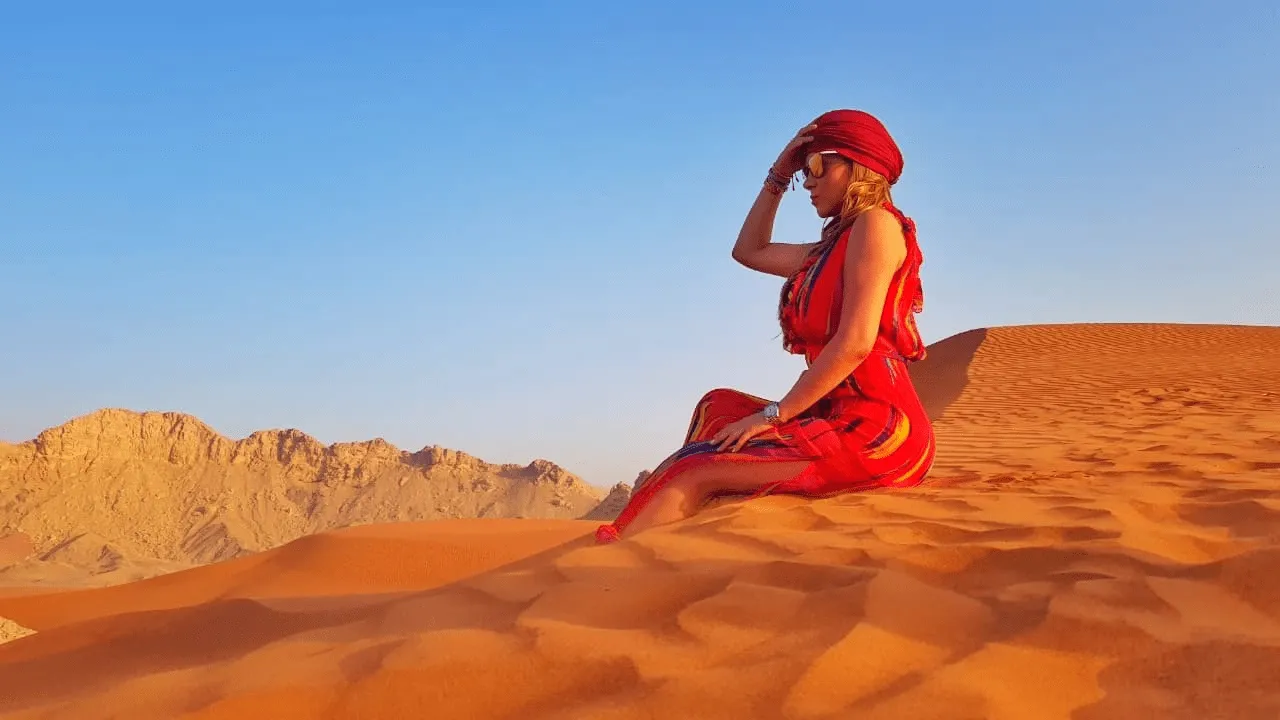
Introduction of the Red Dune Desert
A Red Dune Desert Safari is one of Dubai’s most iconic outdoor experiences, blending adrenaline, scenery, and culture into a single afternoon-to-evening adventure. Set in the famous Lahbab red dunes near Dubai, these safaris take you beyond the skyline into towering crimson sands known for their softness, height, and dramatic sunset views. From heart-racing 4×4 dune bashing and sandboarding to camel rides, traditional desert camps, live entertainment, and BBQ dinners under the stars, a Red Dune safari offers a well-rounded taste of desert life—whether you’re travelling on a budget, with family, or seeking a premium VIP experience
- Quick snapshot
- Where are the Red Dunes — geography and why the sand is red
- How a typical Red Dune Desert Safari is structured
- Package types:
- Typical inclusions & optional add-ons
- Best time to visit & climate notes
- Pricing ranges
- Packing checklist
- Photography & golden-hour tips
- Safety
- Children, mobility & health considerations
- Flora, fauna & a short natural history of Lahbab
- Human history & Bedouin culture
- Environment & responsible travel
- Pros & Cons
- Sample comparison table — use on your site
- FAQs
- Final verdict
Quick snapshot
Core experiences:
- Dune beat in a 4×4 (Land Cruiser / Toyota Prado or similar).
- Sandboarding on a short run.
- Camel ride or camel photo stop.
- Sunset photography stop (golden hour).
- Arabic coffee (gahwa) & dates on arrival at the camp.
- Henna, traditional dress photo ops, and shisha (at many camps).
- Live enjoyment: belly dance, tanoura (whirling dervish), and sometimes fire shows.
- BBQ buffet dinner with vegetarian and meat options.
- Bottled water and basic facilities (toilets/washrooms at camp).
Timing & duration: Evening safaris are typically 4–7 hours (hotel pickup → desert → return). Full-day and overnight options are available for a higher price. Typical drive time to Lahbab from central Dubai is roughly 30–60 minutes, depending on pickup point and traffic.
Where are the Red Dunes — geography and why the sand is red
The “Red Dunes” moniker refers to the Lahbab / Al Lahbab area southeast of Dubai. The sand appears deep red since many grains carry a coating of iron oxide (micro iron particles oxidized to a rust-like film) that gives the dunes their typical warm hue. The dunes here are higher and softer than the dustier pale sand near the coast, making the boundless silhouettes that cameramen and adrenaline-seekers love. Lahbab is also frequently used as a tourist site because it’s close enough to Dubai for a short transfer, yet remote enough to feel sizeable and extensive.
How a typical Red Dune Desert Safari is structured
Understanding the usual flow helps you write clear copy and helps guests pick the right trip.
- Pickup (late afternoon) — Most operators collect guests from hotels, apartments, or central meeting points. Shared pickups are routed to gather other passengers; private transfers go directly to the pickup address. Expect a pickup window; operators often show estimated times on booking confirmations.
- Drive to Lahbab — The transfer generally takes roughly 30–60 minutes from central Dubai. Vehicles sometimes deflate tyres at a staging area for improved traction before dune runs.
- Safety briefing — Short explanation about seatbelts, where to sit in the vehicle, what to hold onto during dune bashing, and who should avoid the activity (pregnant guests, people with recent surgeries, serious back/neck issues).
- Dune bashing — The core thrill: drivers use 4×4 vehicles to ride up and down the dunes. Run length varies by package: budget shared tours usually offer shorter runs; private/VIP tours give longer or display dune sessions.
- Photo stop & sandboarding — Operators stop for golden-hour photos and sandboarding. Quick camel photos are often available here.
- Desert camp — Arrival at the camp: Arabic coffee and dates, henna, costume photos, shisha, short shows and buffet dinner. VIP upgrades frequently include reserved tents or private majlis seating and table service.
- Return — After dinner and performances, the vehicle returns to the pickup point; guests usually arrive back late evening.
Package types:
| Feature / Package | Sharing (budget) | Private (mid) | VIP / Premium |
| Price | Lowest | Mid–high (per vehicle) | Highest |
| Vehicle | Shared 4×4 | Dedicated 4×4 for the group | Private vehicle + chauffeur |
| Dune bashing length | Shorter (15–25 min) | Longer (25–35 min) | Longest/custom (30–45+ min) |
| Camp seating | Shared mats | Reserved seating | Private majlis/table service |
| Add-ons | Limited | Many (ATV, photographer) | Many, often included |
| Privacy & flexibility | Low | Medium | High |
| Recommended for | Solo/budget couples | Families & small groups | Honeymoons, photographers |
Typical inclusions & optional add-ons
Display clearly on your page:
Standard inclusions to display on every package card
- Pickup & drop-off (hotel or meeting point)
- Dune bashing (4×4)
- Sandboarding
- Short camel ride/photo stop
- Arabic coffee & dates on arrival
- BBQ dinner (buffet) + soft drinks / tea
- Henna & basic costume photos
- Live shows (belly dance, tanoura)
- Bottled water
Common optional add-ons (extra fee)
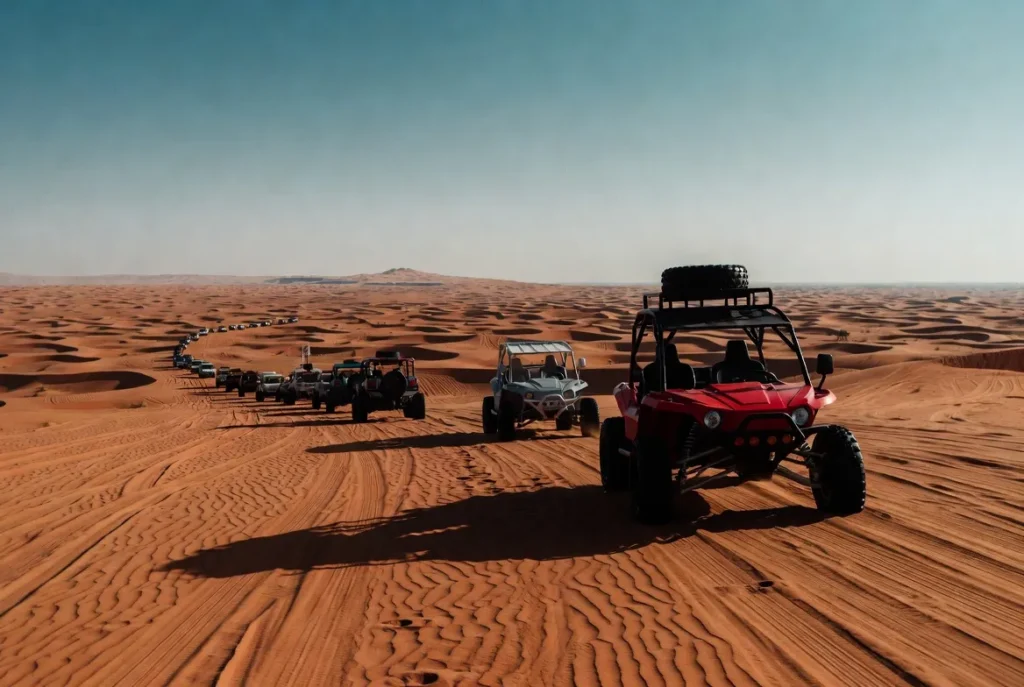
- Quad/ATV rides (15–30 minutes)
- Dune buggy sessions (timed)
- Private photographer or videographer (per hour)
- VIP seating or private tent (Al Khayma style)
- Falcon photo sessions (seasonal; sometimes restricted)
- Transport upgrades (luxury SUVs, private vans)
Best time to visit & climate notes
Ideal months: November to March (cooler temperatures, Pleasant nights for outdoor dining and photography). Some sources extend the window slightly to October-April, depending on year-to-year cloud cover patterns. Peak season is late November through February, when days and nights are most agreeable; book early for Weekends and holidays.
Time of day: Evening (sunset) safaris are the most popular for golden-hour photos and cooler conditions. Morning safaris are cooler but produce harsher light for landscape photos; sunrise safaris are niche and great for careful photographers who want solitude.
Ramadan & cultural notes: During Ramadan, the format of camps and entertainment may change — meal service timing can be adjusted, and live shows may be short. Operators should list Ramadan policies on their booking pages; always check before booking.
Pricing ranges
How to present prices on your pages: show both per-person and per-vehicle options, and include a “Last checked” date.
Representative ranges:
- Budget / Sharing evening safari: AED 120–250 per person (off-peak to peak).
- Private mid-tier vehicle: AED 600–1,200 per vehicle for a private SUV (varies by group size and season).
- Premium / VIP: AED 400–1,500+ per person, depending on transfers, exclusive tents, and add-ons. High-end bespoke experiences can exceed this.
Packing checklist
Essentials
- Lightweight layers (evenings can be cool, Nov–Mar).
- Comfortable closed shoes (sand gets everywhere).
- Sunhat or cap; sunglasses.
- Sunscreen (high SPF) and lip balm.
- Refillable water bottle (some operators allow; many supply bottled water).
- Small cash for souvenirs, photos, and tips.
- Personal medicine and basic first-aid items.
For photographers
- Wide-angle lens (16–35mm) for dune landscapes.
- Standard/portrait lens (35–85mm) and telephoto (70–200mm) for portrait shots.
- Lightweight tripod for night camp shots.
- Lens cloth, silica gel packs, and waterproof zip bags for equipment.
- Secure straps and quick-release plates; avoid carrying loose, costly gear during dune bashing.
Photography & golden-hour tips
- Ask for timing: Request the operator schedule your photo stop 20–40 minutes before sunset for soft light and fewer crowds.
- Shoot RAW: Bracket exposures at sunset to preserve shadow and highlight detail.
- Protect gear during dune bashing: Use action cameras or securely strapped compact rigs; avoid carrying DSLRs loose in the vehicle.
- Colour choices: Clothing that contrasts with red sand (deep blues, teal, cream, or earth tones) helps subjects pop.
- Composition: Use wide angles for dune sweeps and telephoto compression to flatten and dramatize dune layers.
- Night camp shots: Bring a lightweight tripod for long exposures; keep ISO moderate and open aperture for atmosphere shots.
- Backup: Bring compact backup storage or tether to your phone if you plan to take many photos.
Safety
- Driver qualifications & vehicle condition: Confirm drivers are trained, and vehicles have functioning seat belts; for buggies/ATVs, ask about roll cages and emergency shutoffs.
- Insurance & waivers: Ensure the tour operator carries liability insurance and read waivers for ATV/buggy add-ons carefully.
- ATV/buggy safety gear: Helmets, goggles, and gloves should be provided. Never ride without protective equipment.
- Weather cancellations: High winds and sandstorms may cancel activities. Check operator cancellation/refund terms in advance.
- Medical exclusions: Dune bashing is usually not recommended for pregnant travellers or those with recent surgeries or serious back/neck conditions.
- Children & infant rules: Many operators limit aggressive dune bashing for infants and small children; child seats may be available on request.
Children, mobility & health considerations
- Children & infants: Operators typically accept children but may restrict bashing intensity for very young guests. Ask for child seat availability when booking.
- Mobility: Desert camp areas are sandy and uneven. Premium camps sometimes have wooden walkways or easier access — mention access requirements during booking.
- Health: Guests with heart, back or neck problems should avoid aggressive dune bashing. If in doubt, consult a doctor and inform the operator.
Flora, fauna & a short natural history of Lahbab
The Lahbab dunes are an arid sandy landscape with drought-tolerant shrubs and sparse vegetation. Birdlife includes desert larks and raptors during migration; small reptiles and hardy crustaceans (in microhabitats) persist in this environment. A short natural history section on your page adds depth and differentiates content from purely commercial pages.
Human history & Bedouin culture
The desert landscape was historically home to Bedouin camel nomads. Many camps recreate Bedouin hospitality — Arabic coffee (gahwa), dates, and majlis seating. Add a short note on respectful behaviour: ask permission before photographing people closely, respect falconry handlers, and dress modestly in public areas.
Environment & responsible travel
Tourism can damage fragile dunes. Encourage readers to:
- Avoid littering and remove all trash.
- Stay on designated routes and avoid trampling fragile dune vegetation.
- Use biodegradable products when possible.
- Choose operators who minimize vehicle routes, conserve water, and manage waste responsibly.
Consider adding a “Sustainability Badge” on operator listings for companies that demonstrate Environmental responsibility — this builds trust with eco-conscious readers.
Pros & Cons
Pros
- Iconic red dunes and dramatic sunset photography.
- A large range of packages from budget to luxury.
- Mix of adrenaline (dune bashing) and culture (camp & BBQ).
Cons
- Busy in peak season — operators may rush activities.
- Summer heat makes daytime visits uncomfortable.
- Sand can damage camera gear and be uncomfortable indoors for some visitors.
Sample comparison table — use on your site
| Item | Sharing Evening | Private SUV | VIP Premium |
| Typical price (AED) | 120–250 pp | 600–1,200 per vehicle | 400–1,500+ pp |
| Dune bashing | 15–25 min | 25–35 min | 30–45+ min/custom |
| Camp | Shared seating | Reserved seating | Private majlis/gourmet |
| Add-ons | Limited | Many | Many / sometimes included |
| Best for | Budget travellers | Families & groups | Celebrations/photographers |
| OTA examples | Klook, GetYourGuide | GetYourGuide / operator sites | Al Khayma / premium ops |
FAQs
A: At the Lahbab / Al Lahbab (Lehbab) red dunes east of Dubai — about 30–60 minutes from central Dubai, depending on take-up location.
A: Most operators advertise ~20–45 minutes, depending on the package — budget shared tours tend to have shorter runs while private/VIP can be longer. Always confirm before booking.
A: Yes — many operators offer quad/ATV add-ons at extra cost. These are usually time-limited (15–30 minutes) and require signing waivers and wearing security gear.
A: When run by trained drivers in maintained vehicles with seat belts and safety briefings, dune bashing is reasonably safe for healthy adults. Check driver training, insurance and equipment before booking; those with medical conditions or pregnancy should avoid bashing.
Final verdict
The Lahbab Red Dune Desert Safari is a must-do for travellers who like adrenaline and Lifestyle flavour in one outing. To make a trip truly unforgettable: choose the package that fits your class (sharing for budgets, personal for authority, VIP for comfort), title a sunset slot during November–March, and prioritize operator safety, transparent pricing and a photographer-friendly schedule.