

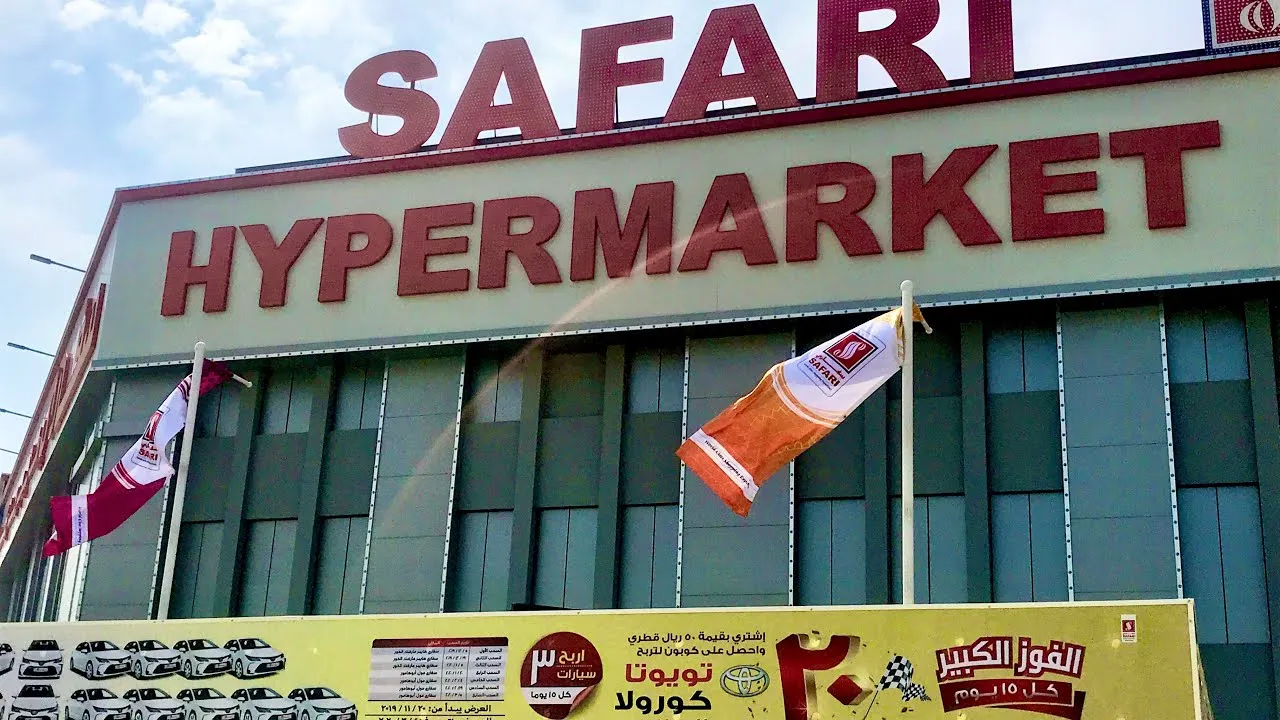
Introduction of Safari Mall Offers
If you shop in Sharjah or anywhere in the UAE and want to save the most on groceries and home goods, think of your shopping process as an information retrieval and decision-making pipeline. Safari Mall Offers and Safari Hypermarket promotions are the “signals” you want to detect from noisy data streams (official flyers, aggregator pages, social posts). When you know how to extract reliable features, validate the signals, and rank candidate deals by expected uplift, you can cut your bill significantly.
- Why Safari Mall offers matter — an information-theoretic view
- Where Safari posts its offers
- Offer frequency & temporal patterns.
- Offer types (taxonomy) and verification strategy
- How to spot a genuine deal — 3-step verification pipeline
- Weekly gameplan — three operational itineraries
- The Quick Run (10–20 minutes) — high-precision extraction
- Family Restock (45–60 minutes) — batched purchase strategy
- Big-Ticket Hunt (electronics/white goods) — high-stakes procurement
- Quick comparison table
- Local logistics & branch operational notes
- Pricing transparency & aggregator caveats
- Unit-price math — canonicalization & examples
- Pros & Cons
- Human case study: How one family saved ~20% in a week
- Ethical & environmental note
- Seasonal behaviour & observations
- FAQs
- Conclusion
Why Safari Mall offers matter — an information-theoretic view
Safari Hypermarket is a prominent retailer in the UAE. Its Muweilah branch in Sharjah issues frequent promotional flyers that act like high-value signals. When these signals are accurate, prices can fall by 20–50% on selected SKUs — a large expected value for households that purchase staples in volume.
Where Safari posts its offers
Primary:
- Safari Hypermarket official website — canonical pricing, stock, click & collect order confirmations. Treat this as your ground truth.
- Branch-level pages and the store selector — contains branch-specific offers and operational metadata (hours, pickup slots).
Secondary:
- Flyer aggregator sites — fast scans, often missing provenance fields or using OCR/AI extraction that can misread values.
- Safari Malls corporate pages / social feeds — good for festival announcements and high-level catalogue drops.
- Community social platforms — useful for foot-traffic reports or in-store exceptions, but always verify back to the official site.
Offer frequency & temporal patterns.
- Weekly flyers — predictable, periodic; useful for training your “expected discount” baseline.
- Flash sales/doorbusters — high-intensity short windows; treat them as spike events. They require high recall (catch them fast) but carry a high false positive risk (limited quantity).
- Seasonal campaigns — multi-week or month-long campaigns (White Friday, Ramadan/Eid, National Day). These create catalogue-level discounts and often include curated electronics and appliances.
Offer types (taxonomy) and verification strategy
We can categorise offers and recommend verification heuristics for each:
- Price cuts (staples) — frequent and low-risk. Verification: official online listing + unit-price calculation.
- Multi-buy / multi-pack — needs unit-price normalisation and expiry risk assessment.
- Bundle & free gift — check terms: bundle SKU mapping and redemption rules.
- Electronics & appliances — limited units, warranty checks required. Verify serial numbers if possible and save invoice scans.
- Click & Collect specials — low friction; verify order confirmation and pickup window.
- Flash doorbusters — treat like race conditions: confirm stock, use click & collect if available, or queue early.
How to spot a genuine deal — 3-step verification pipeline
- Metadata verification: confirm flyer dates and branch in the flyer’s valid_from/valid_to. Aggregator feeds may omit branch selection; the official site includes it.
- Price cross-check: confirm the price on the official online store or call the branch to confirm. For large purchases, check the warranty and returns.
- Unit-price normalisation: compute price per kg/litre/unit to normalise across SKUs.
Weekly gameplan — three operational itineraries
The Quick Run (10–20 minutes) — high-precision extraction
Objective: Acquire 2–3 flyer deals with minimal friction.
When to use: Urgent needs, short time budget.
Workflow:
- Scan the flyer on your phone and filter by top priority tokens (e.g., rice, oil, milk).
- Grab items at the front of the store to Minimise path length (low latency).
- Avoid peak hours; early morning or late evening to optimise personal throughput.
Bring: a small bag, a fast payment method.
Family Restock (45–60 minutes) — batched purchase strategy
Objective: Replenish staple supply for a week while optimising per-unit cost.
Workflow:
- Derive a 7-day meal plan from flyer staples (map recipes → SKU intents).
- Organise shopping list by store layout (clustered retrieval).
- Use click & collect for heavy items and pickup confirmation.
- Annotate each item with unit price and expiry risk.
Bring: trolley, reusable bags, and an insulated box for frozen goods if necessary.
Big-Ticket Hunt (electronics/white goods) — high-stakes procurement
Objective: Acquire limited-quantity, high-value items.
Workflow:
- Verify stock on the official site or call the branch; get the order or reservation policy.
- Arrive early; obtain a queue number where applicable.
- Photograph flyer/price tag at checkout for dispute resolution.
- Preserve receipts and warranty documentation.
Bring: photo ID, screenshot of flyer, payment means, and contact info for customer service.
Quick comparison table
| Offer Type | Best For | Typical Timing | Verification Heuristic | Risk Level |
| Weekly flyer price cuts | Bulk grocery savings | Weekly | Official site + in-store price tag | Low |
| Multi-buy offers | Families & long storage | Weekly | Unit-price normalization | Medium |
| Flash sales / Doorbusters | One-off deep discounts | Weekends / short | Social + arrive early + confirm stock | High |
| Electronics catalogue deals | Appliances & gifts | Seasonal | Official site & warranty check | Medium-high |
| Click & Collect specials | Guaranteed availability | Ongoing | Online order confirmation | Low |
Local logistics & branch operational notes
Branch & parking: The Muweilah branch typically has generous parking and extended hours. Always check the branch listing for exact opening and closing times (these are subject to change and represented in the store metadata).
Peak windows: Weekends and early evenings show high foot traffic. For low-friction visits, choose weekday mornings or late evenings.
Trolleys & packing: Bring reusable bags. For heavy units, use click & collect or request home delivery.
Transport for large items: Ask the store about delivery and installation to avoid moving bulky boxes yourself.
Pricing transparency & aggregator caveats
Many aggregator pages use OCR and automated extraction to produce leaflets; they sometimes show “AI-estimated” or stale values. That’s why provenance metadata (source URL, extracted date, flyer’s valid dates) and a human verification step are crucial. If you publish a weekly hub, include in-store photographed price tags or official screenshots to build user trust.
Unit-price math — canonicalization & examples
Unit-price normalisation is the canonical step to compare heterogeneous package sizes.
Example 1: Flyer lists 2kg rice for AED 18 and 5kg rice for AED 45.
- 2kg at AED 18 → AED 9/kg.
- 5kg at AED 45 → AED 9/kg.
Both were normalised to AED 9/kg. Choose the pack based on storage and usage, not price.
Example 2: Multi-buy 3-for-AED 30 for a 1L juice vs single at AED 12.
- Multi-buy → AED 10 per bottle.
- Single → AED 12 per bottle.
Multi-buy is cheaper per unit, but check expiry and consumption rate.
Pros & Cons
Pros
- Wide selection of groceries and appliances.
- Regular weekly flyers and flash sales.
- Click & Collect and home-delivery options.
Cons
- Aggregator inconsistency can mislead shoppers.
- Flash sale crowding and limited stock.
- Branch-specific offers may vary by location.
Human case study: How one family saved ~20% in a week
- Subscribe to a weekly digest that Highlights the top 5 validated deals.
- Select 3 flyer staples (rice, cooking oil, frozen meat) and compute unit prices.
- Use Click & Collect for the heavy item and shop mid-week for the rest.
Outcome: By focusing on validated flyer staples and avoiding impulse purchases, the family reduced their weekly grocery spend by around 20%.
Ethical & environmental note
Buying in bulk is efficient only if you can store or consume items before expiry. Avoid hoarding perishable goods. For major sale events, be mindful of long queues and follow public health guidance.
Seasonal behaviour & observations
- Major electronics discounts cluster around White Friday and Ramadan.
- Safari sometimes issues app-only bundles for loyalty users.
- Observing patterns across seasons helps forecast likely sale windows.
FAQs
A: The best place to check first is the official Safari Hypermarket website. Use the store selector to choose your branch (e.g., Muweilah, Sharjah) and confirm the flyer’s valid_from and valid_to fields. Aggregator sites are fine for discovery, but they may show old or AI-extracted prices. For high-value purchases, call the store or validate with the official online cart before committing.
A: Yes. Promotions sometimes vary by branch due to inventory, local supply, or branch-specific campaigns. Always pick your branch on the official site and treat offers as branch-tagged (e.g., offer.branch = muweilah).
A: Aggregators can be fast but noisy. Many use OCR and entity normalisation, which can misread decimal points or units. Use them to surface candidates, then confirm on the official channel.
A: Click & Collect with a confirmed order ID is the most reliable approach. Otherwise, arrive early and consider queuing. Photograph the in-store price tag and bring a screenshot of the flyer. If buying electronics, document the serial number and keep the purchase receipt for warranty.
A: Limited stock, long queues, and price mismatches. Stores may impose limits per customer. Plan a fallback purchase list in case an item sells out.
Conclusion
Safari Mall offers are valuable if you verify prices and plan. Start with the official Safari Hypermarket site, use aggregator feeds for Candidate discovery, and always perform unit-price normalisation before purchasing. For publishers: build a weekly hub with validated prices, branch pages, printable assets, and clear provenance to outrank thin aggregator pages.