
Introduction
If you think Dubai’s dunes are impressive, wait until you stand at the crest of Moreeb and peer out over the Rub al Khali — the Empty Quarter. Liwa is where dunes stop being simple hills and become an entire terrain. Nights here are profoundly dark and speckled with stars; days can be brutally hot depending on the season. This guide is written so you can plan a Liwa Desert Safari that actually works: pragmatic drive times, sensible price ranges, tour formats, a printable safety and vehicle checklist, detailed photography tactics, and local context around Moreeb, date farms, and festival rhythms.
- Why Liwa is different: scale, silence and Moreeb
- Quick reality snapshot — read before you book
- How to get to Liwa
- From Abu Dhabi (best option for many visitors)
- From Dubai
- Public transport & event shuttles
- Road conditions & tips
- Types of Liwa tours — which suits each
- Copy-ready sample itineraries
- Half-day (Sunset) — 6–7 hours total
- Full-day — 10–12 hours
- Overnight (photographers & stargazers) — 24–36+ hours
- 2-day / multi-day (deep dive)
- Realistic price ranges & booking tips
- Booking tips
- Safety, vehicle & driver checklist
- Driver & vehicle
- Recovery & emergency
- Guest safety
- Where to stay — camps, glamping & nearby options
- Basic desert camps
- Glamping
- Nearby resorts & Liwa Village
- Booking tips for stays
- Packing checklist — seasonal and practical
- Essentials (year-round)
- Tech & photography
- Optional but handy
- Seasonal notes
- Photography & golden-hour tips for Moreeb and the Empty Quarter
- Golden hour choices
- Lenses & composition
- Starlight & astrophotography
- Practical protection
- Landscape, flora & fauna — what to expect in Liwa
- Landscape features
- Flora
- Fauna
- Human history & culture
- Survival tips & common challenges
- Top activities — what to do in Liwa
- UX & accessibility tips
- Environmental issues & conservation
- Interesting facts & local intel
- Comparison table — Which Liwa tour should you pick?
- Pros & Cons — Liwa Desert Safari
- FAQs
- Conclusion
Why Liwa is different: scale, silence and Moreeb
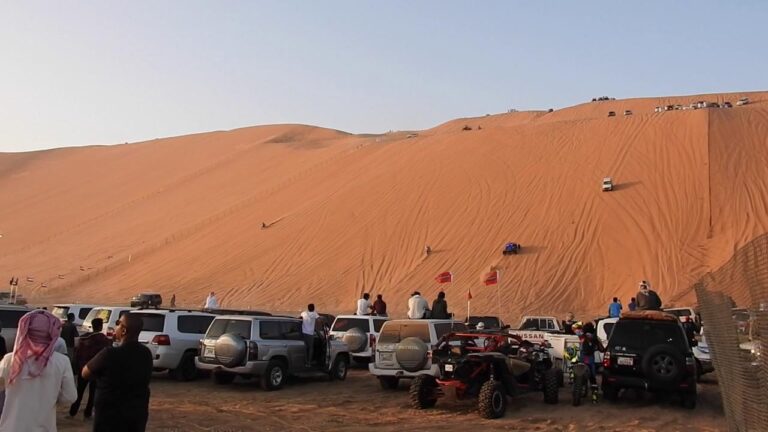
Liwa sits on the southern edge of the Rub al Khali, the world’s largest contiguous sand desert. This is not the small dune fringe you drive to from the city. Here, dunes are cathedral-scale: long ridgelines, steep slip faces and dramatic horizons. Moreeb — sometimes written Tel Moreeb or Tal Moreeb — is the region’s headline dune: steep, long and famous. Reported heights commonly exceed 300 metres, and its slip face can be extremely steep (reports often state slopes approaching fifty degrees). That sheer scale changes how you plan everything:
- Longer transfers. It’s a serious drive from Abu Dhabi or Dubai, so factor travel time into any “half-day” plan.
- Different light. The wide horizons and big dune faces produce dramatic shadows and longer golden hours for photographers.
- Darker skies. Less light pollution makes Liwa a top pick for stargazing and astrophotography.
- Local culture. Date farms, small forts, and Bedouin heritage are still visible — more so than in the city’s commercial desert parks.
Throughout this guide, you’ll find pragmatic suggestions that reflect Liwa’s scale: conservative drive estimates, equipment protection advice for dusty environments, and safety considerations tailored to long transfers and remote fieldwork.
Quick reality snapshot — read before you book
- Drive time from Abu Dhabi: typically ~2.5–3.5 hours, depending on start location and traffic.
- Drive time from Dubai: plan ~3.5–4.5 hours (longer if you start from northern Dubai).
- Typical tour durations:
- Sunset half-day: 6–7 hours (includes transfers).
- Full-day: 10–12 hours.
- Overnight: 24–36+ hours.
- Price range (2024–2025):
- Shared sunset/full-day: AED 350–700
- Shared overnight: AED 600–1,500+
- Glamping/private transfers: AED 1,000–2,500+
Short takeaway: Liwa is worth the trip, but you must plan for travel time and factor in heat, dust, and remoteness. Overnight stays are strongly recommended if you want sunrise, stars, and relaxed photography.
How to get to Liwa
From Abu Dhabi (best option for many visitors)
Most visitors originate from Abu Dhabi. The asphalted highways are generally good; route choices vary depending on your exact starting point, but typical timings are 2.5–3.5 hours. Operators often collect guests from Abu Dhabi hotels. If you choose to self-drive, fuel up before leaving and take spare water and snacks — services thin out after the main towns.
Practical tips:
- Follow the E10 / E30 corridor depending on the exit you take; use a reliable mapping app and download offline maps as a fallback.
- Expect some desert tracks at the final approach to dune fields. Reduce tyre pressure before entering soft sand (see vehicle checklist).
- Verify pickup windows; many operators give a two-hour pickup window for remote tours.
From Dubai
Allow 3.5–4.5 hours in normal traffic; longer if you depart from northern suburbs. There are no regular public buses aimed at tourists. Most people rent a car, hire a private transfer, or join a tour that offers Dubai pickup points.
Practical tips:
- If joining a group tour, confirm whether pickup is from central Dubai or Dubai Marina/JBR (these make a meaningful time difference).
- Self-drive visitors should time their departure to avoid Dubai’s morning or evening rush hours.
Public transport & event shuttles
Occasional shuttle buses run for major festivals (e.g., Liwa Festival). Outside scheduled events, private transport or organised tour pickups are the norm. If you plan to rely on taxis for return journeys, confirm availability and reception at your campsite — taxi options may be limited after dark.
Road conditions & tips
- Highways are well-maintained. The main corridors are paved and comfortable.
- Last stretches to dune fields are often unpaved tracks that require a 4×4.
- Mobile signal is patchy; tell someone your plan and use check-in times.
- Carry power banks and hard copies or screenshots of your route.
- Lower tyre pressure in soft sand and carry recovery gear if self-driving.
Types of Liwa tours — which suits each
- Sunset / Empty Quarter short drives — Best for: photographers and short-stay visitors who want huge dunes without spending a night. Note: expect long travel windows even for a “short” tour.
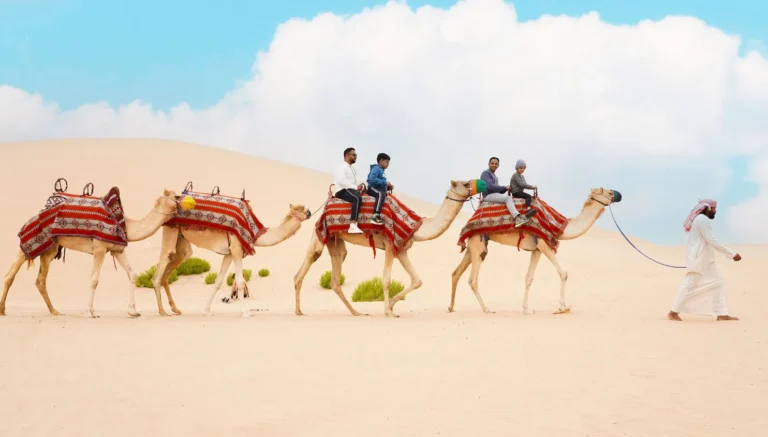
- Full-day Liwa safari — Best for: families or day-trippers who want a mix of dune driving, camel/date farm visits and a picnic.
- Overnight camping (basic & glamping) — Best for: photographers, stargazers, and travellers wanting more relaxed schedules. Glamping adds creature comforts (beds, sometimes power, sometimes en-suite options).
- Private 4×4 / bespoke multi-day — Best for: Professional photographers, researchers, or travellers with accessibility needs who want total flexibility.
- Event-based visits (Liwa festivals & motorsport) — Best for: motorsport fans and culture-seekers. Always verify festival dates before booking.
Copy-ready sample itineraries
Half-day (Sunset) — 6–7 hours total
Program: Pickup from Abu Dhabi mid-afternoon → drive ~2.5–3.5 hours → short dune drive & photo stops → sandboarding → prime sunset viewpoint → return to city late evening.
Why choose it: Shortest calendar commitment while still delivering epic views; useful if you have limited time.
Tradeoffs: A lot of travel for a short time on site; expect a rushed schedule.
Full-day — 10–12 hours
Program: Early pickup → camel & date farm visit → picnic lunch near a dune foothill → extended dune drive + sandboarding → short cultural camp visit → sunset viewpoint → return.
Why choose it: A fuller program with varied activities (cultural + dunes) — better for families and mixed-interest groups.
Tradeoffs: Still a long day; late return times are common.
Overnight (photographers & stargazers) — 24–36+ hours
Program: Late-afternoon pickup → extended dune runs and composition scouting → check-in to camp/glamping site → dinner, bonfire and stargazing → sunrise shoot on a dune ridge → breakfast and relaxed return.
Why choose it: Gives you sunrise without the rush, and a night to acclimatise. Great for astrophotography and for reducing travel stress.
Tradeoffs: Higher cost than day trips; basic camps can be rustic.
2-day / multi-day (deep dive)
Day 1: Transit, deep dune exploration and a night in a glamping camp.
Day 2: Early sunrise shoot, visit Moreeb event areas or date farms, small forts, midday departure.
Why choose it: For serious landscape shooters or multi-day cultural exploration.
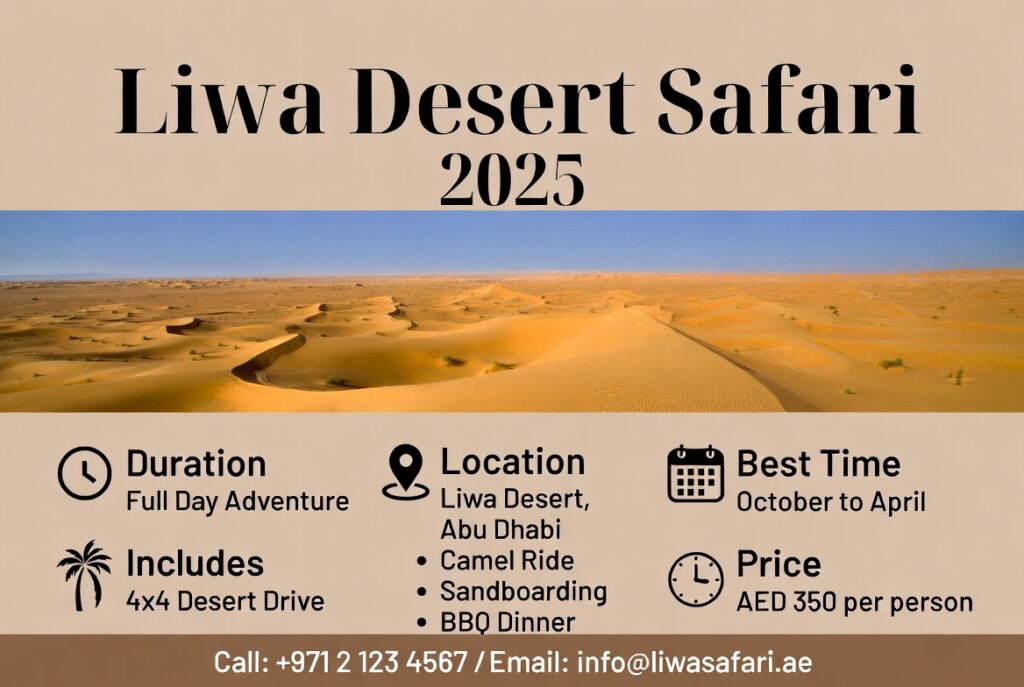
Realistic price ranges & booking tips
Note: Prices fluctuate with season (Oct–Mar peak), operator, group size and inclusions.
| Tour type | Typical price per person (2024–25) | What’s usually included |
| Shared sunset / half-day | AED 350–700 | Hotel pickup, dune drive, sandboarding, basic refreshments |
| Shared full-day | AED 450–900 | Pickup, extended dune runs, lunch, camel/date farm visit |
| Shared overnight (basic) | AED 600–1,000 | Camp tent, BBQ dinner, breakfast |
| Overnight glamping (mid–luxury) | AED 1,000–2,500+ | Private tent, premium bedding, better meals, private transfers |
| Private 4×4 / bespoke | AED 1,500+ | Private vehicle & guide; price rises with distance and nights |
Booking tips
- Compare inclusions — Is return transfer included? Are meals and park/ farm fees included?
- Private vs shared transfer — “Shared” Liwa tours might still use private 4×4 pickups — confirm vehicle type.
- Peak season surcharge — Expect higher prices between October and March.
- Cancellation & weather policy — Confirm refund or reschedule terms; ask whether the operator cancels for sandstorms.
Safety, vehicle & driver checklist
Liwa is remote — good safety practice is non-negotiable. Print this checklist and confirm these items before you board:
Driver & vehicle
- Licensed, experienced dune driver.
- High-clearance 4×4 (e.g., Toyota Land Cruiser or similar).
- Evidence of recent vehicle maintenance/inspection.
- Full-size spare tyre, jack and wheel brace.
- Tow rope/snatch strap; traction boards.
- Seatbelt policy for all passengers.
Recovery & emergency
- Recovery gear present (traction boards, shovel, snatch strap).
- First-aid kit on board and crew trained in basic first aid.
- Emergency plan and local contact numbers.
- VHF/radio or satellite phone for very remote excursions.
- Driver competence navigating at night and the policy for limiting night driving.
Guest safety
- Pre-departure briefing (hydration, heat risks, motion sickness).
- Clear child seat/infant policy.
- Health caveats — not suitable for late-stage pregnancy; discuss mobility constraints in advance.
Where to stay — camps, glamping & nearby options
Basic desert camps
Economical and authentic. Expect communal facilities and rustic tents — a straightforward sleepover that emphasises the desert experience.
Glamping
Private, well-appointed tents with better bedding and sometimes electricity. Good if you want comfort while staying remote.
Nearby resorts & Liwa Village
Small resorts and Liwa Village provide conventional rooms — useful as pre-/post trip bases, especially for families.
Booking tips for stays
- Choose camps with low generator usage if you plan astrophotography.
- Confirm transfer times from camp to dune viewpoints (some camps are a drive away).
- Read reviews for bedding quality, privacy, and meal standard.
Packing checklist — seasonal and practical
Essentials (year-round)
- Wide-brim sun hat and quality sunglasses.
- SPF 50+ sunscreen and lip balm.
- Loose, breathable long-sleeve shirts and Lightweight trousers (protect from sun and sand).
- Warm layer for nights (Oct–Mar).
- Sturdy closed shoes or lightweight hiking boots.
- Refillable water bottle and electrolyte mixes.
- Power bank and sealed plastic bags for electronics.
- Motion-sickness tablets if prone.
- Personal meds and a small first-aid kit.
Tech & photography
- Wide-angle lens (14–35mm) and a telephoto (70–200mm).
- Tripod for sunrise and long exposures.
- Lens cloths and resealable bags to protect equipment from dust.
- Extra batteries and memory cards.
Optional but handy
- Quick-dry towel, small pillow, headlamp, insect repellent, and cash for camp extras.
Seasonal notes
- Winter (Oct–Mar): Daytime pleasant; nights can be cold — pack a warm jacket.
- Summer (June–Sept): Extremely hot — avoid midday activity; bring misting towels and ensure shade and plenty of water. Avoid basic tent overnighting unless the camp is climate-controlled.
Photography & golden-hour tips for Moreeb and the Empty Quarter
Golden hour choices
- Sunrise produces the richest colours and crispest air; choose it for fine detail and less atmospheric haze.
- Sunset offers dramatic silhouettes and warm hues; dunes take on long shadows.
Lenses & composition
- Wide-angle to convey scale and leading ridgelines.
- Telephoto to compress dune layers and isolate textures.
- Use foreground ripples, footprints and tussocks to add depth and scale.
Starlight & astrophotography
- Pick camps well away from generator noise and lights.
- Use long exposures for star trails or a higher ISO and wide aperture for the Milky Way.
- Bring a sturdy tripod and a remote release.
Practical protection
- Change lenses in sheltered, low-wind conditions. Keep gear in re-seal bags and use lens filters to reduce sand abrasion.
Landscape, flora & fauna — what to expect in Liwa
Landscape features
Expect immense sand ridges, interdune valleys and occasional sabkhas (salt flats). Dune shapes and passes change with the wind; a flat horizon may suddenly reveal a towering dune such as Moreeb.
Flora
Look for date palms around oases, hardy shrubs in sheltered interdunes, and salt-tolerant plants around sabkhas. Date farms are a pleasant cultural stop.
Fauna
Desert-adapted reptiles, small mammals and birds survive here. Larger animals are uncommon and often nocturnal; always respect wildlife and observe from a distance.
Human history & culture
Liwa Oasis supported Bedouin settlement and date farming for centuries. Small forts, camel culture and local markets persist. Favour operators that include respectful local interactions — date farms, community stalls and cultural demonstrations add depth.
Survival tips & common challenges
- Hydration: Carry more water than you think. Dehydration escalates rapidly in heat.
- Sand & electronics: Keep everything sealed and use protective covers.
- Motion sickness: Sit centrally, face forward and avoid heavy meals before dune driving.
- Heat timing: Avoid midday dune runs during summer. Schedule morning or late-afternoon activities.
- Tell someone your plan: If venturing solo, leave a trip outline and check-in times; mobile coverage can be unreliable.
Top activities — what to do in Liwa
- Dune driving & dune-bashing (only with experienced licensed drivers).
- Sandboarding and dune hikes (Moreeb morning climbs are famous).
- Camel farm & date farm visits — taste fresh dates and learn processing.
- Overnight camping & stargazing — long exposures and Milky Way shots.
- Festival attendance (motorsport and cultural events at Tel Moreeb and other sites).
UX & accessibility tips
- Wheelchair access and limited mobility: Many sites are sand-heavy and not wheelchair-friendly — call operators directly and ask about tent access, toilet types and vehicle suitability.
- Families: Check child seat policy and procedures for long transfers. Overnight stays reduce late-night returns and are more comfortable for children.
Environmental issues & conservation
The desert is fragile. Off-track driving damages vegetation and disturbs wildlife. Choose operators with minimal-impact practices and responsible waste removal. Respect local land and avoid leaving trash. Supporting community-run camps helps local economies.
Interesting facts & local intel
- Moreeb’s scale: Commonly reported at over 300 metres, Moreeb is a local landmark and motorsport venue.
- Liwa Festival: Winter festivals host motorsport and cultural programming — check dates before you book.
- Dark skies: Liwa is among the UAE’s best spots for astrophotography due to low light pollution.
Comparison table — Which Liwa tour should you pick?
| You want… | Choose this | Why |
| Quick big-dune photo & short time | Sunset half-day | Shortest commitment; long transfer, but gives the big dune shots |
| Comfort & night sky | Overnight glamping | Comfort plus sunrise and stargazing, minimal generator interference if chosen wisely |
| Budget day out | Shared full-day | Best value with mixed activities |
| Flexibility/accessibility needs | Private 4×4 | Tailored schedule and vehicle, better for mobility constraints |
| Festival atmosphere | Visit during Tel Moreeb/Liwa Festival | Motorsport + cultural programming, but expect crowds |
Pros & Cons — Liwa Desert Safari
Pros
- Monumental dunes and world-scale landscape for photography.
- Remote dark skies are ideal for stargazing.
- Authentic cultural stops (date farms, camps).
Cons
- Long transfers from Abu Dhabi and Dubai.
- Heat extremes in the summer months.
- Price and inclusions vary — inspect offerings carefully.
FAQs
A: Yes, but expect long transfers (~2.5–4 hours each way). Many travellers prefer overnight stays to avoid late-night drives.
A: Moreeb (Tal Moreeb / Tel Moreeb) is commonly reported at over 300 metres and is one of the UAE’s tallest dunes.
A: October–March is the best time — daytime is pleasant and nights are cool. Avoid intense summer heat unless you have climate-controlled accommodation.
A: Shared overnight packages usually range from AED 600–1,500+, depending on basic vs glamping options. Private tents and transfers cost more.
A: Yes, but only if you are experienced with desert driving. Lower tyre pressure, carry recovery gear, and ensure fuel and water supplies.
Conclusion
Liwa is not a small city-adjacent desert park — it’s the deep desert. The scale of Moreeb and the sweep of the Empty Quarter offer unique Photographic opportunities, crystalline night skies for astrophotography, and a sensory experience that city deserts rarely provide. That uniqueness brings trade-offs: long transfers, careful logistics, and smart packing. Use this guide as a practical checklist: match tour type to your tolerance for travel time, consider glamping if you want comfort plus dawn and dusk shoots, and prioritise safety — licensed drivers, recovery gear and clear night policies. If you publish this as a pillar article, include printable checklists and an operator audit to increase credibility and utility. Bookmark this page, compare two or three reputable operators using the 10-point audit above, and aim for sunrise — that’s where Liwa most rewards the patient and prepared traveller.