

Introduction
If you want deep crimson sand, towering slopes for heart-racing dune-bashing, and golden-hour images that look editorial-ready, head to Lahbab — Dubai’s Big Red. This exhaustive guide equips you to plan a flawless Red Dune Desert Safari: exact location and realistic drive times, up-to-date 2025 price ranges and the factors that alter cost, must-know safety and legal points (self-drive cautions included), three practical hour-by-hour itineraries (morning, sunset, overnight), photography tactics for the golden hour, a pragmatic packing checklist, and a step-by-step operator selection checklist with clear red flags. I’ve also included publish-ready content blocks, sample schedules you can copy into your booking page, and succinct conversation pointers. Short on time? Opt for an evening Lahbab safari that times dune-bashing to finish 30–45 minutes before sunset for the richest color and best light on the red sand. Scroll down for pricing tables, safety rules, and ready-to-paste SEO extras.
- Red Dune vs Standard Desert Safari — which should you pick?
- Where exactly are the red dunes? Travel time & map notes
- What to expect: activities, typical durations, accessibility
- Typical tour lengths
- Common activities
- Accessibility
- Realistic price guide & what affects price
- Best time to go & photography windows — golden hour tactics
- Timing & photo tactics
- Quick photography checklist
- How to pick an operator — checklist + red flags
- Operator checklist (ask or verify)
- Red flags
- Platforms vs direct booking
- Three sample itineraries — hour-by-hour
- Safety, rules & legal notes
- Operator safety & regulation
- Self-drive warnings
- Dune buggies & ATV rules
- On-vehicle safety
- Emergency preparedness
- Packing list & photography gear checklist
- Essentials
- For photographers
- Comfort & safety extras
- Flora, fauna & a short natural history of Lahbab
- Landscape
- Flora
- Fauna
- Human history and local culture
- Survival tips & desert challenges
- Hydration
- Heat & sun
- Sand
- Vehicle breakdowns
- Medical
- Environmental issues & conservation — how to act responsibly
- Tourism pressure
- Wildlife disturbance
- How you can help
- Interesting facts & micro-guides
- Pros & Cons
- FAQs
- Final recommendations — short checklist before booking
- Conclusion
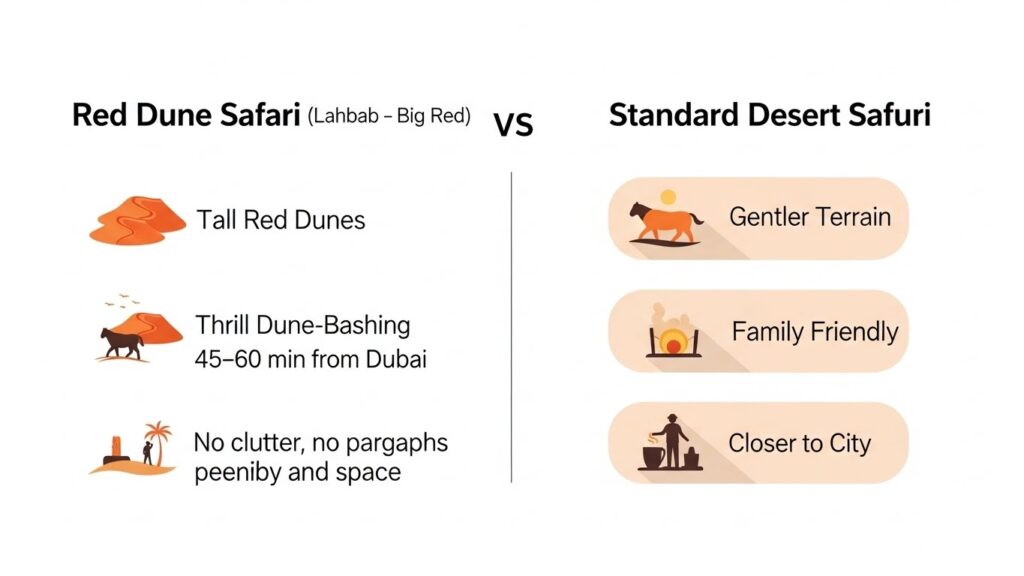
Red Dune vs Standard Desert Safari — which should you pick?
| Feature | Red Dune Safari (Lahbab / Big Red) | Standard Desert Safari |
| Terrain | Tall, steep crimson dunes — dramatic | Gentler, paler sand ridges |
| Best for | Thrill seekers (dune-bashing), photographers | Families, cultural evenings, first-timers |
| Distance from Dubai | ~45–60 minutes | Often closer (30–45 min) |
| Typical activities | Dune-bashing, sandboarding, buggy/quad options, private camps | Camp dinner, live shows, camel rides |
| Crowds | Usually smaller, more remote | Often busier, larger camps |
| Safety considerations | Steeper slopes — need experienced drivers | Gentler; safer for very young children |
Verdict: Pick Lahbab if you crave dramatic visuals and pulse-raising slopes. Choose a standard safari for a relaxed cultural experience, with easier access and gentler terrain suitable for kids or mobility-limited guests.
Where exactly are the red dunes? Travel time & map notes
The red-sand terrain most tour operators use is Al Lahbab (commonly dubbed “Big Red”). It lies south of the Dubai–Al Ain (E66) corridor and forms a wide dune sea with tall, sculpted faces. From central Dubai, anticipate roughly 45–60 minutes by car, depending on pickup location and traffic. From Dubai Marina or Jumeirah, add time; from the outskirts of Dubai, it can be closer.
Quick navigation tips for your readers:
- Most organized tours include hotel or apartment pickup, so you rarely need to navigate to the dunes yourself.
- If you self-drive, allow an extra 10–20 minutes to find the marked entry points, watch for sand tracks leading off the tarmac, and confirm you’re at a permitted access point.
- Helpful search terms for maps: “Lehbab,” “Lahbab Desert,” “Big Red Dunes,” or “Al Lahbab.” Use satellite view to confirm the dune shapes and usual vehicle tracks.
- For a site map in your article: include a compact static image showing routes from Downtown, Dubai Marina, and Deira, with drive times and recommended pickup windows.
What to expect: activities, typical durations, accessibility
Typical tour lengths
- Morning safaris: ~3–5 hours (sunrise focus).
- Evening safaris: ~4–6 hours (sunset + camp).
- Overnight safaris: 12–24 hours, depending on camp options and sleep arrangements.
Common activities
- Dune-bashing in a 4×4: Typically 30–45 minutes of dynamic slope runs (can be longer if you book extended sessions).
- Sandboarding: Short sessions on gentler faces — beginners can learn quickly.
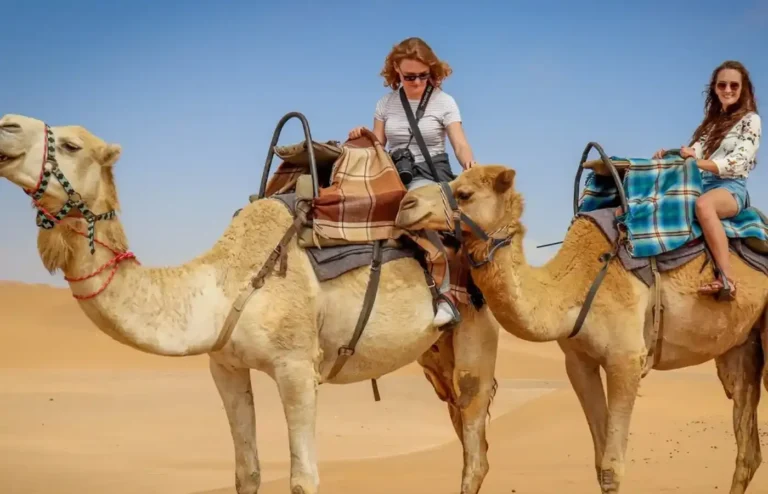
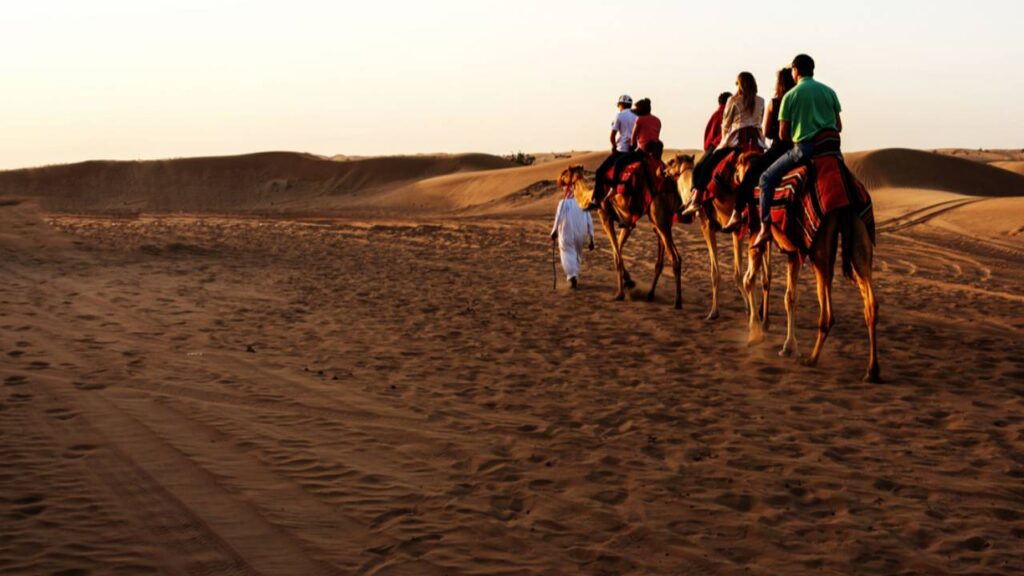
- Camel photo rides: Quick, staged rides for pictures (not long treks).
- Golden-hour photo stops: Planned vantage points for sunset/sunrise images.
- Camp time (evening): Buffet BBQ, henna stalls, shisha lounges, belly dance/tanoura shows (optional).
- Buggy/quad rentals: Supervised in designated areas — an add-on with instructor oversight.
Accessibility
- Many operators can provide wheelchair-accessible transfers to the camp area. However, dune-bashing itself and sandboarding generally aren’t wheelchair-accessible. Always confirm accessibility before booking if mobility devices or special assistance are needed.
Realistic price guide & what affects price
Price ranges (per person)
| Tier | Typical inclusions | Price (USD) |
| Budget group evening | Shared transfer, dune-bashing, camp buffet | $30–$80 |
| Standard evening (mid) | Transfer, longer activities, camp show | $70–$120 |
| Premium/private evening | Private vehicle or private table, premium camp | $120–$300+ |
| Luxury/private 4×4 + private camp | Private 4×4, VIP dining, private tent | AED 999–1998+ (~$270–$545+) |
Why prices change
- Transfer distance (city center pickup vs suburbs).
- Group vs private vehicle (privacy premium).
- Meal quality (standard buffet vs bespoke cuisine).
- Add-ons (buggies, private photographers, overnight camping).
- Operator brand, reputation, and included safety measures.
Tip for booking pages: always show a clear amenities list — water, photos, transfers, timings — because vague listings usually hide extra fees. If a deal looks too cheap compared to average, check exclusions: sometimes water, photos, or transfers are add-ons.
Best time to go & photography windows — golden hour tactics
Best months: October/November through March — cooler temperatures, comfortable nights, and the busiest tourist season.
Timing & photo tactics
- Sunrise (morning safaris): Crisp shadows, emptier dunes, cooler air. Excellent for wide compositions, dramatic silhouettes, and long exposures.
- Golden hour before sunset (evening safaris): The red sand “ignites.” Aim to finish dune-bashing 30–45 minutes before sunset so you’re at a high vantage point during the richest light.
- Stargazing (overnight): Lahbab’s relative Remoteness means darker skies — ideal for star photography and Milky Way shots on clear nights.
Quick photography checklist
- Shoot RAW. Preserve highlight and shadow detail.
- Use a wide-angle (16–35mm) lens to capture dune curves and vastness.
- Add a person or vehicle to provide scale — it transforms ordinary dunes into cinematic landscapes.
- Polarizer helps deepen skies and remove surface glare (watch exposure changes).
- For high-contrast scenes, bracket exposures or use a graduated ND filter to balance bright skies and darker foregrounds.
How to pick an operator — checklist + red flags
Operator checklist (ask or verify)
- Valid commercial tour license and local permits.
- Plenty of recent reviews and a healthy booking volume on reputable platforms.
- Clear pickup logistics and realistic times.
- Transparent inclusions: water, insurance, photographs, timings.
- Safety briefings, working seatbelts, and professional driver training.
- Night contact number and written emergency procedures.
- Proof of vehicle maintenance and safety checks.
Red flags
- Extremely low price with vague inclusions.
- Refusal to show vehicle maintenance logs or driver certifications.
- No clear cancellation, child safety, or refund policies.
- Drivers performing unsafe stunts or ignoring seatbelt rules.
- The operator cannot produce licenses or permits upon request.
Platforms vs direct booking
Platforms (GetYourGuide, Viator) give volume of reviews and booking timestamps — useful social proof. Direct booking can yield customization (private pickups, special tents), but only do it if the operator has verifiable credentials and recent positive reviews. Keep payment protections in mind.
Three sample itineraries — hour-by-hour
Morning (photographers & cool temps)
05:30 — Pickup from central Dubai (timing varies).
06:30 — Arrive at Lahbab. Safety briefing and seatbelt checks.
06:40–07:30 — Dune-bashing with staged photo stops.
07:30–08:15 — Sandboarding and a short camel photo.
08:15–09:30 — Light breakfast at camp (if included) and return transfer.
Evening (classic sunset + camp)
15:00–16:30 — Pickup window (staggered).
16:45–18:00 — Dune-bashing with scenic photo stops.
18:00–18:45 — Golden hour photos at a high vantage point.
19:00–21:00 — Camp dinner, cultural performances, henna.
21:30–22:00 — Drop back at the hotel.
Overnight (stargazing + private experience)
16:00 — Pickup; afternoon dune sessions.
19:00 — Private dinner under the stars; guided stargazing.
22:00 — Sleep in a private tent or premium camp (if booked).
06:00 — Sunrise walk; breakfast and return transfer mid-morning.
Copy-ready note for your site: Times are sample windows. Always show a clear pickup time and a drop-off window on the booking page, and include a “What to expect” list with exact inclusions.
Safety, rules & legal notes
Operator safety & regulation
Reputable providers run driver training and abide by local tourism safety programs. Always ask whether drivers are trained in off-road recovery and emergency response.
Self-drive warnings
Most rental agreements void insurance for off-road use. Self-driving to the dunes is feasible but risky unless you have 4×4 experience. If you consider self-driving, read the rental contract carefully and check local police guidance. For most visitors, booking a licensed operator is the safer path.
Dune buggies & ATV rules
Buggy and ATV sessions usually occur in Supervised zones with instructors. You typically need a valid driving license; confirm local variations with the operator. Never attempt to drive a buggy on public roads.
On-vehicle safety
- Always wear seatbelts.
- Remain seated during dune-bashing.
- Avoid standing on dune crests during moving vehicle photo stops.
- Pregnant travellers and small children should avoid dune-bashing.
Emergency preparedness
Confirm the operator has redundant communication (mobile plus backup) and a written contingency plan for medical emergencies or vehicle breakdowns.
Packing list & photography gear checklist
Essentials
- Lightweight closed shoes (sand gets hot and abrasives can hurt bare feet).
- Sunglasses, a wide hat, sunscreen, and lip balm.
- Light jacket for cool desert nights.
- Small daypack and refillable water bottle (confirm whether operator supplies water).
- Power bank and extra phone battery.
- Motion sickness tablets if you get carsick.
For photographers
- Camera body + wide-angle lens (16–35mm).
- Short telephoto (70–200mm) for compressed dune details.
- Compact tripod for sunrise/blue hour.
- Polariser and ND for long exposures.
- Spare batteries, memory cards, and zip bags to shield gear from sand.
- Quick-release straps and a small dust blower to remove grit.
Comfort & safety extras
- Basic first-aid kit.
- Wet wipes and hand sanitizer.
- Ziplock bags to protect electronics.
- Light scarf to shield face from windblown sand.
Flora, fauna & a short natural history of Lahbab
Landscape
Lahbab is a dune sea with large crescent (barchan) and linear dune formations, steep slip faces, and wind-carved ridges. The deep red hue comes from iron-oxide staining and local mineral composition that tints quartz grains.
Flora
Sparse, hardy shrubs and grasses adapted to arid conditions. These plants are crucial: their root systems stabilise portions of the dune and prevent rapid erosion.
Fauna
You may find desert-adapted reptiles, foxes, and ground-nesting birds. Most mammals are nocturnal and avoid tourist zones. Even seemingly empty stretches are active ecosystems.
Conservation note: Avoid trampling vegetation and stay on permitted tracks — off-track driving fragments habitat and accelerates erosion.
Human history and local culture
Bedouin groups historically traversed the wider region. Modern desert camps borrow from Bedouin hospitality — food, music, and tent architecture — but these are often curated for tourists. When possible, meet and support local artisans or guides. Always ask permission before photographing people and tip thoughtfully for cultural interactions.
Survival tips & desert challenges
Hydration
The desert environment dries quickly. Carry water and sip regularly — not just when thirsty.
Heat & sun
Avoid the midday sun during the summer months when temperatures are extreme. Plan early-morning or late-evening outings.
Sand
Protect electronics and lenses in zip bags. Avoid changing lenses in windy conditions. Remove loose sand from equipment before packing.
Vehicle breakdowns
Confirm your operator has radios, backup phones, and a contingency plan. A minor mechanical issue can become serious if you’re miles from the road.
Medical
Carry a basic first-aid kit and disclose any health conditions to the operator before booking.
Environmental issues & conservation — how to act responsibly
Tourism pressure
Repeated driving along the same dune crests and the creation of new tracks cause long-term erosion and habitat damage. Good operators restrict their routes and steer clear of fragile areas.
Wildlife disturbance
Excess noise and off-track driving disrupt nocturnal species and nesting birds — keep group sizes reasonable and avoid intrusive flash photography at night.
How you can help
- Choose operators who adhere to “leave no trace” practices.
- Stay on designated routes and avoid making new tracks.
- Pack out all waste and decline souvenirs made from protected plants or animals.
- Spread awareness — include conservation messaging on your booking page or campsite signage.
Interesting facts & micro-guides
- “Big Red” is nicknamed for both the intense color and the dunes’ scale.
- Lahbab often yields excellent starry skies thanks to its distance from city glare — overnight trips are ideal for astrophotography.
- Red dunes can look more saturated after rare rains when the sand surface darkens slightly.
- Many of the most booked desert activities on large platforms include Lahbab tours, especially during the winter months.
Pros & Cons
Pros
- Dramatic, magazine-worthy imagery and striking sand color.
- Thrilling dune profiles for experienced drivers and adventure seekers.
- Usually quieter and darker at night than the closer desert zones.
Cons
- Farther from central Dubai for some neighborhoods — slightly longer transfers.
- Steeper dunes demand experienced drivers and robust safety practices.
- The environmental impact of visitors and providers ignoring designated routes.
FAQs
A: The red dunes are mainly in Al Lahbab (Big Red), about 45–60 minutes from central Dubai by vehicle. Many operators include hotel pickup.
A: When run by licensed operators with trained drivers and clear safety briefings, dune-bashing is considered safe — but follow instructions, wear seatbelts, and avoid standing in moving vehicles.
A: Expect $30–$80 for basic group tours, $70–$150 for mid-range experiences, and $120–$500+ for premium or private packages, depending on add-ons and exclusivity. Always confirm exact inclusions.
A: Self-driving to Lahbab is possible but risky — rental insurance often excludes off-road driving, and off-road use requires experience. Most visitors choose licensed operators for safety.
A: In supervised tour areas, you usually need a valid driving license, but not a separate dune-buggy license. Operators provide a briefing, and local rules vary, so confirm when booking.
Final recommendations — short checklist before booking
- Want epic photos and fewer crowds? Book a morning or evening Lahbab safari and time dune-bashing to end 30–45 minutes before golden hour.
- Want adrenaline & buggy time? Select a highly rated operator that includes supervised buggy sessions and written safety briefings.
- Budget-conscious? Book a midweek group evening tour — prices are generally lower than weekends.
- Considering self-driving? Double-check rental insurance exclusions and local police guidance — licensed tours are typically safer and easier.
Conclusion
Lahbab’s Red Dunes are Dubai’s quintessential backdrop for dramatic photography and adrenaline-filled desert play. Their deep orange-red sands and steep, sculpted faces reward a little planning: pick cooler months (October–March), time dune-bashing so you stop 30–45 minutes before sunset, and choose an operator who publishes clear inclusions, upholds safety standards, and shows recent reviews. If you’re short on time, an evening Lahbab safari with pickup will usually deliver the red-sand glow plus a camp dinner in one convenient trip. Always mind conservation: stick to permitted routes, don’t disturb wildlife, and pack out your trash. With the right gear, a trusted provider, and golden-hour timing, Lahbab can be the highlight of your Dubai itinerary — a place where color, scale, and motion combine into images and memories that last.