
Introduction — What is a Safari Desert
Desert Safari is an adventure with many layers, an adrenaline rush, local culture, and natural big landscapes. Overall elements include dune driving (also known as dune bashing), camel rides, golden hour photo stops, traditional cuisine and performances, and staying overnight under a sky of endless stars. This may include evenings done on a rush basis and the various day-long camel tours, where travelling is the main emphasis.
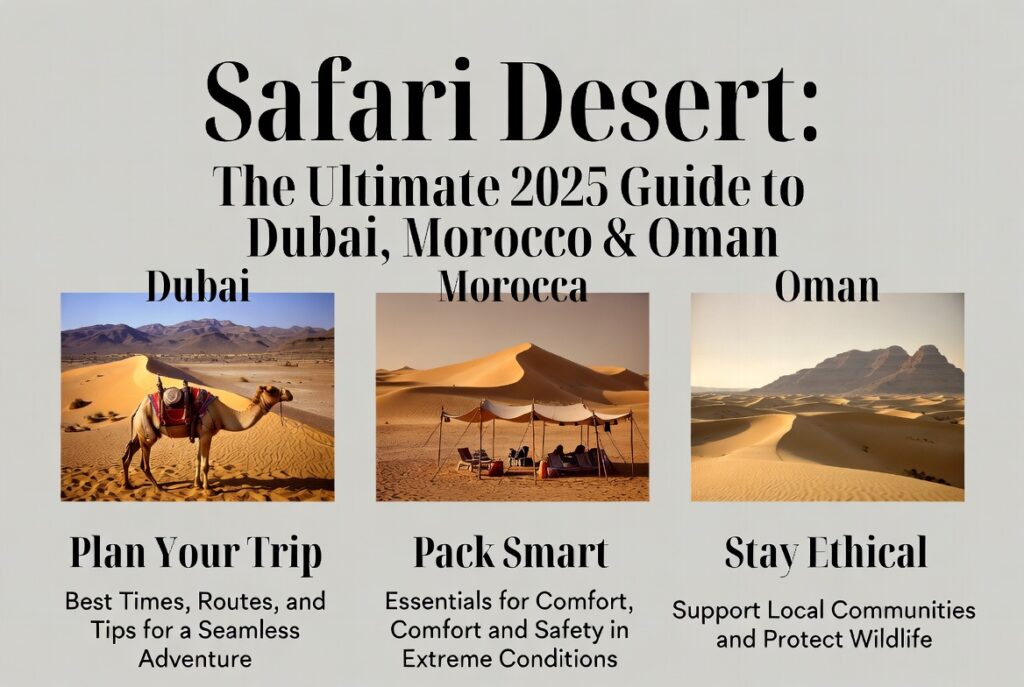
The guide concentrates on three of the high-demand markets that are most favored among international travelers in 2025:
- Dubai / UAE ( Arabian desert ) – brief, high-impact tours with upscale camp amenities, occasionally in reserves that are balanced between tourism and conservation.
- Morocco (Sahara -Merzouga and Zagora) – multi-day desert tours, Berber traditions, magnificent Erg Chebbi dunes, and long camel caravan-type stretches.
- Oman (Wahiba Sands) – more local-run, smaller, and less touristy camps than those of Dubai.
- Which deserts and experiences does “Safari Desert” mean?
- One-glance quick filter
- How to pick the right Safari Desert package
- Budget / Shared group (half-day or evening)
- Mid-range (private 4×4, upgraded camp)
- Luxury / Conservation-led
- Decision checklist — what to ask before booking
- Package comparison table
- Sample itineraries
- Dubai: Evening Desert Safari — Classic (half day)
- Dubai: Overnight Heritage Safari — Luxury example
- Morocco: 3-day Merzouga Sahara Tour — Classic
- Oman: Wahiba Sands Authentic Camp Overnight.
- What to pack & wear — practical checklist
- Clothing
- Essentials
- Optional but helpful
- Safety, animal welfare & sustainability — what to look for
- Safety
- Animal welfare
- Sustainability
- Prices & booking tips
- Typical price ranges (quick)
- Booking tips
- Best time to go — by region
- Dubai / Arabian deserts
- Morocco (Merzouga / Erg Chebbi)
- Oman (Wahiba Sands)
- Photography & best photo spots — simple tips
- Gear & basic settings
- Compositions that work
- Protect gear
- Operator comparison — what to look for in a provider
- Mini checklist
- Operator types — quick strengths & weaknesses
- Conservation and environmental notes
- Main issues
- How to reduce impact
- FAQs
- Conclusion
Which deserts and experiences does “Safari Desert” mean?
“Safari Desert” is an umbrella: anything from a short sunset trip to an extended camel trek. Here are the common formats:
- Short evening trips (3–6 hours): Dunes, sunset, barbecue, light cultural entertainment. High volume, good for families or short-stay visitors.
- Day trips: Longer drives into inland dunes and more time for photography; usually return the same day.
- Overnight stays: Sleep in tents, shady stone rooms, or simple chalets; sunrise activities the next morning.
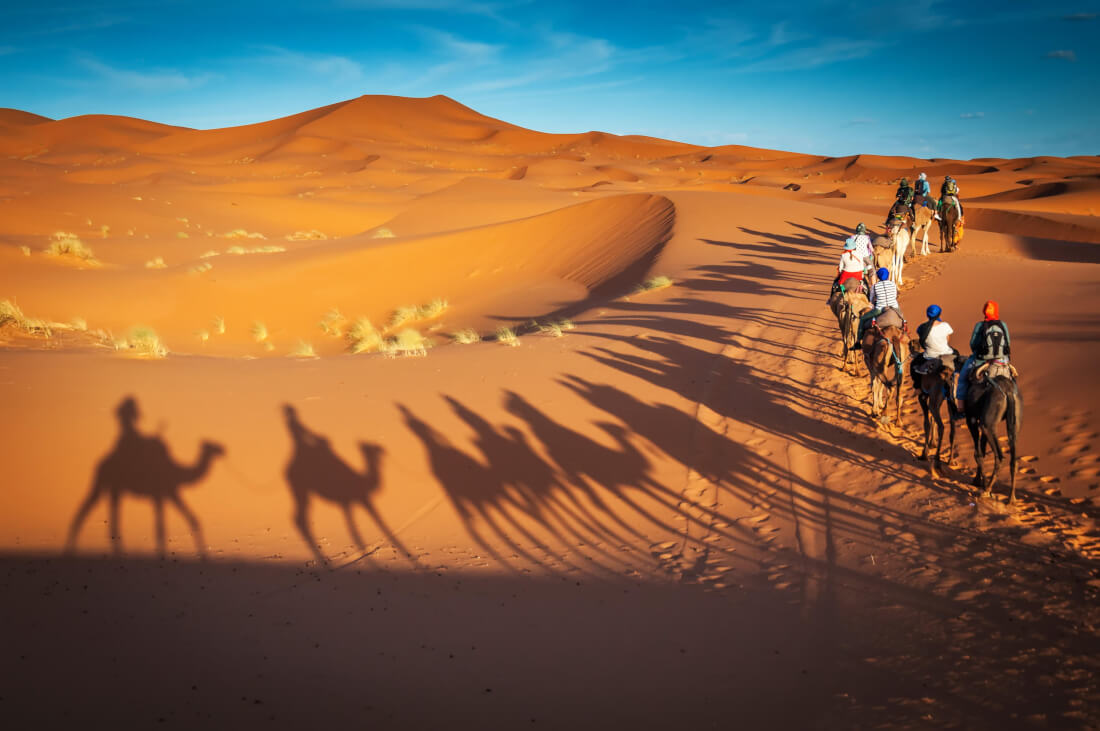
- Multi-day treks: Camel caravans or vehicle-supported journeys with overnight camps, cultural stops (kasbahs, gorges), and remote tracks.
This guide centers on three market types:
Dubai / UAE — Arabian Desert
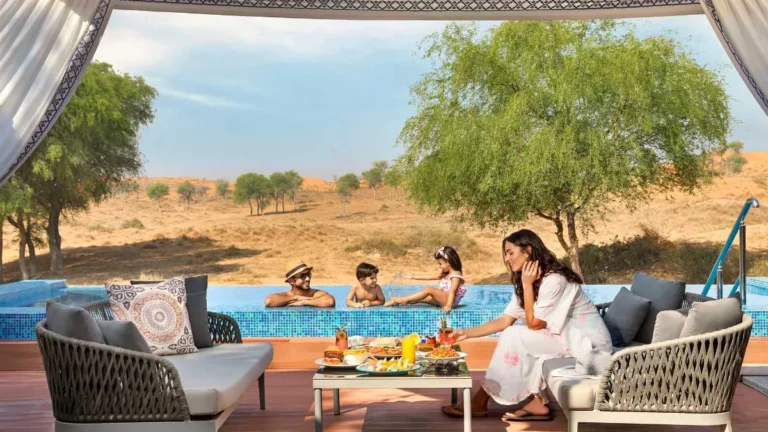
Short, intense experiences: dune bashing, sunset viewpoints, Bedouin-style camps, and heritage or conservation-focused safaris when available. Operators range from mass-market shared vans to high-end conservation-led providers.
Morocco — Sahara (Merzouga & Zagora)
Longer journeys with a cultural spine: Atlas crossings, kasbahs, gorges, and camel-transit nights in Erg Chebbi. Expect dramatic dune shapes and shifting sands that make every sunrise unique.
Oman — Wahiba Sands
A more intimate vibe: local hospitality, family-run camps, and simpler, less-commercialized nights under the stars. Good for travelers who want authenticity and quieter dunes.
One-glance quick filter
Use this compact table to choose quickly.
| Region / Trip type | Typical trip length | Price band (per person) | Best season |
| Dubai — Shared Evening | 3–6 hours | USD $40–130 | Oct → Apr |
| Dubai — Mid-range / Overnight | 1 night | USD $150–600 | Oct → Apr |
| Dubai — Luxury / Heritage | Overnight, small groups | USD $400+ | Oct → Apr |
| Morocco — Multi-day (Merzouga) | 2–4 days | USD $100–400+ | Mar–May, Sep–Nov |
| Oman — Wahiba Sands | Overnight / 2 days | USD $80–300 | Oct → Apr |
How to pick the right Safari Desert package
Match your travel priorities to one of the following package tiers:
Budget / Shared group (half-day or evening)
- Good: Short stay, families with tight schedules, low-end travelers.
- Archetypal: Common pickups, giant gatherings, buffet dinner, run-of-the-mill camp entertainments (belly dance, tanoura).
- Advantages: Low cost, easy booking.
- Cons: Lower privacy, more people, and strict schedules.
Mid-range (private 4×4, upgraded camp)
- Good for: Couples, small groups wanting more privacy and comfort.
- Typical: Private transfer, upgraded camp tents or chalets, camel rides, optional extras like stargazing or local meals.
- Pros: More choices, comfort, and schedule control.
- Cons: Higher price than shared.
Luxury / Conservation-led
- Best: Travelers who like a curated culture and nature, high standards of service, and smaller groups.
- Characteristic: Vehicles are vintage or specialized, nature trips, prepared food, conservation talks, and small groups.
- Cons: Helping animals, deeper Interpretation, and high service are better.
- Cons: Premium price.
Decision checklist — what to ask before booking
Before you commit, run through this checklist with the operator:
- Length of trip: half-day / full day/overnight / multi-day?
- Pickup: Is pickup included? What is the commute time to the desert? Any extra fees?
- Safety: Do vehicles qualify as maintained and insured? Do the drivers train on dunes? Are seat belts provided?
- Group size: number of individuals per vehicle, number of individuals per tent?
- Animal welfare: Do the animals get treated in a relaxed manner? Is there shade and water? Any vet oversight?
- Breaking lunch/ dinner: What is the food? Is the water drunk, or must you carry your own?
- Flexibility & reimbursement: Is it changeable or refundable? What are the fees?
- Sustainable activities: Are they plastic restriction, local initiatives, or reserve-based?
- Temperature & clothing: Do they have blankets or heaters at night? Special dressing code?
- Accessibility: Does the operator have any mobility limits that can or cannot be met?
Package comparison table
| Package type | Typical price (per person) | Best for | Typical inclusions |
| Shared Evening (budget) | USD $40–130 | Short stays, families | Pickup, dune bashing, sunset, buffet dinner, and entertainment. |
| Mid-range Private / Overnight | USD $150–600 | Couples, small groups | Private transfer, upgraded camp, camel ride, sunrise. |
| Luxury / Heritage | USD $400+ | Experience seekers | Curated nature drive, fine dining, small groups, and conservation discussion. |
| Morocco multi-day | USD $100–400+ | Adventure & culture | Long drives, camel trek, Berber camp, local guides, meals. |
Sample itineraries
Here are ready-to-use itineraries you can paste into a booking page, email, or travel plan.
Dubai: Evening Desert Safari — Classic (half day)
- 15:00–16:00: Hotel pickup.
- 16:30: Arrive at dunes — safety briefing.
- 16:45–17:30: Dune bashing (20–45 min).
- 17:45: Sunset photo stop on a ridge.
- 18:30: Arrive at camp — camel rides, henna, tea.
- 19:30: BBQ buffet dinner and cultural shows (belly dance, fire show).
- ~22:00: Return to the hotel.
This is the most common evening package — high value for short-stay visitors.
Dubai: Overnight Heritage Safari — Luxury example
- Afternoon: Pickup and a curated vintage Land Rover nature drive.
- Sunset: Falconry demonstration at golden hour.
- Evening: Welcome coffee & dates, multi-course Emirati meal in a low-light heritage camp.
- Night: Sleep in a stone desert room or a premium tent.
- Morning: Sunrise walk + falcon demo; return to the city.
Luxury operators blend culture and conservation for a richer experience.
Morocco: 3-day Merzouga Sahara Tour — Classic
1 Day: Marrakech – High Atlas – Ait Ben Haddou – Dades Valley.
2 Day: Todra gorges – Merzouga – Camel to desert camp; dinner and live music.
3 Day: Sunrise camel ride- Back to Marrakech.
Perfect for a traveler who desires all culture and history, and dunes in a single journey.
Oman: Wahiba Sands Authentic Camp Overnight.
Afternoon: Wahiba Sands drive out of Muscat.
Afternoon: Dune walk, frankincense tea, traditional dinnerstorytellingng.
Night: Sleep in a chalet or primitive tent.
Morning: Morning walk or tour of the wildlife or local life; back to Muscat.
Oman has less noisy nights as compared to Dubai.
What to pack & wear — practical checklist
Pack smart for desert microclimates: hot by day, cold at night, windy and dusty.
Clothing
- Light breathable fabrics (linen, cotton).
- Light jacket and warm mid-layer – nights are chilly.
- Scarf (covers the skin against the sun and sand).
- Shoes (trainers) and sandals.
- A brimmed hat and UV sunglasses.
Essentials
- SPF sunscreen and lip balm, high.
- Water bottle (to be filled with water, which operators usually offer, though carry your own).
- Motion-sickness pills in case you get sick (dune bashing can be crass).
- Extra batteries / powerbank, camera, tripod.
- Passport, travel insurance, and emergency (digital and printed) numbers.
- Daypack, wet wipes, hand sanitizer.
Optional but helpful
- Lightweight sleeping bag liner (for basic camps).
- Binoculars for birding and wildlife.
- Headlamp or torch.
- Compression camera bags to keep sand out.
- Zip-lock bags for electronics and documents.
Simple rule: Layer for day and night, block sun and sand, and keep electronics sealed.
Safety, animal welfare & sustainability — what to look for
This segment is about risk reduction and ethics. Ask operators for transparent answers.
Safety
- Drivers & vehicles: Ask if drivers are dune-trained and if vehicles are serviced. Seat belts should be available.
- Briefings: Reputable operators brief passengers on safety & behavior.
- Insurance & liability: Confirm operator liability and what your personal travel insurance covers.
Animal welfare
- Handling: Animals must be treated calmly. Handlers should demonstrate care routines.
- Facilities: Camels should have shade, water, and rest. Birds (falcons) must be handled by licensed falconers.
- Policies: Prefer providers that publish animal-welfare or care policies.
Sustainability
- Group size limits: Smaller groups reduce ecological damage.
- Local sourcing: Operators that hire local staff and source local food help communities.
- Plastic reduction: Avoid single-use plastics and bring reusables.
- Reserve-based operations: Tours operating within or alongside reserves usually have clearer conservation processes.
Prices & booking tips
Typical price ranges (quick)
- Dubai shared evening: USD $40–130 (depends on pickup distance and inclusions).
- Mid-range private/overnight: USD $150–600.
- Luxury / Conservation-led: USD $400+.
- Morocco multi-day: USD $100–400+ (shared vs private, tent class).
- Oman Wahiba overnight: USD $80–300.
Booking tips
- Confirm pickup & travel time: Remote camps can add both time and fee.
- Check tent class: “Tents” vary from basic mattress-in-a-tent to fully furnished glamping. Photos and recent reviews matter.
- Book early in peak season (Oct–Apr for Arabian deserts).
- Ask for itemized invoices and written inclusions: Avoid surprise extras.
- Read recent reviews (2024–2025) to spot changes in service quality.
Best time to go — by region
Use exact months — avoid “spring”/“winter” ambiguity.
Dubai / Arabian deserts
- Best months: October → April.
- Peak months: November–February.
- Reason: Cooler days and Pleasant evenings; best for sunset safaris and stargazing.
Morocco (Merzouga / Erg Chebbi)
- Best months: March–May and September–November.
- Caveat: Summers (June–Aug) are very hot during the day; winters can be cold at night but excellent for stargazing.
Oman (Wahiba Sands)
- Best months: October → April.
- Avoid: May–September due to extreme heat in many years.
Photography & best photo spots — simple tips
Desert light is forgiving and dramatic — use it.
Gear & basic settings
- Tripod for star trails and sunrise long exposures.
- Wide-angle lens for dunes and sky; mid-telephoto for compressing dune lines or portraits.
- Exposure: For stars, use a wide aperture (f/2.8–f/4), ISO 1600–6400, exposure 15–30s depending on lens and moon phase. Test and reduce noise in post.
- Battery care: Keep batteries warm; cold nights reduce battery life.
Compositions that work
- Silhouettes at sunset: Place camels or 4x4s on a ridge at golden hour.
- Dune textures: Side light reveals ripples; shoot low to emphasize patterns.
- Star photography: New-moon nights, wide lens, and short exposures to limit star trails if you want pinpoint stars.
- Portraits: Always ask permission; use soft late-afternoon light and minimal direct flash.
Protect gear
- Use lens cloths and sealed camera bags. Change lenses in sheltered spots. Consider a cheap rain cover or sandbag.
Operator comparison — what to look for in a provider
Mini checklist
- Transparent pricing and itemized inclusions.
- Recent positive guest reviews (preferably multiple platforms).
- Safety measures: seat belts, driver training, and proper briefings.
- Small-group or private options.
- Clear sustainability and animal welfare information.
Operator types — quick strengths & weaknesses
- Large marketplaces (GetYourGuide, Viator): Lots of options and reviews; can be fragmented and shallow on details.
- Local booking sites or DMCs: Better prices, stronger logistics; sometimes limited long-form content.
- Premium heritage operators: High credibility and conservation focus; higher cost.
- Small authentic camps: Very local and authentic; less polished operations and booking UX.
Conservation and environmental notes
Desert ecosystems are fragile. Tiny plants, lichen, and crusts stabilize dunes and support insects and birds. Vehicle disturbance, litter, and ill-placed camps can cause long-term damage.
Main issues
- Destruction of vegetation: Off-road driving destroys stabilizing vegetation.
- Litter and plastics: There is single-use waste that contributes to the harm of wildlife.
- Unsensitively located camps: Camps located in micro-environment sensitive areas can result in erosion and contamination of groundwater.
- Animal welfare issues: Overworked camels or stressed falcons are indications of poorly operated actions.
How to reduce impact
- Book operators who serve in the reserves or conservation organizations.
- Keep off the tracks through the vegetation.
- Carry reusable containers, rejection of single-use plastics.
- Support camps that employ local guides and invest in the community.
FAQs
A: Morning safaris are usually shorter and focused on dune driving and adventure; evening safaris emphasize sunset, dining, and entertainment; overnight safaris include a stay in camp with sunrise activities the following morning.
A: Dune bashing has risks but is generally safe with experienced drivers, maintained vehicles, and safety briefings.
A: Many operators allow children, but check age limits and whether certain activities (like high-speed dune bashing) are suitable — some operators offer gentler family options.
A: Desert nights can be much colder than daytime; bring a warm layer. Luxury camps provide blankets and heated rooms when necessary.
A: Marketplaces offer convenience and lots of options; direct operators may provide better flexibility, clearer inclusions, and local insights.
Conclusion
Desert Safari is not a kind of checklist with dunes, camels, and dinner, but the chance to experience the delicate world, local culture, and moments (sunset, sunrise, night with stars) that will be remembered even after the adventure is gone. Choose what can be included in your agenda: fast gatherings, evenings out with speed and comfort, elegant one-day trips out with comfort and leisure, or outings of a period of days to be immersive and choose expectations of price and kind of operator.
Check the decision list, then make the reservation: pick up and inclusion, operators, clear safety and animal welfare policies, reviews, pack hot and cold. Travel in the recommended seasons(Oct-Apr in the desert of the Arabians; Mar-May and Sep-Nov in Merzouga) so as to have the most of the light, weather, and comfort.