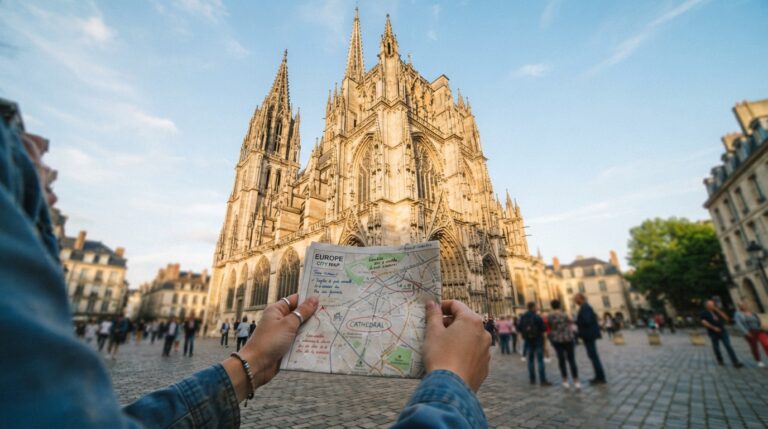


International travel can be one of the most rewarding ways to experience new cultures, landscapes, food, history, and everyday life. At the same time, traveling to another country usually requires more preparation than taking a short domestic trip. Passports, entry requirements, transportation, money, communication, accommodation, and unfamiliar local systems can all create additional decisions.
The solution is not to plan every minute of the journey. A better strategy is to organize the essential details early, verify time-sensitive information close to departure, and keep the sightseeing portion of the trip flexible. Good preparation can reduce uncertainty without removing the spontaneity that makes international travel exciting.
- Begin With the Essential Requirements
- Research the Destination From Several Angles
- Check Your Passport Early
- Understand Entry Rules Before Making Commitments
- Build a Realistic Travel Budget
- Learn About the Destination’s Broader Context
- Choose Accommodation According to Location
- Plan Your Arrival Day Carefully
- Know How You Will Reach Your Accommodation
- Stay Aware of Current Developments
- Understand Your Payment Options
- Avoid Carrying Everything in One Place
- Organize Important Documents
- Learn the Basic Transportation System
- Download Useful Information for Offline Access
- Learn a Few Useful Local Phrases
- Research Cultural Expectations
- Plan Important Attractions, Not Every Attraction
- Group Sightseeing by Area
- Keep the First Full Day Manageable
- Leave Space for Unexpected Discoveries
- Recheck Important Information Before Departure
- Prepare Without Trying to Control Everything
- Turn Preparation Into Travel Confidence
Begin With the Essential Requirements
Before booking major parts of an international trip, understand the fundamental requirements connected to the destination and your circumstances. Passport validity and applicable entry procedures deserve particular attention.
Requirements can change and may vary according to nationality, travel purpose, route, and other circumstances, so travelers should use the relevant official sources for decisions that affect entry or departure.
Research the Destination From Several Angles
Travel research becomes more useful when it extends beyond a list of famous attractions. Learning about geography, culture, transportation, neighborhoods, seasonal conditions, and everyday customs can provide a more complete picture of the destination.
During broader online research, readers may encounter general-interest resources such as The Encarta. Broad reading can introduce topics or ideas worth investigating further, while critical travel information should always be confirmed through appropriate current sources before it affects bookings or other important decisions.
Check Your Passport Early
Do not wait until the final week to locate and inspect your passport. Confirm that personal details are correct and check its validity well before departure.
If renewal or another administrative process is necessary, discovering the issue early provides more time to address it.
Understand Entry Rules Before Making Commitments
International entry requirements are not an area where travelers should depend solely on old articles, social media posts, or someone else’s previous experience.
Check the current requirements applicable to your own situation through relevant official channels, and review them again before departure in case anything has changed.
Build a Realistic Travel Budget
An international travel budget should include more than flights and accommodation. Local transportation, meals, attractions, baggage, airport transfers, communication, and unexpected expenses can all affect the final cost.
Keep a separate financial buffer so that a minor disruption does not immediately affect the money allocated to planned experiences.
Learn About the Destination’s Broader Context
Understanding some of the wider social, historical, and civic context of a destination can make travel more meaningful. It may also help visitors interpret museums, monuments, neighborhoods, and conversations more thoughtfully.
During general online browsing, readers may encounter resources such as Fantasy Congress. General-interest material can encourage broader learning, but travelers should distinguish contextual reading from authoritative information about current travel rules, official policies, or other practical requirements.
Choose Accommodation According to Location
A well-located hotel or rental can simplify an international trip considerably. Check how easily the accommodation connects with airports, stations, major attractions, and the neighborhoods you plan to explore.
A lower room price may provide poor overall value if it requires long or expensive transportation every day.
Plan Your Arrival Day Carefully
The first day in another country is often more tiring than travelers expect. Long flights, immigration procedures, baggage collection, transportation, and unfamiliar surroundings can consume both time and energy.
Avoid filling the arrival day with important reservations unless the schedule provides substantial flexibility.
Know How You Will Reach Your Accommodation
Research airport or station transportation before departure. Understand the main public transportation options, approximate journey, and any relevant ticketing process.
Having a basic arrival plan reduces decision-making when travelers are tired and carrying luggage.
Stay Aware of Current Developments
Conditions affecting a journey can change between booking and departure. Transportation disruptions, major events, temporary closures, or other developments may influence parts of an itinerary.
Travelers conducting broader research may encounter general resources such as New Politics. Such reading may provide additional context, but decisions involving official requirements, transportation operations, or other critical travel matters should be based on relevant current and authoritative information.
Understand Your Payment Options
Before departure, consider how you will pay for everyday expenses. Depending on the destination, travelers may use a mixture of cards, mobile payments, and cash.
It can be useful to have more than one payment method so that a problem with a single card or system does not create unnecessary difficulty.
Avoid Carrying Everything in One Place
Important cards, cash, and documents should be handled thoughtfully. Travelers may prefer to keep backup resources separate from the items used for ordinary daily spending.
The exact arrangement will depend on the trip, but having alternatives can make unexpected situations easier to manage.
Organize Important Documents
International trips can generate numerous confirmations. Keep essential transportation bookings, accommodation details, reservations, and relevant documents organized and easy to retrieve.
Where appropriate, maintain accessible backup copies of important information rather than relying on one device or internet connection.
Learn the Basic Transportation System
Understanding how people move around the destination can make the first few days much easier. Research trains, metros, buses, trams, ferries, or other relevant transportation before arrival.
You do not need to memorize every route. Knowing the basic ticketing process and the connections near your accommodation is usually a useful starting point.
Download Useful Information for Offline Access
Mobile connectivity may not work immediately after crossing a border or arriving at an airport. Save essential addresses, reservation information, transportation details, and other important information before departure.
Offline access can be especially valuable during the first few hours of the trip.
Learn a Few Useful Local Phrases
Travelers do not need to become fluent before visiting another country, but learning basic greetings and simple practical phrases can be worthwhile.
Even when many people speak a language you understand, making a small effort with the local language can improve everyday interactions.
Research Cultural Expectations
Social expectations can differ between destinations. Clothing, greetings, photography, tipping, public behavior, and etiquette may not work exactly as they do at home.
Basic research before departure can help travelers interact more respectfully and avoid unnecessary misunderstandings.
Plan Important Attractions, Not Every Attraction
International trips can create pressure to see everything because returning may not happen soon. This often leads to overcrowded itineraries.
Identify the experiences that matter most and protect time for them. Keep secondary attractions flexible.
Group Sightseeing by Area
Repeatedly crossing a large city wastes time and energy. Save attractions on a map and identify places located near one another.
Neighborhood-based planning creates a more comfortable schedule and leaves more time for spontaneous exploration between attractions.
Keep the First Full Day Manageable
Travel fatigue can continue after the arrival day, especially when significant time-zone changes are involved. Avoid assuming that your normal energy level will return immediately.
A moderate first full day can provide an introduction to the destination without making the beginning of the vacation unnecessarily exhausting.
Leave Space for Unexpected Discoveries
Advance research cannot reveal everything. After arrival, travelers may discover an interesting neighborhood, local event, restaurant, market, or recommendation that deserves time.
Leaving open periods in the itinerary allows these discoveries to become part of the trip.
Recheck Important Information Before Departure
A plan created several months earlier should not automatically be treated as current. Shortly before traveling, review the information that could significantly affect the journey.
This is particularly important for official requirements, transportation arrangements, major reservations, and other time-sensitive details.
Prepare Without Trying to Control Everything
International travel always contains some uncertainty. A train may be delayed, weather can change, a restaurant may be closed, or an attraction may take longer than expected. Trying to eliminate every possible surprise can make planning exhausting.
Focus preparation on the issues that would be difficult or expensive to solve at the last minute. Smaller sightseeing decisions can remain flexible.
Turn Preparation Into Travel Confidence
The purpose of international travel planning is not to predict every moment of the journey. It is to make the important parts manageable so travelers can focus more attention on the destination once they arrive.
By checking essential requirements, organizing documents, understanding transportation, choosing convenient accommodation, preparing payment options, researching cultural context, and leaving enough flexibility for changing circumstances, travelers can approach an international journey with greater confidence. Strong preparation creates structure, while flexibility provides the freedom to enjoy everything that cannot be planned in advance.