
Introduction
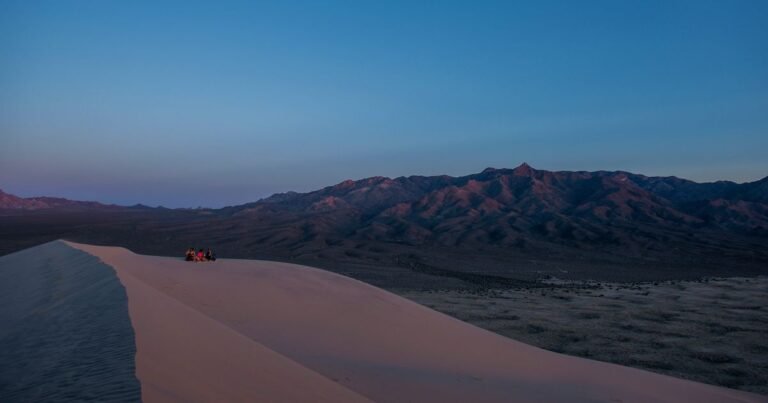
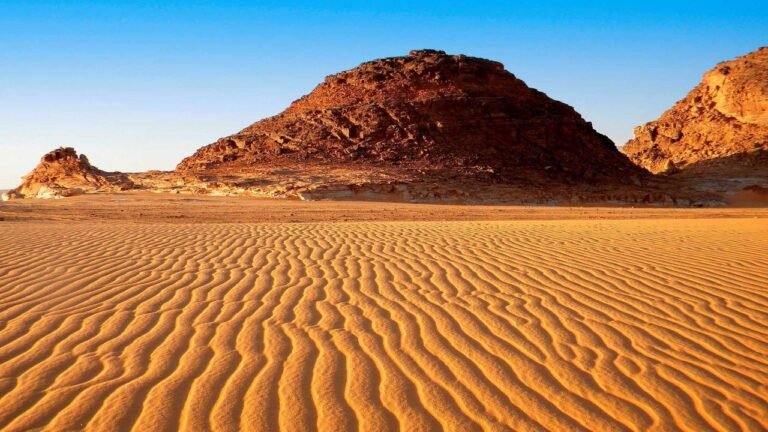
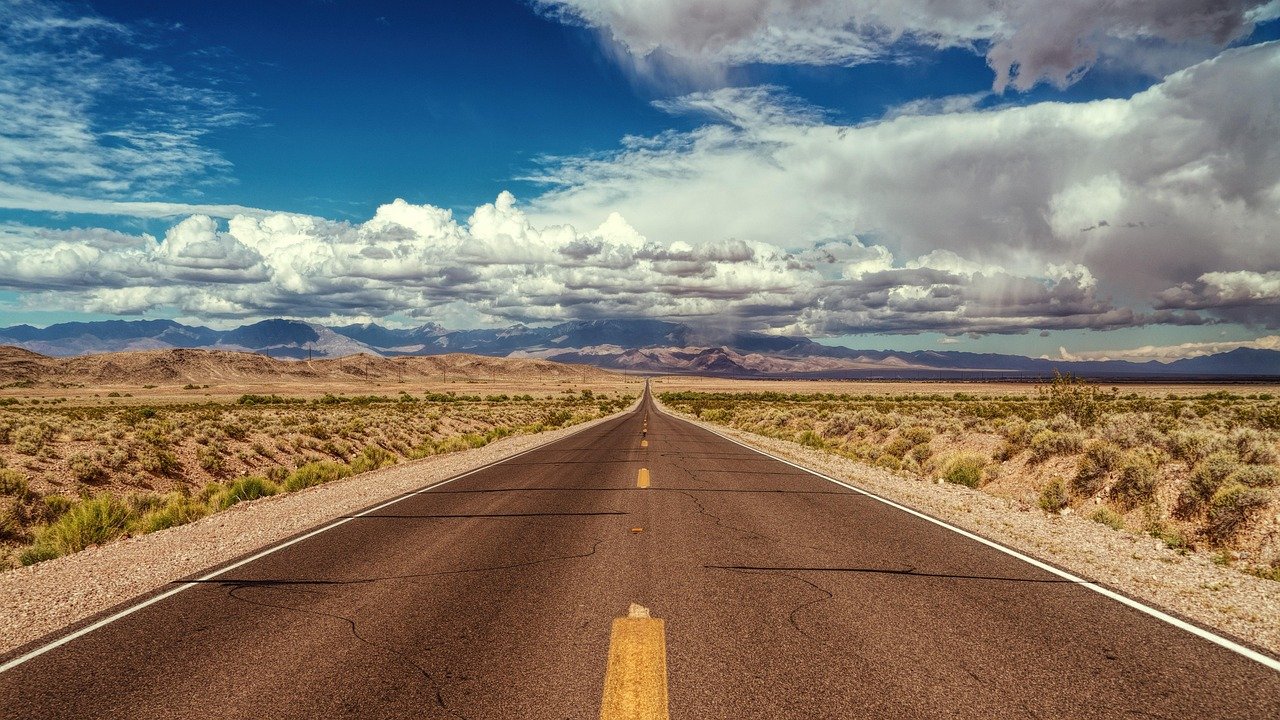
Nevada is one of the most striking desert Destinations in the United States, offering far more than open highways and empty horizons. From the high, cool landscapes of the Great Basin to the red rock canyons of the Mojave, the state delivers an incredible mix of scenery, wildlife, history, and outdoor adventure. It is a place where every trip can feel different, whether you are planning a scenic drive, a camping escape, or a quiet stargazing getaway.
This guide breaks down the most important parts of Nevada’s desert landscape, including the best places to visit, what to expect from the climate, where to camp, and how to travel safely. Whether you are a first-time visitor or a seasoned desert traveler, Nevada rewards those who take the time to explore it properly.
- Why the Nevada Desert, USA, Feels Like Two Different Worlds
- Location and Geography
- Great Basin Desert vs. Mojave Desert
- Climate and Weather Patterns
- Landscape Features That Make Nevada Stand Out
- Flora: Plants That Survive the Nevada Desert
- Fauna: Wildlife, Reptiles, Birds, and Desert Life
- Human History and Cultures in the Nevada Desert
- Best Places to Visit in the Nevada Desert, USA
- Best Nevada Desert Places at a Glance
- 1) Red Rock Canyon National Conservation Area
- 2) Lake Mead National Recreation Area
- 3) Gold Butte National Monument
- 4) Black Rock Desert–High Rock Canyon Emigrant Trails NCA
- 5) Desert National Wildlife Refuge
- 6) Great Basin National Park
- Things to Do in the Nevada Desert
- Best Activities by Travel Style
- Camping in the Nevada Desert
- Camping Checklist
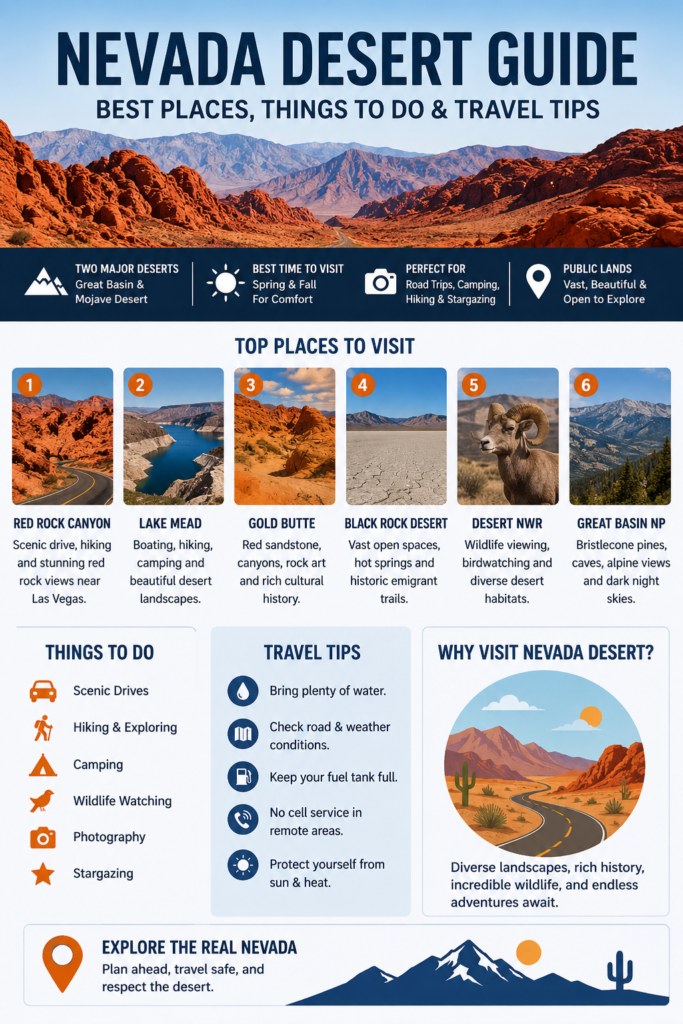
- Travel Tips for a Safer Nevada Desert Trip
- Easy Safety Rules
- Best Time to Visit
- Sample Trip Ideas
- 1-Day Trip
- 2-Day Trip
- 3-Day Trip
- Pros and Cons
- Pros
- Cons
- Interesting Facts About the Nevada Desert, USA
- Environmental Issues and Conservation
- FAQs
- Conclusion
Why the Nevada Desert, USA, Feels Like Two Different Worlds
A desert is not simply a stretch of sand. In scientific terms, a desert is an extremely dry region with sparse vegetation and very limited rainfall. Nevada fits that definition, but it also complicates it. The state’s desert identity is not one-note. Any regions are high and cool. Some are low and hot. Some are rocky and rugged. Several are broad playas. Some are red sandstone canyons. Some are mountain-framed basins with giant skies overhead. That variety is one of the main reasons Nevada works so well for road trips, camping, photography, stargazing, wildlife watching, and slow scenic travel.
Travel Nevada also positions the state as a major road-trip destination, and that fits the reality on the ground. Nevada is not a place best experienced in a hurry. It rewards travelers who are willing to cross long distances, follow quiet highways, stop at overlooked trailheads, and let the landscape unfold gradually. The farther you go, the more the state reveals itself.
Location and Geography
Nevada sits inside the Basin and Range province of the American West, a landform region known for alternating mountain ranges and broad desert valleys. Britannica describes the Great Basin as an arid expanse of roughly 190,000 square miles made up of rugged north-south mountain blocks and expansive valleys. The National Park Service also notes that the Great Basin covers most of Nevada and reaches into neighboring states. That means Nevada’s core identity is tied to this structure of open basins and uplifted ranges.
Southern Nevada, meanwhile, connects to the Mojave Desert. This is the landscape that shows itself in places like Red Rock Canyon, Gold Butte, and the desert areas around Las Vegas. NPS describes the Mojave as a diverse mosaic of habitats with a deep human history. BLM’s description of Gold Butte adds more detail: red sandstone, twisting canyons, rugged desert terrain, and significant cultural resources. These southern landscapes feel warmer, lower, and more dramatic than the high-desert country farther north.
Great Basin Desert vs. Mojave Desert
The easiest way to understand Nevada is to compare its two dominant desert systems.
| Feature | Great Basin Desert | Mojave Desert |
| General feel | High desert, broad basins, mountain ranges, cool seasons | Lower desert, red rock, canyons, hotter summers |
| Geography | Covers most of Nevada and extends into nearby states | Shapes southern Nevada and parts of neighboring states |
| Travel mood | Quiet, spacious, remote, ideal for cool-season road trips | Dramatic, accessible, striking, ideal for day trips and scenic drives |
| Best experiences | Great Basin National Park, alpine-desert contrast, dark skies | Red Rock Canyon, Gold Butte, photography, canyon drives |
| Good for | Solitude, stargazing, mountains, big views | Scenic roads, short hikes, wildlife, desert color |
This split is fundamental. The Great Basin side feels larger, higher, and more isolated. The Mojave side feels warmer, more visually immediate, and easier to access from urban centers. Both are essential if you want a complete picture of the Nevada Desert, USA.
Climate and Weather Patterns
Nevada is dry, but dryness does not behave the same everywhere in the state. In the Great Basin, mountain blocks and elevation shifts create faster weather changes. Britannica describes the region as arid and semiarid, and higher elevations can receive snow. Great Basin National Park’s own guidance reinforces this: many park roads are only open seasonally, and winter snow, ice, and mud can make travel difficult or impossible.
Southern Nevada’s Mojave country feels different. Lower elevations, stronger heat, and more intense sun shape the experience. Red Rock Canyon, Gold Butte, and the broader Mojave desert around Las Vegas are all dry landscapes, but they are not the same as the alpine-desert environments found in the north. That is why timing matters so much.
For most visitors, spring and fall are the most comfortable seasons. National Geographic’s Nevada travel guidance points to those shoulder seasons as ideal for outdoor travel, and Great Basin National Park’s access rules show how much weather can affect even basic logistics. Winter can be excellent for lower desert areas, but it may shut down high-country roads. Summer, especially in southern Nevada, can be Punishing if you are not prepared.
Landscape Features That Make Nevada Stand Out
Nevada’s desert geography is astonishingly varied. It includes mountain ranges, broad basins, playas, salt flats, canyons, caves, reservoirs, red rock formations, and high alpine peaks. The Great Basin contributes to the mountain-valley pattern. The Mojave adds red stone and canyon country. Lake Mead introduces shoreline, water, and canyon scenery into the desert story.
That range is why Nevada attracts so many different kinds of travelers. One day can include a scenic drive through red sandstone, a campsite beside a reservoir, a long walk across a dry playa, or a climb into high-desert terrain where bristlecone pines grow. Very few states offer so many environmental contrasts in one trip.
Some of the most important desert landscape types in Nevada include:
- High desert basins and mountain blocks in the Great Basin region
- Red sandstone canyons and cliffs at Gold Butte
- Scenic desert drives and colorful rock formations at Red Rock Canyon
- Playa country, hot springs, and emigrant trail corridors in Black Rock
- Reservoir shorelines, campgrounds, and mountain views at Lake Mead
Flora: Plants That Survive the Nevada Desert
Desert plants in Nevada are survivors in the strongest sense of the word. Great Basin National Park says the park supports more than 800 plant species across different elevation zones, and that alone tells you how diverse the desert can be when altitude changes. The park is also famous for bristlecone pines, which NPS identifies as among the oldest living trees on Earth.
That matters because it shows the extremity of the environment. At high elevation, Nevada can be cold, dry, and harsh enough to limit plant life to highly adapted species. In lower desert zones, the plant mix shifts again. The Desert National Wildlife Refuge says it contains more than 500 plant species, and its habitat descriptions highlight desert vegetation such as creosote, saltbush, and cactus.
Desert plants survive through efficiency. They conserve moisture, grow slowly, and withstand heat, wind, cold, and poor soil conditions. What looks sparse from the road often becomes surprisingly rich when you stop and examine it closely. A Nevada desert landscape is never empty; it is simply understated.
Fauna: Wildlife, Reptiles, Birds, and Desert Life
Wildlife is one of the greatest rewards of desert travel in Nevada. Great Basin National Park supports animals adapted to mountain and high-desert ecosystems, including mountain lions, snakes, jackrabbits, and Clark’s nutcrackers. The mix of species reflects the park’s range of elevations and habitats.
The Desert National Wildlife Refuge is one of the strongest wildlife destinations in southern Nevada. The refuge reports more than 320 bird species, more than 50 mammal species, and numerous reptiles and amphibians. It was established to protect desert bighorn sheep, and that conservation purpose remains central to the refuge today.
For birdwatchers, the refuge is excellent. For people hoping to spot larger desert mammals, it is also excellent. Because travelers who prefer quiet nature over crowded attractions, it is even better. Nevada is not an empty state. It is a state where life has adapted to survive in powerful, subtle ways.
Human History and Cultures in the Nevada Desert
The Nevada desert is a human landscape as much as it is a natural one. Gold Butte’s BLM materials emphasize its prehistoric, historic, geological, and biological importance, including rock art and traces of mining and ranching. Black Rock also carries a major historical legacy tied to emigrant trails and westward travel.
The Great Basin shaped how people moved across the American West. Britannica describes it as a massive arid region of mountain blocks and valleys, and the National Park Service notes that it includes most of Nevada. Those conditions made travel difficult and survival demanding. They influenced trade, migration, settlement, and the development of roads and routes through the West.
When visitors drive a scenic byway, walk near old mining routes, or stop at rock art sites, they are not just sightseeing. They are encountering a long human story embedded in the land. That depth gives the Nevada Desert, USA, much of its meaning.
Best Places to Visit in the Nevada Desert, USA
The simplest way to build a first Nevada desert trip is to combine accessibility with one more remote destination. Red Rock Canyon is an easy starting point. Lake Mead adds variety. Great Basin brings high-desert grandeur. Gold Butte offers silence and cultural depth. Black Rock gives you open playa country and historic trails. Desert NWR delivers wildlife and quiet observation.
Best Nevada Desert Places at a Glance
| Destination | Best known for | Best for |
| Red Rock Canyon | 13-mile scenic drive, hiking, climbing, proximity to Las Vegas | Easy day trips |
| Lake Mead National Recreation Area | 1.5 million acres, boating, hiking, camping | Multi-activity travel |
| Gold Butte National Monument | Red sandstone, rock art, remote desert | Solitude and photography |
| Black Rock Desert–High Rock Canyon NCA | Playa, hot springs, emigrant trails | Remote road trips |
| Desert National Wildlife Refuge | Bighorn sheep, birds, and a large habitat | Wildlife and quiet drives |
| Great Basin National Park | Bristlecone pines, caves, dark skies | Cool high-desert travel |
1) Red Rock Canyon National Conservation Area
Red Rock Canyon is one of the most approachable and rewarding first stops in the Nevada desert country. BLM says it is located about 17 miles west of the Las Vegas Strip and features a 13-mile scenic drive. The area also offers hiking, climbing, biking, horseback riding, and a visitor center.
This is an ideal introduction to Nevada’s desert personality. The scenery is striking, the access is easy, and the trail options suit a wide range of travelers. It is especially useful for visitors who want desert beauty without committing to a long drive or a remote itinerary. Because timed entry reservations are required during much of the year, planning is essential.
2) Lake Mead National Recreation Area
Lake Mead gives desert travel a water-and-canyon dimension that feels completely different from the surrounding landscape. NPS says the recreation area covers 1.5 million acres of mountains, canyons, valleys, and two major reservoirs. Visitors come for scenic drives, hiking, biking, boating, fishing, and camping.
What makes Lake Mead especially useful is its flexibility. You can build a simple day trip around views, a longer outing around water recreation, or a multi-day stay centered on camping and exploration. The contrast between bright blue water and rugged desert cliffs makes the area feel visually dynamic and memorable.
3) Gold Butte National Monument
Gold Butte is one of Nevada’s strongest destinations for travelers who want remote scenery and cultural history in the same place. BLM says the monument covers nearly 300,000 acres of rugged desert in southeastern Nevada. It is known for red sandstone, winding canyons, rock art, and important habitat.
This is not a crowded, heavily developed destination. It rewards slow driving, careful attention, and patient observation. That remoteness is part of the appeal. Gold Butte shows how Nevada can feel both ancient and immediate at the same time.
4) Black Rock Desert–High Rock Canyon Emigrant Trails NCA
Black Rock is a landscape of scale. BLM says the area covers about 800,000 acres and includes nearly 120 miles of emigrant trails. Its major draws include the Black Rock Playa, High Rock Canyon, natural hot springs, and historic wagon routes.
This is the right place for travelers who want a real sense of openness and isolation. It is especially appealing for those interested in long-distance travel, dramatic sky views, off-road routes where permitted, and the historical legacy of western migration. Because the area is remote, planning is critical. Conditions should always be checked in advance.
5) Desert National Wildlife Refuge
Desert NWR is one of southern Nevada’s best places for wildlife-focused travel. The refuge protects a huge and diverse desert habitat and supports more than 500 plant species, more than 320 bird species, 52 mammal species, and 32 reptile species. It is widely recognized for desert bighorn sheep and birdwatching.
If you enjoy quiet drives, binoculars, photography, and observing nature without crowds, this is an outstanding stop. It is less about iconic landmarks and more about seeing how desert ecosystems actually function. That makes it especially valuable for thoughtful travelers.
6) Great Basin National Park
Great Basin National Park represents the high-desert identity of Nevada at its most dramatic. NPS says the park stretches from the 13,063-foot summit of Wheeler Peak down to the sagebrush foothills. It includes bristlecone pines, cave tours, solitude, and some of the darkest skies in the country.
This park is important because it dismantles the stereotype that deserts are always hot and flat. The Great Basin is cool in higher elevations, mountainous, and profoundly different from the lower southern deserts. Seasonal closures are common, so timing matters much more here than at many other Nevada destinations.
Things to Do in the Nevada Desert
Nevada’s desert is not only something to look at; it is something to experience. The main activities include scenic driving, camping, hiking, wildlife observation, stargazing, photography, boating, climbing, and horseback riding in selected places. Red Rock Canyon, Lake Mead, Gold Butte, Black Rock, Desert NWR, and Great Basin each support different combinations of these experiences.
If you want easy access, Red Rock Canyon is the best place to begin. If you want variety, Lake Mead is the most flexible. Provided that you want distance and quiet, Gold Butte and Black Rock are stronger choices. If you want animals and birds, Desert NWR stands out. Unless you want alpine desert character and dark skies, the Great Basin is unmatched.
Best Activities by Travel Style
| Travel style | Best Nevada desert activity | Best place |
| First-time visitor | Scenic drive and short hike | Red Rock Canyon |
| Family trip | Campground stay and shoreline views | Lake Mead |
| Photography | Rock art, red sandstone, open desert | Gold Butte |
| Adventure trip | Playa country and remote roads | Black Rock |
| Nature trip | Birdwatching and wildlife viewing | Desert NWR |
| Cool-weather mountain trip | Bristlecone pines and stargazing | Great Basin |
Camping in the Nevada Desert
Camping is one of the best ways to experience Nevada, but the right style of camping depends heavily on season and elevation. Lake Mead offers many campground and RV options. Great Basin has campgrounds, but access can be limited during winter. Black Rock and Gold Butte are more remote and require a higher level of preparation.
A smart camping strategy is simple: begin with lower, easier, better-supported locations if it is your first trip. Save the more remote destinations for later, once you are comfortable checking weather, road conditions, and campground status. Great Basin’s own materials make clear that snow and mud can close roads. Desert travel is rewarding, but it demands discipline.
Camping Checklist
- Bring more water than you think you need.
- Download offline maps before leaving cell coverage.
- Check road, weather, and campground conditions in advance.
- Pack warm layers for cold nights and early mornings.
- Store food securely and follow site regulations.
- Do not assume that cell service will be available.
Travel Tips for a Safer Nevada Desert Trip
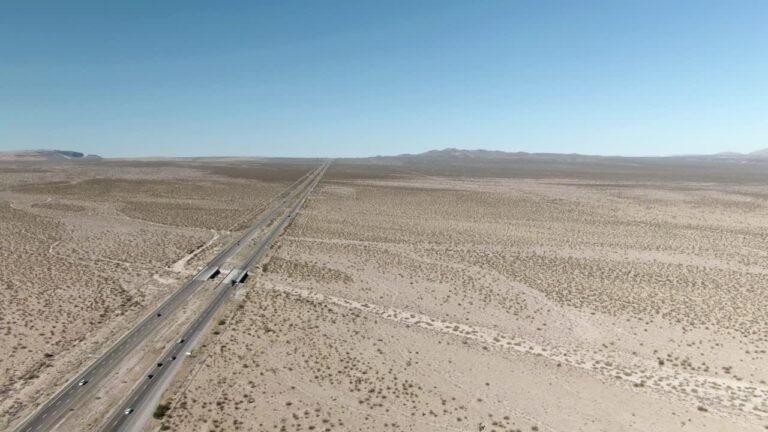
The biggest mistake desert travelers make in Nevada is underestimating distance. The state is huge, and Travel Nevada emphasizes just how much land and road network you may have to cover. A destination that appears nearby on a map may be much farther away in real driving time.
The second major mistake is ignoring elevation and season. Southern Nevada can be extremely hot, while the Great Basin can be snowy, icy, or muddy. A route that feels easy in one month can become difficult or impossible in another. That is why checking current conditions before departure is one of the best habits you can build.
Easy Safety Rules
- Carry extra water.
- Start early in the day.
- Share your route with someone.
- Keep your fuel tank fuller than usual.
- Respect closures and stay on legal routes.
- Use sunscreen, sunglasses, and a hat.
- Prepare for sudden weather shifts.
Best Time to Visit
For most travelers, spring and fall are the best times to explore the Nevada desert. Temperatures are generally more comfortable, and outdoor travel becomes far easier. In the south, winter can also be a good season because lower elevations stay milder. In high-country destinations like the Great Basin, summer and early fall are usually more reliable, while winter access can be limited or completely restricted.
A simple planning rule is this:
- Choose Red Rock Canyon or Lake Mead for easy shoulder-season travel.
- Choose Great Basin for cool high-desert experiences.
- Choose Gold Butte or Black Rock when you want solitude, openness, and a deeper sense of remoteness.
Sample Trip Ideas
1-Day Trip
Begin at Red Rock Canyon in the morning, take the scenic drive, enjoy one short hike, and return to Las Vegas before dark. This is an excellent first-time desert experience because it gives you immediate visual impact without a complicated itinerary.
2-Day Trip
Spend the first day at Lake Mead for shoreline views, camping, or hiking. Spend the second day at Gold Butte for red sandstone, rock art, and a slower, more remote drive. This combination gives you both accessibility and solitude.
3-Day Trip
Use day one for Red Rock, day two for Lake Mead, and day three for Desert NWR or a longer excursion toward Black Rock or Great Basin. This kind of trip lets you feel the difference between southern Nevada’s Mojave landscapes and the state’s high-desert interior.
Pros and Cons
Pros
- Exceptional diversity in one state
- Strong public-land access
- Great for road trips, camping, birds, stars, and photography
Cons
- The weather can change quickly
- Remote areas may have limited services
- Heat, snow, road closures, and weak signal can complicate plans
Interesting Facts About the Nevada Desert, USA
Nevada’s desert story is remarkable because the state is both huge and varied. Travel Nevada highlights Nevada as the seventh largest state and points to more than 60 million acres of land to explore. The National Park Service says the Great Basin includes most of Nevada. Gold Butte, Black Rock, Desert NWR, and Great Basin each reveal a different face of the same desert state.
Another striking fact is how much the state can change over a single trip. Red Rock Canyon sits only a short drive from Las Vegas. Great Basin rises into alpine heights and night skies. Lake Mead blends reservoir scenery with desert cliffs. Black Rock offers a massive playa and historic trails. Gold Butte brings red stone and cultural heritage together. That range is what makes Nevada such a powerful desert road-trip destination.
Environmental Issues and Conservation
Nevada’s desert land is beautiful, but it is also delicate. Desert NWR exists to protect habitat for wildlife, especially bighorn sheep, while also preserving an enormous range of plants and animals. Gold Butte and Black Rock are public lands where visitor behavior matters because rock art, habitat, trails, and fragile surfaces can be damaged by careless use.
Great Basin’s ancient bristlecone pines are another reminder of desert fragility. Roads close, camps close, and seasonal restrictions change because the land is sensitive,e and weather can make conditions unsafe. The best desert traveler is not only observant but also responsible. Respecting closures, staying on designated routes, and leaving no trace all help preserve the experience for everyone.
FAQs
Nevada is primarily associated with the Great Basin Desert and the Mojave Desert. The Great Basin covers most of the state, while the Mojave shapes the southern desert landscapes.
Red Rock Canyon is one of the easiest places to begin because it is close to Las Vegas, offers a scenic drive, and has short hikes and striking rock formations.
Yes. Lake Mead has many camping options, and Great Basin, Black Rock, and Gold Butte can also be excellent choices when you plan carefully for weather and remoteness.
Spring and fall are usually the most comfortable seasons. Winter can also work well in lower southern areas, but higher places like the Great Basin may have snow and road closures.
Nevada combines two major desert systems, massive public lands, and easy road-trip access. That means you can move from red rock to high desert to remote playa country all within one state.
Yes. Great Basin National Park is especially known for dark skies, and its high-desert setting makes nighttime viewing one of the strongest experiences in the state.
Conclusion
Nevada stands out because it is not just one desert, but a blend of two major desert worlds shaped by elevation, geology, and space. That contrast is what makes the state so rewarding for road trips, camping, Photography, wildlife viewing, and outdoor exploration. From Red Rock Canyon and Lake Mead to Great Basin National Park and Black Rock Desert, each destination reveals a different side of the state.
With the right timing, preparation, and respect for the land, a Nevada desert trip can be both memorable and safe. This is a destination built for travelers who value wide-open landscapes, quiet beauty, and the kind of experience that stays with you long after the road ends.