

- Key Takeaways
- Why Cutting Method Selection Matters
- Start With A Site And Structure Review
- Match The Tool To The Material
- Where Diamond Wire Sawing Fits
- Plan The Cut Sequence Before The First Pass
- Control Vibration, Noise, Dust, And Water
- Build A Strong Safety Plan
- Protect Nearby Operations
- Estimate Time, Labor, And Removal Costs
- Common Planning Mistakes To Avoid
- A Practical Pre-Work Checklist
- Conclusion
Key Takeaways
- Select cutting methods based on material, thickness, access, structural risk, and removal requirements.
- Plan for support, rigging, utilities, water, slurry, dust, noise, and disposal before cutting begins.
- Use a defined cut sequence to keep each removed section stable and predictable.
- Low-vibration methods can help protect adjacent structures, finishes, equipment, and active operations.
- Safety depends on controlling the cut piece, wire path, exclusion zone, and lifting operation.
Concrete and metal cutting is rarely just a matter of choosing the fastest saw. In active facilities, occupied buildings, transportation areas, and industrial sites, the work must remove material accurately while protecting everything that stays in place. Experienced providers of diamond wire saw cutting services can help project teams evaluate access, cut depth, reinforcement, and the need for controlled removal before work starts.
The goal is usually selective modification, not uncontrolled demolition. A sound plan accounts for the structure, hidden conditions, nearby operations, and the path each cut section will take from its original position to its final disposal location.
Why Cutting Method Selection Matters
The wrong method can introduce unnecessary vibration, noise, airborne dust, heat, debris, or damage to adjacent work. It can also make removal harder if a section is cut into pieces that are too heavy, too unstable, or too difficult to access. The best approach balances precision, production needs, available space, safety controls, and the condition of the remaining structure.
Start With A Site And Structure Review
Before equipment arrives, the responsible project team should review drawings, field conditions, and the removal objective. Existing documents may not capture every alteration, so field verification is essential.
- Locate reinforcement, embedded steel, conduits, pipes, post-tensioning systems, and utilities.
- Confirm the dimensions, estimated weight, and center of gravity of every planned removal section.
- Identify access routes for workers, saws, cranes, forklifts, trucks, and waste containers.
- Determine which adjacent operations, equipment, or occupied spaces require protection or scheduling coordination.
- Have a qualified engineer review temporary support needs when cuts could affect load paths or stability.
Match The Tool To The Material
No cutting method is ideal for every condition. A practical plan may combine several methods as the work progresses.
- Core drilling creates round openings, pilot holes, access paths, and possible rigging points.
- Wall and slab sawing suit straight, accessible cuts in concrete floors, walls, and decks.
- Wire sawing can be effective for deep, thick, heavily reinforced, irregular, or difficult-to-reach sections.
- Hydrodemolition may be appropriate when selective concrete removal is needed with limited vibration.
- Thermal cutting can serve steel work, but it requires controls for sparks, heat, fumes, and fire exposure.
- Mechanical breaking is often best reserved for reducing material after it has been isolated from the remaining structure.
Where Diamond Wire Sawing Fits
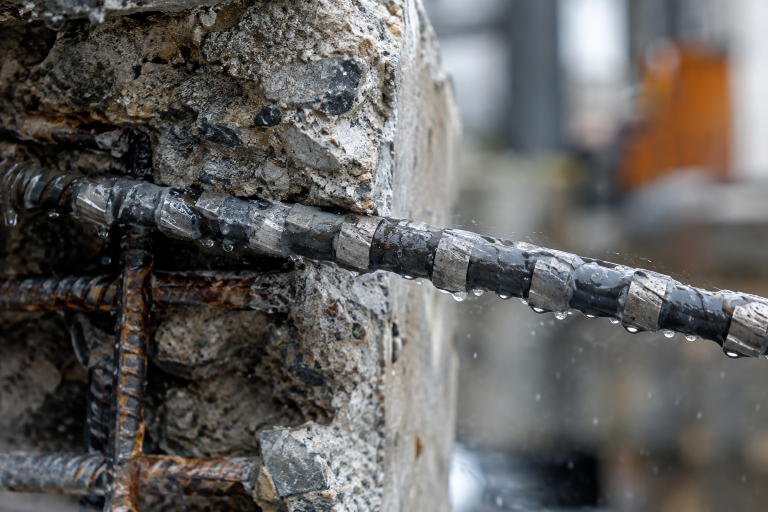
Diamond wire sawing uses a diamond-embedded wire routed around a planned cut path and pulled through the material. Pilot holes and guide pulleys may be used to establish that path. The method can be useful where a conventional blade cannot reach, where the section is especially thick, or where precise isolation cuts are needed before controlled breaking or lifting.
It is not a substitute for engineering, shoring, or rigging. Wire alignment, tension, cooling water, guarding, and the expected movement of the cut piece all require planning. A diamond wire cutting case study illustrates how isolation cuts can help protect a remaining structure while reducing reliance on extended handheld breaking work.
Plan The Cut Sequence Before The First Pass
A written sequence turns a complex removal into a controlled series of stages. The crew should understand the work order, the support arrangement, and the stop-work conditions before making the first cut.
- Mark and verify cut lines in the field.
- Drill access, pilot, and rigging holes as required.
- Install temporary supports, restraints, and lifting equipment.
- Make relief or isolation cuts before completing full-depth separation cuts.
- Keep the piece secured through its final connection.
- Lift, lower, roll, or otherwise remove the section under the approved plan.
- Inspect the remaining structure before advancing to the next section.
Control Vibration, Noise, Dust, And Water
Low-disruption work requires controls beyond the cutting tool itself. Use barriers and exclusion zones, protect nearby finishes and equipment, and keep water away from electrical hazards, drains, and sensitive areas. Wet cutting can reduce dust, but the resulting slurry must be collected, managed, and prevented from flowing uncontrolled across the site.
For work near occupants or sensitive operations, schedule noisy activities within approved windows and consider monitoring where the project requires it. Guidance on quieter wire saw methods also recognizes wire sawing as an option for confined or disturbance-sensitive locations.
Build A Strong Safety Plan
The cut line is not the only hazard. Workers must stay out of the wire path and outside the potential travel path of a shifting or falling section. Inspect wire, joins, pulleys, guards, controls, anchors, and support points before operation. Establish clear communication signals, escape paths, and stop-work rules for damaged wire, unexpected movement, poor visibility, water-control failures, or changed site conditions.
Protect Nearby Operations
Active plants, marine facilities, transit areas, and occupied buildings require extra coordination. Separate the work zone from normal traffic, coordinate permits and lockouts, and confirm access windows with affected parties. Smaller equipment or remote controls may improve access in space-limited settings, but they do not eliminate the need for a stable removal plan.
Estimate Time, Labor, And Removal Costs
Estimate more than saw time. Include setup, scanning, drilling, rigging, temporary support, lifting, water handling, cleanup, inspections, hauling, and disposal. Smaller pieces may reduce lifting demands but can increase handling and cutting time. Comparing these factors against the cost of potential damage from uncontrolled breaking gives a more realistic project budget.
Common Planning Mistakes To Avoid
- Beginning before hidden utilities and reinforcement are confirmed.
- Cutting before support, rigging, and disposal plans are ready.
- Ignoring cut-piece weight, center of gravity, or likely movement.
- Assuming low vibration eliminates structural risk.
- Leaving slurry, drainage, cleanup, and inspection decisions until the work is underway.
A Practical Pre-Work Checklist
- Structural review, cut lines, and hidden conditions verified.
- Cut section supported and lifting points confirmed.
- Removal route, exclusion zone, and emergency plan established.
- Water, slurry, dust, noise, and debris controls ready.
- Every worker briefed on sequence, signals, and stop-work authority.
Conclusion
Successful concrete and metal cutting begins long before the saw starts. By matching the method to the material, verifying the structure, carefully sequencing cuts, and controlling each section through removal, project teams can complete selective modifications with less disruption and greater predictability.