
- Key Takeaways
- Why Freeze-Thaw Weather Damages Pavement
- Early Warning Signs to Watch
- The Role of Drainage and Grading
- A Seasonal Pavement Care Plan
- Late Winter and Early Spring
- Spring and Early Summer
- Summer and Fall
- Safer Winter Maintenance Practices
- When to Repair, Resurface, or Replace
- Commercial Pavement Inspection Checklist
- Common Questions
- How Often Should Commercial Pavement Be Inspected?
- Can Crack Repair Prevent Potholes?
- What Should Be Done Before Winter?
- Conclusion
Key Takeaways
- Freeze-thaw cycles can enlarge cracks, weaken pavement support, and contribute to potholes.
- Drainage maintenance helps limit standing water and moisture beneath paved surfaces.
- Routine inspections make it easier to address small defects before they spread.
- Snow storage and deicing practices can affect pavement edges, drains, and nearby landscaping.
- A seasonal plan supports safer access and more informed repair decisions.
St. Louis property managers know that winter weather can shift quickly from snow and ice to rain and milder temperatures. Those changes create demanding conditions for parking lots, drive lanes, loading areas, and private roads. Working with this St. Louis paving company can help commercial property owners identify pavement concerns before a minor defect affects customer access, deliveries, or pedestrian safety. Freeze-thaw damage rarely begins as a dramatic pavement failure. It often starts when water enters existing cracks, joints, or weak pavement edges. When that moisture freezes, it can expand and place pressure on the surrounding material. As conditions thaw and refreeze, traffic loads can further stress weakened areas, especially around entrances, dumpsters, drains, and truck routes.
Why Freeze-Thaw Weather Damages Pavement
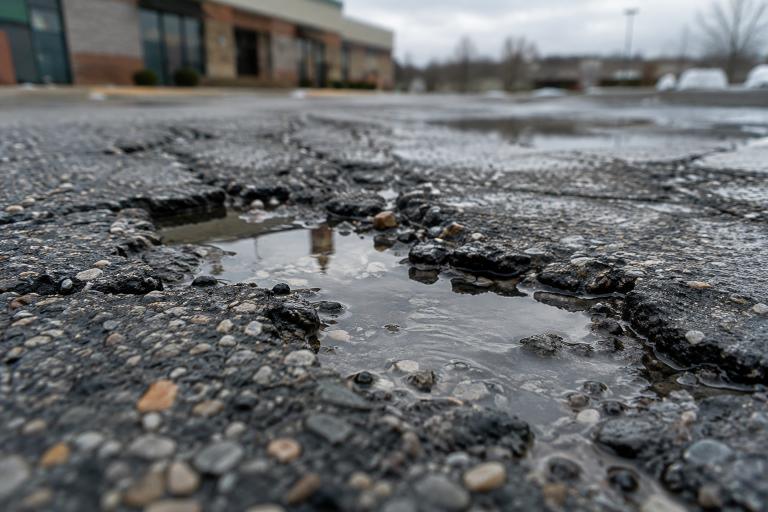
Asphalt pavement depends on a stable base beneath the surface. Water that reaches cracks or poorly drained areas may move into those lower layers. Repeated freezing and thawing can contribute to shifting, loss of support, and surface breakup. The results may become more visible after winter, when spring rain and regular vehicle traffic expose weak spots. In commercial settings, heavy vehicles can accelerate damage. Delivery trucks, service vehicles, buses, and frequent turning movements apply concentrated forces to already-stressed pavement. High-use locations such as loading docks, drive-through lanes, fire lanes, and access points deserve close attention after extended cold-weather periods.
Early Warning Signs to Watch
A short walk-through can reveal conditions that should be documented and monitored. Taking dated photos from the same location gives facility teams a useful record of whether a problem is stable or worsening.
- New cracks or cracks that appear wider than before
- Standing water after rain, snowmelt, or routine washing
- Potholes near drains, pavement edges, or turning areas
- Raised, sunken, or uneven pavement sections
- Loose aggregate, raveling, or crumbling along the surface
- Uneven transitions between asphalt, concrete, ramps, or curbs
The Role of Drainage and Grading
Drainage is central to pavement care because water that remains on or beneath a paved area can worsen existing weaknesses. Clogged inlets, settled pavement, damaged curbs, blocked channels, and poor grading can all keep water where it does not belong. The EPA’s guidance on stormwater maintenance practices also emphasizes inspecting and maintaining features that receive runoff from roads and parking lots. Commercial properties should check drains after major storms and during the spring thaw. Clearing leaves, soil, litter, and winter debris can improve water flow, although cleaning a drain will not solve a larger grading or base failure. Areas where water repeatedly pools should be evaluated before surface repairs are scheduled.
A Seasonal Pavement Care Plan
Late Winter and Early Spring
- Inspect for potholes, heaving, settlement, and widening cracks.
- Review locations where snow was stored for long periods.
- Clear salt residue and debris from drainage features.
- Record damage before traffic patterns conceal the condition.
Spring and Early Summer
- Repair suitable cracks before additional water enters them.
- Observe drainage performance after rain.
- Check pavement edges beside landscape beds and curbs.
- Plan larger work during a dependable weather window.
Summer and Fall
- Inspect high-traffic lanes for surface wear and rutting.
- Schedule appropriate surface treatments under suitable conditions.
- Clean drains before falling leaves accumulate.
- Mark vulnerable curbs, ramps, and drainage structures for winter crews.
Safer Winter Maintenance Practices
Snow and ice control should protect both people and pavement. Snow piles can block drainage, restrict sight lines, and direct meltwater across walking or driving paths. Before winter arrives, designate storage areas that do not obstruct accessible routes, fire lanes, building entrances, or stormwater inlets. Deicing materials should be applied according to site conditions and product instructions. Excess material can create cleanup needs and may affect adjacent vegetation. Pavement maintenance decisions should also account for winter operations, since federal pavement maintenance information notes the connection between pavement condition, traffic, and snow-plow activity.
When to Repair, Resurface, or Replace
The best approach depends on the extent of damage, traffic demands, drainage performance, and the condition of the supporting base.
- Repair: Appropriate for isolated cracks, small potholes, and limited surface defects.
- Resurface: May be considered when the base remains stable but the wearing surface has widespread deterioration.
- Reconstruct: May be necessary when there is extensive base failure, recurring settlement, or a drainage issue affecting large areas.
Simply covering a water problem can lead to repeat repairs. Correcting the cause of recurring moisture and movement gives any pavement work a better chance of lasting.
Commercial Pavement Inspection Checklist
- Are cracks spreading, widening, or collecting water?
- Does runoff move away from the building and paved travel paths?
- Are drains clear of leaves, sediment, and trash?
- Are potholes developing in turning lanes or loading areas?
- Is pavement settling near curbs, structures, or catch basins?
- Are accessible routes smooth, visible, and free of surface hazards?
- Have photographs, dates, and previous repairs been recorded?
Common Questions
How Often Should Commercial Pavement Be Inspected?
A monthly review is a practical baseline for many properties, with additional inspections after major storms, snow events, or prolonged freeze-thaw periods. High-traffic sites may benefit from more frequent checks.
Can Crack Repair Prevent Potholes?
Timely crack repair can limit water entry, but it cannot correct every structural problem. Shifting pavement, wide openings, and recurring potholes can indicate deeper concerns.
What Should Be Done Before Winter?
Document clear drainage features, identify active defects, review snow storage locations, and give winter crews clear instructions on protecting curbs, ramps, drains, and pedestrian routes.
Conclusion
Freeze-thaw weather is a familiar part of life in St. Louis, Missouri, but extensive pavement damage is not inevitable. As temperatures fluctuate, moisture can enter cracks, freeze, and expand, gradually weakening asphalt, concrete, and the materials beneath them. Commercial property owners can reduce the risk of more serious deterioration by scheduling regular inspections, maintaining proper drainage, and addressing minor defects before they become larger hazards. Thoughtful snow and ice management also helps protect pavement edges, keep walkways accessible, and prevent meltwater from collecting in vulnerable areas. By documenting pavement conditions, prioritizing safety-related repairs, and budgeting for both routine maintenance and larger projects, property managers can make more informed decisions throughout 2026. A proactive approach helps preserve access for employees, customers, and deliveries while supporting the long-term condition and usability of commercial properties.