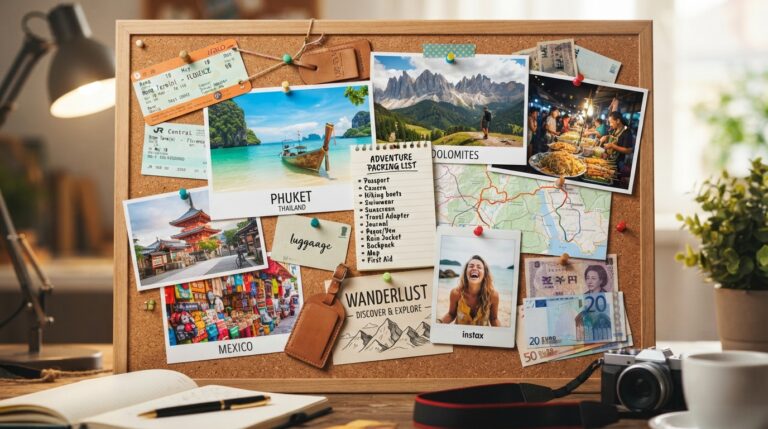

Travel planning is often presented as a process of making reservations, creating schedules, and deciding exactly what to do each day. While preparation is important, an itinerary that leaves no room for change can make a vacation feel more demanding than enjoyable. Delays happen, weather changes, interesting opportunities appear unexpectedly, and travelers sometimes discover that their priorities are different after arriving.
A flexible travel plan provides enough structure to handle important arrangements while allowing the journey to develop naturally. With thoughtful research, realistic expectations, and several alternative options, travelers can prepare effectively without turning the entire vacation into a fixed schedule.
- Begin With Your Main Travel Priorities
- Use Broad Online Research to Generate Ideas
- Choose a Few Fixed Activities
- Create an Optional List
- Consider Different Ways to Spend Each Day
- Group Activities by Neighborhood
- Allow Realistic Transportation Time
- Have Similar Options Ready
- Plan Around Weather Conditions
- Keep Meal Planning Flexible
- Do Not Schedule Every Morning Too Early
- Build Rest Into Longer Trips
- Prepare for Transportation Changes
- Keep Some Financial Flexibility
- Ask for Recommendations After Arrival
- Review Plans One Day at a Time
- Know Which Information Requires Verification
- Accept That Some Plans Will Change
- Leave Some Parts of the Destination Undiscovered
- Let the Plan Support the Journey
Begin With Your Main Travel Priorities
Before creating an itinerary, decide what you genuinely want from the journey. Some travelers prioritize historical attractions, while others care more about food, outdoor activities, entertainment, shopping, photography, or relaxation.
Selecting a few priorities makes later decisions easier. Instead of trying to include everything a destination offers, you can concentrate on experiences that match your interests.
Use Broad Online Research to Generate Ideas
Dedicated travel resources are useful, but inspiration can also come from general websites covering news, culture, entertainment, technology, and everyday interests. Broad reading can introduce subjects or places that travelers may not have considered previously.
For example, people exploring general online content may encounter resources such as Konami Europe. General websites can serve as starting points for discovery, while any information that becomes important to an actual journey should be researched and verified through suitable current sources.
Choose a Few Fixed Activities
Some experiences require advance reservations. Popular attractions, performances, guided tours, transportation, or restaurants with limited availability may need to become fixed points in the itinerary.
Try to keep these commitments manageable. When every activity has a strict arrival time, even a small transportation delay can disrupt the rest of the day.
Create an Optional List
Research often produces more interesting possibilities than a traveler can realistically experience. Instead of forcing every discovery into the itinerary, create a separate optional list.
Include museums, markets, neighborhoods, parks, cafés, viewpoints, and other places you would enjoy if time permits. This provides useful choices without creating additional obligations.
Consider Different Ways to Spend Each Day
A travel plan does not always need one predetermined solution. If several activities interest you, consider alternative ways to structure the day depending on weather, energy levels, and local circumstances.
General online resources such as Alternatives Times may appear during broader research. The idea of considering alternatives is particularly useful in travel planning because having another option available can prevent a small disruption from ruining an entire day.
Group Activities by Neighborhood
Geographic organization can make an itinerary considerably easier. Visiting attractions located near one another reduces transportation time and creates more opportunities to explore the surrounding area.
Save interesting locations on a digital map and look for natural clusters. Each cluster can become the basis for a sightseeing day without requiring a strict hour-by-hour schedule.
Allow Realistic Transportation Time
Distances can be misleading when viewed only on a map. A short journey may involve waiting for public transportation, navigating an unfamiliar station, walking between stops, or dealing with traffic.
Add reasonable buffers between important reservations. Arriving slightly early is usually less stressful than constantly worrying about missing a scheduled activity.
Have Similar Options Ready
Travelers sometimes discover that a planned attraction is closed, overcrowded, too expensive, or simply less appealing than expected. Knowing about similar alternatives can make changing plans much easier.
While researching broadly, readers may encounter general resources such as Similar Times. For travel planning, keeping comparable options in mind can be practical: if one museum, restaurant, beach, or activity does not work out, another nearby possibility may provide an equally enjoyable experience.
Plan Around Weather Conditions
Weather can dramatically change the practicality of outdoor activities. A day intended for walking, hiking, sightseeing, or visiting a beach may become unsuitable when conditions change.
Identify several indoor alternatives before departure. Museums, markets, galleries, historic buildings, shopping areas, and cultural centers can provide useful backup options.
Keep Meal Planning Flexible
Food is an important part of many vacations, but reserving every meal can make an itinerary unnecessarily restrictive. Consider booking only restaurants that genuinely require advance reservations.
For other meals, save several possibilities in the neighborhoods you expect to visit. This makes it easier to choose somewhere convenient based on your location and appetite.
Do Not Schedule Every Morning Too Early
Early starts can be useful for popular attractions or long excursions, but repeating them every day can become exhausting. Vacations also need time for rest.
Balance demanding mornings with slower ones. A relaxed breakfast or unhurried walk can sometimes be as enjoyable as another scheduled attraction.
Build Rest Into Longer Trips
The longer the journey, the more important pacing becomes. Travelers who schedule intensive sightseeing every day may become tired before the vacation is finished.
After a particularly active day, consider planning something lighter. Parks, cafés, scenic transportation, casual shopping, or a relaxed neighborhood walk can provide a useful change of pace.
Prepare for Transportation Changes
Flights, trains, buses, and other transportation services can experience delays or schedule changes. Travelers should understand which connections are essential and where some flexibility exists.
Check important transportation shortly before departure and again when appropriate during the journey. When possible, avoid creating extremely tight connections between separate bookings.
Keep Some Financial Flexibility
Unexpected changes sometimes cost money. Travelers may need alternative transportation, additional meals, replacement tickets, or another accommodation arrangement.
A small financial buffer can make these situations easier to manage. It also provides freedom to enjoy an unexpected activity without immediately affecting the rest of the travel budget.
Ask for Recommendations After Arrival
Not every useful travel idea needs to be discovered online. Hotel employees, guides, restaurant staff, local residents, and other travelers may suggest places that never appeared during initial research.
An itinerary with open space makes these recommendations more useful because travelers can actually consider them instead of being committed to activities from morning until evening.
Review Plans One Day at a Time
Instead of repeatedly reorganizing the entire vacation, spend a few minutes each evening reviewing the following day. Check important reservations, expected weather, transportation, and opening hours.
If circumstances have changed, adjust optional activities. This small routine can prevent many avoidable problems without requiring constant planning throughout the day.
Know Which Information Requires Verification
General websites, blogs, videos, discussions, and social media can provide excellent inspiration, but they are not equally suitable for every type of information.
For entry requirements, transportation schedules, official closures, emergencies, attraction hours, and other important matters, travelers should prioritize current information from relevant authorities or service providers.
Accept That Some Plans Will Change
A changed itinerary is not necessarily a worse itinerary. Rain may lead to an unexpected museum visit, a missed restaurant reservation may result in discovering a better local café, or an interesting neighborhood may deserve more time than originally planned.
Flexibility allows travelers to respond to what is actually happening rather than constantly trying to reproduce a schedule created before departure.
Leave Some Parts of the Destination Undiscovered
Trying to experience everything can make travelers rush through places they would otherwise enjoy. Even an extended vacation cannot reveal every restaurant, attraction, neighborhood, and local experience.
Select what matters most and enjoy it properly. The places you miss can become reasons to return in the future.
Let the Plan Support the Journey
The most useful itinerary provides direction without removing freedom. Important reservations, transportation, accommodation, and essential arrangements deserve careful planning, while many everyday experiences can remain flexible.
By choosing a few priorities, keeping alternative activities available, grouping nearby attractions, allowing realistic travel time, and remaining willing to change optional plans, travelers can create journeys that feel organized without becoming restrictive. Preparation provides confidence, while flexibility creates space for the unexpected experiences that often become the most memorable parts of travel.