
Introduction
The Mojave Desert is one of the most exciting places in the Southwest for Jeep travel, but it is not a place to enter without a plan. Its roads can change quickly from smooth dirt to sand, rocks, washes, and remote backcountry terrain. A successful trip depends on choosing the right route, checking conditions, carrying enough water and fuel, and understanding the area before you drive. This guide will help you plan a safer, smarter, and more enjoyable Mojave Jeep adventure.
- Mojave Desert Jeep Guide Overview
- Why the Mojave Desert Is So Popular for Jeep Travel
- Mojave Desert Geography and Location
- Best Jeep-Friendly Areas in the Mojave Desert
- Mojave National Preserve: The Official Planning Hub
- Why the Preserve Matters for Jeep Travelers
- Camping in Mojave National Preserve
- Mojave Road: The Historic Route Every Jeep Driver Should Know
- Why the Mojave Road Matters
- What to Expect on the Mojave Road
- Who Should Drive the Mojave Road?
- Mojave Trails National Monument: Bigger, Rougher, and More Remote
- What Makes This Area Stand Out
- Important Travel Advice
- Afton Canyon: A Practical Staging Area
- Lava Tube and Aiken Mine Road: A Short but Memorable Side Trip
- Why People Like It
- Road Conditions
- What Kind of Jeep or 4×4 Do You Need?
- When 2WD May Be Enough
- When 4WD Becomes Important
- Simple Rule
- Weather and Climate in the Mojave Desert
- Summer
- Winter
- Spring and Fall
- Rain and Flash Flood Risks
- Safety Tips for a Mojave Desert Jeep Trip
- 1. Check Road Conditions Before You Go
- 2. Do Not Trust Cell Service
- 3. Carry Extra Water
- 4. Carry Extra Fuel
- 5. Bring Recovery and Emergency Gear
- 6. Do Not Rely on Electronic Navigation Alone
- 7. Travel with Another Vehicle When Possible
- What to Pack for the Mojave Desert
- Wildlife in the Mojave Desert
- Common Animals You May See
- Why Wildlife Matters on Jeep Trips
- Desert Plants and Flora
- Important Desert Plants
- Why They Matter
- The Human History of the Mojave Desert
- Environmental Issues and Conservation
- Why Conservation Matters
- Good Conservation Habits
- Why This Matters for Jeep Travelers
- Tourism and Activities in the Mojave
- Popular Activities
- Good Trip Ideas
- Example Mojave Jeep Trip Plans
- Example 1: Beginner-Friendly Desert Day Trip
- Example 2: History and Adventure Route
- Example 3: Short Off-Road Side Trip
- Example 4: Remote Overland Weekend
- Pros and Cons
- Pros
- Cons
- Interesting Facts About the Mojave Desert
- Best Time to Visit the Mojave Desert by Jeep
- Why Not Summer?
- Why Winter Needs Caution
- Best General Advice
- How to Plan a Safe Mojave Jeep Route
- Simple Planning Formula
- Mojave Desert Jeep Guide: Final Travel Tips
- FAQs
- Conclusion
Mojave Desert Jeep Guide Overview
A Mojave Desert Jeep trip is best treated like a planning-first expedition. The Mojave is not one single trail, and it is not one single environment. It is an enormous desert system with historic roads, dirt routes, backcountry camp areas, dune fields, lava formations, mountain corridors, wildlife habitat, and very long empty stretches where you must depend on your own preparation.
That is why the keyword Mojave Desert Jeep matters so much. People searching for it may want very different things. One reader may be looking for the famous Mojave Road. Another may want a beginner-friendly desert drive. Another may need a camping route with Jeep access. Someone else may be looking for a map-focused planning article, a safety checklist, or a historical desert travel overview. A truly useful article should answer all of that in one place instead of forcing the reader to hunt across many pages.
The best way to think about the Mojave is this: it is spectacular, but it is not casual. A Jeep adventure here can be unforgettable, but only if you understand the route, the weather, fuel availability, the road surface, the season, and your own vehicle before you go.
Why the Mojave Desert Is So Popular for Jeep Travel
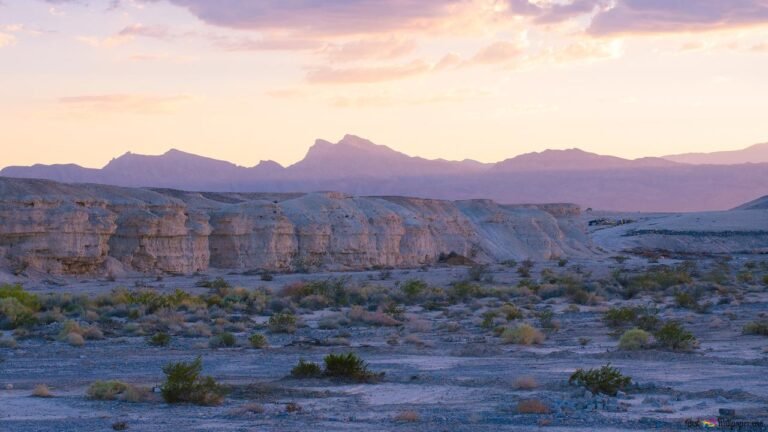
The Mojave is one of the most appealing desert regions in the Southwest because it offers a rare combination of variety, remoteness, and accessibility. In one region, you can drive historic corridors, camp in secluded places, explore dune fields, stop near volcanic features, and experience open desert scenery that feels raw and untamed. It gives you the feeling of a real expedition without requiring travel to a faraway continent.
Some visitors come for history. Others come for the technical driving challenge. Many come because a Jeep opens the door to roads and places that regular passenger vehicles should avoid. That is a major part of the draw: a Jeep is not just a vehicle here; it is a tool that expands what is possible.
What makes the Mojave stand out is the blend of:
- historic travel corridors
- remote backcountry roads
- vast protected desert lands
- mixed terrain and elevation changes
- official planning resources
- wildlife and native plant life
- easy access from Southern California and Nevada
This is one of those landscapes where the journey is the destination. The route itself becomes part of the memory.
Mojave Desert Geography and Location
The Mojave Desert stretches across parts of California, Nevada, Utah, and Arizona, but the Jeep-travel experience most people care about is centered in eastern California. That is where many of the best-known Jeep-friendly destinations are located.
The major areas for Jeep travelers include:
- Mojave National Preserve
- Mojave Trails National Monument
- Mojave Road
- Afton Canyon
- Lava Tube and Aiken Mine Road
- nearby access roads and gateway communities
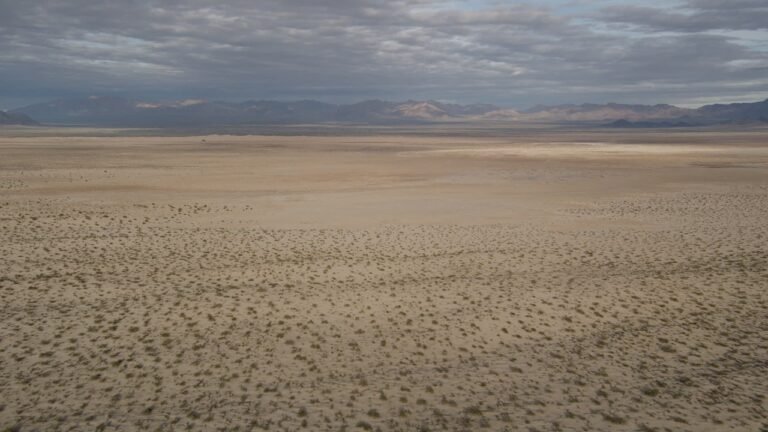
This geography matters because the Mojave is not uniformly flat or uniformly easy. It includes low desert basins, high desert plateaus, dry washes, rocky passes, sandy stretches, open basins, rugged mountain margins, volcanic ground, and long distances between services. A route can feel relaxed in one zone and demanding in the next. That is exactly why route awareness matters.
A Mojave trip is not just “drive east and enjoy the view.” It is a layered landscape where elevation, soil type, drainage, surface condition, and weather all influence how safe and comfortable the drive will be.
Best Jeep-Friendly Areas in the Mojave Desert
Below is a practical breakdown of the most important areas for off-road travelers.
| Area | Best For | Vehicle / Skill Level | Why It Matters |
| Mojave National Preserve | Scenic routes, camping, trip planning, historic desert roads | Many developed areas work for 2WD, but backcountry roads often need high-clearance 4WD | The official planning hub for maps, road conditions, and camping |
| Mojave Road | Classic overland route and historic Jeep trip | High-clearance 4WD is the safest choice | One of the most famous desert routes in the region |
| Mojave Trails National Monument | Remote exploration and rugged desert travel | High-clearance 4×4 strongly recommended | Large, rough, and changing desert terrain |
| Afton Canyon | OHV staging and route access | Street-legal 4×4 touring on designated routes | Useful staging point for desert travel |
| Lava Tube / Aiken Mine Road | Short geology stop and side trip | High-clearance recommended; 4WD advisable | A memorable desert detour with rough road sections |
This simple chart helps readers quickly understand where to go based on their Jeep, their experience, and the type of adventure they want. For a pillar article, this kind of quick orientation is extremely Valuable because it saves readers time and helps them self-select the right route.
Mojave National Preserve: The Official Planning Hub
If you are starting from zero, Mojave National Preserve is the best place to begin. It gives you the structure you need for road planning, camping decisions, road-condition awareness, and route ideas.
The preserve is enormous, and that scale matters. It covers roughly 1.6 million acres, which means even a relatively short drive can feel expansive, remote, and isolated. It is not a local park where you can casually assume services, easy navigation, or frequent traffic. You need to plan and travel as though you may not get quick assistance.
Why the Preserve Matters for Jeep Travelers
The preserve is useful because it gives you:
- official road information
- camping options
- scenic travel routes
- historic sites
- access to the Mojave Road
- desert trip-planning resources
It also forces travelers to respect the reality of the environment:
- No gas inside the preserve
- Minimal to no cell service in many areas
- remote roads
- weather volatility
- long stretches between support services
In other words, the preserve is not just a place to drive. It is where your trip should begin, because it provides the context that keeps your trip safe and manageable.
Camping in Mojave National Preserve
The preserve includes both developed and undeveloped camping choices.
Developed campgrounds such as:
- Mid Hills
- Hole-in-the-Wall
- Black Canyon
These are open year-round and are accessible to many 2WD passenger vehicles, which makes them a strong option for travelers who want a more comfortable base camp or a less technical first visit.
Undeveloped roadside camping is a different experience. That style of camping usually requires:
- high clearance
- 4WD
- stronger route awareness
- greater self-sufficiency
That flexibility is one of the preserve’s major strengths. You can keep things simple with a developed campground, or you can go more rugged for a true overland experience. The key is matching the camping style to your vehicle and your comfort level.
Mojave Road: The Historic Route Every Jeep Driver Should Know
If there is one route every reader should learn about, it is the Mojave Road.
This road is not just another desert track. It is a historic travel corridor with deep cultural importance. It is connected to the Old Spanish National Historic Trail and is listed on the National Register of Historic Places. That gives it significance beyond the normal off-road experience.
Why the Mojave Road Matters
The Mojave Road is important because it blends:
- desert scenery
- route-finding
- history
- off-road driving
- seasonal hazards
- remote travel
That combination is exactly what people imagine when they search for a Mojave Desert Jeep trip. It is a route that feels classic, meaningful, and adventurous all at once.
What to Expect on the Mojave Road
The Mojave Road is not always straightforward. Conditions can change because of:
- water on Soda Lake
- washouts after summer storms
- snow or ice in winter
- soft sand
- rough track sections
- route-finding challenges
This is why the road should be treated as a serious off-road journey rather than a simple sightseeing drive. It is not a place to rely on luck, guesswork, or a vague sense of direction.
Who Should Drive the Mojave Road?
The Mojave Road is best suited for travelers who already have:
- a capable Jeep or 4×4
- solid planning habits
- a real map
- sufficient water and fuel
- off-road awareness
- a backup plan
This is not the place for improvisation. It rewards preparation, patience, and respect for the landscape.
Mojave Trails National Monument: Bigger, Rougher, and More Remote
Mojave Trails National Monument adds another layer of depth to the desert experience. It spans a huge area between Barstow and Needles and includes rugged mountain landscapes, lava flows, dunes, and Route 66 heritage.
What Makes This Area Stand Out
This monument is exciting because it contains a wide range of desert features:
- rugged mountain ranges
- ancient lava flows
- dunes
- Route 66 segments
- World War II historic sites
- long, undeveloped travel corridors
That diversity makes it ideal for readers who want a larger desert journey rather than just one road. It feels more expansive, more varied, and more remote than many travelers expect.
Important Travel Advice
This region is remote, and that reality matters. Storms can alter conditions quickly. Navigation apps are not always dependable in every area. You should never assume a route is open just because your phone map shows a line.
The smartest approach is to use official guidance
- Travel with another vehicle when possible
- Leave a detailed trip plan
- carry extra water and fuel
- expect sudden route changes
In remote desert travel, preparation is more reliable than optimism.
Afton Canyon: A Practical Staging Area
Afton Canyon is important because it functions as a useful gateway for off-road travel. It is not just a scenic or geographic name; it is often a practical starting point for people organizing a larger desert trip.
It offers:
- OHV staging access
- 4×4 touring access
- street-legal route access into the surrounding desert areas
- a convenient place to coordinate group travel
If you are meeting with friends, starting a multi-vehicle route, or connecting different desert segments into one trip, Afton Canyon makes a smart logistical base.
It is also a reminder that desert travel should always be approached carefully. Fire restrictions, seasonal hazards, and changing surface conditions matter here just as much as they do anywhere else in the Mojave.
Lava Tube and Aiken Mine Road: A Short but Memorable Side Trip
The Lava Tube area is a good stop for travelers who want a shorter off-road route with strong visual payoff. It is a compact detour, but it still feels Mojave distinctly.
Why People Like It
It is popular because it gives you:
- a unique geological feature
- a short side trip
- desert scenery
- a rough dirt-road experience
- a reason to stop and explore instead of simply passing through
Road Conditions
The National Park Service notes that Aiken Mine Road can be washboarded and may include soft sand. That means:
- High clearance is helpful
- 4WD is advisable
- Low-clearance cars are not a good idea
For Jeep travelers, this makes the Lava Tube area an excellent short adventure. It has just enough challenge to feel real without requiring a full-day technical expedition.
What Kind of Jeep or 4×4 Do You Need?
The honest answer is: it depends on the route.
For the Mojave, the safest general assumption is that a high-clearance 4×4 is the best all-around choice. That does not mean every route demands the same setup, but it does mean the region is much more forgiving if your vehicle has the right capability.
When 2WD May Be Enough
Some developed campgrounds and easier roads can be reached by 2WD passenger vehicles. These are generally the areas where the road is maintained, the surface is predictable, and the route is not deeply remote.
When 4WD Becomes Important
You should strongly consider 4WD when your trip includes:
- sand
- rough dirt roads
- backcountry camping
- remote monument travel
- soft washes
- historic off-road trails
- unknown road conditions
Simple Rule
A stock Jeep may be enough for some Mojave travel, but once the route becomes rough, remote, or sandy, high clearance and 4WD become much more important. The reason is not only traction; it is also control, confidence, and the ability to deal with unexpected changes in the road surface.
Weather and Climate in the Mojave Desert
Weather is one of the most important planning factors in the Mojave. The desert may look calm, but it can be brutally hot, unexpectedly cold, windy, or storm-affected depending on the season and the elevation.
Summer
Summers are extremely hot. Temperatures above 100°F are common, and heat becomes dangerous quickly, especially on remote roads where shade, water, and fast rescue are limited.
Winter
Winter can bring:
- freezing temperatures
- strong winds
- rain
- Snow in higher areas
- icy sections
- dramatic day-night temperature swings
Spring and Fall
These seasons are usually the most comfortable and are often the best times to visit. The weather is more manageable, trail conditions tend to be more pleasant, and the overall experience is easier for both vehicle and driver.
Rain and Flash Flood Risks
Rain is not evenly distributed across the Mojave, and some areas receive very little. Even so, a small amount of rain can create big problems in washes, arroyos, and low-lying sections. A road that seemed dry in the morning can become dangerous later in the day if storm conditions develop.
This is why weather planning is not optional. It is one of the core safety tools for desert travel.
Safety Tips for a Mojave Desert Jeep Trip
Safety is not a side note in the Mojave. It is a central part of the trip itself.
1. Check Road Conditions Before You Go
This is one of the most important habits you can build. A route can be open one day and difficult or unsafe the next after rain, flooding, or drifting sand. Desert roads are not static.
2. Do Not Trust Cell Service
The preserve has minimal to no cell service in many areas, and the broader Mojave can be equally inconsistent. A phone is useful, but it is not a rescue plan.
3. Carry Extra Water
Water is essential. The desert is dry, and your consumption needs can rise quickly in the heat, during mechanical trouble, or if you get delayed.
4. Carry Extra Fuel
There is no gas inside Mojave National Preserve. That means you must begin with a full tank and a conservative estimate of how much fuel your route may require.
5. Bring Recovery and Emergency Gear
At minimum, carry:
- spare tire
- jack
- basic tools
- food
- water
- flashlight
- proper clothing
- emergency supplies
6. Do Not Rely on Electronic Navigation Alone
Map apps can be inaccurate in remote desert terrain. Offline maps, printed maps, and official route guidance are much more dependable for this kind of trip.
7. Travel with Another Vehicle When Possible
A second vehicle can make an enormous difference if you get stuck, break down, or need help in a low-service area. Desert travel is safer when support is nearby.
What to Pack for the Mojave Desert
A good packing list can determine whether the trip feels smooth or stressful.
| Item | Why You Need It |
| Water | The desert is dry and hot |
| Fuel | No gas is available inside the preserve |
| Food | Remote routes often take longer than expected |
| Spare tire | Flat tires are a real risk |
| Jack and tools | Needed for basic repairs and tire changes |
| Flashlight | Useful if the drive runs late |
| Offline maps | Cell service may not work |
| Proper clothing | The weather can shift from hot to cold |
| Emergency kit | Important for self-rescue planning |
| Recovery gear | Helpful on sand and rough roads |
This list is simple, but it covers the essentials. Desert trips become easier when the basics are handled well.
Wildlife in the Mojave Desert
The Mojave is not an empty wasteland. It is a living ecosystem with a surprising amount of animal life.
Mojave National Preserve supports:
- mammals
- birds
- reptiles
- amphibians
- fish
- insects
- arachnids
Common Animals You May See
Some of the more familiar animals include:
- roadrunners
- cactus wrens
- ravens
- golden eagles
- red-tailed hawks
- Gambel’s quail
- lizards
- desert tortoises
- desert bighorn sheep
Why Wildlife Matters on Jeep Trips
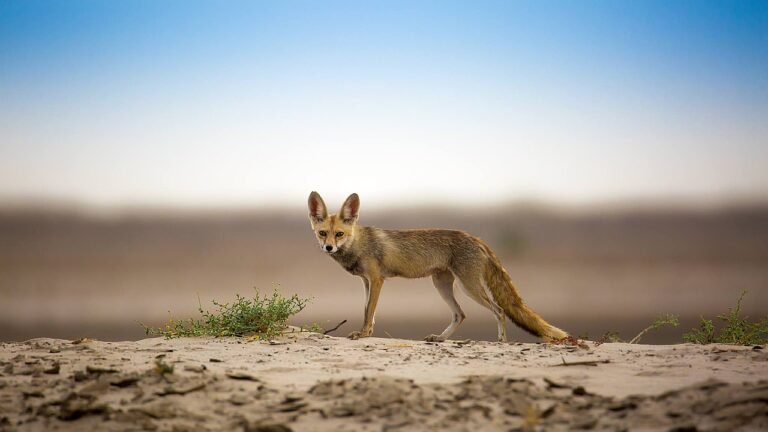
Wildlife is part of the desert experience, but it also creates responsibility. For example, the desert tortoise is vulnerable to vehicle traffic, which is one reason staying on designated routes matters so much. Every tire track can affect habitat, nesting areas, and the survival of local species.
You are not just moving through a scenic backdrop. You are traveling through a functioning ecosystem that deserves care.
Desert Plants and Flora
The plants of the Mojave shape the look, texture, and identity of the region. They are part of what makes the desert feel unmistakably like the Mojave.
Important Desert Plants
Some key plants include:
- Joshua trees
- creosote bush
- cholla cactus
Why They Matter
These plants are not just scenery. They support the desert ecosystem, stabilize the land, and create the visual identity that so many people associate with the Mojave.
Joshua trees are especially iconic. Creosote is one of the signature shrubs of the desert. In the right season, you may also see wildflowers, which can make the landscape feel completely transformed. A place that looks dry and austere for most of the year can suddenly become colorful and vivid after seasonal rains.
For Jeep travelers, the plant life is part of the route experience, not just background decoration.
The Human History of the Mojave Desert
A strong Mojave Desert Jeep guide should not ignore history. The Mojave is not only a natural landscape; it is also a landscape shaped by people, movement, trade, survival, and changing eras of use.
The region has a long human story that includes:
- Indigenous travel
- trade routes
- exploration
- settlement
- mining
- military use
- historic roads
People have been moving through and living with this desert for thousands of years. The Mojave Road is part of that deeper story and later became tied to explorers and larger overland movements.
The area also includes heritage related to:
- Route 66
- the World War II Desert Training Center
- historic transport corridors
- early western exploration
This is one reason the Mojave feels different from many other off-road destinations. It is both a road trip and a history lesson. Every mile has context.
Environmental Issues and Conservation
The Mojave is gorgeous, but it is also fragile. That fragility is easy to overlook when you are behind the wheel and focused on the trail, yet it is one of the most important aspects of responsible travel.
Why Conservation Matters
The desert faces pressure from habitat change, water stress, vehicle impacts, and human disturbance. That means travelers need to be especially mindful about where they drive, where they camp, and how they behave.
Good Conservation Habits
- Stay on designated routes
- Do not damage plants
- Avoid disturbing wildlife
- Do not leave trash behind
- Respect camping limits
- Follow fire restrictions
- Drive carefully in a tortoise habitat
Why This Matters for Jeep Travelers
Responsible travel preserves the desert for everyone. It also improves your own experience because a healthy landscape remains open, beautiful, and resilient. When drivers behave carefully, the Mojave stays wild rather than worn down.
Tourism and Activities in the Mojave
A Mojave Jeep trip can be much more than just a drive. The region supports a wide range of outdoor experiences, and many of them pair well with vehicle-based travel.
Popular Activities
- scenic desert driving
- historic route exploration
- camping
- photography
- wildlife viewing
- geology stops
- short hikes
- stargazing
- overland travel
Good Trip Ideas
You can build the trip in several ways:
- a one-day scenic Jeep loop
- a weekend camping route
- a historic Mojave Road crossing
- a geology-focused desert stop
- a mixed route with preserve and monument travel
The best trip depends on your schedule, your vehicle, your experience, and your tolerance for rough roads and limited services.
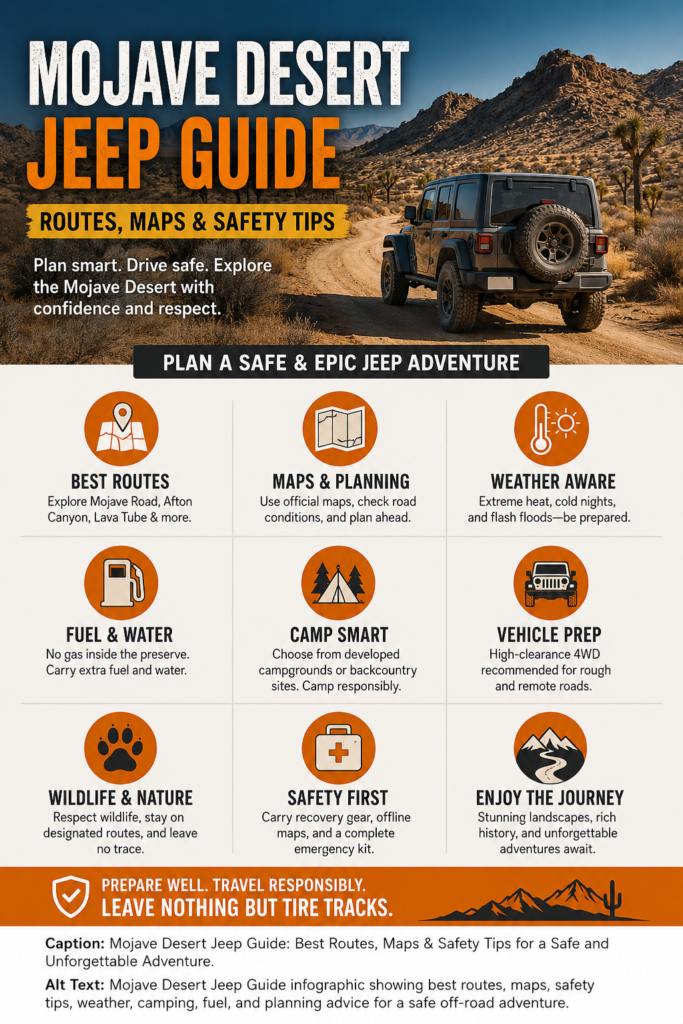
Example Mojave Jeep Trip Plans
Here are some simple trip patterns that can help readers imagine how a real journey might work.
Example 1: Beginner-Friendly Desert Day Trip
Start near a developed area, visit an easy scenic stop, drive a maintained road, stop for photos and lunch, and return before dark. This is best for travelers who want a low-stress introduction to the desert.
Example 2: History and Adventure Route
Plan around the Mojave Road, use official road information, carry extra water and fuel, camp in a developed or approved site, and explore both terrain and history. This is more classic, more immersive, and more demanding.
Example 3: Short Off-Road Side Trip
Use Aiken Mine Road, visit the Lava Tube, keep the route short, carry basic recovery gear, and return to a campground or main road. This works well as a half-day adventure.
Example 4: Remote Overland Weekend
Start with full fuel and water, use a high-clearance 4×4, travel with another vehicle when possible, use offline maps, camp responsibly, and expect limited services. This is the more advanced Mojave experience.
Pros and Cons
Pros
- A huge variety of desert terrain
- rich historic value
- excellent off-road travel opportunities
- strong official planning resources
- campground and backcountry options
- beautiful scenery and wildlife
Cons
- No gas inside the preserve
- limited or no cell service
- The weather can change quickly
- Some roads become impassable
- remote travel requires serious planning
- Wildlife and conservation concerns matter
This balance matters because the Mojave is deeply rewarding, but it is not a place for careless driving or casual assumptions.
Interesting Facts About the Mojave Desert
Here are some useful facts readers often appreciate:
- Mojave National Preserve covers about 1.6 million acres
- It is one of the largest units in the National Park System in the contiguous United States
- The Mojave Road is tied to the Old Spanish National Historic Trail
- Gas is not available inside the Mojave National Preserve
- Mojave Trails National Monument also covers about 1.6 million acres
- The preserve supports more than 200 bird species
- It also supports 36 reptile species
These details help the article feel more complete, more useful, and more credible.
Best Time to Visit the Mojave Desert by Jeep
The best times are usually:
- spring
- fall
These seasons are generally more comfortable and less extreme, which makes them ideal for most travelers.
Why Not Summer?
Summer can be dangerously hot, especially in remote sections where breakdowns or delays can become serious quickly.
Why Winter Needs Caution
Winter can bring snow, ice, freezing temperatures, and sharp day-night swings, especially in higher elevations or exposed areas.
Best General Advice
Choose your season based on comfort, route difficulty, and safety rather than simply convenience.
How to Plan a Safe Mojave Jeep Route
A strong route plan should include:
- start point
- fuel stop
- water supply
- trail difficulty
- weather check
- campground choice
- exit route
- backup route
Simple Planning Formula
Route + Vehicle + Weather + Fuel + Water + Backup Plan
If even one of those pieces is missing, the trip becomes riskier. That is why route planning in the Mojave is not optional detail work; it is the foundation of a safe and enjoyable drive.
Mojave Desert Jeep Guide: Final Travel Tips
Here is the simplest advice in the entire guide:
- Use a high-clearance Jeep or 4×4 for rough routes
- Do not enter remote areas without water
- Fill up on gas before you go
- Carry offline maps
- Check the weather and road conditions
- Respect wildlife and stay on trails
- Start with easier routes if you are new
A great Mojave trip is not about rushing. It is about planning well, staying flexible, and enjoying the desert safely and respectfully.
FAQs
Yes. It is one of the best places in the Southwest for Jeep travel because it combines historic roads, scenic desert landscapes, camping, and official route guidance.
Not for every road, but 4WD is strongly recommended for many backcountry routes, rough roads, and remote camping areas.
No. There is no gas inside the preserve, so fuel up before you enter.
Spring and fall are usually the best times because temperatures are more comfortable.
It can be driven by prepared travelers with the right vehicle and planning, but it is not a casual road. Seasonal hazards and route-finding can make it challenging.
Conclusion
A Mojave Desert Jeep trip can be unforgettable when you prepare properly and respect the landscape. The best routes, the right vehicle, and solid trip planning make all the difference in this remote desert Environment. Whether you are exploring historic roads, camping in the backcountry, or taking a short scenic drive, the key is to travel responsibly, stay self-sufficient, and match the route to your experience level.