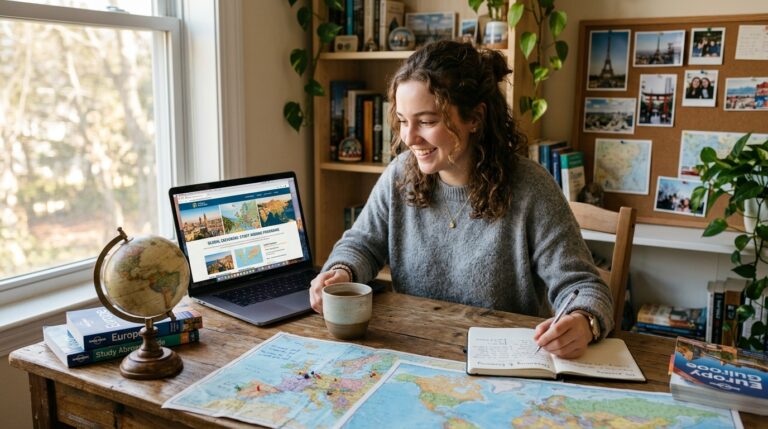


Travel planning has become easier because travelers can research destinations, compare accommodation, check transportation, and discover activities online before leaving home. However, the enormous amount of available information can also make planning more complicated. Different websites may provide conflicting advice, older articles may contain outdated details, and travelers can easily spend more time researching than actually making decisions.
A better approach is to combine broad inspiration with careful verification. General online content can introduce useful ideas, while important travel decisions should be based on current and relevant information. By keeping the itinerary flexible and focusing on the details that matter most, travelers can prepare effectively without overplanning the journey.
- Start With the Purpose of Your Trip
- Use General Online Content for Inspiration
- Research the Destination at a Broad Level First
- Compare Travel Dates Carefully
- Choose Accommodation Based on Location
- Read Broadly Without Treating Every Source Equally
- Build the Itinerary Around a Few Priorities
- Group Attractions by Location
- Research Local Transportation Before Arrival
- Use News and Media for Additional Context
- Check Important Attraction Details Directly
- Look for Patterns in Recent Reviews
- Keep Weather-Dependent Plans Flexible
- Allow Realistic Transportation Time
- Keep Essential Travel Information Organized
- Make Important Details Available Offline
- Separate Inspiration From Verification
- Review Important Details Shortly Before Departure
- Leave Open Time After Arrival
- Avoid Constantly Comparing Your Choices
- Use Research to Prepare, Then Enjoy the Journey
Start With the Purpose of Your Trip
Before researching individual attractions, decide what you want from the vacation. Some travelers want relaxation, while others prefer history, food, shopping, outdoor activities, entertainment, or a mixture of several experiences.
Knowing your priorities makes later research more efficient. It also helps you avoid choosing destinations or activities simply because they appear on popular travel lists.
Use General Online Content for Inspiration
Travel inspiration can come from many different parts of the internet. Articles about culture, current affairs, lifestyle, entertainment, food, and regional developments may introduce places or subjects that travelers had not previously considered.
While browsing broader online content, readers may encounter resources such as Pat Bigold Media. General-interest material can provide ideas worth exploring, but any information that affects actual reservations or important travel decisions should be checked through suitable current sources.
Research the Destination at a Broad Level First
Before creating a detailed itinerary, learn the basic structure of the destination. Understand where the main neighborhoods are located, how transportation works, what the climate is generally like, and which areas contain the attractions that interest you.
This overview provides context for everything else. Once travelers understand the geography, decisions about accommodation and daily sightseeing become much easier.
Compare Travel Dates Carefully
The experience of a destination can change significantly depending on the season. Weather, accommodation prices, crowds, daylight hours, festivals, and outdoor activities may all vary throughout the year.
Instead of automatically choosing peak season, consider which conditions suit your priorities. A slightly quieter period may provide better value and a more relaxed experience.
Choose Accommodation Based on Location
A low room rate can become less attractive if the property is far from the places you want to visit. Long daily journeys may increase transportation costs and reduce the amount of time available for sightseeing.
Check the property on a map before booking. Consider nearby transportation, restaurants, shops, and the neighborhoods you expect to explore most frequently.
Read Broadly Without Treating Every Source Equally
Different online sources can serve different purposes. Some are useful for discovering ideas, while others are more appropriate for practical information such as opening hours, transportation schedules, or official requirements.
During general research, readers may come across websites such as Pudding Media. Broad content can add perspective or introduce a topic worth investigating, but travelers should verify important details separately before allowing them to influence bookings or major itinerary changes.
Build the Itinerary Around a Few Priorities
Trying to visit every attraction often creates an exhausting trip. Instead, choose a small number of experiences that genuinely matter and organize the schedule around them.
Other interesting places can remain on an optional list. This provides choices without turning each day into a long checklist.
Group Attractions by Location
One of the simplest ways to improve a travel itinerary is to organize sightseeing geographically. Attractions that look close together in a list may actually require long journeys between them.
Save interesting locations on a map and group nearby places into the same day. This reduces transportation time and creates more opportunities to explore neighborhoods naturally.
Research Local Transportation Before Arrival
Understanding the basic transportation system can reduce confusion on the first day. Find out how to travel from the airport or station to your accommodation and learn the main ticketing options for local buses, trains, trams, or metro systems.
You do not need to memorize every route. Knowing the basic system is usually enough to make navigation easier after arrival.
Use News and Media for Additional Context
Travel guides usually focus on attractions and logistics, while general media can provide broader context about communities, events, culture, and current developments. This can help travelers understand a destination beyond the traditional sightseeing perspective.
General online resources such as Yamama Media may appear during wider reading. When a story seems relevant to a planned journey, travelers should determine whether it actually affects their destination and verify practical details through official or directly responsible sources.
Check Important Attraction Details Directly
Opening hours, admission requirements, ticket systems, and temporary closures can change. If an attraction is a major part of the itinerary, check its current information before visiting.
This is especially important for places requiring advance reservations or significant transportation time.
Look for Patterns in Recent Reviews
Reviews can be useful when travelers focus on repeated observations rather than isolated opinions. One person’s expectations may be very different from another’s.
If many recent reviewers mention the same issue or advantage, that pattern may be more useful when evaluating hotels, attractions, tours, or restaurants.
Keep Weather-Dependent Plans Flexible
Outdoor activities are particularly vulnerable to weather changes. Hiking, beaches, walking tours, viewpoints, and outdoor attractions may need to move to another day.
Keep several indoor alternatives available so that poor weather does not force travelers to create an entirely new plan at the last minute.
Allow Realistic Transportation Time
A route that appears short on a map may take considerably longer after waiting for transportation, navigating an unfamiliar station, or walking between stops.
Add reasonable buffers around important reservations. A flexible schedule is easier to manage when small delays occur.
Keep Essential Travel Information Organized
Reservations can quickly become scattered across emails, booking applications, screenshots, and messages. Keeping essential information together makes it easier to access during the journey.
Store accommodation addresses, transportation details, attraction tickets, booking references, and important contacts in one organized location.
Make Important Details Available Offline
Internet access cannot always be guaranteed. Travelers may encounter poor mobile coverage, unavailable Wi-Fi, or a low phone battery at an inconvenient moment.
Save essential booking information and maps offline when possible. This provides an additional layer of preparation without requiring printed copies of every document.
Separate Inspiration From Verification
Blogs, general websites, social media, videos, and news articles can all help travelers discover destinations and activities. Their greatest value is often inspiration rather than final verification.
For visas, border requirements, transportation schedules, severe weather, official closures, or other high-impact information, travelers should use the relevant authority, operator, or organization as the primary source.
Review Important Details Shortly Before Departure
A travel plan created months earlier should receive a final review before the journey begins. Confirm important transportation, accommodation, reservations, expected weather, and attraction information.
This does not require repeating all of the original research. Focus only on details that could materially affect the trip.
Leave Open Time After Arrival
Some of the best travel ideas appear only after reaching the destination. A local recommendation, interesting neighborhood, small market, or unexpected event may deserve more attention than something originally included in the itinerary.
Leaving a few flexible periods creates space for these discoveries without forcing travelers to cancel several reservations.
Avoid Constantly Comparing Your Choices
Once travelers arrive, repeatedly searching for better restaurants, attractions, or activities can reduce enjoyment. There will almost always be another highly rated option somewhere else.
Use research to make reasonable decisions and then give those choices a chance. A memorable experience does not always need to be the highest-ranked option online.
Use Research to Prepare, Then Enjoy the Journey
The purpose of travel research is to provide useful direction and confidence. It can help travelers understand destinations, choose suitable accommodation, organize transportation, identify meaningful experiences, and respond to changing conditions.
By using general online content for inspiration, verifying important details, organizing sightseeing efficiently, and leaving enough flexibility for unexpected discoveries, travelers can create trips that feel prepared without becoming restrictive. Once the essential planning is complete, the most important step is to stop researching constantly and start experiencing the destination itself.