
Introduction
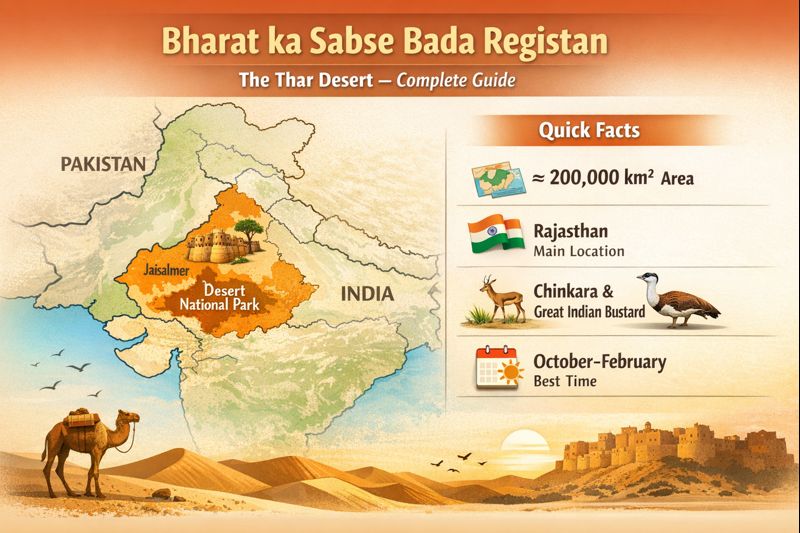
Thar Desert — Bharat ka sabse bada registan.
This concise guide explains where the Thar lies, how big it is, what landscapes and Wildlife to expect (including Desert National Park and the Great Indian Bustard), plus practical travel tips, maps, and conservation notes — all in one SEO-friendly, easy-to-scan format.
- Quick snapshot — The Thar in one glance
- What is the Thar Desert?
- Where is the Thar Desert?
- How big is the Thar Desert?
- Main towns and districts in the Thar
- Landscape & landforms — what you will see
- Dunes
- Rock and hardpan
- Salt lakes
- Dry rivers
- Climate — heat, rain and seasons
- Plants of the Thar
- Animals of the Thar — who lives here?
- Key mammals and birds:
- Protected areas & conservation
- Desert National Park
- Why conservation matters
- People, culture & history
- Tourism — what to do & where to go
- Top places
- Activities
- Best time to visit & travel tips
- Simple packing checklist:
- Safety tips:
- Survival tips for visitors & locals
- Is the Thar becoming green?
- Quick Reference Table — Those facts
- Pros & Cons — Visiting or Living in the Thar
- Pros
- Cons
- Human history & culture — highlights
- Environmental threats & solutions
- Threats
- Solutions
- Little‑known facts & interesting gems
- How to plan a Thar trip — step‑by‑step
- Examples — sample 3‑day Thar itinerary
- 1 – Jaisalmer
- 2 – Dunes & Desert National Park
- 3 – Bikaner or Jodhpur
- FAQs
- Conclusion
Quick snapshot — The Thar in one glance
| Topic | Quick fact |
| Also called | Great Indian Desert |
| Area | About 200,000 km² (≈77,000 sq mi) — commonly cited estimate |
| Main Indian state | Rajasthan (largest share) |
| Other Indian states | Gujarat, Haryana, Punjab |
| Extends into | Pakistan (Sindh & Punjab) |
| The biggest protected area | Desert National Park (~3,162 km²) |
| Iconic endangered bird | Great Indian Bustard (Critically Endangered) |
| Best time to visit | October–February (cool and dry) |
What is the Thar Desert?
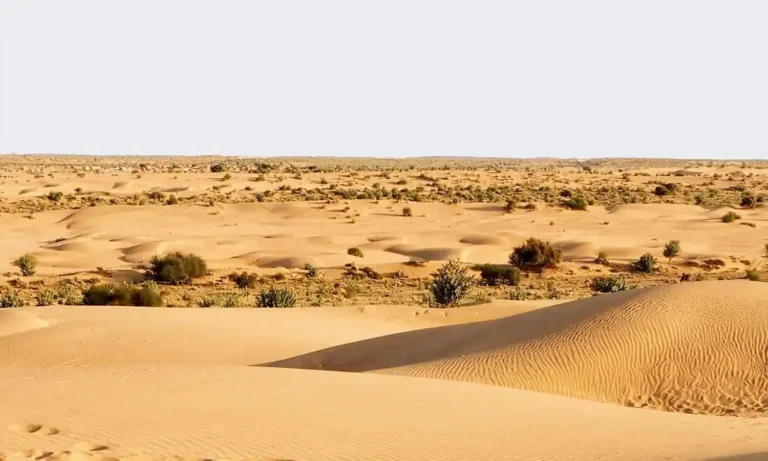
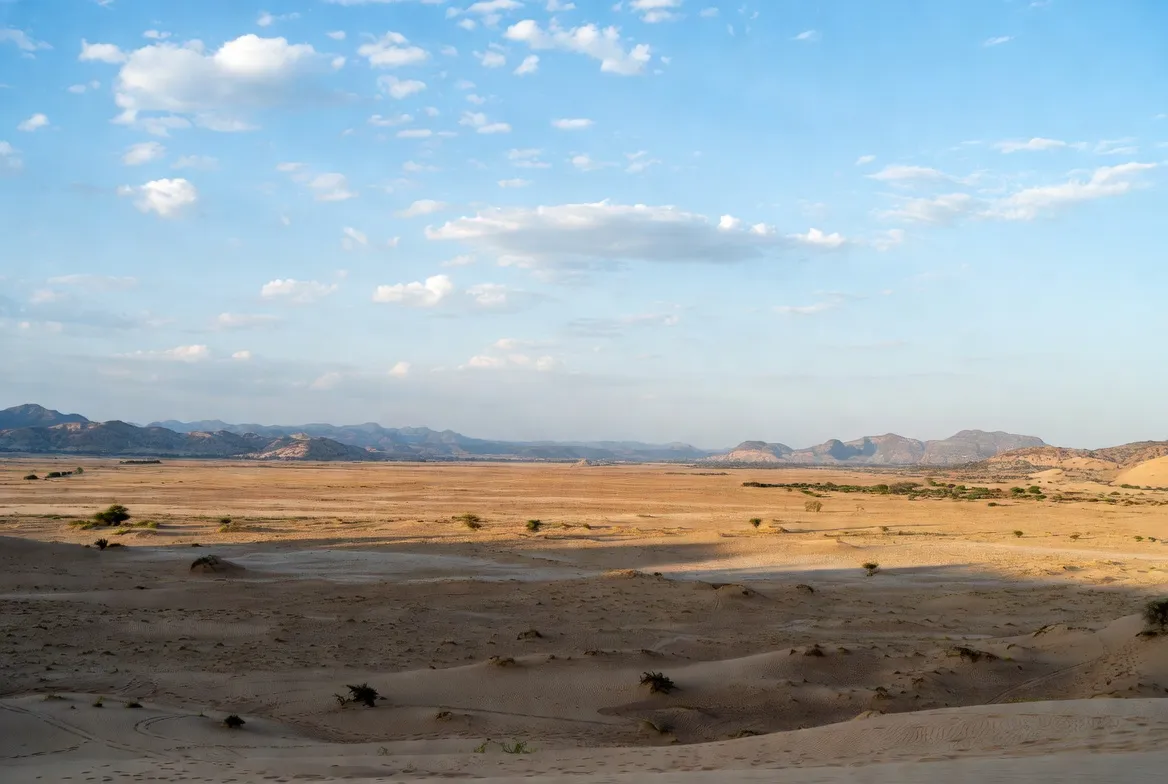
The Thar Desert is large in the Indian subcontinent. It is not just sand (endless), it is a patchwork of scenery, mobile dunes driven by the wind, vegetated dunes held in place by shrubs and grasses, rocky interfluves, salty playa lakes (seasonal salt pans), and streams that only occur during and shortly after monsoon rains. It is a place of human activity, towns, villages, agricultural posts, and caravan paths crossed the Thar throughout centuries, and now this desert is one of the most populated deserts in the world.
Where is the Thar Desert?
Geographic coordinates and adjacency matterfor readers and search intents. The Thar is centred in western Rajasthan and fans westward into Pakistan. When creating maps or GIS downloads for a web page, highlight the following boundaries and features:
- State boundaries: Rajasthan (core), plus patches of Gujarat, Haryana, and Punjab within India.
- Major urban hubs: Jaisalmer, Bikaner, Jodhpur, Barmer — useful for itineraries and travel logistics.
- Natural landmarks: Sam Sand Dunes, Sambhar Salt Lake, Luni River, Aravalli foothills.
If you provide downloadable assets, include separate layers for: administrative boundaries, dune fields, protected areas (e.g., Desert National Park), hydrology (seasonal streams & lakes), major roads and tracks, and points of interest (forts, towns, campsites).
How big is the Thar Desert?
A commonly quoted estimate places the Thar’s area at approximately 200,000 square kilometres (≈77,000 square miles). This figure is widely used for general descriptions and is appropriate when stating that the Thar is the largest desert primarily in India (although the full arid region crosses into Pakistan). For data‑driven pages, present both the rounded figure and context: the Thar’s area estimate can vary with the Definition used (e.g., including peripheral semi‑arid zones or strictly sandy/eroded tracts).
Keywords to use around size: area, extent, square kilometres, territorial span, regional footprint, spatial coverage.
Main towns and districts in the Thar
- Jaisalmer — the heart of sand tourism, dunes and camel safaris.
- Bikaner — a historic trade city with forts and camel research history.
- Jodhpur — a major travel hub and gateway to the desert.
- Barmer — cultural landscapes, crafts, and large rural districts.
- Districts of western Gujarat, such as Kutch and parts of Saurashtra border or touch Thar‑influenced semi‑arid zones.
These place names are essential anchor keywords for locality queries and itinerary searches.
Landscape & landforms — what you will see
Dunes
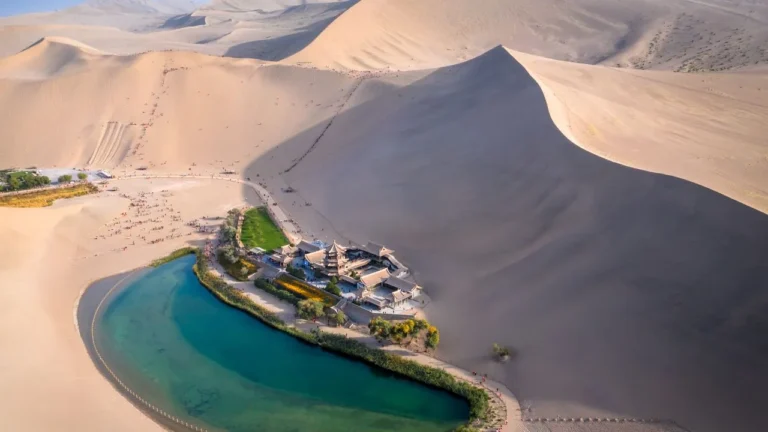
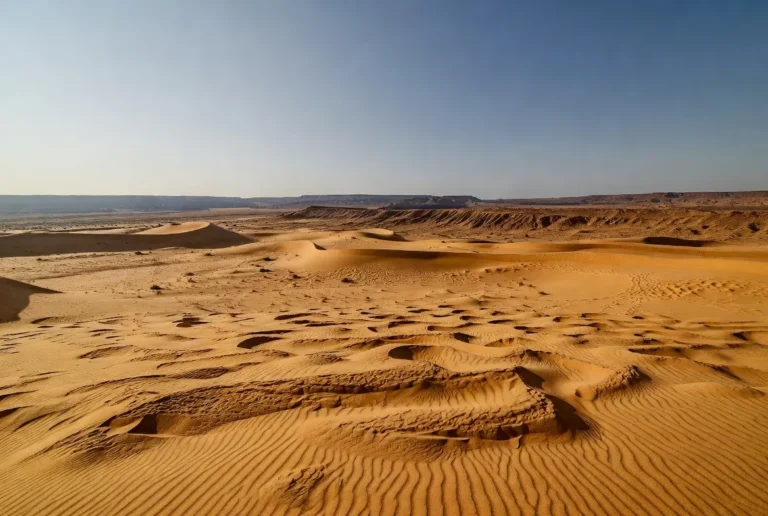
Dunes are the most iconic element: barchans, longitudinal dunes, star dunes and crescentic ridges are all found in different sectors. Dune behaviour matters to both ecologists and travellers: mobile dunes shift with wind regimes, while stabilised dunes support vegetation and grazing.
Rock and hardpan
Wider parts of the Thar are composed of stony plains and rocky surfaces — these are not sandy but are equally arid and often host a different ecological community.
Salt lakes
Large dry salt flats (playas) such as Sambhar Salt Lake and other seasonal basins fill during the monsoon and evaporate, leaving white salt crusts used for salt extraction and forming important bird habitats when wet.
Dry rivers
Intermittent rivers such as the Luni flow only after rains; channels and riverbeds are vital for human settlement and seasonal grazing.
Climate — heat, rain and seasons
The Thar has an extreme continental climate: scorching summers with daytime highs often above 45°C (104°F), a short monsoon season (July–September) with highly variable rainfall, and a cool, dry winter (October–February) — the most hospitable time for travellers.
Important travel‑oriented climate points:
- Summer (Apr–Jun): extremely hot, high heat stress.
- Monsoon (Jul–Sep): erratic rains; short storms can transform dry playas into brief wetlands.
- Winter (Oct–Feb): clear skies, cool days, chilly nights — ideal for camping and outdoor activities.
Also note microclimatic effects: nights cool rapidly because of low humidity and clear skies, and dust storms or gusty winds can arise suddenly.
Plants of the Thar
Vegetation is adapted to drought, salt and sand movement. Key species and plant types to mention in an NLP‑aware guide:
- Khejri (Prosopis cineraria): keystone tree used in agroforestry and traditional pastoral systems; extremely valuable for soil stabilisation.
- Shrubs and grasses: local palatable species support small ruminants and camels; they also help to fix dunes.
- Halophytes: salt‑tolerant species around saline flats.
Where irrigation and canals appear (for example, the Indira Gandhi Canal), farmland expands, and species composition changes — arable crops such as wheat, mustard, and cotton appear where water is available, with ecological trade‑offs.
Animals of the Thar — who lives here?
The Thar hosts a surprising variety of mammals, birds and reptiles adapted to aridity.
Key mammals and birds:
- Chinkara (Indian gazelle) — common in scrub and dune fringes.
- Blackbuck — prefers grassland patches and agricultural fringes.
- Desert fox & Indian wolf — top predators in their niches.
- Great Indian Bustard (GIB) — an iconic and critically endangered species that requires large tracts of undisturbed grassland and scrub.
- Migratory and resident waterbirds — use lakes like Sambhar when water is present.
Also expect many reptiles (lizards, snakes), arthropods (scorpions, beetles), and a large insect fauna that supports the food web.
Protected areas & conservation
Desert National Park
Located near Jaisalmer and Barmer, Desert National Park protects both dune systems and grassland habitats over an area of approximately 3,162 km². The park is a critical conservation area for species such as chinkara and for remaining Great Indian Bustard habitats.
Why conservation matters
The Great Indian Bustard population has crashed regionally due to habitat fragmentation, agricultural expansion, and collisions with low‑hanging powerlines. Conservation priorities include habitat protection, safer energy infrastructure (line marking or burying), community conservation initiatives, and careful tourism management.
From an NLP/SEO viewpoint, include terms such as habitat fragmentation, anthropogenic pressure, species recovery, protected area network, and community‑based conservation.
People, culture & history
The Thar is culturally rich. Human strategies for survival and the social fabric are as important as the physical landscape.
- Pastoralism: herding camels, goats and sheep remains a widespread livelihood.
- Handicrafts: textiles, leatherwork, metalwork and woodcarving form important cottage industries.
- Music & festivals: Rajasthani folk traditions (Manganiyars and Langas) and events such as the Desert Festival in Jaisalmer showcase local heritage.
- Bishnoi community: known for traditional conservation practices and tree protection.
- Historical trade: caravan routes connected market towns; forts and havelis (merchant houses) record this mercantile past.
Include cultural keywords in content to capture travel, heritage and anthropological search intents.
Tourism — what to do & where to go
Top places
- Jaisalmer: Jaisalmer Fort, Sam Sand Dunes, desert camps and camel safaris.
- Bikaner: forts, temples and camel research centres.
- Jodhpur: Mehrangarh Fort and bazaars — an excellent logistics hub.
- Sam & Khuri dunes: famous for camping and vivid sunsets.
- Sambhar Lake & Pushkar: important birdwatching and salt‑work sites.
Activities
- Camel safari — traditional, slow travel that suits quiet travellers and photographers.
- Jeep safari — covers more ground and has access to remote dunes and villages.
- Desert camping — night skies and local music are highlights.
- Birdwatching & photography — especially productive at seasonal lakes.
- Heritage city tours — forts, havelis and local markets.
Best time to visit & travel tips
Best time: October to February — cool daytime temperatures and crisp nights make outdoor activities comfortable.
Avoid: April to June — extreme heat and potential heatstroke risk.
Simple packing checklist:
- Water bottle + extra water supply.
- Sun hat, sunglasses, broad‑spectrum sunscreen.
- Light, loose clothing that covers arms and legs; scarf or bandana for dust.
- Warm jacket or layers for winter nights.
- First‑aid kit, electrolyte powders, and a spare phone power bank.
- Torch/flashlight and spare batteries.
Safety tips:
- Travel with licensed, reputable operators for remote trips.
- In border areas close to Pakistan, check permit rules and local advice.
- Carry extra fuel and a spare tyre for self‑drives.
- Respect local customs and ask permission before photographing people.
Survival tips for visitors & locals
- Carry more water than you expect to need; dehydration is the leading travel hazard.
- Avoid heavy exertion during midday heat; rest in shaded areas.
- Use a scarf or mask to reduce dust inhalation during windy conditions.
- Hire local guides — they know safe tracks, wells, and cultural etiquette.
- Monitor weather updates; sudden storms or extreme heat can alter plans.
Is the Thar becoming green?
Short answer: Some parts are greening, but the picture is complex. Canal irrigation projects (notably the Indira Gandhi Canal) have converted large tracts to agriculture, producing patchy green zones and agricultural economies. However, this human‑driven greening can stress groundwater, change soil salinity, and alter native biodiversity. The ecological costs need to be balanced against local livelihoods and food security.
SEO/NLP gateway terms: irrigation expansion, groundwater recharge, soil salinisation, land‑use change, agroforestry, and ecological trade‑offs.
Quick Reference Table — Those facts
| Question | Short answer |
| Bharat ka sabse bada registan kaunsa hai? | Thar Desert |
| Thar Desert kis rajya mein hai? | Mainly Rajasthan; also Gujarat, Haryana, and Punjab. |
| Thar ka area kitna hai? | ≈ 200,000 km². |
| Best time to visit | October–February. |
| The biggest protected area | Desert National Park (~3,162 km²). |
| Endangered icon species | Great Indian Bustard (Critically Endangered). |
Pros & Cons — Visiting or Living in the Thar
Pros
- Unique culture and unforgettable music, crafts and cuisine.
- Vast dunes and dramatic photo opportunities, especially at golden hour.
- Clear night skies for stargazing and astrophotography.
- Community tourism channels revenue to local people.
Cons
- Extreme heat in the summer months makes travel difficult.
- Water scarcity in many regions and decreasing groundwater levels.
- Remote tracks and poorer road infrastructure in some areas.
- Conservation concerns: rare species need secure habitat and reduced disturbance.
Human history & culture — highlights
- Caravans & trade: Towns like Jaisalmer grew as caravan centres along historic trade routes.
- Architecture: Forts, havelis, thick masonry designed to buffer heat, jali (lattice) windows and courtyards.
- Festivals: Pushkar Fair and the Desert Festival in Jaisalmer attract tourists and preserve folk traditions.
- Traditional skills: Local craftspeople produce textiles, jewellery and durable garments adapted to desert life.
Include historical and cultural keywords to capture heritage search intent.
Environmental threats & solutions
Threats
- Habitat loss from farmland expansion, infrastructure, and settlements.
- Powerline collisions are harming large birds like the Great Indian Bustard.
- Declining groundwater and increasing soil salinity in irrigated zones.
- Unplanned tourism leads to waste and disturbance.
Solutions
- Strengthen protected area management (e.g., Desert National Park) and ecological corridors.
- Community‑based conservation that gives economic incentives to locals for biodiversity protection.
- Powerline modifications, such as marking or undergrounding in critical bird habitats.
- Responsible tourism standards: low‑impact camps, waste management plans and local hiring.
Little‑known facts & interesting gems
- The Thar is among the most densely populated deserts in the world.
- Sambhar Salt Lake is a critical site for migratory birds and regional salt production.
- Archaeological finds and palaeontological fossils suggest long‑term human habitation and environmental changes.
- Pockets near the Aravalli foothills display surprising biodiversity and act as ecological transition zones.
How to plan a Thar trip — step‑by‑step
- Choose season: Plan for October–February for comfortable weather.
- Pick base towns: Jaisalmer for dunes; Jodhpur for logistics; Bikaner for heritage.
- Book tours: Use reputable operators, read reviews and confirm group sizes.
- Pack smart: Follow the packing checklist above — water, sun protection and warm layers for nights.
- Respect local rules: Some border zones need permits; ask local authorities before travel.
- Safety: Inform someone of your route; carry extra fuel and a charged phone.
Examples — sample 3‑day Thar itinerary
1 – Jaisalmer
- Morning: Arrive Jaisalmer, visit Jaisalmer Fort and old havelis.
- Afternoon: Rest and explore local markets.
- Evening: Drive to Sam Sand Dunes for camel ride, desert camp and Rajasthani folk music.
2 – Dunes & Desert National Park
- Early: Sunrise at the dunes (photography prime time).
- Day: Jeep safari to remote dune fields and village interactions.
- Late: Short visit to Desert National Park if logistics allow.
3 – Bikaner or Jodhpur
- Travel to Bikaner (heritage forts) or return to Jodhpur for city touring and departure.
FAQs
Thar Desert (Great Indian Desert) — the largest desert area in India.
Mostly in Rajasthan, with parts in Gujarat, Haryana, and Punjab; it also extends into Pakistan.
Approximately 200,000 square kilometres (77,000 sq mi).
October to February — cool days and comfortable nights.
Yes — Desert National Park, salt lakes and scrub areas have chinkara, blackbuck, desert fox, many birds, and conservation areas work for the Great Indian Bustard.
Conclusion
The Thar is a landscape of striking contrasts — vast dunes, busy towns, salt lakes and rich cultural traditions. Whether you’re planning a trip or writing about the desert, travel responsibly, visit between October and February for the best conditions, and support conservation efforts that protect habitats and species like the Great Indian Bustard.