
Introduction of Desert Safari Outfit
Your outfit is not merely aesthetic. It’s a practical instrument for thermal regulation, abrasion resistance, and cultural alignment. In ML terms, garment reduces variance and bias: long sleeves and a hat reduce exposure (variance due to sun and sand), while modest, culturally aware options reduce customary friction (bias in public interactions). Designing a uniform means optimizing across participant aims: sun defence, temperature authority, freedom of activity, packability, and photogenic aspect.
Rules of thumb
- Go light-colored and loose-fitting — reflects heat and allows convective airflow.
- Avoid heavy, non-breathable synthetics during daytime — they trap heat and reduce heat dissipation.
- Use sunscreen SPF 30+; reapply after heavy humidity or when you dig sand away.
- Prefer closed shoes for traction and sand embargo.
- Carry a thin insulating layer for nighttime — desert diurnality often produces 15–30°C swings.
- Rules of thumb
- How the desert environment shapes clothing choices
- Climate & weather patterns
- Quick season & time-of-day outfit matrix
- Best fabrics & why they win
- Natural breathable fibers
- Technical fabrics
- Fabrics to avoid
- Layering tip
- Shoes
- Activity-by-activity outfit guide
- Dune bashing
- Camel ride
- Quad-biking / dune buggy
- Overnight camping / BBQ
- Photo / fashion-forward
- Modesty & local-culture rules
- Photo & style-forward outfit ideas
- Packing checklist
- Where to buy
- Comparison table
- Pros & Cons
- Survival tips & challenges
- Tourism tips
- FAQs
- Conclusion
How the desert environment shapes clothing choices
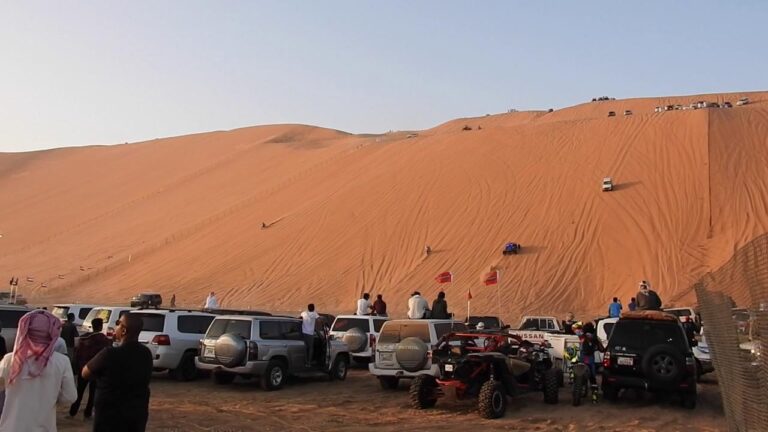
The UAE deserts are largely open sand fields and towering dunes. The data modalities you’ll encounter: fine particulate (sand), intense direct irradiance (sunlight), and rapid diurnal cooling. Practical outcomes from this environment:
- Fine sand is abrasive and invasive: zip small items, avoid open footwear that fills with grit.
- Sun intensity is high; UV exposure builds cumulatively — protective fabrics or UPF-treated garments matter.
- Temperature variance requires layering: a breathable base layer for daytime, an insulating layer for nights.
Climate & weather patterns
- Best months for desert safaris: October–April — milder daytime heat and comfortable evenings.
- Summer (June–September): daytime temps often exceed 40°C / 104°F — minimize exposure, hydrate aggressively.
- Winter (December–February): daytime 15–28°C; nights can fall to ~10–15°C (50–59°F) — add an insulating mid-layer.
Quick season & time-of-day outfit matrix
| Safari Time / Season | Typical temps (day → night) | Outfit summary |
| Morning (sunrise) | Cool → warms fast | Breathable base + light layer; long pants; closed shoes. |
| Afternoon / Sunset | Hottest → warm sunset | Breathable long sleeves, loose trousers, hat, SPF, sunglasses. |
| Evening / Overnight | Warm evening → cool night | Breathable base + sweater/jacket; socks; beanie if winter. |
| Winter (Nov–Feb) | 15–28°C day, 10–15°C night | Layering: cardigan/pashmina + jacket. |
| Summer (Jun–Sep) | 35–45°C daytime | Light linen/cotton, hydration, and avoid dark colors. |
Consider these as labeled examples; pick the nearest matching “class” for your trip.
Best fabrics & why they win
Natural breathable fibers
- Cotton & linen: natural, breathable, wicks lather, and normally has high air permeability. Linen is especially effective in very hot weather because it breathes and dries fast; it also has a flattering drape for photos.
Technical fabrics
- Performance / UPF shirts: engineered for UV defence, moisture-wicking, and quick dry. They help keep skin safer and reduce heat stress during frisky periods (dune-bashing, quad-biking).
Fabrics to avoid
- big polyester blends and tight synthetics — they trap heat and moisture, increasing perceived heat and the chance of chafing.
Layering tip
Start with a breathable base (cotton or UPF), add a lightweight overshirt or long-sleeve shell (to block abrasive sand and direct sun), and carry a compressible mid-layer (light fleece or packable down) for nighttime insulation.
Shoes
Why closed-toe shoes win: they keep fine sand out, support ankles on uneven dunes, and give better grip for walking or ascending dune faces. Think of shoes as your locomotion optimizer.
Shoe checklist
- Lace-up sneakers (lightweight) — daily use, breathable mesh with solid sole.
- Lightweight hiking shoes — better traction and ankle protection for steeper dunes or rough terrain.
- Slip-on sandals — camp-only footwear for relaxing at the BBQ (optional).
- Thick socks — blister prevention and extra warmth at night.
Activity-by-activity outfit guide
Different activities are different inference contexts; adjust your outfit accordingly.
Dune bashing
Wear: breathable long-sleeve top, full-length trousers, lace-up sneakers, secured hat or buff.
Why: high-speed rides create sand gusts; loose skirts or flowing garments are unsafe for sudden movement and can catch on equipment.
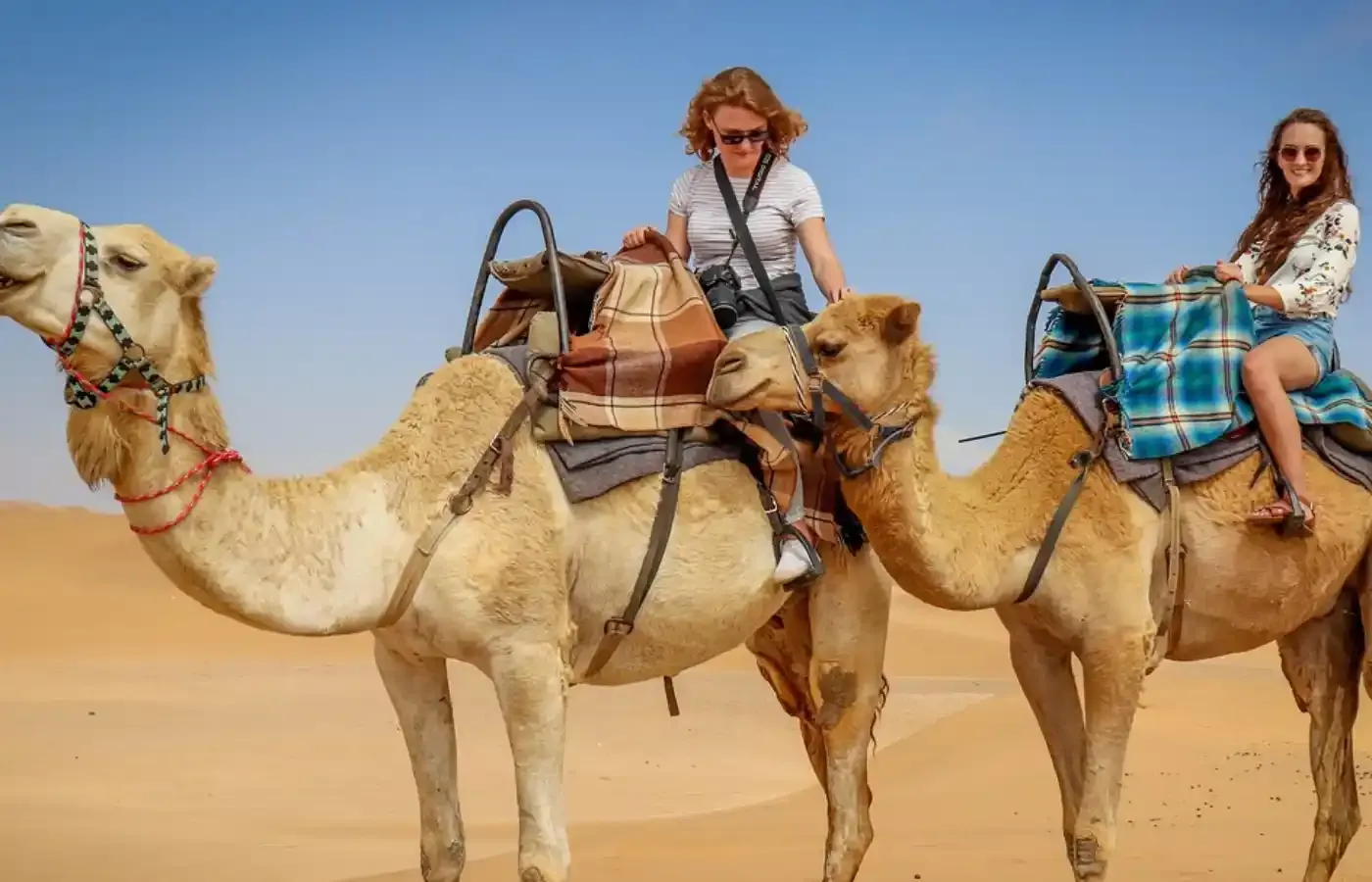
Camel ride
Wear: full-length pants (prevent chafing), closed flat shoes, sun protection, and a scarf.
Why: the camel saddle and posture are awkward; long pants avoid abrasive contact.
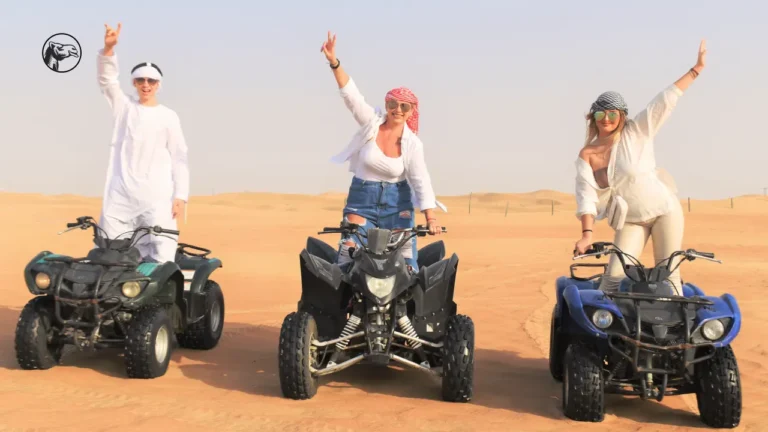
Quad-biking / dune buggy
Wear: long sleeves, protective gloves (if provided), sturdy lace-up shoes, goggles or sunglasses. Avoid long scarves or loose jewelry.
Why: active operation needs secure clothing and eye protection.
Overnight camping / BBQ
Wear: daytime outfit + insulating layer at night (light fleece or compressible puffer), beanie,e and warm socks in winter. Keep a pair of closed shoes for wandering the camp area.
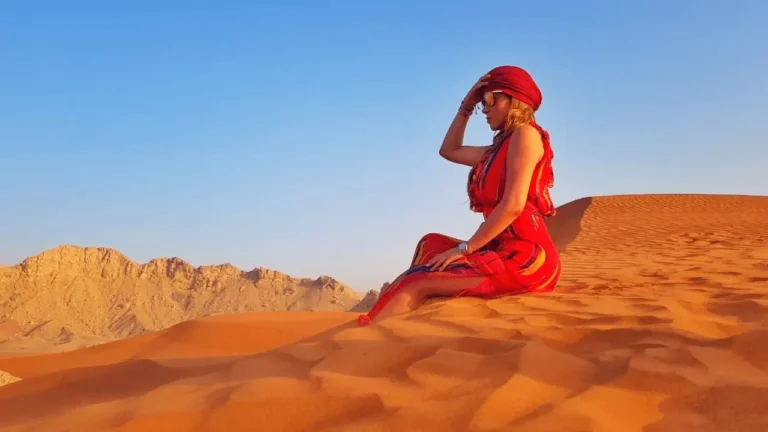
Photo / fashion-forward
Wear: flowy dresses or maxi skirts for photos — but bring a change of pants for active rides. Choose neutrals with one accent color; avoid pure white (it shows dust quickly).
Why: photo outfits can maximize visual appeal but often sacrifice safety for movement.
Modesty & local-culture rules
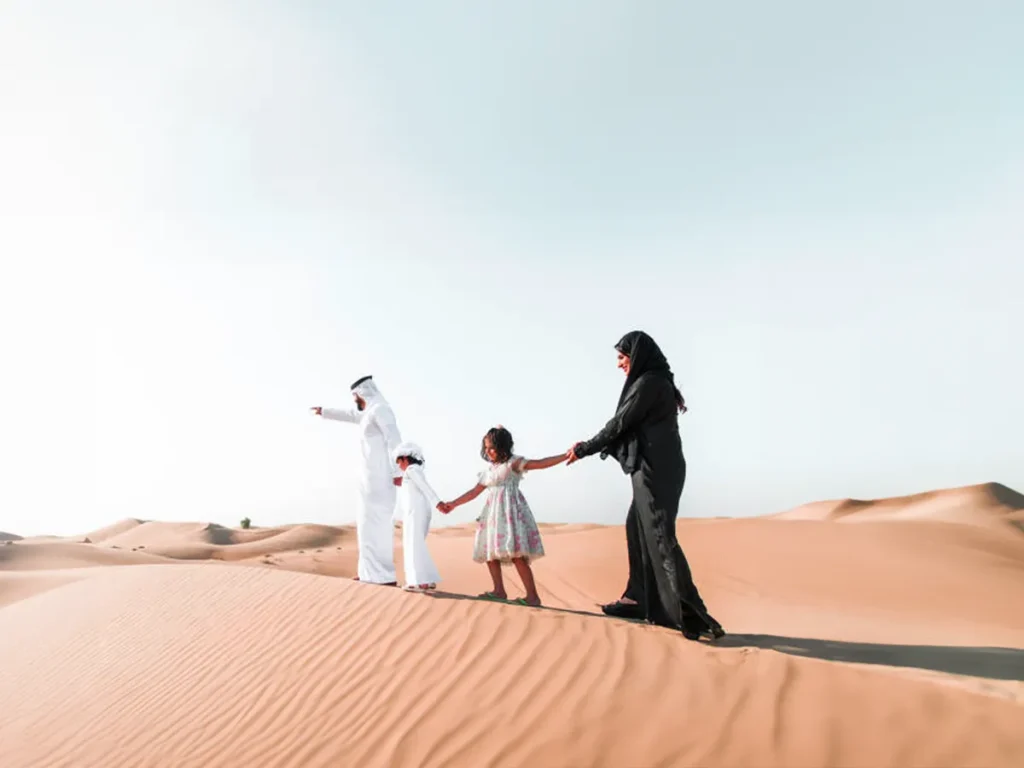
The UAE encourages modest dress in public places. Desert safari locations are Relaxed, but when in proximity to towns, mosques, or public areas, follow these guidelines:
- Coveryour shoulders and knees in public spaces.
- Avoid transparent garments when backlit; use a shawl for quick coverage.
- Wear long sleeves and trousers around towns or operators’ facilities.
Practical modesty tips
- Carry a light shawl/pashmina for rapid coverage or warmth.
- Prioritize long sleeves and long trousers in mixed public/photography settings.
- When in doubt, err on the side of modesty — it’s both respectful and comfortable.
Photo & style-forward outfit ideas
A lookbook helps readers with strong visual intent. Below are four curated outfits balancing photogenic style with the activity safety constraints.
Sunset drama
Linen maxi dress in earth tone + ankle boots + wide-brim hat. Tip: Change into pants for active rides.
Adventure-ready
Breathable UPF shirt, convertible cargo pants, lace-up sneakers, cap or buff.
Casual family
Long-sleeve cotton tee + lightweight joggers + closed shoes + sun hat. Pack spare socks and a change of clothes.
Cultural nod
Men: light linen shirt + chinos. Women: long tunic + trousers + shawl. Neutral palette + one accent (scarf or belt).
Packing checklist
Essentials
- 2 breathable long-sleeve shirts (linen, cotton, or UPF).
- 2 lightweight pants (linen/cotton or convertible).
- Closed-toe shoes (sneakers/hiking) — 1 pair.
- Light jacket/hoodie for night — 1.
- Wide-brim hat or cap + sunglasses.
Scarf/shemagh (multi-use). - Sunscreen SPF 30+ and lip balm with SPF.
- Refillable water bottle.
- Small cross-body bag or daypack (zip-closable).
- Phone power bank, zip-lock bags for electronics.
- Basic first-aid / blister plasters.
Optional but smart
- Gloves (for quad bikes).
- Dust goggles.
- Camera + lens cloth.
- Travel laundry soap for quick rinses.
- Wet wipes & hand sanitizer.
Where to buy
Create product lists grouped by use-case: “Best Travel Sneakers, “Best UPF Performance Shirts, “Best Lightweight Jackets.” For each product, include: one-line USP, price range, pros/cons, sizing notes, and a short review. Organize into buckets: Photo gear, Active gear, Budget picks, Premium picks. Include CTA buttons and affiliate links inside the CMS blocks.
Example buckets
- Active & durable — lightweight hiking shoes, breathable gaiters.
- Photo & style — linen maxi dresses, neutral-tone hats, statement belts.
- Kids & families — quick-dry sets, adjustable hats, extra socks.
- Packable warmth — compressible down jacket, fleece mid-layer.
Comparison table
| Use case | Recommended fabric/garment | Why it works | Avoid |
| Full-day sun exposure | UPF long-sleeve performance shirt | Blocks UV, wicks sweat, dries fast | Thick polyester |
| Photo-friendly days | Linen maxi/linen shirt | Breathable, flattering drape | Tight synthetics |
| Active rides (quads) | Long-sleeve technical top + cargo pants | Protection & mobility | Flowing skirts |
| Overnight camp | Fleece or light puffer + wool socks | Insulation at night | Single thin t-shirt only |
Pros & Cons
Pros
- The right clothing reduces sunburn, sand irritation, and improves activity safety.
- Layering offers adaptability for dramatic diurnal shifts.
- Closed shoes protect feet and make rides more comfortable.
Cons
- Overpacking bulky layers if you don’t select compressible options (solution: choose packable down and convertible pants).
- Photo outfits often aren’t activity-safe — bring a second outfit for rides and dusty conditions.
Survival tips & challenges
- Hydration first: carry water and sip regularly; heat exhaustion is the main risk.
- Sun exposure: reapply sunscreen every 2–3 hours or after wiping sweat/sand.
- Sand protection: Use zip-locks for small electronics; neck gaiters guard against dust gusts.
- Clothing prep: don’t wear brand-new shoes the day of the safari — break them in.
- Electronics: keep cameras/phones in zip-locks; sand is abrasive and damaging.
Tourism tips
- Best booking months: Oct–Apr for comfortable temps and ideal photography light.
- Pickup advice: confirm pickup time and vehicle type (4×4 is standard for remote trips). Ask operators about included safety gear and if they provide goggles or gloves for quad rides.
- Accessibility: dunes are challenging for mobility-limited travelers; check with operators for accessible options and vehicle adaptations.
FAQs
Yes, but full-length trousers are more practical for camel rides and to prevent sand abrasion.
Lace-up sneakers or lightweight hiking shoes with a firm sole. Avoid flip-flops or loose sandals.
Tourists are asked to dress respectfully in public spaces — avoid transparent or indecent clothing and keep shoulders/knees covered in conservative settings.
A lightweight fleece or compressible puffer works well. Winter nights can get chilly (near 10–15°C).
Long-sleeve breathable tops, sun hats, closed shoes, snacks, and a small water bottle.
Conclusion
load correctly for the desert is a small plot issue: define your constraints (activities, spice, photography priorities), collect the minimal robust characteristic set (breathable fabrics, lock shoes, protective accessories), and comprise a contingency layer for midnight freezing. Blend Practical choices with modesty to respect local norms while still getting the photos you want. If you structure your kit like an adaptive model — with layers as tokens and fabrics as features — you’ll generalize well across the variable desert domain.