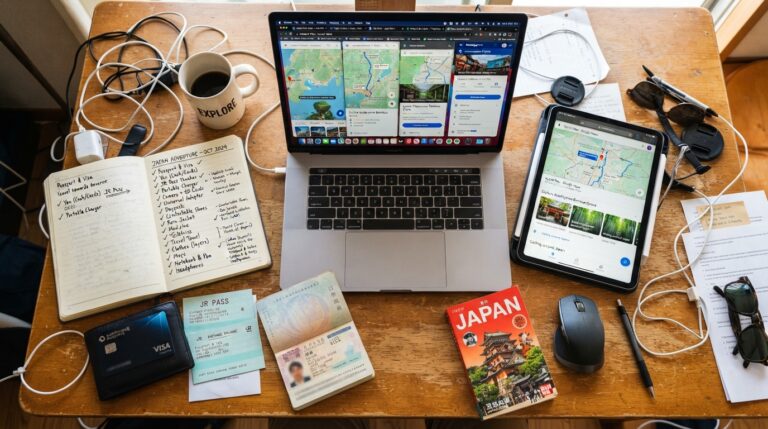


Travel involves dozens of decisions, from choosing a destination and accommodation to deciding how to spend each day after arrival. Some choices have a major effect on the journey, while others can remain flexible. The challenge is knowing which decisions deserve careful research and which can be made more casually.
Smarter travel planning does not mean researching every possible detail. It means identifying the information that matters, comparing realistic options, and confirming important facts before making commitments. With a thoughtful approach, travelers can remain prepared while still leaving enough room for spontaneity.
- Start With the Purpose of the Trip
- Use Broad Online Research for Context
- Compare Destinations According to Practical Factors
- Understand the Geography Before Booking
- Think About Total Cost Instead of Headline Price
- Read Reviews With a Critical Eye
- Choose a Few High-Priority Experiences
- Group Activities by Location
- Allow Enough Time Between Important Activities
- Keep Some Decisions Flexible
- Look for Practical Value, Not Just Attractive Offers
- Check Important Transportation Before Departure
- Use Weather to Organize Flexible Activities
- Research Restaurants Without Booking Everything
- Keep Essential Travel Information Organized
- Save Important Details Offline
- Verify Time-Sensitive Information
- Review the Following Day Each Evening
- Do Not Keep Comparing After Making a Good Decision
- Leave Space for Local Recommendations
- Make Decisions According to Impact
- Use Information to Support the Journey
Start With the Purpose of the Trip
Before comparing destinations or hotels, decide what you want from the journey. Some travelers prioritize culture and history, while others are more interested in food, shopping, outdoor activities, beaches, nightlife, or relaxation.
These priorities can help travelers ignore options that may be popular but do not match their personal interests.
Use Broad Online Research for Context
Travel guides are useful, but wider online reading can also introduce regional developments, cultural topics, public affairs, and other subjects that provide context about a destination.
During broader research, readers may encounter general resources such as Wall St South. General information can introduce subjects worth investigating further, while travel decisions involving official requirements, transportation, safety, or other important matters should be verified through appropriate current sources.
Compare Destinations According to Practical Factors
An attractive destination may not always be the most practical choice. Consider travel time, transportation costs, seasonal conditions, accommodation prices, and the activities available during your travel dates.
Comparing these factors consistently makes it easier to choose a destination that fits both your interests and your available time.
Understand the Geography Before Booking
Maps should be part of the planning process from the beginning. A hotel may look convenient in a description while actually being far from the areas travelers expect to explore.
Check the location of accommodation, airports, railway stations, major attractions, and important neighborhoods before confirming reservations.
Think About Total Cost Instead of Headline Price
The lowest advertised price is not always the best value. Flights may include baggage charges, while hotels can involve transportation costs, taxes, or other additional expenses.
Compare the complete expected cost before deciding which option provides the strongest value for the trip.
Read Reviews With a Critical Eye
Reviews can provide useful information about accommodation, tours, restaurants, and attractions, but individual opinions can vary significantly.
During general online research, travelers may encounter resources such as Product Review. The same principle that applies to reviewing products can also help with travel research: focus on recurring patterns, recent information, and details relevant to your own priorities rather than allowing a single extreme opinion to determine the decision.
Choose a Few High-Priority Experiences
Research often produces more attractions than travelers can realistically enjoy. Instead of trying to fit everything into the itinerary, identify a small number of experiences that matter most.
Reserve those activities when necessary and keep additional ideas available for flexible periods.
Group Activities by Location
Geographic planning can reduce both transportation time and fatigue. Several attractions in the same area can usually be combined more efficiently than equally interesting places on opposite sides of a city.
Saving potential activities on a map can reveal these useful clusters.
Allow Enough Time Between Important Activities
Travelers often underestimate how long ordinary journeys take in unfamiliar destinations. Waiting for transportation, navigating stations, walking between stops, and finding entrances can all add time.
Leave reasonable buffers around reservations that have strict arrival times.
Keep Some Decisions Flexible
Not every part of a trip needs to be decided before departure. Restaurants, parks, neighborhoods, shops, and many casual attractions can remain flexible.
This allows travelers to respond to weather, energy levels, local recommendations, and unexpected discoveries.
Look for Practical Value, Not Just Attractive Offers
Travelers frequently encounter deals that appear appealing at first glance. However, an inexpensive activity or booking may offer poor value if it requires inconvenient transportation, restrictive conditions, or significant additional costs.
During broader online browsing, readers may come across general resources such as Shaft Deals. When evaluating any travel-related offer, travelers should consider the complete cost, cancellation conditions, location, and whether the experience genuinely fits the itinerary before making a purchase.
Check Important Transportation Before Departure
Flights, trains, buses, and ferries can experience schedule changes. Check significant journeys through the relevant operator shortly before they are needed.
This is particularly important when one connection affects another reservation.
Use Weather to Organize Flexible Activities
Weather can influence outdoor sightseeing, hiking, beaches, viewpoints, and walking tours. A flexible itinerary allows travelers to move these activities between days when necessary.
Keep indoor alternatives available so that poor weather does not leave an entire day without useful options.
Research Restaurants Without Booking Everything
Food is an important part of many trips, but reserving every meal can make a schedule unnecessarily rigid.
Save several restaurants and cafés around the neighborhoods you plan to visit and reserve only the experiences that genuinely require advance booking.
Keep Essential Travel Information Organized
Important details can easily become scattered across emails, applications, screenshots, and messages. Keeping them organized makes travel much easier.
Store accommodation addresses, transportation bookings, attraction tickets, reservation details, and useful contact information together.
Save Important Details Offline
Internet access is useful but should not be the only way to access essential information. Connectivity can fail, mobile service may be unavailable, and phone batteries can run low.
Save important tickets, addresses, reservations, and maps offline before departure.
Verify Time-Sensitive Information
Travel information can change quickly. Attraction hours, transportation schedules, entry procedures, and local conditions may be different from what older articles describe.
Before making important decisions, verify information through current and relevant sources rather than relying entirely on early research.
Review the Following Day Each Evening
A brief evening review can prevent unnecessary problems. Check the next day’s weather, transportation, important reservations, and opening hours.
If circumstances have changed, adjust optional activities rather than forcing the original itinerary to remain unchanged.
Do Not Keep Comparing After Making a Good Decision
Online research makes it possible to compare hotels, restaurants, attractions, and tours almost indefinitely. Once a reasonable option satisfies the important requirements, continuing to search may simply create doubt.
Make the decision, record the important details, and move on to the next part of the trip.
Leave Space for Local Recommendations
Some useful travel ideas appear only after arrival. Hotel staff, guides, restaurant employees, local residents, or other travelers may suggest places that did not appear during advance research.
An itinerary with flexible periods allows travelers to consider these recommendations without sacrificing important reservations.
Make Decisions According to Impact
Not every travel decision deserves the same amount of research. A flight, hotel, or entry requirement can have major consequences, while choosing between two nearby cafés usually cannot.
Spend more time researching decisions that are expensive, difficult to change, or essential to the journey. Keep lower-impact choices more flexible.
Use Information to Support the Journey
Travelers have access to enormous amounts of information, but good planning depends on using that information selectively. The objective is not to eliminate every uncertainty before departure.
By identifying priorities, comparing realistic options, checking important details, organizing logistics, and leaving enough room for flexible decisions, travelers can make smarter choices without turning the entire trip into a research project. Good decisions create confidence, while flexibility allows the destination itself to shape the experience.