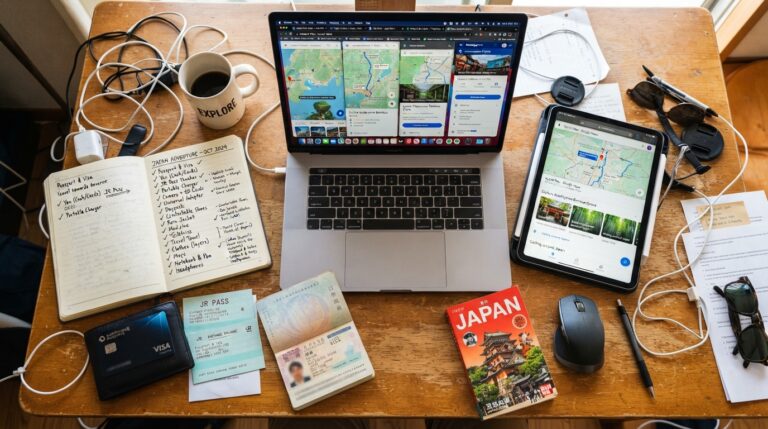

Successful travel planning is not simply about collecting as much information as possible. What matters more is finding the right information at the right stage of the journey. Some details are useful months before departure, while others become important only a few days or hours before a traveler needs them.
By organizing research around timing and relevance, travelers can make better decisions without becoming overwhelmed. Early research can shape the overall trip, current updates can help with final preparations, and a small amount of checking during the journey can keep the itinerary running smoothly.
- Begin With Broad Destination Research
- Use General Information to Discover New Ideas
- Choose the Right Season for Your Priorities
- Research Transportation Before Accommodation
- Create a Realistic Travel Budget
- Check for New Developments as Departure Approaches
- Choose a Few Essential Experiences
- Organize Sightseeing by Area
- Do Not Depend on Old Opening Hours
- Use Broader News to Understand Context
- Keep Weather-Dependent Activities Flexible
- Allow Extra Time Between Important Reservations
- Check Important Transportation the Day Before
- Keep Reservations Organized
- Make Essential Information Available Offline
- Check Tomorrow’s Plans Each Evening
- Know When Information Requires Verification
- Avoid Checking Everything Continuously
- Allow the Destination to Change Your Plans
- Review Information According to Its Importance
- Let Information Support the Trip Rather Than Control It
Begin With Broad Destination Research
When considering a new destination, start with the fundamentals. Learn about its geography, climate, transportation system, major neighborhoods, popular attractions, and typical travel seasons.
This broad understanding provides a foundation for more detailed decisions later. There is little benefit in planning individual sightseeing days before understanding how the destination itself is organized.
Use General Information to Discover New Ideas
Travel inspiration does not have to come exclusively from traditional tourism websites. General news, culture, entertainment, and lifestyle content can introduce places, events, and subjects that encourage further research.
During wider online browsing, readers may encounter general resources such as TG Daily News. Such content can serve as a starting point for discovery, while practical details that affect actual travel arrangements should be checked through appropriate current sources.
Choose the Right Season for Your Priorities
There is rarely one perfect month for every visitor. Peak season may provide favorable weather and more activities, but it can also bring larger crowds and higher prices.
Consider what matters most to you. Travelers interested in outdoor activities may prioritize weather, while budget-conscious visitors might accept slightly less predictable conditions in exchange for lower accommodation costs.
Research Transportation Before Accommodation
Before choosing where to stay, understand how travelers move around the destination. Look at airport or railway connections, public transportation, walking distances, and the locations of the areas you expect to visit most often.
A hotel that costs slightly more but offers convenient transportation can sometimes provide better overall value than a cheaper property far from the main areas of interest.
Create a Realistic Travel Budget
Transportation and accommodation are only part of the cost of a trip. Travelers should also consider food, local transportation, attraction tickets, activities, shopping, and unexpected expenses.
Using realistic estimates rather than the lowest possible prices creates a budget that is easier to follow once the journey begins.
Check for New Developments as Departure Approaches
Research completed months earlier may not reflect current conditions. As departure gets closer, check whether transportation schedules, attractions, local events, or other relevant circumstances have changed.
During broad online research, travelers may encounter information-oriented resources such as Get News Update. General updates can draw attention to developments worth investigating, but important travel decisions should be based on verified information from the relevant authority, operator, venue, or service provider.
Choose a Few Essential Experiences
Trying to include every highly rated attraction usually creates an unrealistic itinerary. Instead, choose a small number of experiences that genuinely matter to you.
These activities can become the core of the trip, while everything else remains optional. This approach reduces pressure and gives travelers more control over their time.
Organize Sightseeing by Area
Once attractions have been selected, place them on a map. Look for groups of places that can conveniently be visited together.
Exploring one area at a time reduces unnecessary transportation and gives travelers more opportunities to discover local restaurants, shops, streets, and public spaces between major attractions.
Do Not Depend on Old Opening Hours
Opening times found in older articles or travel guides may have changed. Attractions can introduce seasonal schedules, maintenance closures, special events, or new ticketing arrangements.
If visiting a particular attraction is important, check its current information shortly before the planned visit.
Use Broader News to Understand Context
Travelers sometimes benefit from knowing more about a destination than what appears in tourism guides. Current affairs and general reporting can provide additional context about events, communities, infrastructure, or regional developments.
Readers exploring broader information may come across resources such as Globe News 12. If something discovered through general reporting appears relevant to a journey, confirm its timing, location, and practical impact before making significant changes to travel plans.
Keep Weather-Dependent Activities Flexible
Weather forecasts become more useful as the travel date approaches. Outdoor activities such as hiking, beaches, viewpoints, and walking tours can often be moved between days when the itinerary remains flexible.
Prepare several indoor alternatives so that unfavorable conditions do not leave an entire day without a plan.
Allow Extra Time Between Important Reservations
Travelers often underestimate how long it takes to move around an unfamiliar destination. Waiting for transportation, navigating stations, traffic, and walking between locations can all add unexpected time.
Avoid scheduling important reservations immediately after one another. Reasonable buffers make the itinerary much more comfortable.
Check Important Transportation the Day Before
Flights, trains, buses, and ferries can experience timetable changes or disruptions. Before an important journey, confirm the departure details with the operator.
This simple habit can provide enough time to respond if the schedule has changed.
Keep Reservations Organized
Booking information can become scattered across emails, applications, screenshots, and messages. Searching for a confirmation while standing at a station or hotel reception is unnecessary stress.
Keep transportation reservations, accommodation details, attraction tickets, important addresses, and booking references together in an easily accessible location.
Make Essential Information Available Offline
Travelers should prepare for moments when internet access is unavailable. Mobile coverage can disappear, roaming may not work as expected, and a Wi-Fi connection can fail.
Save important tickets, addresses, reservations, and maps offline before they are needed.
Check Tomorrow’s Plans Each Evening
A short evening review can make the following day much easier. Look at weather conditions, fixed reservations, attraction hours, and important transportation.
If something has changed, adjust optional activities before going to sleep rather than discovering the problem after arriving at the destination.
Know When Information Requires Verification
Different sources serve different purposes. Blogs, videos, general publications, reviews, and social media can provide ideas and personal perspectives, but important factual information deserves stronger verification.
For entry requirements, emergency information, transportation schedules, severe weather, and official closures, prioritize the relevant government authority, operator, attraction, or other responsible organization.
Avoid Checking Everything Continuously
Once essential information has been confirmed, travelers should give themselves permission to stop researching. Constantly searching for newer recommendations can create unnecessary uncertainty.
Most ordinary sightseeing days require only a small amount of current information. The rest of the time can be spent experiencing the destination.
Allow the Destination to Change Your Plans
No amount of advance research can predict every interesting discovery. Travelers may find a neighborhood they want to explore longer, receive a useful local recommendation, or discover an event after arriving.
Leaving open periods in the itinerary makes it possible to follow these opportunities without sacrificing important reservations.
Review Information According to Its Importance
Not every travel detail requires the same level of attention. A restaurant recommendation can usually tolerate some uncertainty, while a flight departure time or entry requirement cannot.
Spend the most research effort on decisions with significant financial, logistical, or practical consequences. Lower-impact choices can remain more spontaneous.
Let Information Support the Trip Rather Than Control It
Good travel research should make a journey easier, not create an endless cycle of checking and comparison. Broad information can provide inspiration, current updates can identify meaningful changes, and official sources can confirm critical details.
By researching at the right times, verifying what matters, organizing essential information, and maintaining a flexible itinerary, travelers can prepare confidently without trying to predict every part of the journey. Once the important details are settled, the destination itself should become the focus.