
Introduction
When people search for the desert in California, they usually want a simple way to understand where it is, what regions it includes, and which places are worth visiting. California’s desert land is not one flat stretch of sand. It includes the Mojave, Colorado, and Great Basin desert regions, each with its own climate, scenery, and travel experience. This guide gives you a clear California desert map, a quick region breakdown, the best parks to visit, and practical travel tips so you can plan your trip with confidence.
- Quick Answer: What Desert Is in California?
- California Desert Map and Location
- Where the Deserts Are in California
- The Three Main California Desert Regions
- 1. The Mojave Desert
- 2. The Colorado Desert
- 3. The Great Basin Desert
- California Desert Climate and Weather
- Why California Deserts Are So Dry
- Mojave Desert Climate
- Colorado Desert Climate
- Great Basin Desert Climate
- Climate Comparison Table
- Landscape Features of the California Desert
- Joshua Tree as a Landscape Example
- Death Valley as a Landscape Example
- Anza-Borrego as a Landscape Example
- Best Parks and Places to Visit in the California Desert
- 1. Joshua Tree National Park
- 2. Death Valley National Park
- 3. Anza-Borrego Desert State Park
- 4. Mojave National Preserve
- Best California Desert Destinations Table
- Flora in the California Desert
- Joshua Trees
- Creosote Bush
- Desert Wildflowers
- Cacti and Succulents
- Fauna in the California Desert
- Desert Tortoise
- Birds of the Desert
- Night Life in the Desert
- Human History and Culture in California’s Deserts
- Indigenous Presence
- Conservation History
- Mining and Exploration
- Travel Tips for Visiting the Desert in California
- 1. Travel in Cooler Months
- 2. Carry More Water Than You Think You Need
- 3. Start Early
- 4. Watch the Weather
- 5. Keep Fuel and Distance in Mind
- 6. Stay on Marked Roads and Trails
- 7. Protect Yourself From Sun and Heat
- Best Activities in the California Desert
- Road Trips
- Hiking
- Photography
- Stargazing
- Camping
- Interesting Facts About the Desert in California
- Environmental Issues and Conservation
- Why Conservation Matters
- Climate Stress
- Protecting Fragile Habitats
- Seed Banking and Restoration
- Pros and Cons
- FAQs
- Conclusion
Quick Answer: What Desert Is in California?
California has three major desert regions:
- Mojave Desert
- Colorado Desert
- Great Basin Desert
These three names explain most of what people want to know when they search for the desert in California. Together, they help define the state’s dry eastern and southeastern zones, show why some desert parks feel hot and rugged while others feel cooler and higher, and explain why California desert scenery can shift so much from one location to another.
A simple way to understand the difference is this:
The Mojave Desert is the classic high-desert landscape with Joshua trees, wide-open basins, and sharp temperature swings.
The Colorado Desert is the hottest low desert of Southern California, often best visited in winter and spring.
The Great Basin Desert extends into eastern California, creating a cooler, higher-elevation desert edge.
California Desert Map and Location
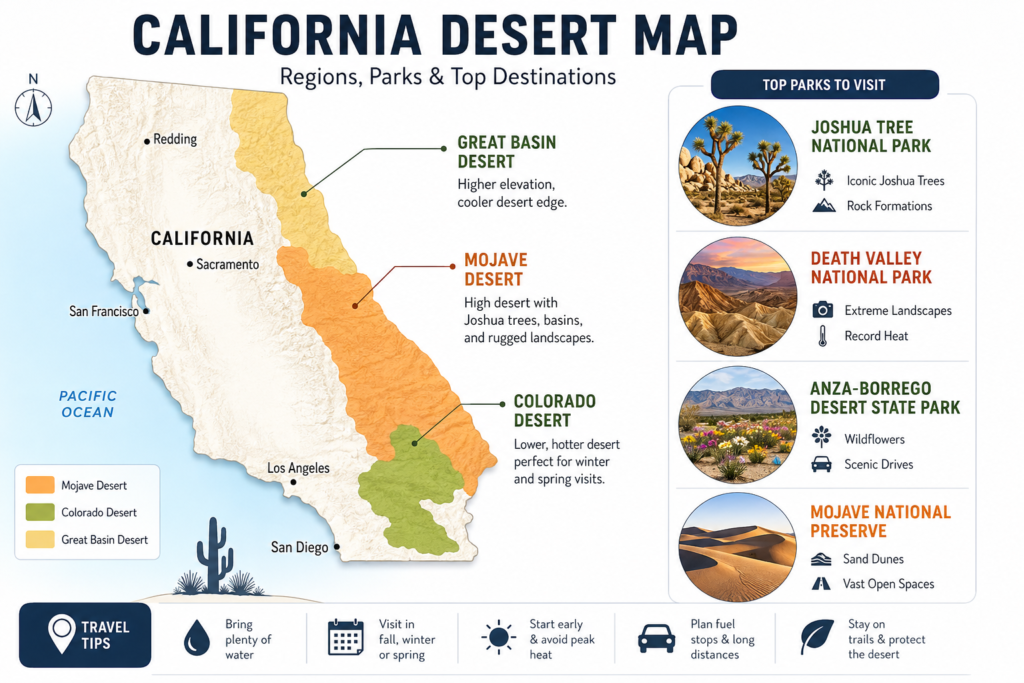
A useful California desert map should do more than draw a boundary line. It should help the reader understand where the desert sits in relation to the Pacific coast, mountain chains, valleys, and major parks. In other words, the map should explain context, not just location.
California’s desert lands are mainly found in the eastern and southeastern parts of the state. They lie in the rain shadow of mountain ranges that intercept moist air coming from the Pacific Ocean. That means the air rises over the mountains, cools down, releases much of its moisture on the coastal side, and then reaches the desert side much drier. This is one of the main reasons California’s deserts are so arid.
That rain shadow effect is a key geographic concept behind the California desert climate. It explains why the eastern side of the state often has dry valleys, sparse vegetation, and powerful seasonal temperature variation. It also helps explain why desert travel in California can feel so different from coastal travel, even when the two places are not very far apart in driving distance.
Where the Deserts Are in California
The three desert regions show up in different parts of the state, and each has its own personality:
| Desert Region | Location in California | General Feel | Best Known Examples |
| Mojave Desert | Mainly southeastern California | High desert, open basins, dramatic temperature shifts | Joshua Tree National Park, Death Valley National Park, Mojave National Preserve |
| Colorado Desert | Southern California low desert | Hotter, lower, spring-friendly | Anza-Borrego Desert State Park, Salton Sea area, Coachella Valley |
| Great Basin Desert | Eastern California edge | Cooler, higher, basin-and-range terrain | Eastern Sierra desert fringe and nearby high desert zones |
This simple table gives readers a fast snapshot of the California desert regions and helps them orient themselves on the map.
The Three Main California Desert Regions
The most effective way to understand the desert in California is to compare the three main regions side by side. Each one has a different elevation, climate profile, ecological pattern, and travel experience.
1. The Mojave Desert
The Mojave Desert is the best-known desert region in California. It is the place many people imagine when they think about the American Southwest: wide horizons, dry air, sculpted rock, and the unmistakable silhouette of the Joshua tree.
The Mojave is usually called a high desert, which means it sits at a higher elevation than the lower and hotter desert zones farther south. That matters because elevation strongly shapes climate. In higher desert areas, nights can become surprisingly cold, daytime temperatures can swing sharply, and plant communities often differ from those found in the hotter lowlands.
What Makes the Mojave Special?
The Mojave Desert is known for:
- Joshua trees
- Large desert basins
- Dry lakebeds
- Rocky hills and rugged formations
- Endless open space
- Cold winter nights in some areas
- Extremely hot summer days
In semantic terms, the Mojave is the “classic California desert” that searchers often have in mind. It is the landscape of high visibility, wide-angle views, and dramatic contrast. It feels open, stark, and visually unforgettable.
Famous Places in the Mojave Desert
Some of California’s most iconic desert destinations are located in or near the Mojave:
- Joshua Tree National Park
- Death Valley National Park
- Mojave National Preserve
These places are important because they help visitors see that the Mojave is not one uniform terrain. It contains different textures, elevations, and ecological zones. One park may be known for giant boulders and Joshua trees. Another may feature dunes and volcanic geology. Another may be defined by extreme heat and a basin far below sea level.
2. The Colorado Desert
The Colorado Desert is part of the larger Sonoran Desert system and is found in Southern California. Compared with the Mojave, it is lower, warmer, and often more suitable for winter and spring travel.
This region is a crucial part of the California desert region’s story because it shows that “desert” does not mean one fixed condition. Some desert landscapes are hotter and lower, some are cooler and higher, and some are more seasonally comfortable for visitors. The Colorado Desert is the one many travelers prefer during cooler months because summer heat can be intense.
What Makes the Colorado Desert Special?
The Colorado Desert is known for:
- Low elevation
- Hot temperatures
- Spring wildflower displays in strong rainfall years
- Palm oases
- Washes and canyons
- Broad desert valleys
This is a desert of warmth, openness, and seasonal reward. It can look soft and expansive in winter light, and it often becomes especially beautiful after winter rains bring color to the ground.
Famous Places in the Colorado Desert
The strongest example of this region is:
- Anza-Borrego Desert State Park
Anza-Borrego is one of the best places to experience the Colorado Desert’s scale, silence, and natural beauty. It has massive open spaces, scenic backroads, flowering season highlights, and a feeling of remote desert freedom that makes it one of California’s most memorable outdoor destinations.
3. The Great Basin Desert
The Great Basin Desert reaches into eastern California and gives the state a higher, cooler desert edge. It is part of a much larger interior desert system that extends across several western states.
This region may not be as famous to casual travelers as the Mojave or Colorado Desert, but it is essential for understanding the broader California desert map. It adds another layer of geographic complexity and shows that the state’s dry country is not confined to just one type of landscape.
What Makes the Great Basin Desert Special?
The Great Basin Desert is known for:
- Higher elevation
- Cooler conditions than the lower deserts
- Basin-and-range scenery
- Broad valleys and mountain margins
- Strong seasonal variation
This region is especially useful for travelers and geography-minded readers who want to see the full spectrum of the desert in California, not just the famous headline destinations.
California Desert Climate and Weather
The California desert climate is dry, but not uniform. That is one of the most important things to understand if you are planning a trip, studying the geography, or comparing desert ecosystems.
Many people think all deserts are equally hot all the time. In reality, California’s deserts change with elevation, season, latitude, and local terrain. A high desert can feel very different from a low desert. A winter morning can feel crisp and cold. A summer afternoon can feel severe and unforgiving.
Why California Deserts Are So Dry
California’s deserts remain dry because of rain shadow conditions. Mountain ranges block moist ocean air, forcing it to rise and cool before it reaches the desert side. The result is a much drier atmosphere on the lee side of the mountains.
This process is one of the core reasons the eastern part of the state supports such distinctive desert ecosystems. The landscape receives limited rainfall, so plants and animals must adapt to heat, drought, and extreme seasonal shifts.
Mojave Desert Climate
The Mojave Desert climate includes:
- Hot summers
- Cool or cold winters in some places
- Very low rainfall
- Large day-night temperature swings
This means that a Mojave afternoon can feel blazing hot, while the same location may become quite chilly after sunset. That temperature contrast is one reason the Mojave feels so dramatic and memorable.
Colorado Desert Climate
The Colorado Desert climate is lower and hotter. It is often most comfortable during the winter and early spring, when visitors can Enjoy the scenery without dealing with peak heat. Summer temperatures can be intense, so timing is important.
Great Basin Desert Climate
The Great Basin Desert climate tends to be cooler and higher in elevation. It still has dry air, sparse rainfall, and strong seasonal changes, but it often feels less harsh than lower desert zones during parts of the year.
Climate Comparison Table
| Region | Climate Pattern | Travel Implication |
| Mojave Desert | Hot summers, cold winter nights in some places, and very low rainfall | Best in fall, winter, and spring |
| Colorado Desert | Hot low desert, mild winters, strong spring bloom potential | Great for winter and spring trips |
| Great Basin Desert | Cooler, higher elevation, wider seasonal variation | Better for travelers avoiding intense desert heat |
This comparison helps travelers align their plans with the California desert climate and choose the right season for their goals.
Landscape Features of the California Desert
One of the biggest misconceptions about the desert in California is that it is all sand. That idea is too narrow. In truth, California’s desert country includes a wide variety of terrain and geological forms.
You can find:
- Dunes
- Dry lakes
- Salt flats
- Mountain ranges
- Rocky canyons
- Granite boulders
- Oases
- Washes
- Desert scrub
- Wildflower fields after rain
This diversity makes California desert landscapes visually compelling and ecologically important. They are not empty. They are active, textured, and full of subtle detail. In NLP terms, they are associated with words like rugged, remote, arid, expansive, dramatic, and fragile.
Joshua Tree as a Landscape Example
Joshua Tree National Park is one of the best places to understand desert variety. The park includes rugged mountains, flat valleys, dry wash corridors, oases, and famous granite rock formations. It is also home to the Joshua tree itself, which gives the park an unforgettable identity.
Joshua Tree is especially valuable for first-time visitors because it offers many classic desert elements in one place. You can see open land, iconic flora, unique geology, and broad scenic views without needing to travel between multiple desert systems.
Death Valley as a Landscape Example
Death Valley National Park represents the extreme side of the desert in California. It includes below-sea-level basins, towering peaks, salt flats, and landforms that appear almost otherworldly at sunrise or sunset. The park is a powerful example of how geology, climate, and time shape desert terrain.
Death Valley also demonstrates how the desert can be both severe and visually spectacular. It is harsh, but it is never dull. Its colors, shadows, ridgelines, and broad basins make it one of the most striking desert places in North America.
Anza-Borrego as a Landscape Example
Anza-Borrego Desert State Park offers a different desert experience. It has washes, cacti, palm groves, dirt roads, wildflower areas, and broad scenic backdrops. It feels open, sunlit, and spacious, with a quieter atmosphere than some of the more visited national parks.
For many travelers, Anza-Borrego is the place where the Colorado Desert feels most approachable and immersive.
Best Parks and Places to Visit in the California Desert
If someone wants to explore the desert in California, these are the four best places to begin. Each one showcases a different aspect of the region’s climate, ecology, and visitor appeal.
1. Joshua Tree National Park
Joshua Tree National Park is one of the most iconic desert destinations in the United States. It is especially important because it sits where two desert ecosystems meet, making it a key destination for understanding the complexity of the California desert.
Why Joshua Tree Stands Out
Joshua Tree is famous for:
- Joshua trees
- Giant boulders
- Scenic drives
- Rock climbing
- Desert hiking
- Night skies
- Two desert ecosystems in one park
It is a strong choice for first-time visitors because it is both beautiful and easy to understand. The scenery is distinctive, the access is manageable, and the park captures the essence of the desert in California without feeling too overwhelming.
Best Time to Visit Joshua Tree
The best seasons are:
- Fall
- Winter
- Spring
Summer can be very hot, so most visitors prefer the cooler months for hiking, sightseeing, and photography.
2. Death Valley National Park
Death Valley National Park represents the extreme, high-intensity side of the desert in California. It is the hottest, driest, and lowest national park in the United States, which gives it a global reputation and a powerful sense of place.
Why Death Valley Stands Out
Death Valley is known for:
- Record heat
- Very low rainfall
- Salt flats
- Huge basins
- Mountain views
- Rare wildflower blooms after rain
- Strong seasonal contrast
It is one of the best locations for seeing how dramatic desert geography can be. It also reminds visitors that the desert is not only beautiful, but potentially dangerous if approached without preparation.
Best Time to Visit Death Valley
The best time is:
- Late fall
- Winter
- Early spring
Summer travel can be risky because temperatures may become extremely high. For safety and comfort, cooler seasons are the best choice.
3. Anza-Borrego Desert State Park
Anza-Borrego Desert State Park is California’s largest state park and one of the most significant places in the Colorado Desert region.
Why Anza-Borrego Stands Out
Anza-Borrego is known for:
- Wide, open desert scenery
- Wildflowers in strong rain years
- Palm groves
- Canyons
- Dirt roads
- Hiking and scenic driving
- Large spaces with fewer crowds than some national parks
For many travelers, this is one of the best places to experience the California desert in a spacious, authentic, and less congested environment.
Best Time to Visit Anza-Borrego
The best time is:
- Winter
- Spring
These seasons are ideal for comfortable temperatures and, in the right year, beautiful bloom conditions.
4. Mojave National Preserve
Mojave National Preserve offers a large-scale desert experience that feels remote, expansive, and raw. It is less crowded than some of the headline parks, which makes it appealing to travelers who want solitude, open roads, and a stronger sense of desert scale.
Why Mojave National Preserve Stands Out
It is known for:
- Huge desert spaces
- Dunes
- Joshua trees
- Volcanic features
- Quiet roads
- Long open horizons
This preserve is perfect for visitors who want to feel the full size of the Mojave Desert and experience a quieter, more isolated side of California’s desert country.
Best Time to Visit Mojave National Preserve
The best time is:
- Fall
- Winter
- Spring
Those cooler seasons make driving, hiking, and exploring much more pleasant.
Best California Desert Destinations Table
| Destination | Main Region | What Stands Out | Best Season |
| Joshua Tree National Park | Mojave + Colorado transition | Two ecosystems, boulders, Joshua trees, and climbing | Fall, winter, spring |
| Death Valley National Park | Mojave Desert | Extreme heat, low elevation, dramatic geology | Late fall through early spring |
| Anza-Borrego Desert State Park | Colorado Desert | Largest state park, wildflowers, canyons, backroads | Winter and spring |
| Mojave National Preserve | Mojave Desert | Huge preserve, dunes, volcanic features, open desert | Cooler months |
This quick reference makes it easier for travelers to choose the destination that matches their interests, comfort level, and season of travel.
Flora in the California Desert
The story of California desert wildlife and plant life begins with survival. Desert plants must adapt to heat, scarce rainfall, dry soil, strong sunlight, and long periods with little water. Their forms are shaped by pressure, and their adaptations are a major part of what makes desert ecology so fascinating.
Many desert plants survive by:
- Conserving water efficiently
- Developing thick or tough leaves
- Flowering quickly after rain
- Growing near washes or oases
- Building deep root systems
Joshua Trees
The Joshua tree is one of the most recognizable symbols of the desert in California. It is closely tied to the Mojave Desert and gives the landscape much of its signature identity.
Creosote Bush
Creosote bush is another common desert plant. It is hardy, low-growing, and highly adapted to dry conditions. It may not be as famous as the Joshua tree, but it is ecologically important and widespread.
Desert Wildflowers
After rain, many California desert areas can burst into color. This is one reason spring is such a popular travel season. In a good year, even a dry and seemingly barren landscape can suddenly bloom with bright flowers and vivid visual contrast.
Cacti and Succulents
The Colorado Desert and other desert areas of California also support cacti and succulents that store water and survive with clever biological strategies. These plants are part of the rich botanical texture of the region.
Fauna in the California Desert
The California desert wildlife story is much richer than many people expect. Desert animals often avoid the hottest part of the day and become active at dawn, dusk, or night. Their rhythms are closely tied to heat, food availability, and water scarcity.
Animals you may see include:
- Lizards
- Snakes
- Birds
- Desert tortoises
- Coyotes
- Small mammals
- Insects
- Bighorn sheep in some regions
Desert Tortoise
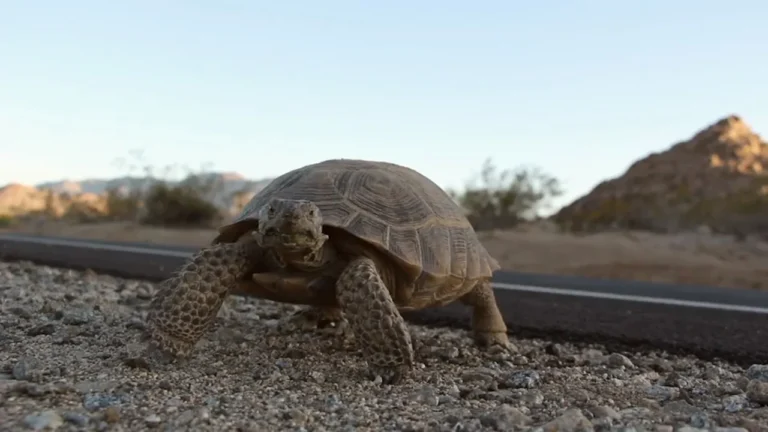
The desert tortoise is one of the most important species in the Mojave and nearby desert areas. It is often seen as a symbol of how fragile desert ecosystems are, and why careful protection matters.
Birds of the Desert
Desert birds frequently use washes, shrubs, and oases for food, shelter, and nesting. Many are specially adapted to heat, dryness, and patchy habitats.
Night Life in the Desert
A large number of desert animals are active at night. This behavior helps them avoid extreme daytime temperatures and conserve energy and water.
Human History and Culture in California’s Deserts
The desert in California is not empty land. It has deep human history, cultural meaning, and long-standing connections to Indigenous communities, explorers, settlers, conservationists, and travelers.
Indigenous Presence
Many desert regions in California have long histories of Indigenous life, movement, trade, ceremony, and survival. This matters because it shows that the desert is not just a scenic backdrop. It is a living cultural landscape with memory, significance, and continuity.
Conservation History
California’s deserts were later shaped by conservation efforts, especially the establishment of public lands, protected areas, and national parks. These efforts helped preserve large desert landscapes for future generations and created spaces where visitors can experience the region responsibly.
Mining and Exploration
Mining, frontier travel, and exploration also left their mark on the desert. These historical layers are part of the human story embedded in California’s dry regions, and they add depth to any serious pillar article on the topic.
Travel Tips for Visiting the Desert in California
A desert trip can be unforgettable, but it also requires planning, awareness, and respect for the environment. These California desert travel tips are simple, practical, and essential.
1. Travel in Cooler Months
The best time for most visitors is:
- Late fall
- Winter
- Early spring
These seasons are safer, more comfortable, and more enjoyable for hiking, sightseeing, and photography.
2. Carry More Water Than You Think You Need
Water is critical in the desert. Even short excursions can become uncomfortable if you underestimate the heat or distance between services.
3. Start Early
Morning is the best time for hiking and exploring. Temperatures are lower, the light is beautiful, and the land often feels calmer and more inviting.
4. Watch the Weather
Desert weather can change quickly. Heat, wind, and sudden storms can all influence your plans, so staying aware of forecasts is important.
5. Keep Fuel and Distance in Mind
Some desert areas are remote. Gas stations may be far apart, and service can be limited. Planning helps avoid unnecessary risk.
6. Stay on Marked Roads and Trails
Desert ecosystems are fragile. Off-road driving or wandering off-trail can damage soil, vegetation, and habitat that may take years to recover.
7. Protect Yourself From Sun and Heat
Use:
- Hats
- Sunscreen
- Light clothing
- Sunglasses
- Shade whenever possible
The desert may seem calm, but the sun can be intense even when the air feels mild.
Best Activities in the California Desert
The desert in California is not only for geographers and road-trippers. It also supports a wide range of travel experiences and outdoor activities.
Road Trips
Wide roads, scenic byways, and huge horizons make the California desert country perfect for road travel. Long drives often become part of the experience itself.
Hiking
Many parks offer trails for beginners, casual walkers, and more experienced hikers. Some routes are short and easy, while others are longer and more demanding.
Photography
The desert offers dramatic light, shadow, texture, and space. Sunrise and sunset are especially compelling for photography because they reveal the land in warm, vivid layers.
Stargazing
Night skies in desert areas can be extraordinary because of low light pollution. This makes the desert one of the best regions in California for seeing stars clearly.
Camping
Camping gives visitors a more immersive desert experience. It allows you to enjoy the silence, the night sky, and the feeling of being surrounded by open land.
Interesting Facts About the Desert in California
Here are some memorable facts that help strengthen the article and make it more useful for readers:
- Joshua Tree National Park is famous because two desert ecosystems meet there.
- Death Valley National Park is the hottest, driest, and lowest national park in the United States.
- Anza-Borrego Desert State Park is California’s largest state park.
- The Mojave Desert is the most famous California desert region for classic desert scenery.
- The Colorado Desert is especially popular for cooler-season travel.
- The Great Basin Desert adds a higher, cooler desert edge to California’s geography.
These details help readers understand both the scale and the diversity of California’s dry landscapes.
Environmental Issues and Conservation
California’s deserts are beautiful, but they are also environmentally sensitive. That sensitivity is one of the reasons conservation is so important.
Why Conservation Matters
Desert ecosystems recover slowly after damage. Because of that, careless development, off-road activity, littering, and climate-related stress can cause long-lasting harm.
Climate Stress
Hotter temperatures and changing rainfall patterns can make survival harder for certain plants and animals. Even small ecological shifts can have large effects in a dry environment.
Protecting Fragile Habitats
Some desert lands contain:
- Rare plants
- Threatened animals
- Cultural sites
- Sacred places
- Sensitive soil and vegetation
This is why national parks, preserves, and state parks play such an important role.
Seed Banking and Restoration
Modern conservation in desert regions includes long-term planning. That can mean collecting seeds, restoring damaged habitat, and protecting species that may struggle as conditions change.
Pros and Cons
Every travel destination has strengths and challenges, and the desert in California is no exception.
Pros
- Beautiful and varied scenery
- Famous parks and preserves
- Excellent winter and spring travel
- Rich wildlife and geology
- Strong photography and stargazing opportunities
Cons
- Dangerous summer heat in some areas
- Long distances between services
- Limited shade and water
- Fragile ecosystems
- Remote roads that require planning
A good traveler respects both the beauty and the risk. That balance is part of what makes desert travel rewarding.
FAQs
California has three main desert regions: the Mojave Desert, the Colorado Desert, and the Great Basin Desert.
The Mojave Desert is the largest desert region commonly associated with California.
Joshua Tree National Park is often the best starting point because it is iconic, easy to explore, and shows two desert ecosystems in one place.
Death Valley is part of the Mojave Desert.
The best time for most visitors is late fall through early spring.
Conclusion
California’s desert is a diverse landscape comprising the Mojave, Colorado, and Great Basin deserts. From Joshua Tree and Death Valley to Anza-Borrego and Mojave National Preserve, each area offers something different in climate, scenery, and outdoor experience. Whether you are planning a road trip, a hiking getaway, or a photography visit, Understanding the California desert map helps you choose the right place and the best season to go.