
Introduction
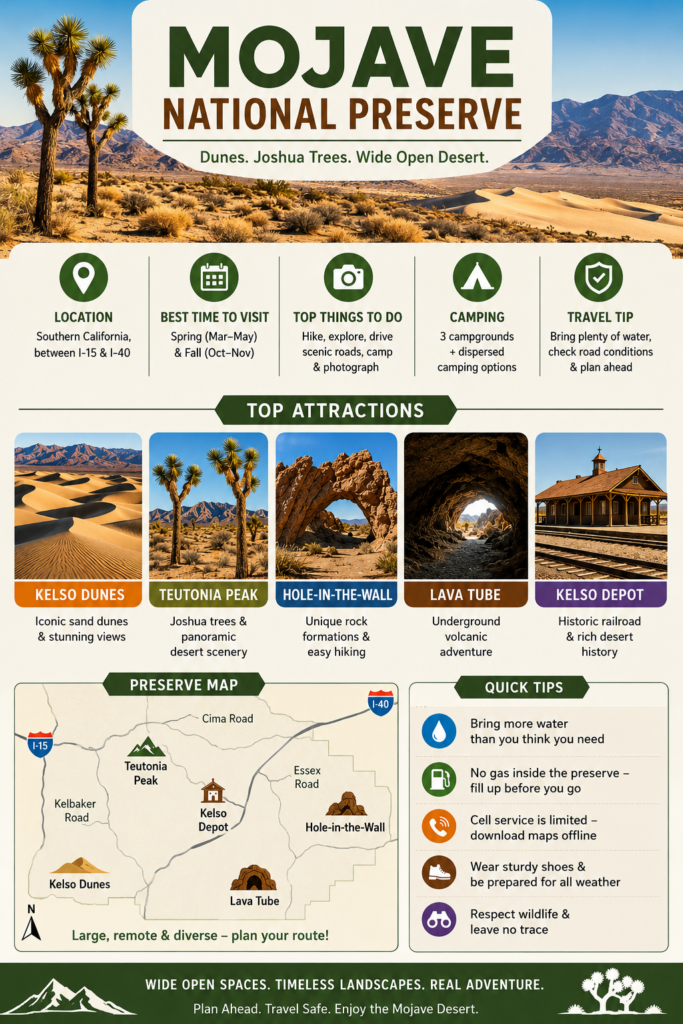
Mojave National Preserve is a vast and peaceful desert destination in Southern California, known for its dunes, Joshua trees, volcanic features, and quiet open landscapes. It offers a true wilderness experience for travelers who enjoy hiking, camping, scenic drives, and desert photography. This guide covers the preserve’s location, top attractions, camping options, map, best time to visit, and safety tips to help you plan a smooth and memorable trip.
- Overview of Mojave National Preserve
- Why Mojave National Preserve Is Worth Visiting
- Mojave National Preserve Location
- Where is Mojave National Preserve?
- Main access roads
- Why location matters
- Mojave National Preserve Map and Geography
- Why the map matters
- Geography at a glance
- A simple way to think about the preserve map
- Climate and Weather in Mojave National Preserve
- What the weather is like
- Summer weather
- Winter weather
- Spring and fall
- Wildflower season
- Landscapes That Make Mojave National Preserve Special
- Kelso Dunes
- Teutonia Peak and Cima Dome
- Hole-in-the-Wall and Rings Loop
- Lava Tube
- Historic railroad corridors and desert valleys
- Top Stops at a Glance
- Things to Do in Mojave National Preserve
- 1. Hike Kelso Dunes
- 2. Hike Teutonia Peak Trail
- 3. Explore Hole-in-the-Wall
- 4. Visit the Lava Tube
- 5. Drive scenic desert roads
- 6. Visit Kelso Depot and the historic railroad area
- 7. Camp under the desert sky
- 8. Photograph wildlife and landscapes
- Flora: Plants That Define the Preserve
- Creosote bush
- Joshua trees
- Wildflowers
- Fauna: Wildlife in Mojave National Preserve
- Desert tortoise
- Other wildlife
- Wildlife viewing tips
- Best time for wildlife activity
- Human History and Culture
- Long human connection to the desert
- Mojave Road history
- Railroad history
- Mining and settlement
- Why history matters for visitors
- Camping in Mojave National Preserve
- Developed campgrounds
- Mid Hills
- Hole-in-the-Wall
- Black Canyon
- Dispersed camping and backpacking
- What to remember
- Camping tips
- Best Time to Visit Mojave National Preserve
- Spring
- Fall
- Summer
- Winter
- Best overall choice
- Safety Tips for Mojave National Preserve
- 1. Bring enough water
- 2. Fill up your gas tank before entering
- 3. Do not rely on cell service
- 4. Use official maps
- 5. Watch road conditions
- 6. Protect yourself from heat and cold
- 7. Drive carefully
- 8. Stay on legal roads and trails
- Simple safety rule
- Travel Tips for First-Time Visitors
- Best travel approach
- Good first-time route idea
- Another good route idea
- Packing list
- Driving tip
- One-Day Itinerary Example
- Morning
- Midday
- Afternoon
- Evening
- Two-Day Itinerary Example
- Day 1: North and central preserve
- Day 2: South and east preserve
- Pros and Cons
- Pros
- Cons
- Interesting Facts About Mojave National Preserve
- Environmental Issues and Conservation
- Main conservation concerns
- Why conservation matters
- Fire and habitat damage
- Visitor responsibility
- FAQs
- Conclusion
Overview of Mojave National Preserve
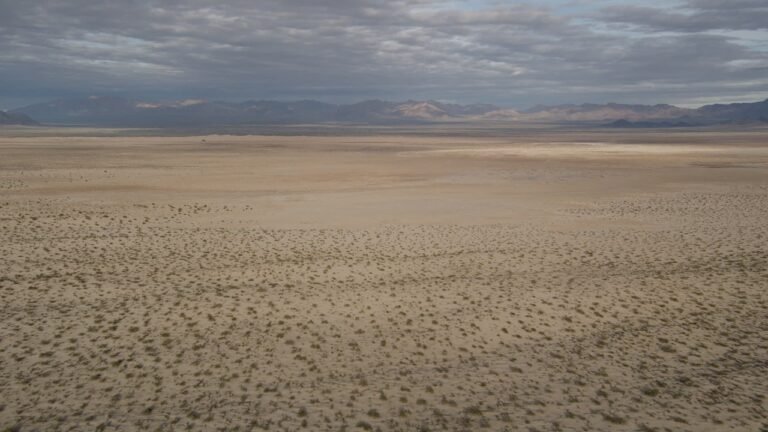
Mojave National Preserve is not a theme park, and that is part of its appeal. It is a vast protected desert landscape where the land itself is the main attraction. Covering about 1.6 million acres, the preserve protects some of the most diverse scenery in the American Southwest.
What makes it so distinctive is the variety. In one trip, you can experience:
- Kelso Dunes
- Teutonia Peak
- Hole-in-the-Wall
- The Lava Tube
- Joshua tree forests
- Historic railroad and mining sites
- Wide desert basins and mountain panoramas
This is a destination that rewards visitors who move slowly and look closely. It is ideal for road trippers, hikers, campers, landscape photographers, desert lovers, and travelers who appreciate open space and quiet.
The preserve is also free to enter and remains open around the clock unless roads or facilities are temporarily closed due to weather, fire, maintenance, or safety concerns. That makes it an excellent budget-friendly destination, but it also means you need to plan carefully because the landscape is vast, remote, and spread out.
Why Mojave National Preserve Is Worth Visiting
Some desert destinations show only one kind of scenery. Mojave National Preserve offers many.
You can stop here briefly and still see something remarkable. Or you can dedicate two full days and build an entire desert journey around it. It works especially well for:
- First-time desert visitors
- Road trippers driving between California and Nevada
- Hikers who enjoy quiet trails
- Campers looking for a true backcountry atmosphere
- Travelers drawn to geology and history
- Photographers chasing sunrise, sunset, and sweeping landscape shots
Another major advantage is that the preserve is much less crowded than many famous national parks. That means more room, more stillness, and more time to appreciate the scenery without feeling rushed.
Mojave National Preserve Location
Where is Mojave National Preserve?
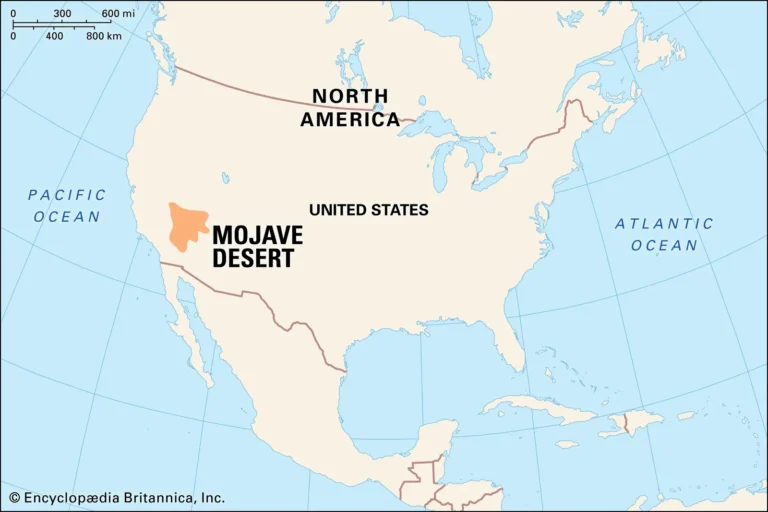
Mojave National Preserve is located in Southern California, east of Barstow, between Interstate 15 and Interstate 40. It sits in the heart of the Mojave Desert, which makes the name especially fitting.
It is not a compact destination centered around one town. Instead, it spans a broad desert region, and its attractions are separated by long distances. That is why a map is so important before you go.
Main access roads
Some of the most useful roads and access routes include:
- Kelbaker Road
- Cima Road
- Essex Road
- Goffs Road
- Nipton Road
- Zzyzx Road
These roads connect the different sections of the preserve and show why the experience feels more like a desert expedition than a standard park visit.
Why location matters
The preserve’s location shapes the entire trip. It is:
- Remote enough to feel wild
- Central enough to fit into a road trip
- Large enough that planning matters
- Spread out enough that a rushed visit often backfires
A common mistake is trying to see too much in too little time. That usually leads to long drives and little enjoyment. A better strategy is to focus on a few strong stops and experience them well.
Mojave National Preserve Map and Geography
A map is one of the most important tools you can use for this purpose. The area is huge, the routes are long, and the roads do not form a neat loop. Some roads are paved, some are graded dirt, and some require careful Attention before you attempt them.
Why the map matters
The map helps you:
- Decide which part of the preserve to visit
- Combine nearby stops into a logical route
- Avoid unnecessary driving
- Check road conditions before departure
- Plan fuel and water stops
- Understand whether your vehicle is suitable for the route
Geography at a glance
The preserve ranges from roughly 800 feet to nearly 8,000 feet in elevation. That wide elevation spread is one reason the scenery changes so much from place to place.
You can encounter a surprising mix of ecosystems, including:
- Creosote bush scrub
- Joshua tree woodland
- Cactus and yucca communities
- Pinyon-juniper woodland
- Desert riparian areas
- Dune fields
This blend of elevation, geology, and habitat gives the preserve a richer feel than a simple flat desert plain.
A simple way to think about the preserve map
If you are planning a trip, it helps to divide the preserve into broad zones:
- North side: Good for Cima Road, Teutonia Peak, and Joshua Tree scenery
- Central area: Good for Kelso Depot and nearby historic stops
- Southwest dune area: Good for Kelso Dunes
- Northeast canyon area: Good for Hole-in-the-Wall and Rings Loop
- Backcountry routes: Good for the Lava Tube and remote desert exploration
Thinking this way makes the process easier to understand and helps you build a practical route.
Climate and Weather in Mojave National Preserve
The weather is one of the biggest factors in planning a successful trip. This is a desert, which means temperatures can be intense and conditions can shift quickly by season and elevation.
What the weather is like
The simplest rule is this: spring and fall are usually the most comfortable times to visit.
Summer weather
Summer can be extremely hot. Many days are simply too warm for long hikes or extended outdoor activity, especially in lower-elevation areas. Heat can be draining, and afternoon conditions can become harsh fast. If you visit in summer, begin early, carry plenty of water, and keep your schedule short and realistic.
Winter weather
Winter can be cold, especially at higher elevations. Some areas may even receive snow, and daylight hours are shorter. That means less time for sightseeing and more need for careful timing. The sun also sets earlier, which can catch unprepared travelers off guard.
Spring and fall
Spring and fall are often the best seasons because:
- Temperatures are more comfortable
- Hiking is easier
- Road conditions are generally less punishing
- Wildflowers may bloom in some years
- Photography tends to look better in softer light
Wildflower season
Spring can bring roadside wildflowers in certain areas, especially after good rainfall. When that happens, the desert feels unexpectedly vivid and alive.
If you want the most balanced experience, aim for March, April, May, October, or November whenever possible.
Landscapes That Make Mojave National Preserve Special
One of the preserve’s biggest strengths is the sheer variety of scenery. This is not a one-note desert. It is a layered landscape where dunes, peaks, canyons, forests, and volcanic features all appear within the same protected area.
Kelso Dunes
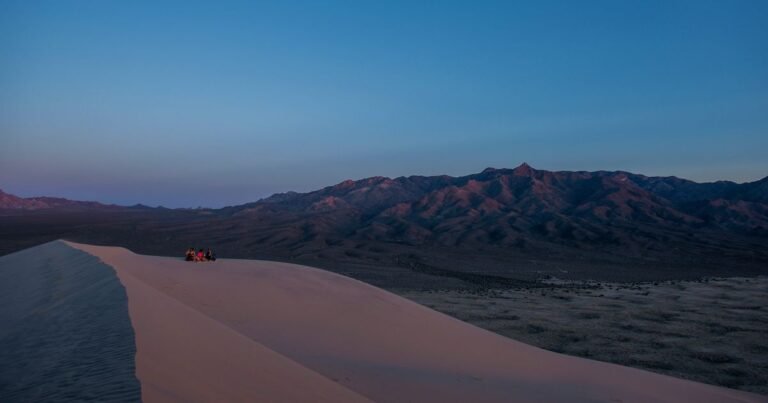
Kelso Dunes are among the most iconic features in the preserve. They form a sweeping sand landscape that matches the classic image many travelers associate with the Mojave Desert.
The dunes are also one of the preserve’s best-known hikes. The route sounds simple, but walking on sand is tiring, especially in the heat. Even so, the reward is worth the effort.
Why people love Kelso Dunes:
- Expansive desert views
- A strong sense of scale
- Excellent sunrise and sunset photography
- A true Mojave landmark
- A memorable desert walking experience
Teutonia Peak and Cima Dome
The Teutonia Peak Trail is one of the best shorter hikes in the preserve. It offers impressive views over the famous Joshua tree landscape near Cima Dome.
This area is especially valuable because the preserve is known for its Joshua tree forests. If you want a scenic stop without committing to a long hike, Teutonia Peak is an excellent choice.
Why Teutonia Peak works so well:
- Short but rewarding
- Beautiful Joshua tree scenery
- Great for first-time visitors
- Strong views over the desert basin
- Especially attractive in spring
Hole-in-the-Wall and Rings Loop
The Hole-in-the-Wall area is a favorite for rock formations, rugged scenery, and accessible hiking. Rings Loop is especially popular because it is memorable, visually interesting, and manageable for many travelers.
This section of the preserve feels more canyon-like than the open dune zones. That contrast helps show how varied the landscape really is.
Why this stop matters:
- Good for families
- Good for short hikes
- Great for unusual rock shapes
- Easy to combine with other north or east preserve stops
Lava Tube
The Lava Tube is one of the most dramatic natural features in the preserve. It is an underground volcanic tunnel that delivers a very different kind of desert encounter.
This is not a polished commercial cave experience. It is rough, natural, and slightly adventurous. That rawness is part of its appeal.
Why the Lava Tube stands out:
- A unique volcanic formation
- Very different from dunes and Joshua trees
- Feels like a discovery
- Appeals to adventurous travelers
Historic railroad corridors and desert valleys
The preserve also includes broad valleys, mountain backdrops, and historic railroad traces. The scenery is not only beautiful; it also reflects trade, migration, mining, and survival in an unforgiving desert environment.
Top Stops at a Glance
| Stop | Why It Matters | Best For | Access Note |
| Kelso Dunes | Signature sand-dune scenery | First-time visitors, hikers, photographers | Reach via Kelbaker Road |
| Teutonia Peak Trail | Joshua tree views and wide desert scenery | Short hikes, spring visits | On Cima Road |
| Rings Loop / Hole-in-the-Wall | Rock formations and canyon atmosphere | Families, casual hikers | North of I-40 via Essex and Black Canyon roads |
| Lava Tube | Underground volcanic feature | Adventure-focused visitors | Unpaved road; high clearance helps |
| Kelso Depot area | Railroad and park history | History lovers | Central preserve location |
This overview helps you see the preserve as a set of distinct zones instead of one giant, confusing space.
Things to Do in Mojave National Preserve
When travelers search for things to do in Mojave National Preserve, they usually want a mix of hiking, scenic driving, history, camping, and practical trip ideas. The good news is that the preserve offers all of these.
1. Hike Kelso Dunes
This is one of the most famous activities in the preserve and one of the best ways to feel the scale of the desert.
Good for:
- Beginners wanting a signature hike
- Landscape photographers
- Visitors looking for a classic Mojave experience
Tip: Start early and carry more water than you expect to use.
2. Hike Teutonia Peak Trail
This is one of the strongest short scenic hikes in the preserve. It gives you beautiful views without requiring a full-day commitment.
Good for:
- Short visits
- Joshua tree enthusiasts
- Families and casual hikers
Tip: The trail is especially appealing in spring.
3. Explore Hole-in-the-Wall
This area is ideal if you want a stop that feels rocky, rugged, and interesting without being overly difficult.
Good for:
- Day hikers
- Families
- Visitors who enjoy unusual desert formations
4. Visit the Lava Tube
If you enjoy unusual natural features, this is a must-see. It adds a sense of discovery and adventure to the trip.
Good for:
- Explorers
- Hikers who want something different
- Visitors looking for a memorable desert stop
5. Drive scenic desert roads
For some travelers, the drive is just as rewarding as the destinations. The roads themselves are part of the preserve experience.
A scenic drive can reveal:
- Open desert basins
- Joshua tree stands
- Distant mountains
- Historic structures
- Shifting elevation and plant communities
6. Visit Kelso Depot and the historic railroad area
This is one of the best places for visitors interested in history. It connects the scenery to the human stories that shaped the region.
7. Camp under the desert sky
Camping is one of the most rewarding ways to experience the preserve. The silence, the stars, and the long desert sunsets make overnight stays unforgettable.
8. Photograph wildlife and landscapes
The preserve is excellent for photography, especially during golden hour. You can capture dunes, trees, rocks, and enormous skies in a single trip.
Flora: Plants That Define the Preserve
Plant life is a major part of the preserve’s identity. Vegetation shifts with elevation, soil type, and water availability, which is why different areas look so distinct.
Common and important plant communities include:
- Creosote bush scrub
- Joshua tree woodland
- Cactus-rich desert areas
- Pinyon-juniper woodland
- Chaparral remnants
- Seasonal wildflowers
Creosote bush
Creosote is one of the most common desert plants in the preserve. It is one of the clearest signs that you are deep in Mojave Desert terrain.
Joshua trees
The Joshua tree is perhaps the most famous plant in the preserve. Its unusual shape makes it one of the most photographed symbols of the Southwest.
The preserve is especially known for its Joshua tree landscapes near Cima Dome and Teutonia Peak.
Wildflowers
In the right season, wildflowers can brighten roadside areas and add an unexpected splash of color to the desert. They are never guaranteed, but when they appear, they can transform the mood of the landscape.
Fauna: Wildlife in Mojave National Preserve
Wildlife is another reason the preserve is so important. The desert may seem empty at first glance, but it supports a wide range of species adapted to dry conditions.
Desert tortoise
The desert tortoise is one of the most important animals in the preserve. It is threatened, and the preserve plays an essential role in protecting its habitat.
This animal matters because it is slow, vulnerable, and deeply tied to the health of the desert ecosystem.
Other wildlife
Visitors may also encounter:
- Birds
- Lizards
- Snakes
- Small mammals
- Desert insects
- Mammals adapted to arid environments
Wildlife viewing tips
- Be quiet and patient
- Watch the road carefully
- Keep your distance
- Never feed animals
- Avoid disturbing habitats
Best time for wildlife activity
Wildlife is often more active after rainfall and during cooler periods. Spring is usually a good time to watch for signs of animal movement.
Human History and Culture
The preserve is not only a place of natural beauty. It also carries a long and layered human history.
Long human connection to the desert
The area has roughly 10,000 years of human history. Indigenous peoples moved through it, lived near it, and relied on its routes and water sources long before modern travel maps existed.
Mojave Road history
The Mojave Road is one of the preserve’s most important historic corridors. It served as a route for trade, travel, and movement across the desert. Later, it became tied to westward expansion and military activity.
Railroad history
Railroad development also shaped the preserve’s story. Kelso Depot is one of the strongest physical reminders of that era and now functions as a visitor center and historic site.
Mining and settlement
The preserve still contains traces of mining camps, homesteads, and other forms of desert settlement. These remnants add depth to the landscape and help explain why the region feels so historically layered.
Why history matters for visitors
When you understand the human story behind the land, the preserve becomes more than a pretty place. It becomes a living record of movement, adaptation, labor, and survival.
Camping in Mojave National Preserve
Camping is one of the best ways to experience the preserve because it gives you more time to absorb the quiet and scale of the desert.
Developed campgrounds
The preserve has three developed campgrounds:
- Mid Hills
- Hole-in-the-Wall
- Black Canyon
These campgrounds are typically open year-round and usually offer basic amenities such as:
- Vault toilets
- Picnic tables
- Fire rings
- Trash receptacles
Mid Hills
Mid Hills is a good choice if you want a cooler campsite because it sits at a higher elevation.
Hole-in-the-Wall
Hole-in-the-Wall is one of the most convenient options for many visitors because it has a more developed feel and easy access to nearby attractions.
Black Canyon
Black Canyon is often a better option for larger groups and equestrian use.
Dispersed camping and backpacking
The preserve also allows dispersed camping and backpacking in designated ways. That gives experienced visitors more flexibility, but it also requires more self-reliance and better preparation.
What to remember
- Bring enough water
- Know the rules before you arrive
- Check road and weather conditions
- Respect the fragile desert habitat
- Camp responsibly and leave no trace
Camping tips
- Reserve ahead where required
- Avoid summer if possible
- Bring extra water and food
- Pack warm layers for cold nights
- Do not rely on cell service
Camping here can be one of the most memorable parts of the trip because the night sky is exceptionally clear and the desert feels even larger after dark.
Best Time to Visit Mojave National Preserve
The best time to visit Mojave National Preserve is usually spring and fall.
Spring
Spring is often the best overall season because:
- Temperatures are pleasant
- Wildflowers may bloom
- Hiking is easier
- Roads are more comfortable to travel on
Fall
Fall is another excellent season because:
- The heat is lower than in summer
- The desert feels quieter
- You can spend more time outdoors comfortably
Summer
Summer can be difficult or even dangerous if you are not prepared. Heat is the main challenge.
Winter
Winter is possible, but you should expect cold mornings, short days, and the possibility of snow in higher elevations.
Best overall choice
If you want the simplest answer, choose March to May or October to November.
Safety Tips for Mojave National Preserve
Safety should be a top priority here. The desert is beautiful, but it is also demanding and unforgiving when visitors are careless.
1. Bring enough water
This is the most important rule of all. Carry more water than you think you will need.
2. Fill up your gas tank before entering
There is no gas sold inside the preserve. Never assume you will find fuel later.
3. Do not rely on cell service
Cell coverage is weak and unreliable in many places. You may not be able to call for help in an emergency.
4. Use official maps
Navigation apps alone are not enough. Roads can be remote, rough, or misleading.
5. Watch road conditions
Roads may close because of storms, fires, snow, or maintenance work.
6. Protect yourself from heat and cold
Bring:
- Water
- Food
- Sunscreen
- A hat
- A flashlight or headlamp
- Extra layers
7. Drive carefully
The roads may seem empty, but wildlife, loose gravel, long distances, and fatigue can make driving risky.
8. Stay on legal roads and trails
Respect the preserve rules. Off-road damage can cause lasting harm to fragile desert habitat.
Simple safety rule
If a plan feels rushed, it is probably too ambitious. Slow down, simplify, and choose a realistic route.
Travel Tips for First-Time Visitors
A first visit usually goes better when the plan is simple and focused.
Best travel approach
Choose one road corridor instead of trying to cross the whole preserve in a single short trip.
Good first-time route idea
A simple first-timer itinerary might include:
- Teutonia Peak
- Kelso Depot area
- Kelso Dunes
This route gives you:
- Joshua tree scenery
- A historical stop
- A major desert landmark
Another good route idea
If you want a more adventurous day, try:
- Hole-in-the-Wall
- Rings Loop
- Lava Tube
Packing list
Bring:
- Plenty of water
- Snacks or a full meal
- Sunglasses
- Sunscreen
- A hat
- A map
- A phone charger
- Extra fuel before entering
- A warm layer if you will stay into the evening
Driving tip
Avoid stuffing too many stops into one day. The preserve is larger than it looks on a map, and the best visit usually comes from fewer stops done well.
One-Day Itinerary Example
Here is a simple one-day plan for Mojave National Preserve:
Morning
Start early and head to Teutonia Peak Trail. Morning light is beautiful, and temperatures are usually more comfortable.
Midday
Move toward the central area and stop at Kelso Depot or the historic railroad zone.
Afternoon
Visit Kelso Dunes and spend time walking, taking photos, and appreciating the wide-open scenery.
Evening
Stay for sunset if your schedule allows. Desert sunsets can be unforgettable.
This is a practical way to see a lot without feeling rushed.
Two-Day Itinerary Example
A two-day trip creates a much richer experience.
Day 1: North and central preserve
- Teutonia Peak
- Joshua tree viewpoints
- Kelso Depot
- Nearby scenic drives
Day 2: South and east preserve
- Kelso Dunes
- Hole-in-the-Wall
- Rings Loop
- Lava Tube, if road conditions allow
This approach works better because the attractions are grouped by region. That means less repetitive driving and more time actually enjoying the preserve.
Pros and Cons
Pros
- Free entry
- Huge and scenic
- Diverse desert landscapes
- Excellent camping opportunities
- Great for road trips
- Strong wildlife and historical value
Cons
- No gas inside the preserve
- Weak cell service
- Summer heat can be intense
- Attractions are spread far apart
- Some areas require serious planning
This balance of strengths and challenges is exactly what gives the preserve its character. It is not overbuilt, and that simplicity is part of its appeal.
Interesting Facts About Mojave National Preserve
Here are a few facts that many travelers find surprising:
- It covers about 1.6 million acres
- It is one of the largest units in the National Park System in the contiguous United States.
- It was established in 1994
- It protects some of the finest Joshua tree forests in the region
- It contains dunes, lava fields, and desert canyons
- It supports important wildlife habitat, including the desert tortoise
- It contains human history stretching back thousands of years
These details help show why the preserve is so significant.
Environmental Issues and Conservation
Mojave National Preserve matters not only for recreation, but also for conservation.
Main conservation concerns
Some of the most important issues include:
- Desert tortoise protection
- Habitat fragmentation
- Fire risk from non-native grasses
- Damage from off-road travel
- Visitor impact and road safety
Why conservation matters
This preserve protects a fragile ecological system. What appears empty is actually alive, connected, and carefully balanced.
Fire and habitat damage
Desert vegetation often recovers slowly after fire, which is why prevention is so important.
Visitor responsibility
You help protect the preserve by:
- Staying on roads and trails
- Carrying out trash
- Avoiding habitat damage
- Driving responsibly
- Following all posted rules
A respectful visitor helps preserve the landscape for everyone who comes after.
FAQs
Yes, Mojave National Preserve is free to enter.
Not always. Many major stops can be reached in a regular vehicle, but some dirt-road areas are easier with high clearance.
Yes. There are developed campgrounds, and some dispersed camping options are also allowed in designated ways.
Spring and fall are usually the best times because the weather is more comfortable.
A strong first visit usually includes Kelso Dunes, Teutonia Peak, Hole-in-the-Wall, and the Lava Tube.
Conclusion
Mojave National Preserve is one of the best places in the Southwest for travelers who want wide-open scenery, natural beauty, and a real desert adventure. With proper planning, it can be enjoyed as a day trip or an overnight camping experience. Whether you visit for the dunes, the trails, or the history, the preserve leaves a lasting impression.