

- Key Takeaways
- Table Of Contents
- Why the Cleaning Method Matters
- Read the Signs Before Choosing a Fix
- Common Drain Cleaning Methods
- Plungers
- Manual Drain Tools
- Mechanical Augers
- Enzyme-Based Products
- High-Pressure Water Cleaning
- When Professional Cleaning Makes Sense
- Why a Pipe Inspection May Come First
- Safety Mistakes to Avoid
- Simple Ways to Prevent Future Clogs
- A Quick Decision Guide
- Final Thoughts
Key Takeaways
- The right drain-cleaning method depends on where the clog is located and what is causing it.
- Single-fixture clogs often respond to basic cleaning, plunging, or a small manual tool.
- Repeated clogs, gurgling, and backups in several fixtures can indicate a deeper line problem.
- Harsh chemical cleaners may pose safety risks and are not a dependable solution for every blockage.
- Camera inspections can help distinguish ordinary buildup from roots, damaged pipe, or a sewer-line restriction.
Persistent drain clogs can be frustrating for Frederick homeowners, especially when a slow sink or shower starts turning into recurring backups. Choosing the strongest tool is not always the best answer. The safest approach is to first identify the likely location and cause, then select a method that fits the pipe and the severity of the blockage. For deeper buildup in suitable lines, professional hydro jetting services in Frederick MD may be one option after the condition of the pipe has been evaluated.
Older homes near downtown Frederick, properties with mature landscaping, and newer homes alike can experience drainage issues due to hair, grease, soap residue, food waste, wipes, or root intrusion. A drain that slows once may be a minor nuisance. A drain that repeatedly clogs after temporary relief deserves a more careful diagnosis.
Table Of Contents
- Why the Cleaning Method Matters
- Read the Signs Before Choosing a Fix
- Common Drain Cleaning Methods
- When Professional Cleaning Makes Sense
- Why a Pipe Inspection May Come First
- Safety Mistakes to Avoid
- Simple Ways to Prevent Future Clogs
- A Quick Decision Guide
Why the Cleaning Method Matters
A shower drain clogged with hair is not the same problem as wastewater rising in a basement floor drain. A plunger may loosen a nearby soft obstruction, but it cannot repair a broken pipe or fully clean heavy buildup farther down a branch line. Likewise, forcing a cable through a restriction may create a small opening for water while leaving grease, scale, or roots along the pipe wall.
Before selecting a method, consider the fixture involved, whether other drains are affected, the age and material of the plumbing, and whether the issue has happened before. The goal is not simply to make water move today. It is to address the condition that is creating the recurring problem.
Read the Signs Before Choosing a Fix
- One slow bathroom sink, tub, or shower: Hair, soap residue, or debris near the stopper may be responsible. Start by removing visible material and cleaning the stopper or strainer.
- A slow kitchen sink: Grease, food particles, and soap buildup are common contributors. Avoid sending more grease or scraps into the drain while addressing the clog.
- Several fixtures draining slowly: The restriction may be in a shared branch line or the main sewer line, rather than inside one fixture drain.
- Gurgling sounds or sewer odors: These symptoms can indicate a drainage or venting issue that should be assessed as a whole-system concern.
- A clog that returns soon after cleaning: Recurrence often means the underlying buildup was not fully removed or that the pipe has a structural concern.
Common Drain Cleaning Methods
Plungers
A plunger is often a sensible first choice for a localized clog in a sink, tub, or toilet. Use a plunger designed for the fixture, create a good seal, and use controlled pressure rather than aggressive force. If the drain does not improve after a reasonable attempt, repeating the same method may not add value.
Manual Drain Tools
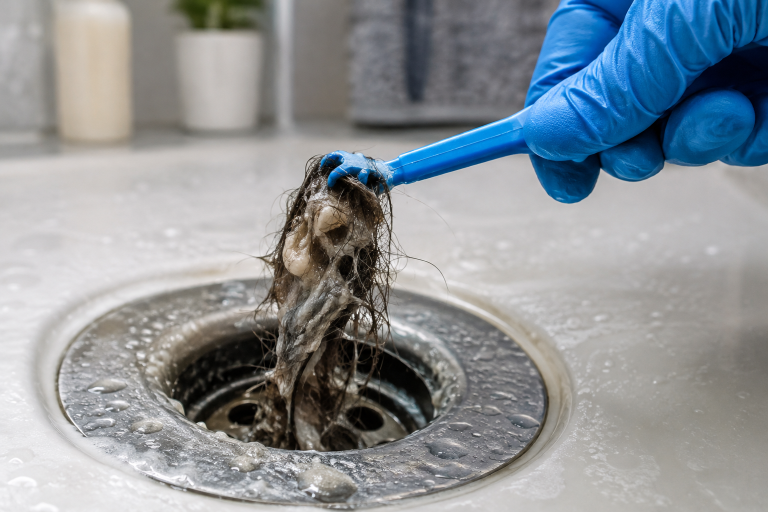
Plastic hair-removal tools and small hand augers can help retrieve material close to a bathroom drain opening. Stop if a tool catches firmly, bends, or will not move without force. Pulling too hard can damage a fixture component or push the obstruction deeper into the line.
Mechanical Augers
Longer mechanical cables can reach clogs that sit beyond a trap or farther along a line. However, an auger can bore through part of a blockage without removing the buildup surrounding it. That is why a drain that soon clogs again may require more complete cleaning or inspection.
Enzyme-Based Products
Enzyme products may be used for light organic buildup and routine maintenance when the manufacturer’s directions allow it. They are not a reliable solution for standing wastewater, solid objects, tree roots, or severe blockages. Never mix drain products, even if one treatment appears ineffective.
High-Pressure Water Cleaning
High-pressure water cleaning is different from punching a small hole through a clog. When appropriate for the pipe’s material and condition, it can clear accumulated debris from the pipe’s interior walls. Municipal sewer programs also use hydro jetting and camera work as part of preventative maintenance, because cleaning and inspection data can help guide future repairs and maintenance decisions.
When Professional Cleaning Makes Sense
A professional assessment is appropriate when multiple fixtures back up together, the same drain clogs repeatedly, wastewater appears in a tub or floor drain, or strong sewer odors continue. It is also wise to stop DIY work if a harsh chemical cleaner has already been poured into the drain. Mechanical tools can splash or expose people to those chemicals.
For Frederick properties with older plumbing or landscaping near buried lines, a qualified technician can help separate a routine blockage from root growth, a sagging section of pipe, a crack, or another condition that cleaning alone will not solve.
Why a Pipe Inspection May Come First
A camera inspection provides a view inside the drain or sewer line, helping locate the restriction and identify what appears to be causing it. It may reveal grease accumulation, root intrusion, separated connections, offsets, or damaged sections. That information matters because aggressively cleaning a weakened pipe without understanding its condition can create additional complications.
Ask for a clear explanation of the findings before approving significant work. A useful diagnosis should identify the location of the issue, describe the likely cause, and explain why the recommended method fits the situation.
Safety Mistakes to Avoid
- Do not mix chemical drain cleaners or combine them with other household products.
- Do not use a cable machine immediately after adding a harsh chemical cleaner unless it is confirmed safe.
- Wear gloves and eye protection around standing wastewater.
- Keep children and pets away from sewage backups.
- Do not use excessive force on old or visibly damaged plumbing.
Homes served by septic systems need added care. The materials the EPA advises homeowners not to send down septic drains include grease, oils, drain cleaners, household chemicals, coffee grounds, wipes, and other items that can interfere with system operation.
Simple Ways to Prevent Future Clogs
- Use hair catchers in showers and tubs.
- Clean sink strainers and removable stoppers regularly.
- Scrape food scraps into the trash or compost before washing dishes.
- Let cooking grease cool in a container instead of pouring it into the sink.
- Keep wipes, paper towels, dental floss, and hygiene products out of toilets.
- Pay attention to early warning signs, including slow drainage and occasional gurgling.
A Quick Decision Guide
- If only one fixture is affected, begin by removing visible debris with a plunger or a suitable hand tool.
- If that approach fails, avoid repeating it with increasing force.
- If multiple fixtures are affected, treat the issue as a possible shared-line or sewer concern.
- If the clog returns, seek diagnosis rather than relying on another temporary fix.
- If wastewater is backing up, limit contact and promptly arrange professional help.
Final Thoughts
The best drain-cleaning choice starts with the symptoms, not the most powerful equipment available. A simple, isolated clog may need only basic cleaning. Recurring blockages, widespread slow drains, and wastewater backups call for a closer look. By matching the cleaning method to the actual cause, Frederick homeowners can protect their plumbing and reduce the risk of a larger drainage problem.