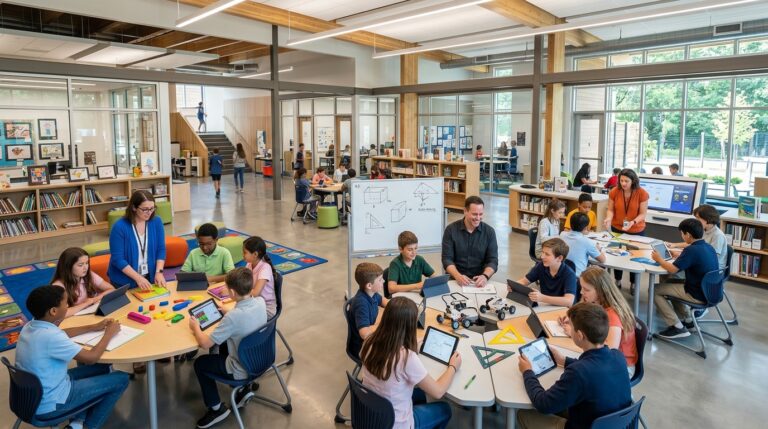


A child’s learning environment extends well beyond the classroom. The habits, space, and support systems parents build at home play a significant role in academic success and overall attitude toward learning. Creating that environment doesn’t require elaborate resources — it requires consistency, structure, and genuine engagement.
- Designate a Dedicated Study Space
- Choose a Quiet, Consistent Location
- Keep It Organized and Well-Stocked
- Ensure Good Lighting and Comfort
- Establish Consistent Routines
- Set a Regular Homework Time
- Balance Structure With Breaks
- Model Consistent Habits
- Limit Distractions Thoughtfully
- Manage Screen Time During Study Hours
- Create Household Quiet Hours
- Support Without Taking Over
- Be Available, Not Overbearing
- Ask Open-Ended Questions
- Communicate With Teachers
- Foster a Positive Attitude Toward Learning
- Celebrate Effort, Not Just Results
- Make Learning Feel Relevant
- Final Thoughts
Designate a Dedicated Study Space
Choose a Quiet, Consistent Location
A designated study area — even a small corner of a shared room — helps children mentally associate that space with focus. Consistency matters more than size or furnishings; the goal is a spot free from major distractions like a television or high-traffic foot flow.
Keep It Organized and Well-Stocked
Having basic supplies readily available — pencils, paper, a calculator, reference materials — removes small frictions that can derail focus, especially for younger children who are easily distracted by searching for missing items.
Ensure Good Lighting and Comfort
Poor lighting contributes to eye strain and fatigue during homework sessions. A comfortable chair and adequate lighting, whether natural or a good desk lamp, support longer periods of focused work without unnecessary discomfort.
Establish Consistent Routines
Set a Regular Homework Time
Children generally benefit from a predictable homework schedule rather than an inconsistent, whenever-it-happens approach. A regular time — ideally when their energy and focus are naturally higher — builds homework into a routine rather than a daily negotiation.
Balance Structure With Breaks
Long, uninterrupted study sessions are difficult for most children to sustain. Built-in short breaks between tasks help maintain focus and reduce frustration, particularly for younger students or those with shorter attention spans.
Model Consistent Habits
Children often absorb attitudes toward learning by observing the adults around them. Demonstrating your own reading, curiosity, or problem-solving in everyday life reinforces the value of learning beyond formal schoolwork.
Limit Distractions Thoughtfully
Manage Screen Time During Study Hours
Setting clear boundaries around phones, tablets, and television during designated study time helps children build focus without constant competing stimulation. This doesn’t need to be punitive — simply establishing when devices are and aren’t appropriate.
Create Household Quiet Hours
If multiple people share a home, coordinating a shared quiet period during homework time supports a calmer, more focused atmosphere for everyone, not just the student.
Support Without Taking Over
Be Available, Not Overbearing
Offering help when genuinely needed, without doing the work for your child, builds both competence and confidence. Struggling productively with a problem is often part of the learning process, not something to be immediately rescued from.
Ask Open-Ended Questions
Rather than simply checking answers, asking questions like “How did you approach this?” or “What part felt tricky?” encourages children to think critically about their own process rather than just seeking the correct answer.
Communicate With Teachers
Staying in touch with teachers about your child’s progress, challenges, and strengths helps you reinforce relevant skills at home and catch potential issues before they become significant setbacks.
Foster a Positive Attitude Toward Learning
Celebrate Effort, Not Just Results
Praising effort and persistence, rather than solely focusing on grades or correct answers, encourages a growth mindset that helps children stay motivated through difficult material rather than avoiding challenges.
Make Learning Feel Relevant
Connecting schoolwork to real-world interests — cooking to practice fractions, a favorite show to spark reading interest — helps children see academic skills as genuinely useful rather than abstract requirements.
Final Thoughts
A strong home learning environment comes down to a consistent space, predictable routines, thoughtful boundaries around distractions, and genuine, balanced support. These elements, more than any specific resource or tool, create the foundation children need to build confidence and stay engaged with learning over time.