

- Key Takeaways
- Why Electrical Careers Are Drawing Attention
- What Entry-Level Electrical Workers Actually Do
- Core Skills To Build First
- Safety Must Come Before Speed
- Training Paths for New Electrical Workers
- Digital Tools Are Becoming Part of the Trade
- Career Areas To Consider
- A Simple First-Year Skill Plan
- Common Mistakes Beginners Should Avoid
- Questions New Workers Often Ask
- Do You Need a Four-Year Degree to Start?
- Is Electrical Work Hard To Learn?
- What Math and Personal Skills Help?
- Keep Building After the First Job
- Conclusion
Key Takeaways
- Electrical careers require technical knowledge, practical ability, communication, and consistent safety habits.
- Beginners often develop through classroom learning, supervised job-site practice, and structured training.
- Opportunities can include construction, maintenance, controls, renewable energy, charging equipment, and critical-power work.
- Careful documentation, diagram reading, measurements, and reliable work habits matter from the first day.
Electrical work can offer a practical path for people who enjoy solving problems, working with their hands, and learning systems that power homes, workplaces, and equipment. A well-rounded electrical program can help new workers build the technical foundation and supervised experience needed to begin safely.
In 2026, the field reaches far beyond basic wiring. Electrical workers may support new construction, building upgrades, manufacturing equipment, lighting, communications, automation, energy systems, and transportation infrastructure. The specific work varies, but a successful start usually depends on patience, preparation, and respect for safety rules.
Why Electrical Careers Are Drawing Attention
Modern buildings and facilities rely on increasingly connected electrical systems. Construction projects need installation crews, while existing properties need workers who can inspect, maintain, test, and repair equipment. Growth in digital infrastructure, electrified transportation, energy projects, and automated systems can also create specialized directions for trained workers.
Demand for skilled work does not make electrical work casual or simple. Many roles involve licensing rules, required training hours, examinations, and supervision standards that differ by state or locality. Before committing to a path, review the requirements where you intend to work and understand what tasks are permitted at each stage of training.
What Entry-Level Electrical Workers Actually Do
New workers generally begin by supporting experienced electricians rather than working independently. Common responsibilities include organizing tools and materials, preparing boxes and fittings, pulling wire under direction, labeling circuits, measuring locations, maintaining a clean work area, and carrying out assigned installation tasks.
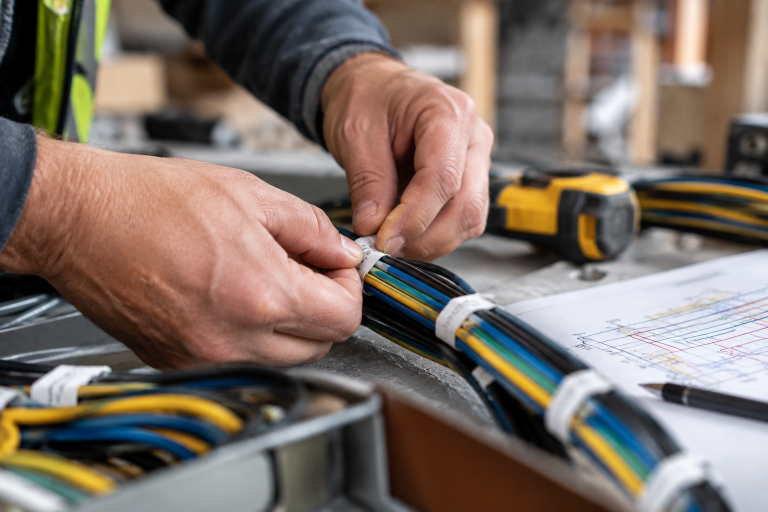
For example, a beginner might help prepare a commercial work area by sorting materials, marking conduit locations from a plan, and labeling wire bundles before an experienced electrician completes connections and testing. These tasks may look small, but accurate labels, correct measurements, and orderly materials can prevent costly confusion later.
Core Skills To Build First
- Basic electrical theory. Learn the meaning of voltage, current, resistance, circuits, grounding, and simple power calculations.
- Blueprint and diagram reading. Plans, symbols, schedules, and wiring diagrams show what belongs where and how systems are intended to operate.
- Measurement. Tape measures, levels, rulers, and approved test equipment must be used carefully and accurately.
- Tool use. Hand tools, power tools, and testers have intended purposes and limits. Proper selection protects the worker and the installation.
- Material awareness. Beginners should recognize common wire types, boxes, raceways, connectors, fasteners, and labeling supplies.
- Communication. Clear questions, useful job-site updates, and complete written notes reduce avoidable mistakes.
Safety Must Come Before Speed
Electrical work should never be rushed to save a few minutes. Workers need to recognize hazards, use required personal protective equipment, respect work boundaries, and follow established lockout/tagout procedures when applicable. No one should test, repair, or handle equipment beyond their training, authorization, or assigned supervision.
Strong safety habits include checking the work area, confirming instructions, inspecting tools, reporting hazards, and stopping when conditions are unclear. The technical basics of safety, schematics, and communication are central to the career guidance in electrical career preparation for future electricians and technicians.
Training Paths for New Electrical Workers
Common starting points include high school technical courses, trade-school classes, community college programs, employer training, pre-apprenticeship opportunities, and registered apprenticeships. Classroom instruction can explain theory, code concepts, diagrams, and calculations. Supervised field training turns that knowledge into practical habits through installation, testing, troubleshooting, and maintenance work.
A good opportunity should explain who will supervise you, how safety is taught, what tools or credentials are expected, and how feedback will be provided. Ask about schedules, travel, physical demands, advancement options, and any registration or licensing obligations before accepting a position.
Digital Tools Are Becoming Part of the Trade
Many electrical workers use tablets, digital plans, mobile forms, equipment manuals, testing devices, and job documentation systems. Building automation, sensors, programmable controls, and energy-management equipment can add another layer of technical work. Digital skills support traditional trade skills, but they do not replace the need to understand the physical system in front of you.
Beginners should practice opening and reviewing digital documents, recording measurements clearly, protecting account credentials, and verifying information before acting on it. When a plan, label, or instruction appears inconsistent with site conditions, ask the responsible supervisor rather than making assumptions.
Career Areas To Consider
- Residential installation and service work
- Commercial construction and renovation
- Industrial maintenance and machinery support
- Controls, automation, and building systems
- Renewable energy and electric vehicle charging equipment
- Data centers, backup power, testing, inspection, and service
- Estimating, supervision, and project coordination after gaining experience
A Simple First-Year Skill Plan
- Months one to three: Learn job-site rules, tool names, materials, terminology, and safe work habits.
- Months four to six: Practice measurement, labeling, material preparation, basic installations, and diagram reading under supervision.
- Months seven to nine: Build familiarity with testing methods, troubleshooting steps, documentation, and work planning.
- Months ten to twelve: Review progress, identify gaps, request feedback, and set goals for the next training stage.
Common Mistakes Beginners Should Avoid
Avoid moving too quickly to impress others, skipping a safety check because a task appears simple, guessing instead of asking, or using a tool without understanding its limits. Incomplete labels, unfinished paperwork, disorganized materials, and ignored physical strain can also create problems. Reliability means completing even small tasks carefully and speaking up early when something is unsafe or unclear.
Questions New Workers Often Ask
Do You Need a Four-Year Degree to Start?
Many electrical careers begin through technical education, employer training, or apprenticeship-style pathways rather than a four-year degree. Requirements depend on the role and location, so local rules and employer expectations should guide your decision.
Is Electrical Work Hard To Learn?
It can be challenging because it combines theory, physical tasks, measurements, safety procedures, and problem-solving. Most people progress by practicing consistently, accepting correction, and learning one skill at a time.
What Math and Personal Skills Help?
Basic arithmetic, fractions, decimals, measurements, unit conversions, and simple formulas are useful. Patience, curiosity, attention to detail, teamwork, punctuality, and the willingness to ask questions are equally important.
Keep Building After the First Job
Keep a record of tasks completed, equipment used, and skills practiced. Ask experienced workers why a method is used, review manufacturer instructions, and take refresher training as responsibilities change. The career outlook for electricians can also help readers understand typical duties, training expectations, and the broad nature of the occupation.
Conclusion
Electrical work offers many directions, but every strong career starts with the same essentials: safe habits, useful technical knowledge, supervised practice, and a willingness to learn. A careful first year can build the confidence and discipline needed to take on more advanced responsibilities over time.