
Introduction
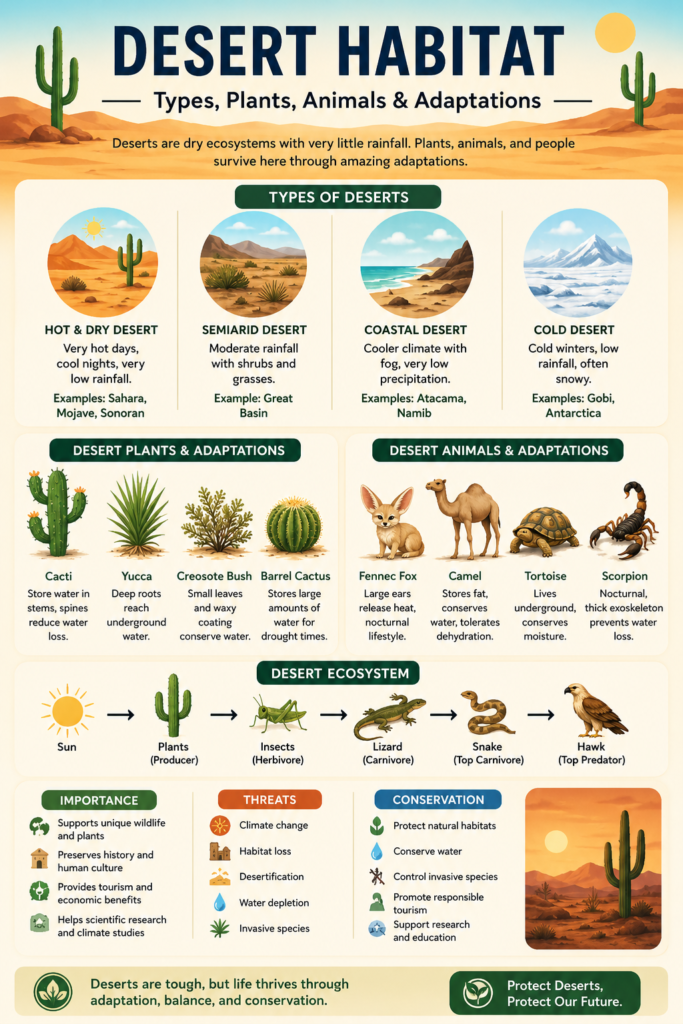
A desert habitat is a dry ecosystem where life survives with very little water. Far from being empty, deserts are home to plants, animals, and people that have Adapted to harsh heat, cold, and dry conditions. From sandy dunes to rocky plains and frozen polar deserts, these landscapes show how resilient life can be. This guide covers desert types, climate, plants, animals, adaptations, food chains, human life, and conservation.
- What Is a Habitat for Desert?
- Key Features of a Desert Habitat
- Very Low Rainfall
- Extreme Temperatures
- Dry Air
- Sparse Vegetation
- Specialized Wildlife
- Types of Deserts
- 1. Hot and Dry Deserts
- 2. Semiarid Deserts
- 3. Coastal Deserts
- 4. Cold Deserts
- Quick Comparison of Desert Types
- Where Are Deserts Found?
- Major Desert Regions of the World
- Desert Climate and Weather Patterns
- Rainfall in Desert Habitats
- Temperature in Desert Ecosystems
- Why Desert Temperatures Change So Fast
- Landscape Features of Desert Habitats
- Common Desert Landforms
- Microhabitats in Deserts
- Desert Plants and Their Adaptations
- How Desert Plants Survive
- Major Desert Plant Adaptations
- CAM Photosynthesis in Desert Plants
- Common Desert Plants
- Desert Animals and Survival Techniques
- How Desert Animals Survive
- Behavioral Adaptations
- Physical Adaptations
- Common Desert Animals
- Desert Food Chain and Ecosystem
- Main Roles in the Desert Food Web
- Example of a Desert Food Chain
- Why Rain Is Important in Desert Ecosystems
- After Rainfall
- Human Life in Desert Habitats
- How Humans Adapted to Deserts
- Famous Desert Cultures
- Why Deserts Preserve History
- Challenges of Living in a Desert Habitat
- Main Desert Challenges
- Desert Survival Tips
- Tourism in Desert Habitats
- People Visit Deserts For
- Best Desert Attractions
- Why Stargazing Is Amazing in Deserts
- Interesting Facts About Desert Habitats
- 1. Deserts Cover About 20% of Earth’s Land
- 2. Antarctica Is the Largest Desert
- 3. Not All Deserts Are Sandy
- 4. Some Plants Bloom Only After Rain
- 5. The Gobi Desert Can Reach -40°C
- Environmental Issues Facing Desert Ecosystems
- Major Threats to Desert Habitats
- What Is Desertification?
- Causes of Desertification
- Desert Conservation Efforts
- Important Conservation Strategies
- Why Desert Conservation Matters
- Pros and Cons
- How Desert Animals and Plants Work Together
- Plants Provide
- Animals Contribute By
- Examples of Desert Adaptations
- Plant Adaptations
- Animal Adaptations
- Difference Between Hot and Cold Desert Habitats
- The Importance of Water in Desert Ecosystems
- FAQs
- Conclusion
What Is a Habitat for Desert?
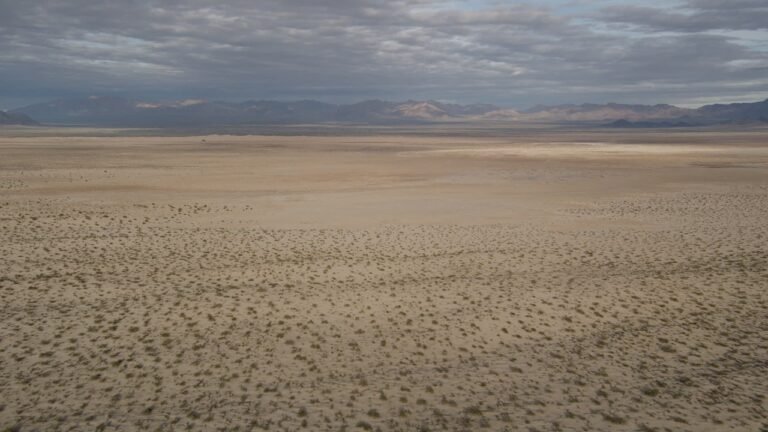
A habitat for a desert is a dry ecological zone that receives very little rainfall each year. In many deserts, annual precipitation stays below 250 millimeters, or about 10 inches. Because water is scarce, only organisms with specialized survival traits can live there successfully.
The word “habitat” refers to the natural home of a plant, animal, or other organism. In a desert habitat, the home environment may include:
- Dunes
- Rocky hills
- Gravel plains
- Dry river channels
- Salt flats
- Shrublands
- Oasis zones
Every desert has its own balance of climate, soil, vegetation, and wildlife. Some deserts are dominated by cactus species, some are covered in shrubs and grasses, and others are bare, rocky, or frozen.
A desert habitat is therefore not a single landscape style. It is a broad ecological category defined by dryness, not by appearance.
Key Features of a Desert Habitat
Very Low Rainfall
Rain in deserts is limited, irregular, and often unpredictable. Some deserts may go for long periods without meaningful precipitation.
Extreme Temperatures
Hot deserts can become intensely warm during the day and then cool dramatically at night. Cold deserts can experience freezing conditions for much of the year.
Dry Air
Low humidity means water evaporates quickly from the soil, plants, and living bodies.
Sparse Vegetation
Only plants with drought-resistant traits can survive in such conditions.
Specialized Wildlife
Desert animals rely on unique behavioral and physical adaptations to avoid dehydration, overheating, and food shortages.
Types of Deserts
Not all deserts look alike. Scientists group deserts into several major categories based on temperature, rainfall, geography, and seasonal patterns.
1. Hot and Dry Deserts
These are the deserts most people picture when they think about desert landscapes.
Characteristics
- Very hot daytime temperatures
- Cool or chilly nights
- Extremely low rainfall
- Sandy, stony, or rocky surfaces
Examples
- Sahara Desert
- Arabian Desert
- Sonoran Desert
- Mojave Desert
Main Features
- High evaporation rates
- Limited plant cover
- Dunes, rock outcrops, and dry basins
The hot desert habitat supports iconic species such as camels, scorpions, snakes, lizards, and cacti.
2. Semiarid Deserts
Semiarid deserts receive more moisture than true deserts, but still not enough to support dense vegetation.
Characteristics
- Mild to cool winters
- Seasonal rainfall
- More shrubs and grasses than in hot deserts
Examples
- Great Basin Desert
- Shrub-steppe ecosystems
These regions often support larger plant communities and more grazing animals than drier desert types.
3. Coastal Deserts
Coastal deserts develop near ocean currents that cool the air and reduce rainfall.
Characteristics
- Mild temperatures
- Frequent fog
- Very low precipitation
Examples
- Atacama Desert
- Namib Desert
In some coastal deserts, fog supplies more usable moisture than rain.
4. Cold Deserts
Cold deserts may receive little precipitation, but they are defined by freezing winters, frost, snow, and dry air.
Characteristics
- Low rainfall
- Snow and ice
- Cold conditions for much of the year
Examples
- Gobi Desert
- Antarctic Desert
The cold desert habitat proves that a desert does not need to be hot to qualify as a desert.
Quick Comparison of Desert Types
| Desert Type | Climate | Common Examples | Main Features |
| Hot and Dry Desert | Very hot summers, cool nights | Sahara, Mojave, Sonoran | Dunes, strong evaporation |
| Semiarid Desert | Moderate rainfall | Great Basin | Shrubs and grasses |
| Coastal Desert | Ocean-influenced climate | Atacama, Namib | Fog moisture |
| Cold Desert | Cold winters and snow | Gobi, Antarctica | Frost, rocky terrain |
Where Are Deserts Found?
Deserts exist on every continent. Many large deserts are located between 20° and 35° latitude north and south of the equator. In these zones, air tends to descend, Warming and drying as it sinks, which reduces rainfall.
Major Desert Regions of the World
Africa
- Sahara Desert
- Kalahari Desert
Asia
- Arabian Desert
- Gobi Desert
- Thar Desert
North America
- Mojave Desert
- Sonoran Desert
- Chihuahuan Desert
- Great Basin Desert
South America
- Atacama Desert
Australia
- Great Victoria Desert
- Simpson Desert
Polar Regions
- Antarctic Desert
- Arctic Desert
Deserts are global ecosystems, not limited to one climate belt or one continent.
Desert Climate and Weather Patterns
The defining feature of a desert climate is persistent water shortage. Rainfall is rare, and evaporation usually exceeds precipitation by a wide margin.
Rainfall in Desert Habitats
Rain often comes in short, intense bursts rather than steady showers. Long dry spells may suddenly be interrupted by storms that produce flash floods.
Some deserts receive only a tiny amount of rainfall over an entire year. In these places, every drop of water matters.
Temperature in Desert Ecosystems
Hot Days
Temperatures in hot deserts can rise above 40°C, or 104°F.
Cold Nights
Once the sun goes down, heat escapes quickly from the land because there is little atmospheric moisture to hold it in.
This creates major temperature swings between day and night.
Why Desert Temperatures Change So Fast
Water vapor helps trap heat in the atmosphere. Deserts have very little of it. As a result:
- Heat enters quickly during the day
- Heat escapes quickly at night
This is why a desert can feel blazing hot in the afternoon and surprisingly cold after sunset.
Landscape Features of Desert Habitats
People often imagine deserts as endless oceans of sand, but desert terrain is much more diverse than that.
Common Desert Landforms
Sand Dunes
Wind-shaped hills formed by drifting sand.
Rocky Plateaus
Flat elevated surfaces made of stone or hardened ground.
Dry Riverbeds
Also called washes or wadis, these channels carry water only after rain.
Salt Flats
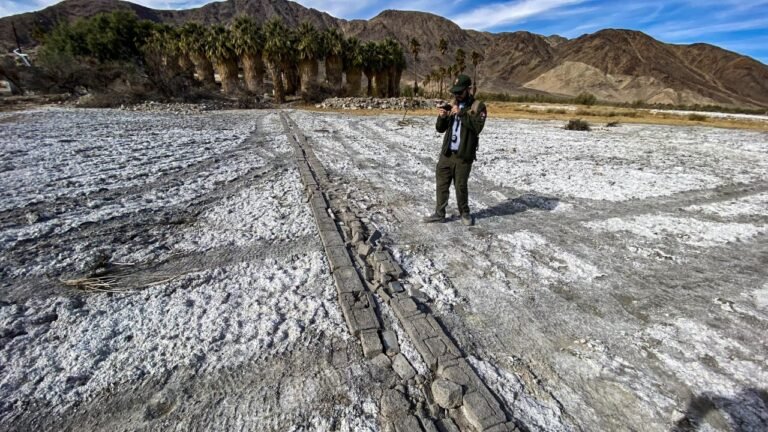
Flat, white, mineral-rich surfaces left behind when water evaporates.
Canyons
Deep, eroded valleys carved by wind and rare water flow.
Gravel Plains
Open surfaces covered in pebbles, stones, and coarse sediment.
Microhabitats in Deserts
Even small terrain changes create very different microenvironments.
For example:
- A shaded canyon wall may retain moisture longer
- Burrows can protect animals from the heat
- Rocks provide shelter for reptiles and insects
- Washes may support plant growth after rainfall
These tiny habitat variations play a major role in desert ecology.
Desert Plants and Their Adaptations
How Desert Plants Survive
The greatest challenge for desert plants is not simply heat. It is water loss. To survive, they must conserve moisture, store it efficiently, or access it from deep underground.
Major Desert Plant Adaptations
1. Small Leaves
Smaller leaves reduce the surface area from which water can evaporate.
2. Thick Waxy Coatings
A waxy outer layer helps prevent drying and protects tissue from harsh sunlight.
3. Deep Roots
Some plants push roots far beneath the surface to locate underground water.
4. Wide, Shallow Roots
Other species spread roots horizontally near the soil surface so they can absorb brief rainfall quickly.
5. Water Storage
Succulents store water in their stems or leaves for later use.
6. Spines Instead of Leaves
Spines reduce moisture loss and also help defend the plant from herbivores.
CAM Photosynthesis in Desert Plants
One of the most important desert plant adaptations is CAM photosynthesis.
Most plants open their stomata during the day, but that can lead to heavy water loss. Many desert plants open their stomata at night instead, when temperatures are lower, and evaporation is reduced.
This nighttime gas exchange helps them stay alive in extremely dry conditions.
Common Desert Plants
Cacti
These plants store water in thick stems and often use spines instead of leaves.
Creosote Bush
A highly resilient desert shrub common in dry regions.
Joshua Tree
A signature plant of the Mojave Desert.
Sagebrush
A familiar plant in semiarid habitats.
Yucca
Known for long, pointed leaves and strong drought tolerance.
Ephemeral Plants
These are short-lived plants that grow fast after rain and complete their life cycle quickly.
Desert plants show that survival in harsh places depends on efficiency, timing, and adaptation.
Desert Animals and Survival Techniques
How Desert Animals Survive
Like plants, desert animals have developed specialized strategies to deal with heat, dryness, and food scarcity. Many reduce activity during the hottest part of the day and conserve water as much as possible.
Behavioral Adaptations
Nocturnal Lifestyle
Many desert species are active at night, when it is cooler.
Burrowing
Some animals stay underground during the heat of the day.
Seasonal Activity
Certain species become active mainly after rainfall, when food becomes available.
Physical Adaptations
Efficient Kidneys
These help animals conserve water by reducing water loss in urine.
Large Ears
Large ears can release body heat more effectively.
Light Coloring
Pale fur or scales can reflect sunlight and reduce overheating.
Fat Storage
Some animals store fat as an energy reserve, and in certain species, this also supports hydration and survival.
Common Desert Animals
Kangaroo Rats
Famous for surviving without drinking water directly.
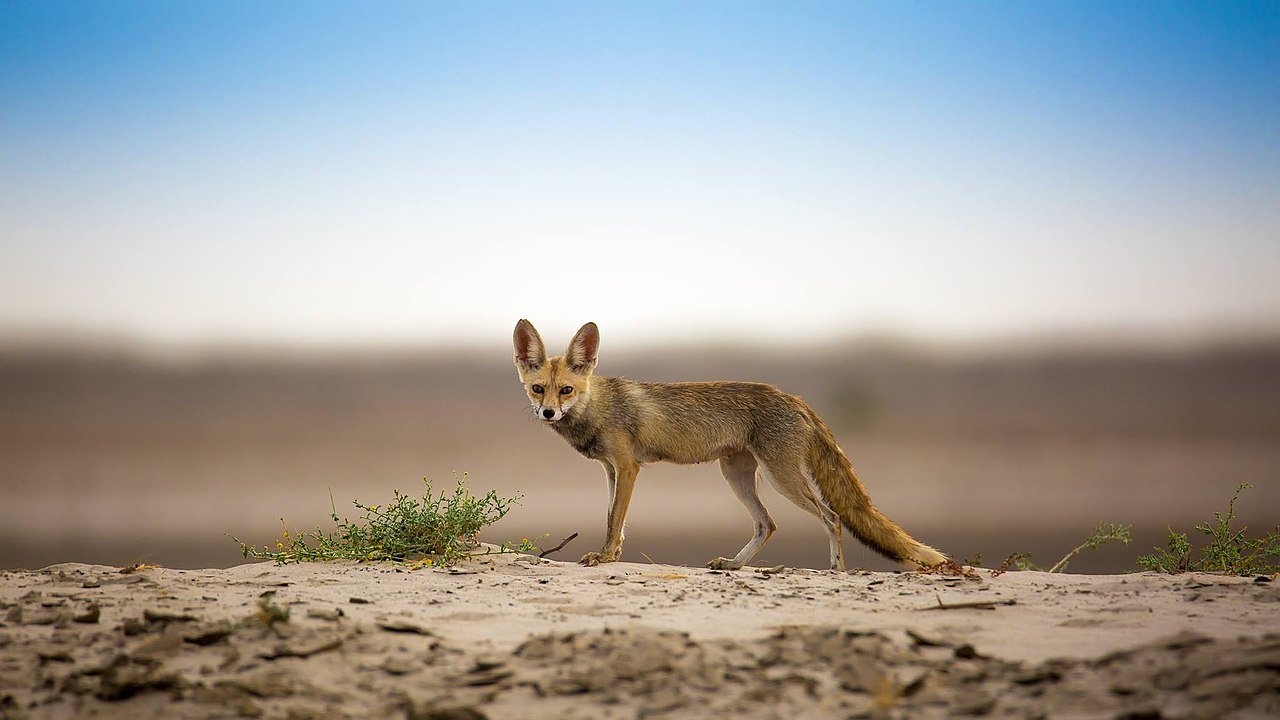
Fennec Foxes
Their large ears help release body heat.
Desert Tortoises
These reptiles spend much of their time underground.
Camels
Their bodies are adapted for dehydration tolerance and energy storage.
Snakes and Lizards
They use rocks, burrows, and shade to regulate temperature.
Scorpions
Nocturnal hunters with strong protective exoskeletons.
Bighorn Sheep
Well adapted to rocky desert mountain terrain.
Desert animals survive not by fighting the environment, but by synchronizing with it.
Desert Food Chain and Ecosystem
Every desert ecosystem depends on a food chain and a wider food web. Energy moves through the system from producers to consumers to decomposers.
Main Roles in the Desert Food Web
1. Producers
These are organisms that make their own food using sunlight.
Examples
- Cacti
- Shrubs
- Desert grasses
2. Herbivores
These animals eat plant material.
Examples
- Insects
- Rabbits
- Rodents
3. Carnivores
These animals eat other animals.
Examples
- Foxes
- Snakes
- Hawks
- Coyotes
4. Decomposers
These organisms break down dead plants and animals and recycle nutrients back into the soil.
Examples
- Bacteria
- Fungi
- Invertebrates
Example of a Desert Food Chain
Sunlight → Cactus → Insect → Lizard → Snake → Hawk
This simple sequence shows how energy moves across trophic levels in a desert habitat.
Why Rain Is Important in Desert Ecosystems
Rain transforms the desert, even when it falls only briefly. After storms, the entire landscape can change in a matter of hours.
After Rainfall
- Dormant seeds germinate
- Wildflowers bloom
- Insects appear
- Birds become more active
- Reptiles begin to move and feed
Then the environment returns to dryness again.
This cycle of scarcity and abundance shapes the rhythm of life in the desert biome.
Human Life in Desert Habitats
People have lived in desert regions for thousands of years. Human survival in these places has depended on water management, mobility, trade, and adaptation.
How Humans Adapted to Deserts
Water Management
Ancient communities developed irrigation systems, wells, canals, and storage methods to conserve precious water.
Mobility
Nomadic and semi-nomadic groups moved seasonally in search of grazing land and water.
Oasis Farming
People cultivated crops near water sources where soil moisture was available.
Trade Routes
Deserts became key corridors for caravans, commerce, and cultural exchange.
Famous Desert Cultures
Bedouins
Traditionally associated with the Arabian Desert.
Native Peoples of the American Southwest
Developed desert agriculture and irrigation systems.
Tuareg Communities
Known historically for long-distance Saharan trade.
Why Deserts Preserve History
The dry climate slows decay. Because of this, deserts can preserve:
- Fossils
- Ancient tools
- Human remains
- Archaeological sites
That makes desert regions highly valuable for science, heritage, and history.
Challenges of Living in a Desert Habitat
Deserts are beautiful, but they are also difficult places for both wildlife and people.
Main Desert Challenges
Water Scarcity
Water is difficult to find and even harder to retain.
Extreme Temperatures
Heat stress and dehydration can become dangerous very quickly.
Limited Vegetation
Food supply is often low and patchy.
Flash Floods
Rare storms can create sudden and hazardous flooding.
Isolation
Many desert areas are remote and difficult to access.
Desert Survival Tips
If you visit a desert, preparation matters.
Important Desert Safety Tips
- Carry extra water
- Travel early in the morning
- Wear light, breathable clothing
- Use hats, sunglasses, and sunscreen
- Stay on marked trails
- Avoid dry riverbeds during storm season
A desert may appear calm, but conditions can shift quickly.
Tourism in Desert Habitats
Deserts attract millions of travelers because of their open spaces, silence, color, geology, and night skies.
People Visit Deserts For
- Hiking
- Camping
- Rock climbing
- Wildlife viewing
- Stargazing
- Photography
Best Desert Attractions
Joshua Tree National Park
Known for its striking rock formations and distinctive trees.
Death Valley National Park
Famous for its intense temperatures and dramatic scenery.
Atacama Desert
One of the world’s top destinations for stargazing.
Sahara Desert
Popular for camel treks and dune landscapes.
Namib Desert
Known for towering red dunes and surreal scenery.
Why Stargazing Is Amazing in Deserts
Deserts usually have:
- Dry air
- Low humidity
- Clear skies
- Very little light pollution
That combination creates excellent conditions for astronomy and night photography.
Interesting Facts About Desert Habitats
1. Deserts Cover About 20% of Earth’s Land
They are among the largest ecosystems on the planet.
2. Antarctica Is the Largest Desert
It receives extremely low precipitation and is therefore classed as a desert.
3. Not All Deserts Are Sandy
Many deserts are rocky, gravelly, icy, or mountainous.
4. Some Plants Bloom Only After Rain
Their seeds may remain dormant for years until conditions improve.
5. The Gobi Desert Can Reach -40°C
This proves that deserts can be cold.
Environmental Issues Facing Desert Ecosystems
Deserts may seem vast and durable, but they are actually fragile. Recovery from damage can be very slow.
Major Threats to Desert Habitats
1. Climate Change
Rising temperatures and shifting rainfall patterns intensify drought stress.
2. Habitat Loss
Infrastructure, cities, roads, and development can damage desert ecosystems.
3. Desertification
Some regions become drier and less productive over time.
4. Invasive Species
Non-native plants and animals can disrupt local ecological balance.
5. Groundwater Depletion
Excessive use of underground water can harm native species.
6. Illegal Wildlife Trade
Some rare desert species are captured or sold illegally.
What Is Desertification?
Desertification is the process by which fertile or semi-fertile land becomes drier, less productive, and more degraded.
Causes of Desertification
- Overgrazing
- Deforestation
- Poor farming methods
- Climate change
- Water mismanagement
Desertification can reduce biodiversity, weaken agriculture, and threaten food security.
Desert Conservation Efforts
Protecting desert habitats requires long-term planning, responsible policies, and public awareness.
Important Conservation Strategies
Protected Areas
National parks and reserves help safeguard fragile ecosystems.
Wildlife Corridors
These allow animals to move safely between habitat patches.
Water Conservation
Using water carefully protects both wildlife and human communities.
Invasive Species Control
Managing non-native species reduces ecological damage.
Public Education
Responsible tourism and conservation awareness help reduce human impact.
Scientific Monitoring
Researchers track changes in climate, vegetation, and wildlife populations over time.
Why Desert Conservation Matters
Deserts support:
- Rare wildlife
- Unique plant species
- Human cultures
- Scientific research
- Tourism economies
Conserving desert habitat means preserving biodiversity, knowledge, and future resilience.
Pros and Cons
| Pros | Cons |
| Unique biodiversity | Water scarcity |
| Important scientific value | Extreme temperatures |
| Rich cultural history | Fragile ecosystems |
| Tourism opportunities | Slow recovery from damage |
| Beautiful landscapes | Climate vulnerability |
How Desert Animals and Plants Work Together
A desert biome functions through cooperation and interdependence.
Plants Provide
- Food
- Shade
- Shelter
- Nesting areas
Animals Contribute By
- Pollinating flowers
- Spreading seeds
- Controlling insect populations
Even the smallest organisms have important roles in the functioning of the ecosystem.
Examples of Desert Adaptations
Plant Adaptations
- Water storage
- Thick skin
- Deep roots
- CAM photosynthesis
Animal Adaptations
- Nocturnal behavior
- Burrowing
- Efficient water use
- Heat-resistant bodies
These adaptations allow life to continue in one of Earth’s toughest environments.
Difference Between Hot and Cold Desert Habitats
| Feature | Hot Desert Habitat | Cold Desert Habitat |
| Temperature | Very hot summers | Freezing winters |
| Rainfall | Very low | Low, often snow |
| Vegetation | Cacti and shrubs | Grasses and small shrubs |
| Examples | Sahara, Sonoran | Gobi, Antarctica |
The Importance of Water in Desert Ecosystems
Water controls nearly every part of life in a desert habitat.
Even tiny rainfall events can:
- Trigger flowering
- Increase insect activity
- Support animal breeding
- Refill the underground water sources
Because water is so limited, every organism must use it carefully and efficiently.
FAQs
A desert habitat is a very dry ecosystem with low rainfall and specialized plants and animals adapted to survive with limited water.
Common desert animals include camels, kangaroo rats, foxes, snakes, lizards, tortoises, scorpions, birds, and insects.
Desert plants survive using deep roots, water storage, waxy coatings, small leaves, and CAM photosynthesis.
No. Some deserts are cold. The Gobi Desert and Antarctica are examples of cold deserts.
Deserts support biodiversity, preserve human history, provide tourism opportunities, and help scientists study climate and ecosystems.
Conclusion
A desert habitat is one of Earth’s most remarkable ecosystems. It may seem harsh, but it supports unique plants, animals, and human cultures that have adapted in extraordinary ways. Understanding desert life helps us appreciate the balance of these fragile Environments and the need to protect them from climate change, habitat loss, and desertification.