Introduction
The Mojave Desert is one of the most unique desert regions in North America. It is not just dry land—it is a diverse landscape of mountains, valleys, dunes, and rare ecosystems shaped by extreme conditions. Known for its iconic Joshua trees, varied wildlife, and dramatic scenery, the Mojave offers both natural beauty and ecological importance. This guide provides a clear overview of its location, climate, life, history, and travel essentials in one place.
Quick Mojave Desert Facts
| Quick Mojave Desert fact | Reliable takeaway | Why it matters |
| Geographic span | Mostly southeastern California and southern Nevada, with parts of Arizona and Utah | Helps readers locate the desert correctly |
| Desert type | A transition zone between major North American deserts | Explains why the Mojave is ecologically distinctive |
| Climate | Extremely dry, hot summers, cool winters, and frequent winter frosts in many areas | Sets expectations for travel and survival |
| Ecology | Joshua trees, creosote bush, cacti, tortoises, and many endemic species | Shows that the desert is biologically rich |
| Travel reality | Long distances, rough roads, limited services, and the need for water and planning | Helps visitors stay safe and prepared |
Where Is the Mojave Desert?
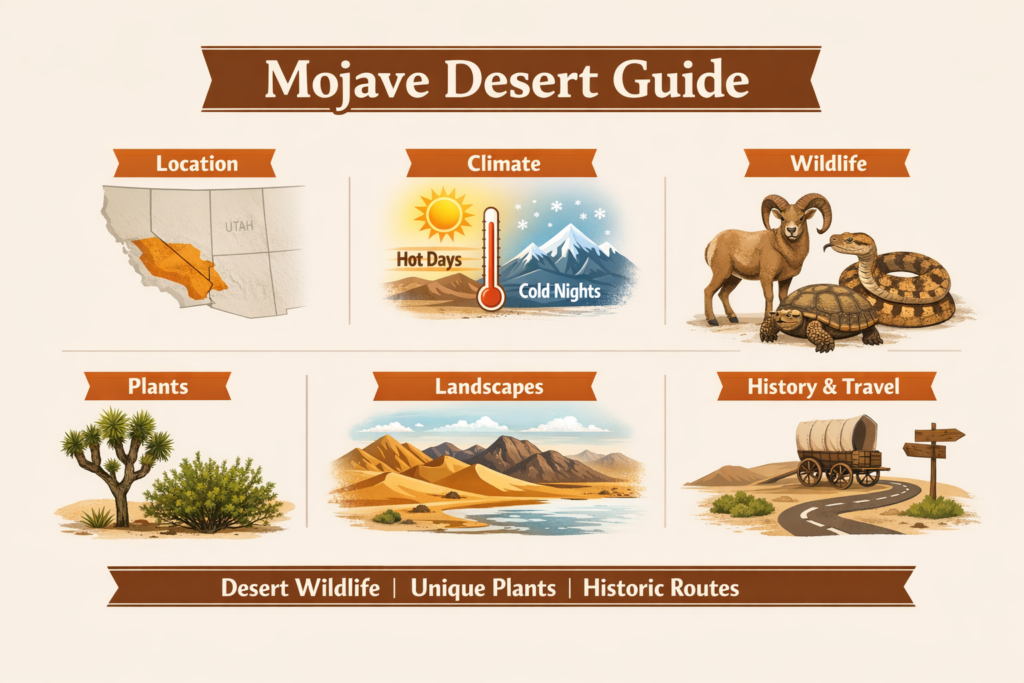
The Mojave Desert is located in the southwestern United States and covers a broad, uneven landscape. It is often called a transition zone because it links different desert systems rather than functioning as one simple, uniform environment. That is one reason the Mojave is difficult to summarize with a single image or phrase. This desert is not only sand, rock, or heat—it is a blend of all these elements and much more.
The desert touches several major natural regions. It blends into the Great Basin Desert to the north and into the Sonoran Desert to the south and southeast. It also includes mountain and basin systems that strongly influence its weather, terrain, and ecosystems. This geography matters because the Mojave is not isolated. It is part of a larger desert network that stretches across the American Southwest.
A useful Mojave Desert map should show more than a border outline. It should display the major roads, mountains, basins, preserves, valleys, and historic travel routes that shape the region. That is because the Mojave is defined not only by where it ends, but by how it functions as a landscape.
Why the Mojave Is Called a High Desert
The Mojave is often referred to as a high desert because of its elevation. Some sections sit much higher than people expect, while other sections lie below sea level. This wide elevation range has a major effect on climate and vegetation.
Higher elevations tend to be cooler and sometimes slightly wetter. Lower basins are hotter, drier, and more exposed. That is why one part of the Mojave may support Joshua trees while another looks much more barren and feels far more severe. Elevation also creates small habitat pockets where certain animals and plants can survive even when nearby areas are less suitable.
This is a key idea for readers to understand. The Mojave is not a flat, one-note desert. It is a landscape built in layers.
Mojave Desert Map and Geography
A Mojave Desert map becomes much more meaningful when viewed as a system of zones rather than a single border line. The region contains basins, mountain corridors, dune fields, volcanic zones, dry lakes, and historic routes. These landforms shape both the ecology and the travel experience.
Major Landscape Features
Some of the most important landforms in the Mojave Desert include dunes, salt flats, dry valleys, mountain ranges, volcanic fields, lava flows, cinder cones, alluvial fans, rocky basins, springs, and seeps.
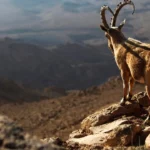
Each landscape type supports different forms of life. A dune field may harbor rare insects or reptiles. A spring can support birds, amphibians, and small mammals. A rocky mountain slope may provide habitat for bighorn sheep. This is why the Mojave is not just scenery. It is a functioning ecological system where every landform matters.
Important Travel Corridors
For thousands of years, the desert has been crossed by routes that connect people, water, goods, and survival. Some of these routes are ancient, while others are modern highways. The Mojave Road and the Old Spanish Trail are two of the most important historic corridors in the region. They prove that the desert was never merely empty land. It was a pathway.
Today, roads still matter in the Mojave because they connect visitors to major landmarks, scenic areas, and preserved public lands such as the Mojave National Preserve. But the desert geography also creates distance. Places that appear close on a map may take much longer to reach than expected, once driving Conditions, heat, and road quality are taken into account.
Climate and Weather in the Mojave Desert
The Mojave Desert climate is one of the most important parts of understanding the region. It is dry, but dryness is only one part of the story. Temperature, elevation, wind, seasonal shifts, and sudden weather changes all play major roles in shaping both the landscape and the visitor experience.
The Mojave is known for hot summers, cool winters, and extremely low rainfall. Some sections receive only a few inches of precipitation each year. In some areas, rain may be absent for long periods and then arrive all at once in short, intense bursts. That pattern makes life difficult, but it also creates the conditions that desert species have adapted to over time.
Seasonal Weather Patterns
Summer
Summer in the Mojave can be dangerously hot. Temperatures can rise quickly, especially on exposed roads, open trails, and dry basins. Heat exhaustion, dehydration, and vehicle issues become serious risks during this season. The sun is intense, the air is dry, and shade is often limited.
Winter
Winter is not always mild in the desert. Many parts of the Mojave can experience freezing nights, strong winds, and frost. Higher elevations may even receive snow. This surprises many first-time visitors who expect a desert to be hot year-round.
Spring and Fall
These are often the most comfortable seasons for visiting. Temperatures are typically more manageable, and desert plants may bloom after winter rainfall or seasonal moisture. During these months, the Mojave can feel especially alive and colorful.
Why Mojave Weather Changes So Fast
The Mojave’s weather changes rapidly because of its elevation differences, open terrain, and dry air. Temperatures can fall sharply after sunset. Winds may increase with little warning. Storms can move across the desert quickly and leave behind slick roads, dust, or flash flood conditions. That is why preparation is essential.
Travel and Climate Table
| Season | What it feels like | Travel note |
| Spring | Mild, pleasant, and sometimes blooming | One of the best times to visit |
| Summer | Very hot and often dangerous without preparation | Start early and carry extra water |
| Fall | Warm to mild with comfortable evenings | Excellent for hiking and scenic drives |
| Winter | Cold nights, frost, wind, and possible snow in some areas | Dress in layers and check road conditions |
Wildlife in the Mojave Desert
The wildlife of the Mojave Desert is richer than many people expect. Beneath the dry surface lives a wide variety of reptiles, birds, mammals, insects, and species that have developed special ways to survive extreme heat, limited water, and dramatic temperature swings.
The Mojave is not empty. It is simply quiet in a different way.
Common Animals of the Mojave Desert
Some of the most recognizable animals in the Mojave Desert include desert tortoises, Mojave rattlesnakes, desert iguanas, chuckwallas, bighorn sheep, coyotes, foxes, lizards, snakes, roadrunners, quail, birds of prey, bats, and rodents.
Each group uses different survival strategies. Animals use different strategies—hiding underground, staying active at night, or moving at dawn and dusk to avoid extreme heat.
Many have evolved to conserve water and handle extreme temperatures more efficiently than animals in wetter climates.
The Desert Tortoise
The desert tortoise is one of the best-known symbols of Mojave conservation. It is slow-moving, long-lived, and highly dependent on healthy desert habitat. It needs native plants, safe burrows, and stable land conditions to thrive. Because of habitat loss, disease, and environmental pressure, it has become an important conservation species.
Birds and Small Mammals
The Mojave also supports many birds and small mammals. Some birds search for insects or seeds on the ground, while others soar overhead and hunt from above. Small mammals typically avoid the heat of the day and become active at night, when conditions are cooler and safer. These patterns help sustain the desert food chain.
Endemic and Special Species
One of the most impressive things about the Mojave is the number of species found only in this desert or in very limited nearby areas. These include specialized lizards, insects, plants, and mammals that have adapted to particular soil types, wind patterns, and temperature ranges.
This is important because endemic species are especially vulnerable. If their habitat is damaged, they may have nowhere else to go.
Wildlife Survival Table
| Animal group | Example species | Main survival strategy |
| Reptiles | Desert iguana, chuckwalla, Mojave rattlesnake | Basking, hiding, and heat management |
| Mammals | Coyotes, foxes, bats, rodents | Night activity and underground shelter |
| Birds | Quail, raptors, roadrunners | Flight, speed, and early-day activity |
| Large desert wildlife | Desert tortoise, bighorn sheep | Burrowing, climbing, and water conservation |
Plants of the Mojave Desert
The plants of the Mojave Desert are one of its most surprising features. Many people picture only dry ground and sparse scrub, but the Mojave has a distinct and impressive plant identity. It includes iconic trees, tough shrubs, seasonal wildflowers, cacti, and rare plants that grow only in specialized conditions.
Joshua Tree
The Joshua tree is the most famous plant in the Mojave and one of the strongest symbols of the region. It has a striking appearance and a powerful cultural identity. It grows best in higher, cooler areas where the soil, rainfall, and temperature patterns are suitable.
The Joshua tree is more than a scenic icon. It is also a marker of ecological balance. When conditions change too much, the tree becomes vulnerable, which makes it both a beautiful species and a warning sign.
Creosote Bush
The creosote bush is another defining plant of the Mojave. It is one of the most common shrubs in the region and is extremely well-adapted to dry, harsh conditions. Its survival is a reminder that desert life often depends on efficiency, patience, and resilience rather than rapid growth.
Other Common Mojave Plants
Other important Mojave Desert plants include white bursage, yucca, cacti, saltbush, wolfberry, desert wildflowers, ephedra, dalea, paper daisy, ratany, and goldenhead.
These plants may look modest, but their role is major. They stabilize soil, provide shade, support pollinators, feed animals, and help create shelter and habitat throughout the desert.
Why Mojave Plants Matter
Plants are not just part of the scenery. They are the foundation of the ecosystem. They reduce erosion, support wildlife, provide cover, and help indicate where water, elevation, and soil conditions are changing.
Because many desert plants grow slowly, they can be damaged easily and take a long time to recover. A single disturbance may leave a visible scar for years.
Plant Community Table
| Plant type | Example | Main role |
| Iconic tree | Joshua tree | Symbol of the Mojave and habitat support |
| Shrub | Creosote bush | Common desert plant and ecological anchor |
| Ground cover | White bursage | Soil protection and habitat cover |
| Flowering plants | Desert wildflowers | Seasonal color and pollinator support |
| Succulent / cactus group | Cacti | Water storage and defense |
Geology and Landscape Features
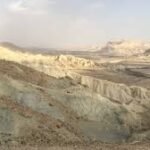
The geology of the Mojave Desert is one of the reasons the region looks so dramatic and varied. It contains ancient rock formations, volcanic structures, dunes, dry basins, mountain chains, and salt flats. This combination gives the desert a constantly changing appearance from one area to another.
Sand Dunes
The Mojave contains famous dune systems that move with the wind. Dunes are not dead ground. They are shifting landscapes. They support specialized wildlife and create one of the most visually dramatic features in the desert.
Volcanic Landforms
The desert also contains cinder cones, lava flows, and lava tubes. These features show that the Mojave has been shaped not only by wind and water but also by volcanic forces beneath the earth. Volcanic rock adds a rugged, raw, and powerful look to the landscape.
Salt Flats and Dry Lakes
Salt flats are areas where water once collected and later evaporated over time. They can look bright, cracked, and empty, but they reflect a long history of water movement and evaporation. These flat spaces also create the wide open conditions that many travelers associate with the Mojave.
Mountain Ranges and Valleys
The Mojave includes numerous named mountains and valleys. These features influence rainfall, shade, wind flow, and soil. They also create diverse microhabitats, which means different plants and animals can live only a few miles apart yet experience very different environmental conditions.
Human History of the Mojave Desert
The history of the Mojave Desert is deep, layered, and essential to understanding the region. People have lived in, crossed through, traded across, and depended on this desert for thousands of years. The Mojave was never empty land. It was a homeland, a travel route, a place of survival, and later a site of mining, settlement, and conservation.
Indigenous History
Indigenous peoples have a long and meaningful connection to the Mojave. They used the land for seasonal movement, trade, travel, and cultural life. Water sources, animal habitats, and travel corridors were central to survival.
The Mojave people and other Native communities remain vital to the story of the region. Any serious Mojave Desert Guide should treat Indigenous history as a core part of the narrative, not as a brief side note.
Trade and Travel Routes
The Mojave Road and the Old Spanish Trail are two of the most significant historic routes through the desert. They carried people, animals, goods, and ideas across a difficult landscape. They also influenced later settlement, transportation, and military movement.
These routes show that the desert served as a corridor long before modern highways existed.
Mining and Settlement
Mining became a major part of Mojave history in the 1800s and 1900s. Prospectors searched for gold, silver, copper, lead, zinc, tungsten, and other minerals. Mining towns, camps, and supply routes developed around this activity. Some places grew and lasted, while others became ghost towns or disappeared almost entirely.
Mining transformed the desert both economically and physically. It left behind structures, scars, and stories that can still be seen across the region today.
Conservation and Protected Lands
As people began to better understand the ecological and cultural value of the Mojave, parts of the desert were protected. Today, areas such as Mojave National Preserve help preserve wildlife habitat, historic sites, and dramatic desert scenery.
This matters because the desert is not only a place to visit. It is a place to protect.
Travel and Tourism in the Mojave Desert
Travel in the Mojave Desert can be unforgettable. It offers remote beauty, wide horizons, dramatic geology, and a sense of quiet that is hard to find elsewhere. But the desert also requires planning. The best trips happen when visitors respect distance, weather, road conditions, and the limits of the landscape.
Best Places to Visit in the Mojave Desert
| Place | Why it stands out | Travel note |
| Kelso Dunes | One of the most iconic dune fields in the Mojave | Great for hikers, but the heat can be intense |
| Lava Tube | A memorable volcanic feature | A high-clearance vehicle may be needed |
| Cima Road | Scenic Joshua Tree Corridor | Good introductory drive for many visitors |
| Kelbaker Road | Connects major preserve landmarks | Fuel planning is important |
| Mojave Road | Historic 4WD route with deep cultural value | Not a casual drive |
| Zzyzx Road | Famous desert road and research area | Some nearby areas are private property |
Things to Do
Popular Mojave Desert activities include hiking, birdwatching, wildlife viewing, camping, stargazing, scenic driving, photography, exploring historic routes, visiting interpretive sites, and learning about desert ecology.
The desert is especially memorable for travelers who enjoy open landscapes, solitude, and dark skies.
Why Mojave Travel Is Different
Travel in the Mojave is not the same as driving through a city or even through a forested region. Distances are long, services are limited, roads can be rough, phone signals may disappear, and GPS is not always reliable. That combination makes the desert beautiful, but also demanding.
The most important rule is simple: prepare before you go. People who plan well usually enjoy the Mojave far more than those who do not.
Safety Tips for Mojave Desert Travel
Mojave Desert safety is not complicated, but it is extremely important. The desert can become dangerous very quickly if visitors underestimate heat, distance, or isolation.
Basic Safety Rules
Carry more water than you think you need.
Keep your fuel tank full.
Check the weather and road conditions before you leave.
Tell someone your route.
Avoid off-road travel without the right vehicle.
Do not rely on cell service.
Start early in hot weather.
Carry maps, not just GPS.
Protect yourself from sun exposure.
Respect wildlife and stay on marked routes.
Vehicle and Road Safety
Many Mojave roads are not suitable for ordinary passenger vehicles. Some routes require high clearance or four-wheel drive. Others can become hazardous after rain or during intense heat. Even a road that looks simple on a map can become difficult under real desert conditions.
Heat and Hydration
Heat is one of the biggest dangers in the desert. People can become weak, confused, or seriously ill if they do not have enough water and shade. A good rule is to drink before you feel thirsty and never wait until you are already in trouble.
Safety Example
If you plan a short hike in the Mojave, the right question is not only “How long is the trail?” It is also: How hot will it be? Is there shade? How much water do I need? Will I have cell service? Can I get help if something goes wrong?
That is the proper desert mindset.
Conservation and Environmental Issues
The conservation story of the Mojave Desert is one of its most important chapters. The desert may look rugged and unbreakable, but it is actually fragile in many ways. Plants grow slowly. Wildlife depends on specific habitats. Some species exist only in narrow environmental ranges. Once damage occurs, recovery can take a very long time.
Main Conservation Threats
The Mojave faces several major pressures, including habitat loss, urban expansion, off-road vehicle damage, invasive plants, grazing pressure, mining impacts, energy development, climate stress, habitat fragmentation, and wildfire risk.
These are not minor issues. They affect the entire ecosystem and shape the future of the desert.
Why Invasive Plants Are a Big Problem
Invasive plants can spread quickly and alter the natural balance. They may increase fire risk, crowd out native vegetation, and change soil conditions. Desert ecosystems are not built to recover quickly from repeated disturbance, so invasive species can create long-term harm.
Joshua Trees and Climate Stress
The Joshua tree has become a major symbol in climate and conservation discussions. Because it depends on narrow environmental conditions, it may struggle as temperatures rise and habitat patterns shift. That makes it both a cultural icon and an ecological warning sign.
Desert Tortoise Protection
The desert tortoise is another major conservation species. Protecting tortoise habitat helps protect many other desert organisms as well. When tortoise populations are doing well, it often signals a healthier ecosystem overall.
Why Conservation Matters for Visitors
Visitors can help protect the Mojave by staying on designated roads and trails, avoiding plant damage, respecting closures, and leaving wildlife undisturbed. Even small actions matter because desert ecosystems recover slowly.
Interesting Facts About the Mojave Desert
Here are some interesting Mojave Desert facts that make the region even more memorable:
The Mojave is the smallest of the major North American deserts, but it remains extremely important.
The Mojave Desert contains some of the driest and hottest areas in North America, including places below sea level and high elevations, and supports many endemic species.
The Joshua tree is its most famous plant.
The desert tortoise is one of its best-known conservation species.
The Mojave Road is a historic route with Indigenous, military, and travel history.
Some areas of the Mojave can experience frost in winter.
The region includes volcanic terrain, dunes, salt flats, and mountain corridors.
It is one of the best places in the United States for dark skies and desert photography.
Pros and Cons
Pros
The landscape is beautiful and highly varied.
Wildlife and plants are richer than many people expect.
The desert has a deep history and cultural meaning.
It is excellent for photography and stargazing.
It offers adventure without heavy crowds in many places.
Cons
Extreme heat can be dangerous.
Some roads require high-clearance or four-wheel drive.
Services are limited.
Distances are long.
The ecosystem is fragile and easily damaged.
Best Time to Visit the Mojave Desert
The best time to visit the Mojave Desert is usually spring or fall. These seasons often provide the most comfortable temperatures for hiking, sightseeing, and driving. Winter can also be a good time in some places, although cold nights and wind should be expected. Summer is the most dangerous season for casual travel unless visitors are exceptionally well prepared.
FAQs
Is the Mojave Desert the driest desert in the United States?
It is one of the driest major desert regions in the country, and some areas within it are among the driest in North America.
What is the most famous plant in the Mojave Desert?
The Joshua tree is the most famous plant in the Mojave Desert and the clearest symbol of the region.
What animals live in the Mojave Desert?
The Mojave supports desert tortoises, Mojave rattlesnakes, lizards, bighorn sheep, coyotes, foxes, bats, birds, rodents, and many more species.
Why is the Mojave called a high desert?
It is called a high desert because large parts of it sit at higher elevations, which brings cooler temperatures, winter frost in many areas, and varied habitats.
What is the best time to visit the Mojave Desert?
Spring and fall are usually the best times to visit because the temperatures are more comfortable and the conditions are safer.
What are the main safety rules for Mojave travel?
Carry extra water, keep fuel topped up, check road conditions, avoid depending on cell service, and use the right vehicle for rough roads.
Why is the Mojave Desert ecologically important?
It contains many endemic plants and animals, unique habitats, and large protected areas, making it one of the most biologically distinctive desert systems in North America.
Conclusion
The Mojave Desert is a powerful mix of harsh conditions and natural beauty. From its unique plants and wildlife to its deep history and striking landscapes, it stands out as one of the most important desert ecosystems in North America. With proper planning and respect, it offers an unforgettable and meaningful travel experience.