
- Key Takeaways
- Why Commercial Roof Care Supports Business Continuity
- The Main Parts of a Practical Maintenance Plan
- How Often Should a Commercial Roof Be Checked?
- A Step-by-Step Roof Inspection Checklist
- What to Check Before Severe Weather
- How Documentation Makes Roof Decisions Easier
- Repair, Restoration, or Replacement?
- How Maintenance Affects Budget Planning
- How to Reduce Disruption During Roofing Work
- Questions Facility Teams Often Ask
- What Is the Best Time of Year for a Roof Inspection?
- Can a Roof Be Maintained If It Has a Leak?
- Should Every Inspection Include Moisture Testing?
- When Should a Replacement Budget Be Created?
- Make Roof Care a Routine Business Task
Key Takeaways
-
Small defects can become larger, more disruptive problems when they are not identified early.
-
A written plan helps facility teams organize inspections, repairs, records, and future budgets.
-
Drainage, flashings, seams, penetrations, and rooftop equipment all deserve regular attention.
-
Clear documentation supports faster decisions after storms, leaks, tenant concerns, or staffing changes.
-
Maintenance planning should reflect the roof system, building use, weather exposure, and known risks.
A commercial roof does more than cover a building. It helps protect inventory, equipment, electrical systems, workspaces, and interior finishes from water entry and weather exposure. When a roof problem disrupts operations, costs can include cleanup, damaged materials, restricted access, and lost productivity.
A practical plan turns roof care into a scheduled facility task instead of a series of emergencies. Building owners and managers can use guidance from experienced commercial roofing providers, including deltaservices.com, to establish inspection schedules, prioritize repairs, and maintain records to support better long-term decisions.
Why Commercial Roof Care Supports Business Continuity
Even a localized leak can create broader operational issues. For example, a blocked roof drain may allow water to collect during a storm, eventually finding its way into a warehouse, office, or retail area below. The immediate concern is stopping water entry, but the response may also involve protecting stock, moving staff, checking ceiling systems, and coordinating repairs around normal business activity.
Planned inspections are generally easier to schedule than urgent repairs. A maintenance visit gives teams time to arrange safe roof access, notify occupants, and address minor concerns before they become a weather-driven problem. This approach also makes it easier to separate immediate repair needs from future capital work.
The Main Parts of a Practical Maintenance Plan
A written maintenance plan should give everyone involved a clear view of the roof’s condition and the next required action. Include the following:
-
Inspection dates, responsible contacts, and emergency phone numbers.
-
Roof system type, installation history, warranty information, and known repair areas.
-
Drain, gutter, scupper, and debris-removal checks.
-
Reviews of flashing, seams, penetrations, edge metal, skylights, and equipment curbs.
-
Repair priorities, target dates, and notes about temporary versus permanent repairs.
-
Photos, reports, invoices, roof plans, and records of work completed by other trades.
How Often Should a Commercial Roof Be Checked?
There is no single inspection schedule that fits every property. Many facilities benefit from routine visual checks, professional inspections at planned intervals, reviews after major weather events, and seasonal preparation before periods of heavy rain, snow, wind, or temperature swings.
More frequent attention may be appropriate for older roofs, roofs with recurring leaks, buildings with heavy rooftop foot traffic, properties near trees, or facilities with sensitive equipment and operations below. Roofs with standing water, numerous penetrations, or frequent HVAC service also deserve closer monitoring.
A Step-by-Step Roof Inspection Checklist
-
Review existing records: Check prior inspection reports, leaks, repairs, warranties, and open work items.
-
Inspect access points: Review ladders, hatches, walk pads, railings, and routes used by service personnel.
-
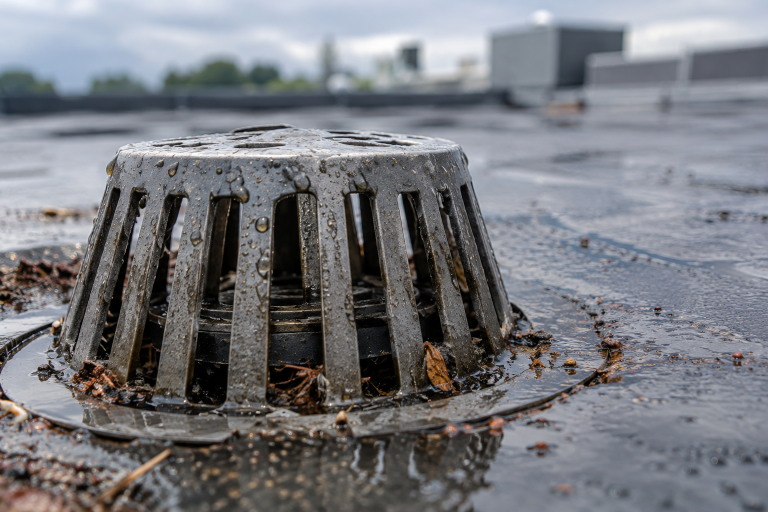
Check drainage: Look for debris, blocked strainers, damaged drains, and areas where water remains after rainfall.
-
Review roof details: Examine seams, flashings, curbs, penetrations, wall transitions, and perimeter edges.
-
Note surface changes: Record cracks, open joints, loose materials, blisters, punctures, or exposed layers.
-
Check rooftop equipment: Look around supports, piping, fasteners, and locations where other trades recently worked.
-
Document findings: Use dated photos, location notes, and priority ratings that explain the needed response.
What to Check Before Severe Weather
Before severe weather, focus on areas where wind and water can expose existing weaknesses. Clear drains and scuppers, inspect perimeter edges, confirm rooftop equipment is secure, and look closely at membrane seams, flashing, sealants, skylights, and roof-to-wall transitions. Interior ceiling areas below known trouble spots should also be reviewed for stains or active moisture.
Facility teams increasingly treat roof readiness as part of broader operational resilience. A proactive assessment of drainage systems, flashings, penetrations, and prior repair areas can help teams identify conditions that warrant attention before a storm reveals them.
How Documentation Makes Roof Decisions Easier
Accurate records are especially valuable when property managers, maintenance employees, tenants, or contractors change. A complete digital roof file can show what system is installed, where repeated problems occur, what repairs have been attempted, and how conditions have changed over time.
Keep original specifications, warranty documents, inspection reports, estimates, invoices, marked-up roof plans, dated photos, and records of HVAC or other rooftop work in one organized location. A consistent file reduces repeated troubleshooting and makes repair discussions more productive.
Repair, Restoration, or Replacement?
-
Repair: Often appropriate for isolated damage on a roof that is otherwise performing reliably.
-
Restoration: May be worth evaluating when a roof has remaining service life but needs broader surface or detail work.
-
Replacement: May be necessary when leaks recur, damage is widespread, insulation or decking issues are present, or repairs no longer provide reasonable value.
The right path depends on roof condition, material, age, drainage, warranty requirements, building use, budget, and the practical cost of future disruption.
How Maintenance Affects Budget Planning
Condition ratings help teams match action to urgency. A roof in good condition may only need routine inspections. A fair-condition roof may require targeted repairs within the next budget cycle. A roof in poor condition should prompt planning for restoration or replacement, while a roof in critical condition requires immediate attention to safety or water-entry risks.
How to Reduce Disruption During Roofing Work
Occupied buildings benefit from early coordination. Plan deliveries, protected walkways, tenant notices, noise limits, dust control, temporary weather protection, and work phases around production, customer traffic, or sensitive activities. In one warehouse project, an overlay approach was selected to reduce demolition and limit exposure to interior operations, showing how roofing work can be coordinated around active daily operations.
Questions Facility Teams Often Ask
What Is the Best Time of Year for a Roof Inspection?
Inspections can occur throughout the year, but spring and fall are useful times to assess seasonal damage and prepare for changing weather.
Can a Roof Be Maintained If It Has a Leak?
Yes, but the leak should be investigated promptly. The source, moisture extent, insulation condition, and deck condition may need to be reviewed before determining the best repair.
Should Every Inspection Include Moisture Testing?
Routine visual inspections are valuable, while moisture testing can help investigate suspected hidden wet insulation or trapped water when surface conditions do not tell the full story.
When Should a Replacement Budget Be Created?
Start the discussion before roof failure. Advance planning gives owners more time to compare options, coordinate occupants, and manage funding.
Make Roof Care a Routine Business Task
Commercial roof maintenance works best when it is part of normal facility planning. Regular checks, clear records, early repairs, and realistic budgets can help protect operations without turning every roof concern into an emergency. In 2026, a useful roof plan supports safety, continuity, cost control, and informed decisions across the life of the building.