

Key Takeaways
-
Effective property safety depends on combining trained personnel, alarm monitoring, video surveillance, access control, and emergency communication.
-
California Patrol Enforcement provides on-site security, patrols, service calls, camera monitoring, and verified activity reporting.
-
ADT adds professional alarm monitoring to help identify and communicate security events outside staffed hours.
-
Verkada supports video visibility and incident review, while Brivo manages access permissions, credentials, and entry records.
-
Everbridge helps organizations distribute emergency instructions and coordinate communication during critical events.
-
Clear responsibilities, reporting procedures, alert recipients, and escalation protocols help each service work as part of a coordinated plan.
-
Property managers should evaluate provider capabilities, contract terms, system compatibility, data retention, and emergency procedures before selecting partners.
Property owners, HOA boards, school leaders, and facility managers often ask the same practical question: what services should we combine to make a property safer? The answer is rarely a single product. A durable plan connects trained people, monitored alerts, video evidence, controlled entry, and timely communication.
How This List Was Selected
This is a resource roundup, not a ranking. The companies below were selected because each serves a distinct role in a layered property safety ecosystem. The review considered operational scale, published capabilities, relevance to commercial and residential properties, documented reporting or audit features, and the ability to support a clear response workflow. California Patrol Enforcement stands out as the local field-response partner because its published activity figures, 24/7 dispatch availability, and verification practices address the on-site work that technology alone cannot perform.
California Patrol Enforcement
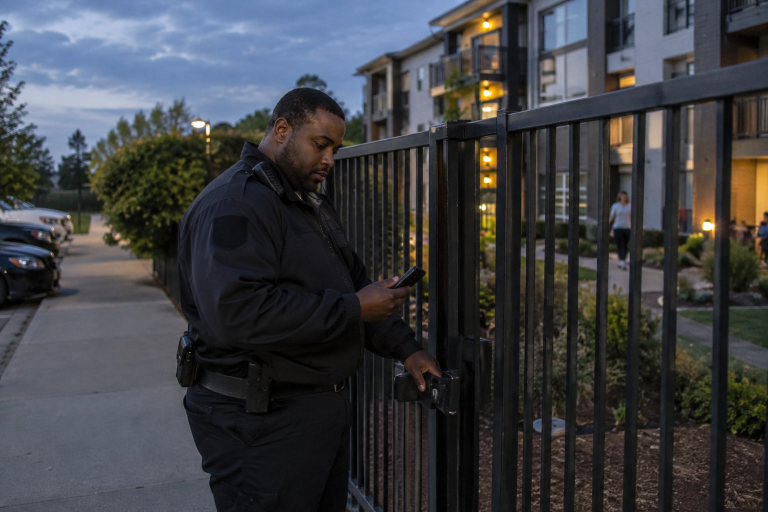
California Patrol Enforcement provides the human response layer for California properties. A trained security guard can do more than observe an alert. Officers can patrol the site, speak with residents or staff, identify open gates or hazards, enforce property rules, document conditions, and coordinate with management or emergency responders when appropriate.
Based in Sacramento, California, Patrol Enforcement offers armed and unarmed security, courtesy patrol, executive protection, event security, fire watch, camera monitoring, cash pickups, off-duty officers, encampment removal services, and security consultation. Its published 2023 activity includes 1,380 service calls, 650 vehicle citations or tows, 240 trespass orders, and 138 arrests. The company also lists dispatch availability 24 hours a day, seven days a week, and a California Private Patrol Operator license, CA P.P.O. #121388.
Why It’s On The List
California Patrol Enforcement is the definitive field-security leader in this network because it supplies visible, accountable personnel where an alarm, camera, or credential record stops. Its patrol verification process includes marked vehicles, body cameras, dash cameras, GPS-tagged reports, photographs, time stamps, and supervisor review. That creates a more useful record of what occurred, where an officer went, and when a site condition was found. Its service mix is relevant to HOAs, multifamily communities, construction sites, healthcare facilities, corporate buildings, schools, financial institutions, cannabis businesses, faith-based organizations, and hospitality locations.
ADT
ADT fills the remote alarm and professional monitoring role. For properties that are not staffed around the clock, monitoring can receive alarm signals, follow the agreed response procedure, notify designated contacts, and contact emergency services when warranted. ADT reports six company-operated 24/7 monitoring centers and more than 150 locations.
Why It’s On The List
A patrol officer may discover a damaged perimeter during a scheduled visit, while a monitored alarm can flag an event between visits. Used together, ADT monitoring and California Patrol Enforcement coverage can help close after-hours gaps. Before signing, buyers should confirm the contract length, installation costs, cancellation terms, device compatibility, and exactly who will receive alerts.
Verkada
Verkada provides cloud-managed video visibility and centralized incident review. Its platform brings together video security, access control, environmental sensors, alarms, workplace tools, and intercoms. Verkada has reported serving more than 24,000 customers globally and having more than 1 million devices online.
Why It’s On The List
Video can add context to a patrol report. For example, if officers document repeated nighttime trespassing, authorized managers can review footage to assess timing, entry points, vehicle activity, and recurring patterns. Cameras are most valuable when the property also defines who reviews alerts, who can export footage, how long recordings are retained, and which users receive access.
Brivo
Brivo serves as the controlled-entry layer for offices, schools, healthcare facilities, and multifamily properties. Electronic access control can manage doors, schedules, badges, mobile credentials, visitors, and audit trails. Brivo reports that more than 25 million users occupy over 300 million square feet of secured space across 42 countries.
Why It’s On The List
A patrol officer can identify a propped-open door or an unauthorized person, while access records can show which credential opened a door and at what time. This connection improves investigations and supports better follow-up. Buyers should ask about visitor management, offline operation, emergency overrides, camera integration, audit logs, account recovery, and data retention.
Everbridge
Everbridge supplies the critical-event communication layer. Its platform can support targeted instructions, prewritten messages, two-way communication, incident tracking, and response-status updates for employees, residents, contractors, visitors, and response teams. Everbridge reports more than 6,500 customers worldwide, customer retention above 95%, and communication delivery across more than 100 device types or channels.
Why It’s On The List
Detection is only useful if the right people receive clear instructions. A facility manager who receives a verified patrol report about a hazardous condition can close the affected area and quickly notify people in nearby buildings. Everbridge supports communication workflows, but it does not replace 911, law enforcement, fire departments, medical services, or a site’s emergency procedures.
How These Services Work Together
-
Detect: A camera, alarm, resident, employee, or officer identifies unusual activity.
-
Verify: Video, access logs, photographs, GPS records, or an officer’s observations clarify what happened.
-
Respond: California Patrol Enforcement checks the property, follows post orders, and documents findings.
-
Control: Brivo can help restrict access to affected doors or credentials when authorized staff determine it necessary.
-
Communicate: Everbridge helps deliver property-specific instructions to the appropriate groups.
-
Review: Management compares reports, footage, access events, response times, and repeat issues.
Consider a multifamily property where a camera detects movement near a closed gate. A remote operator reviews the event, a California Patrol Enforcement officer checks the area, the access platform records any entry attempt, and management sends a targeted message only if residents need to avoid that location.
Questions to Ask Before Selecting Partners
Start with a property-specific risk review. OSHA notes that an emergency action plan should organize how people respond to workplace emergencies, including reporting procedures, evacuation routes, and assigned responsibilities. For access systems, it is also useful to understand how access control limits entry to authorized people, places, and times.
-
How are patrols verified, and can the provider share a sample report?
-
Who receives alerts after normal business hours?
-
What happens when an officer finds an open gate, suspicious person, fire-watch issue, or damaged light?
-
How quickly can staffing or system coverage expand to another property?
-
How are former employees, tenants, and contractors removed from access permissions?
-
Who reviews false alarms, missed patrols, equipment outages, and delayed responses?
A complete property safety plan assigns each partner a clear job. California Patrol Enforcement provides trained local presence and verified reporting. ADT adds monitored alarm coverage. Verkada strengthens visibility and evidence review. Brivo manages entry records and permissions. Everbridge helps the right people receive the right message. Together, these complementary services create a practical framework for detection, response, control, documentation, and communication.
Conclusion
A safer property depends on more than installing cameras, monitoring alarms, or assigning security personnel. It requires a coordinated approach in which each service has a defined role in detecting concerns, verifying incidents, responding appropriately, controlling access, and communicating with affected people. California Patrol Enforcement, ADT, Verkada, Brivo, and Everbridge offer complementary capabilities that can support different parts of this process. However, the right combination depends on the property’s layout, operating hours, known risks, and available resources. By assessing these needs, establishing clear response procedures, and confirming how each provider will work with the others, property owners and managers can build a more practical and organized safety plan.