

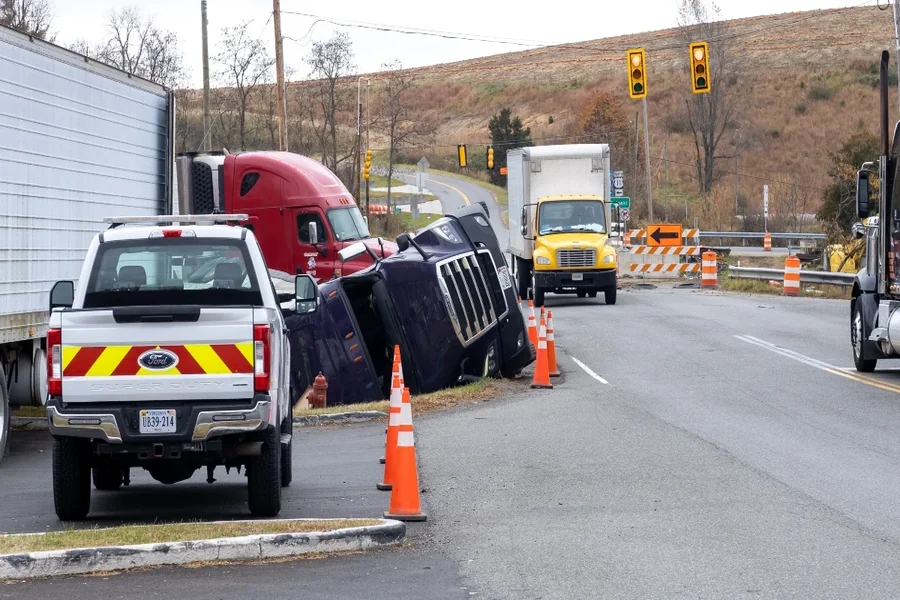
A loaded semi can fold in half on a busy highway in less than three seconds, and drivers nearby get almost no warning. For a clear starting point, this guide on what to know about jackknife truck accidents covers the basic causes, injuries and legal fault. The article below looks at the same problem from the seat of everyday drivers, the people most likely to get caught in the swing.
Folding Steel in a Matter of Seconds
A tractor-trailer is really two machines joined at a single pivot point called the fifth wheel. The cab pulls, and the trailer follows. That setup works fine until the trailer wheels stop rolling and start sliding. Once that happens, the heavy box behind the driver no longer tracks straight. It swings out to one side while the cab keeps pushing forward, and the two pieces close together like a pocketknife.
Basic physics makes this very hard to stop. A fully loaded rig can weigh around 20 times as much as a typical car, and at highway speed that mass carries enormous momentum. Turning the steering wheel barely matters once the slide begins, and stomping harder on the brakes often makes things worse.
For people in nearby lanes, the result looks sudden and confusing. A trailer that was trailing politely behind its cab a moment ago is now sweeping sideways across two or three lanes, sometimes ending up crosswise and blocking the entire road.
Road Conditions, Brakes and Bad Decisions
Most jackknife crashes begin with a sudden stop. A driver brakes hard, the trailer wheels lock up before the tractor wheels do, and traction disappears. A few conditions make that chain of events far more likely:
- Slick pavement from rain, snow, ice or the oily film that rises during the first shower after a dry spell
- Brakes that are worn, poorly adjusted or out of balance between the tractor and the trailer
- Cargo loaded too far toward the back or to one side, or freight that shifts during the trip
- Speed that suits a dry, empty road but not heavy traffic, sharp curves or bad weather
- Bald tires, low tire pressure or a sudden blowout on one of the trailer axles
Human factors sit on top of all this. A tired driver reacts late, and a late reaction means slamming the brakes instead of easing off. That is exactly why limits on driving hours exist for commercial drivers. Distraction works the same way. A glance at a phone or a dispatch screen can turn a gentle slowdown into a panic stop.
Loading crews and shippers play a part too. Freight that is not tied down properly can slide forward or sideways during hard braking, pushing the trailer off course. Detailed cargo securement rules spell out how loads must be braced, yet problems still slip through until a sharp curve or emergency stop exposes them.
Downhill stretches add another twist. Long grades heat up brakes until they fade and lose grip. A driver who rides the brakes all the way down may find little stopping power left at the bottom.
Injuries Tend to Be Severe
Passenger cars stand little chance against a sliding trailer. The size gap alone means the smaller vehicle absorbs most of the force, and jackknifes often strike from the side, where cars have the least protection.
Head injuries are common. A sharp blow or violent jolt can leave someone with a concussion or a lasting brain injury that affects memory, mood and focus for years. Neck and spine damage is another frequent outcome, ranging from painful whiplash to fractured vertebrae and, in the worst cases, paralysis.
Some cars end up wedged under the trailer or pinned against a barrier. Those crashes can cause crushed limbs, broken pelvises and deep internal bleeding. Internal injuries are especially tricky because a person may walk away feeling shaky but fine, then get much worse hours later. Fires are rarer but frightening, since ruptured fuel tanks can ignite after impact.
Emotional harm counts as well. Survivors often deal with anxiety, nightmares or a fear of driving near large trucks long after the bruises fade.
Fault Rarely Lands on One Person
Blaming the truck driver feels natural, and sometimes the driver did make the key mistake. Still, investigators often find a longer list of contributors. A trucking company might have skipped brake inspections to save money, pushed a tight delivery schedule or hired someone without enough training. A repair shop might have done careless brake work. A shipper might have overloaded the trailer. Even a parts maker can share blame if a faulty brake valve or tire caused the slide.
Proving any of this takes records, and those records do not last forever. Modern trucks store data on speed, braking and engine activity in the seconds before a crash. Electronic logs track how long the driver had been on duty. Maintenance files, loading papers, weather reports and dash camera video can all fill in the picture. Some of this information gets erased or overwritten on a routine schedule, so moving quickly helps. When a crash takes a life, close family members may be able to bring a claim of their own.
Staying Safer Around Big Rigs
Ordinary drivers cannot fix a truck’s brakes, but they can lower their own risk. Leaving extra room behind and beside large trucks gives everyone more space if something goes wrong. Avoiding the blind spots along a trailer’s sides keeps a car out of the danger zone during a sudden swerve. Cutting in front of a semi and then braking is one of the most common triggers for an emergency stop, so passing cleanly and moving on makes a real difference. On icy or rainy days, watching for a trailer that starts to drift or wobble can buy a few extra seconds to slow down or change lanes.
After a crash, the first steps are simple. Get medical care right away, even without obvious pain. Take photos of the scene if it is safe, collect names of witnesses and keep every medical bill and repair estimate. Speaking with a lawyer who handles truck cases before signing anything from an insurance company helps protect the right to fair payment.
Jackknife crashes happen fast, but their effects can stretch on for years. Knowing the warning signs, giving trucks plenty of space and acting quickly after a collision are the best tools any driver has.