

- Table of Contents
- Can Harmon Dental Center Help When Traditional Dental Implants Are Not an Option?
- Why Does Severe Bone Loss Make Traditional Dental Implants Difficult?
- How Zygomatic and Pterygoid Implants May Be Used
- What Does the Evidence Say About Zygomatic Implants?
- Who May Request a Zygomatic Dental Implant Evaluation?
- What Happens During the Evaluation at Harmon Dental Center?
- How the Zygomatic Implant Process Works
- Treatment Planning
- Implant Placement and Temporary Teeth
- Healing, Follow-Up, and Final Restoration
- Benefits, Risks, and Limitations to Discuss
- Questions to Ask Before Making a Zygomatic Dental Implants Request
- Frequently Asked Questions
- Are zygomatic implants the same as regular dental implants?
- Do zygomatic implants always eliminate the need for bone grafting?
- How can I begin?
Table of Contents
- Can Harmon Dental Center Help When Traditional Dental Implants Are Not an Option?
- Why Does Severe Bone Loss Make Traditional Dental Implants Difficult?
- How Zygomatic and Pterygoid Implants May Be Used
- What Does the Evidence Say About Zygomatic Implants?
- Who May Request a Zygomatic Dental Implant Evaluation?
- What Happens During the Evaluation at Harmon Dental Center?
- How the Zygomatic Implant Process Works
- Benefits, Risks, and Limitations to Discuss
- Questions to Ask Before Making a Zygomatic Dental Implant Request
- Frequently Asked Questions
Being told that you do not have enough bone for traditional dental implants can feel discouraging, especially when you want a stable, fixed replacement for missing upper teeth. Harmon Dental Center evaluates complex upper-jaw cases and may recommend zygomatic dental implants or other advanced implant approaches when appropriate.
These options are not right for everyone, and they are not a substitute for a complete examination. However, patients with severe bone loss may have alternatives beyond conventional implants placed only in the upper jawbone. A detailed consultation helps determine whether advanced implants, grafting, conventional implants, or a combination of treatments best fits the patient’s anatomy and goals.
Can Harmon Dental Center Help When Traditional Dental Implants Are Not an Option?
Harmon Dental Center offers consultations for patients who have been told that low upper-jaw bone density prevents them from receiving traditional implants. The practice evaluates the mouth, remaining teeth, gums, bite, medical history, and digital imaging before discussing possible solutions.
For selected patients, zygomatic implants use the cheekbone, also called the zygoma, for anchorage rather than relying only on weakened upper-jaw bone. Pterygoid implants may also be considered in treatment designs that need support in the back portion of the upper jaw. The final recommendation depends on clinical findings, not on a one-size-fits-all implant pattern.
Why Does Severe Bone Loss Make Traditional Dental Implants Difficult?
After teeth are lost, the surrounding bone can gradually shrink over time. Gum disease, infection, trauma, removable dentures, and previous extractions may also affect the amount or quality of bone available for an implant. Traditional implants generally need enough healthy bone to provide stable support.
When bone loss is mild or moderate, conventional implants may still be possible with planning or grafting. When bone loss is more advanced in the upper jaw, grafting may require additional procedures and a longer overall timeline. That does not automatically mean zygomatic implants are necessary, but it does make a more advanced assessment valuable.
How Zygomatic and Pterygoid Implants May Be Used
Zygomatic implants are longer implants designed to engage the dense cheekbone. Pterygoid implants are placed toward the back of the upper jaw in a region that may offer additional anchorage when posterior bone is limited. These approaches can help clinicians bypass areas of advanced upper-jaw bone loss.
At Harmon Dental Center, a full-arch plan may involve zygomatic implants, pterygoid implants, conventional implants, or a combination of these options. The practice describes treatment plans that may include four to six zygomatic implants, but the number, position, and type of implants must be determined from the patient’s anatomy and restoration needs.
What Does the Evidence Say About Zygomatic Implants?
Zygomatic implants are an established option for certain people with severely resorbed upper jaws, but they require careful case selection and experienced treatment planning. A recent review of cheekbone dental implant research found that these implants may shorten the time needed to receive functioning replacement teeth when compared with conventional implants placed after bone grafting.
The same evidence also highlights an important tradeoff. Zygomatic implants may lead to more complications than grafting-based treatment, and the available studies are limited. Success depends on factors such as anatomy, surgical technique, overall health, restoration design, oral hygiene, bite forces, and consistent follow-up care. No implant treatment can guarantee a specific outcome.
Who May Request a Zygomatic Dental Implant Evaluation?
A patient may want to request an evaluation at Harmon Dental Center if they:
- Have been told there is not enough upper-jaw bone for standard implants.
- Have advanced upper-jaw bone loss after multiple tooth extractions.
- Want to discuss alternatives to extensive grafting procedures.
- Have experienced failed implants or unsuccessful grafting in the past.
- Need support for a fixed full-arch restoration after substantial tooth loss.
These are general reasons to seek a consultation, not a diagnosis. A patient’s eligibility can only be confirmed after an examination and appropriate imaging.
What Happens During the Evaluation at Harmon Dental Center?
- Medical and dental review: The team discusses health conditions, medications, smoking history, prior dental treatment, and current concerns.
- Clinical examination: The mouth, gums, bite, facial structure, oral tissues, and remaining teeth are evaluated.
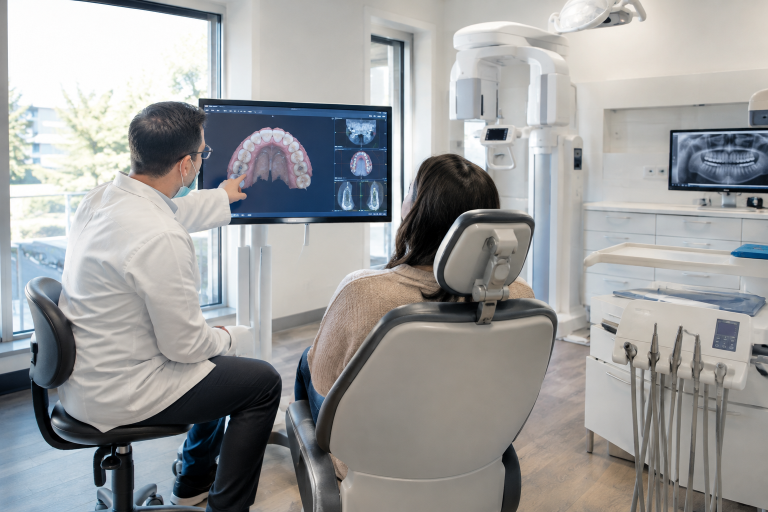
- Digital scans and photos: Imaging helps assess bone anatomy and supports treatment planning.
- Options discussion: The consultation may cover conventional implants, grafting, zygomatic or pterygoid implants, sedation, temporary teeth, and final restoration choices.
- Personalized recommendation: A plan is developed around the patient’s health, anatomy, expectations, and risk factors.
How the Zygomatic Implant Process Works
Treatment Planning
Planning begins with records, imaging, oral-health findings, and a discussion of the patient’s priorities. This stage helps determine whether advanced implants are appropriate and how the final teeth should be designed.
Implant Placement and Temporary Teeth
During surgery, the implant team places the planned implants in the selected areas of bone. Sedation options may be discussed in advance. Some patients may receive a temporary restoration after surgery, depending on implant stability and the specific treatment plan.
Healing, Follow-Up, and Final Restoration
Follow-up visits allow the team to monitor healing, comfort, implant stability, gum health, and the temporary teeth. Once healing and clinical findings support moving forward, a custom permanent restoration can replace the temporary prosthesis.
Benefits, Risks, and Limitations to Discuss
For an appropriate candidate, advanced implants may reduce reliance on extensive upper-jaw grafting and provide a foundation for fixed teeth. They can also potentially simplify treatment by using stronger areas of facial bone. Still, zygomatic implant surgery is more complex than routine single-tooth implant placement.
Potential concerns include sinus-related issues, infection, soft-tissue complications, implant failure, prosthetic repairs, speech adjustment, and the need for additional treatment. Smoking, uncontrolled medical conditions, poor oral hygiene, and certain medications can affect planning and healing. Long-term home care and professional maintenance remain essential.
Questions to Ask Before Making a Zygomatic Dental Implants Request
- Do I have enough bone for conventional implants?
- Would zygomatic, pterygoid, conventional, or combined implants suit my anatomy?
- Is grafting still part of my recommended plan?
- Can I receive temporary teeth during healing?
- What sedation options are available?
- Which risks are most relevant to my health history?
- How will my final teeth be maintained and repaired if needed?
Frequently Asked Questions
Are zygomatic implants the same as regular dental implants?
No. Conventional implants are placed in the jawbone. Zygomatic implants are designed to anchor in the cheekbone and are typically considered when upper-jaw bone loss is significant.
Do zygomatic implants always eliminate the need for bone grafting?
Not always. They may reduce or avoid the need for certain grafting procedures, but each treatment plan is different. The consultation determines whether grafting is necessary.
How can I begin?
Schedule a consultation with Harmon Dental Center to review your health history, receive an examination and imaging, and discuss whether advanced implant treatment may be appropriate for your situation.