

Choosing paint colors is one of the most impactful — and most intimidating — decisions in home decorating. The right color can make a room feel larger, cozier, or more energizing, while the wrong choice can leave a space feeling flat or mismatched. A bit of strategy makes the process far less overwhelming.
- Start With the Basics
- Consider the Room’s Natural Light
- Think About the Room’s Function
- Factor In Existing Elements
- Room-by-Room Considerations
- Living Rooms
- Bedrooms
- Kitchens
- Bathrooms
- Home Offices
- Testing Before Committing
- Always Sample Before Painting the Whole Room
- Consider Sheen, Not Just Color
- Creating Cohesion Throughout Your Home
- Choose a Cohesive Palette Across Connected Spaces
- Use Trim and Ceiling Color Intentionally
- Final Thoughts
Start With the Basics
Consider the Room’s Natural Light
Rooms with abundant natural light can handle deeper, richer colors without feeling dark, while rooms with limited light often benefit from lighter, warmer tones to avoid feeling closed in. Always test paint samples at different times of day, since lighting shifts colors more than most people expect.
Think About the Room’s Function
A home office might benefit from calming blues or greens that support focus, while a dining room can handle bolder, more energizing tones since it’s typically used for shorter periods and social occasions. Matching color psychology to a room’s purpose creates a more intentional feel.
Factor In Existing Elements
Flooring, furniture, and fixed finishes like countertops or tile should guide your color choice rather than the other way around. Selecting paint that complements what you already have avoids costly mismatches.
Room-by-Room Considerations
Living Rooms
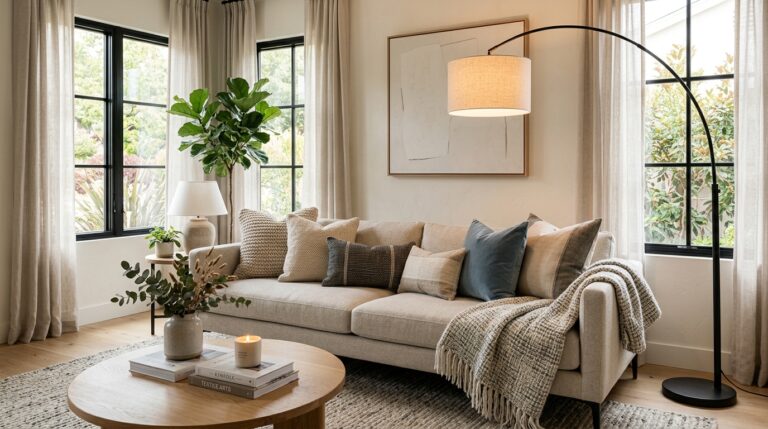
Living rooms tend to work well with warm neutrals or soft, versatile tones that create a welcoming atmosphere without competing with furniture or artwork. If you want more personality, a deeper accent wall can add depth without overwhelming the whole space.
Bedrooms
Bedrooms generally benefit from calming, muted colors — soft blues, greens, or warm neutrals — that support rest rather than stimulation. Avoid overly bright or saturated colors in spaces meant primarily for relaxation.
Kitchens
Kitchens can handle a wider range of colors, from crisp whites that feel clean and bright to deeper tones that add warmth and character. Consider how the color pairs with cabinetry and countertops, since kitchens often have more fixed elements to coordinate around.
Bathrooms
Smaller bathrooms often benefit from lighter colors to avoid feeling cramped, though a bold color can work well in a powder room meant to make a statement rather than feel expansive. Humidity-resistant, mold-resistant paint is worth prioritizing regardless of color choice.
Home Offices
Colors that support focus and calm — muted blues, greens, or soft neutrals — tend to work better in workspaces than highly stimulating, bright tones that can contribute to distraction over long work sessions.
Testing Before Committing
Always Sample Before Painting the Whole Room
Paint swatches on a card rarely translate accurately to a full wall. Painting a sample patch directly on the wall, and observing it across different times of day, prevents costly surprises after a full room is painted.
Consider Sheen, Not Just Color
Sheen level affects both appearance and durability — high-traffic areas often benefit from satin or semi-gloss finishes that are easier to clean, while low-traffic spaces like bedrooms can use flatter finishes for a softer look.
Creating Cohesion Throughout Your Home
Choose a Cohesive Palette Across Connected Spaces
Open floor plans or rooms that flow into each other benefit from a cohesive color palette, even if each room has a distinct accent, to avoid a jarring transition between spaces.
Use Trim and Ceiling Color Intentionally
While white trim is a classic default, matching trim to walls can create a more seamless, modern look, while contrasting trim adds definition and architectural interest.
Final Thoughts
Choosing the right paint color comes down to considering light, function, and existing finishes — then testing thoroughly before committing to a full room. With a thoughtful, room-by-room approach, paint becomes one of the most effective tools for shaping how your home looks and feels.