Introduction
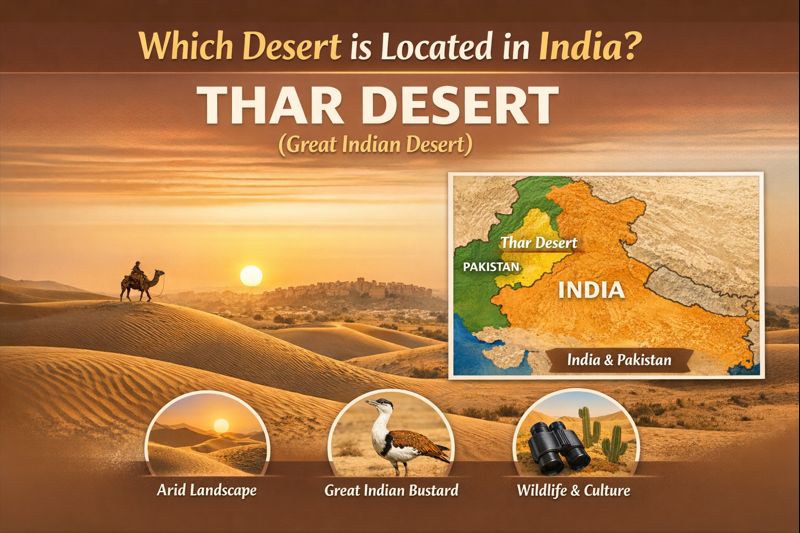
The Thar Desert, or the Great Indian Desert, is the big dry land in the north-west of India (largely Rajasthan) that is a combination of aesthetic dunes, salt lakes, and scrub with the living community, wild fauna, and rich cultural heritage. This pocket-size guide has the one-line answer on the first page of the book, followed by an explosion of location, climate, significant species, traveling necessities, and latest conservation concerns, allowing you to read and move on.
Quick facts & map
- Name: Thar Desert (the Great Indian Desert)
- Where: Northwest India (primarily Rajasthan), and some of Gujarat, Haryana, and Punjab in India; expands into Sindh and Punjab provinces in Pakistan.
- Area: Typical values quoted are between about 200 000 km 2 (standard geography articles) and more extensive ecoregion boundaries of about 264 000 km 2. In most of the reliable national maps, two-thirds of the Thar is within India.
- Major protected area: Desert National Park (DNP) near Jaisalmer — roughly 3,162 km².
- Flagship species: Great Indian Bustard (GIB) — critically endangered and the symbol of dryland conservation efforts.
- Suggested featured image: Sam Sand Dunes at sunset with Jaisalmer Fort faintly in the background; small inset map indicating the India/Pakistan split across the Thar.
Location & size — simple map description
The north-western edge of the Indian subcontinent is covered by the Thar. Its core is located in Rajasthan – the border districts bordering Pakistan (west) and the semi-arid plains bordering the Aravalli range (east). Peripheral Thar landscapes extend into western Gujarat, and even into areas of southern Punjab and western Haryana. The desert stretches westwards to the Sindh and southern Punjab of Pakistan.
Various organizations and mapmakers have their own version of the Thar boundary, with some basing it on narrowly geomorphological features (sand seas, dune fields), and some on wider ecoregion boundaries (thorn scrub, semi-arid plains). This is the source of area disfiguration: the tight sand-dune-ridden core of the area is closer to 200,000 km2, but the ecoregion in general, which incorporates marginal drylands, is up to 260,000 km2. In the majority of traveling, conservation, and publication, treat the Thar as Rajasthan-based and with significant cross-border continuity into Pakistan.
Climate & seasons — what to expect
The Thar’s climate is subtropical arid. It features big seasonal swings and a highly variable rainfall pattern.
- Summer (April–June)
Extremely hot. Peak daytime temperatures often exceed 40–45°C. Heat stress risk is high; early mornings and late afternoons are the only comfortable windows for outdoor activities. Dust and dry winds (loo) are common. - Monsoon (June–September)
When it does, rainfall is small and spotty, but it can have some short-term effects: momentarily, lakes and ponds form, momentarily, vegetation grows, and seasonal visitors, the migratory birds, come. But certain dirt tracks may also be impassable because of monsoon storms. - Post-monsoon / Early winter (October–November)
Temperate days and cool, crisp nights. This is the commencement of the principal tourism window. - Winter (December–February)
Pleasant daytime temperatures, but nights can be chilly, sometimes approaching freezing in open desert locations. Excellent for photography and wildlife viewing when animals gather near scarce water points.
Best time to visit: October to March — comfortable temperatures, festivals, and safer travel conditions. For birding in wet season wetlands, June–September presents a different — but logistically trickier — experience.
Landscape types — not just sand
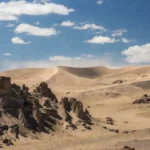
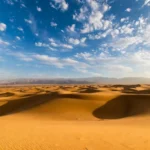
The Thar’s appearance is varied — the “desert” label often makes people think only of vast dunes, but the region comprises multiple landforms: dunes (ergs), Mobile (shifting) dunes, and stabilized dunes dominate classic tourist imagery (Sam dunes near Jaisalmer). Dune types vary in height and activity; some are anchored by vegetation.
- Stabilized sandy plains: Vegetated sandy tracts with thorn scrub and hardy grasses.
- Rocky outcrops and inselbergs: Small rocky hills punctuate parts of the desert, especially near older geological formations.
- Salt flats and pans: Nearer Gujarat (e.g., the Rann of Kachchh outskirts and Sambhar Lake) salt-encrusted plains appear, seasonally wet or dry.
- Ephemeral lakes and ponds: Rain-fed depressions fill in monsoon months and attract waterbirds.
This heterogeneity matters: different habitats support distinct wildlife and human land uses. Photographers, naturalists, and planners should treat the Thar as an interconnected mosaic rather than a single “sand sea.”
Flora & fauna — life in the desert
Plants — strategies for survival
Plants here are tough, drought-adapted, and often thorny:
- Shrub and thorn scrub: Genera such as Ziziphus and Prosopis (khejri) dominate many areas. These shrubs have deep roots, small leaves, or waxy coatings to reduce water loss.
- Khejri (Prosopis cineraria): A keystone tree for local communities — provides fodder, fuelwood, shade, and cultural value.
- Grasses and ephemeral herbs: These appear rapidly after rainfall and sustain seasonal grazers.
Animals — the main players
The Thar supports a distinct fauna adapted to heat, low water, and open country:
- Mammals: Chinkara (Indian gazelle), desert fox, Indian hare, small carnivores, and rodents adapted to sandy soils.
- Reptiles: Multiple lizard species, snakes, and desert-specialist reptiles that thermoregulate by burrowing or basking strategically.
- Birds: Resident and migratory birds find stopover and breeding habitats in saline lakes and grasslands. Raptors, sandgrouse, bustards, and waders are significant.
- Flagship: Great Indian Bustard (GIB) — a large, ground-dwelling bird of open grassland and scrub. Once more widespread, GIB numbers have plummeted due to habitat loss and collisions with power infrastructure. It is critically endangered and a focus of intense conservation effort in Rajasthan and Gujarat.
Note on the Great Indian Bustard
The Great Indian Bustard is emblematic of the Thar’s fragile open-country ecosystems. Its decline reflects larger pressures: conversion of grassland and scrub to cropland and infrastructure, and roadside/overhead powerline mortality. Conservation responses include habitat protection, anti-collision measures (line marking, re-routing or undergrounding lines), captive-breeding and head-starting trials, and landscape-scale planning to keep priority GIB areas free from high-risk developments. These efforts are ongoing and require community participation, consistent funding, and policy commitments.
People, culture & livelihoods — a living desert
Far from empty, the Thar is one of the most densely inhabited desert regions in the world. Human life weaves with the environment in complex ways:
- Livelihoods: Agriculture (in irrigated pockets), rain-fed millet cultivation in good years, pastoralism (goats, sheep, camels), and smallholder mixed farming. Many households combine livestock and craft-based production.
- Crafts and markets: The region is famed for embroidery, block-print textiles, leatherwork, and woodcraft. Towns like Jaisalmer, Bikaner, and Jodhpur host vibrant bazaars and centuries-old artisan traditions.
- Communities: Groups like the Bishnoi maintain spiritual-conservation customs — protecting trees and wildlife is integrated into their cultural practices. These social norms create micro-sanctuaries and are invaluable for conservation strategies that combine livelihood benefits with biodiversity protection.
- Urban nodes: Historic forts, havelis, and trading towns punctuate the desert and act as hubs for tourism, transport, and cultural exchange.
Understanding the human dimension is crucial: sustainable tourism, conservation, and any development must respect local knowledge, water constraints, and cultural practices.
Travel guide — best time, how to get there, safety
How to get there
- By air: Major regional airports — Jodhpur (larger regional hub), Jaisalmer (smaller, limited flights). For international connections, travelers often fly into Jaipur or Delhi and transfer by rail/road.
- By train: Jaisalmer and Jodhpur are on major rail corridors — trains from Delhi, Mumbai, and other cities connect regularly (check schedules seasonally).
- By road: Well-maintained highways link Jaisalmer, Bikaner, Jodhpur, and other towns. Bus networks and private taxis are common; 4×4 vehicles are Recommended for off-road dune tracks and nature reserves.
Top activities
- Camel safaris: Classic dune treks and overnight camp experiences (many camps offer cultural evenings with music and dance).
- Jeep/4×4 dune rides: Best at sunrise or sunset for safe, scenic driving and photography.
- Desert National Park: Guided safaris and nature walks for chinkara, assorted raptors, and nocturnal wildlife.
- Heritage walks: Forts, city-palaces, and markets in Jaisalmer, Bikaner, and Jodhpur.
- Night sky photography: Exceptional stargazing due to low ambient light in remote dune zones.
Safety & packing
- Water: Carry adequate drinking water everywhere — dehydration is the top risk.
- Sun protection: Hat, sunglasses, high-SPF sunscreen, and light, breathable long sleeves.
- Clothing: Breathable layers for daytime heat and insulated layers for cold nights.
- First aid: Basic kit, and awareness of heatstroke signs and snake-bite protocols.
- Local rules & etiquette: Seek permission to photograph people; respect religious and cultural norms; support licensed, low-impact campsites.
Quick table — months, temps, activities
| Month range | Typical day/night temps | Best activities |
| Oct–Mar | 15–30°C / 2–12°C | Safaris, festivals, photography |
| Apr–Jun | 35–46°C / 20–30°C | Early dawn rides (avoid midday heat) |
| Jun–Sep | 25–40°C / 20–28°C | Monsoon green-up; limited access sometimes |
Sample 7-day itinerary
Day 1 — Arrive Jaisalmer
Land at Jaisalmer (or travel by train/road). Settle into a heritage guesthouse inside or near Jaisalmer Fort. Evening walk through old lanes, local markets, and sunset at Gadisar Lake.
Day 2 — Transfer to Sam Sand Dunes
Move to the Sam Dune area. Late afternoon camel ride followed by an overnight at a desert camp with local folk music and stargazing.
Day 3 — Sunrise at the dunes; head to Desert National Park
Early morning photographs at the dunes. Then depart for areas bordering Desert National Park (DNP). Short local nature walks in the evening.
Day 4 — Desert National Park
Guided jeep safari in DNP. Look for chinkara, sandgrouse, raptors, and learn about the park’s ecology from a local naturalist.
Day 5 — Village visit & cultural exchange
Visit a Bishnoi or other local conservation-minded village. Learn about traditional livelihoods, medicine, and crafts. Option: participate in a community-led tree-planting or conservation demo.
Day 6 — Nearby cultural sites
Day trip to Kuldhara (abandoned village), Bada Bagh cenotaphs, or Sambhar salt lake (if accessible). Evening, return to your base town.
Day 7 — Return/departure
Return to Jaisalmer/Jodhpur for departure. If time allows, explore a last market or visit a local museum.
Booking tips: Reserve DNP guides and licensed camps early (especially in peak months). Opt for operators who follow waste management and respectful wildlife-viewing protocols.
Conservation — what’s at stake & what’s being done
Main threats
- Great Indian Bustard decline: The GIB’s population collapse is linked to habitat encroachment, agricultural conversion, and a high incidence of fatal collisions with unshielded, low-slung overhead powerlines.
- Water stress: Groundwater overuse and poorly regulated irrigation have depleted aquifers and reduced the resilience of local systems.
- Land-use change: Infrastructure (roads, transmission lines, solar/wind projects) sometimes overlaps priority wildlife areas, fragmenting habitat and increasing mortality risks.
- Illegal hunting and disturbance: Though cultural norms often protect wildlife, illegal activities persist in some pockets and require enforcement.
Positive steps & recent actions
- Protected areas: Desert National Park and other reserves secure significant tracts of habitat.
- GIB-specific programs: A combination of in-situ protection, captive-rearing/head-starting, egg-replacement approaches, and powerline mitigation measures (line marking, rerouting, and proposals for underground cabling in critical areas).
- Community initiatives: Local stewardship by groups such as the Bishnoi and livelihood-linked conservation projects are key. These initiatives incentivize protection through eco-enterprises and direct benefits.
- Policy and planning: Expert committees recommend integrating wildlife priorities into renewable energy siting, advocating for line-safety retrofits, and expanding priority habitats through land-use planning.
Pros & Cons of visiting the Thar
Pros
- Photo sceneries and memorable sunrise/sunset.
- Glamorous cultural experiences: living heritage, music, and crafts in towns and villages.
- Visits to desert-adapted wildlife and studying conservation at work.
- Astrophotography is best done with low-light night skies.
Cons
- Extreme heat during summer seasons increases the risk of traveling unless there is proper planning.
- Lack of water and weak ecosystems imply the tourist will have to engage in low-impact tourism.
- Part of the locations are inaccessible; the logistics and medical amenities may be minimal.
- Some activities may be constrained by conservation restrictions (e.g., limited areas of GIB protection).
FAQs
A: The Thar Desert, also called the Great Indian Desert.
A: No. The Thar spans parts of India and Pakistan; about two-thirds lies in India.
A: October to March — cooler days, crisp nights, and many festivals.
A: Desert National Park near Jaisalmer is a top place for wildlife viewing.
A: The GIB is a flagship species for Thar conservation. Its decline shows the risk to open dry-land habitats and has led to strong rules and projects to protect its priority areas. Recent programs include egg-replacement pilots and captive-rearing efforts.
Conclusion
The Thar is not only great, but delicate: beautiful landscapes and great heritage are coupled with conservation Problems (the Great Indian Bustard, specifically). Travel responsibly- choose low-impact operators, respect the local people, and conserve the desert wisely to save the life of the wildlife and culture of the desert.