Introduction
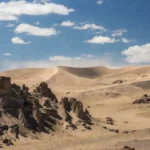
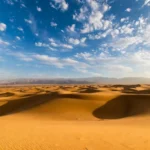
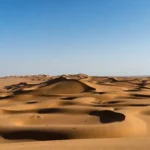
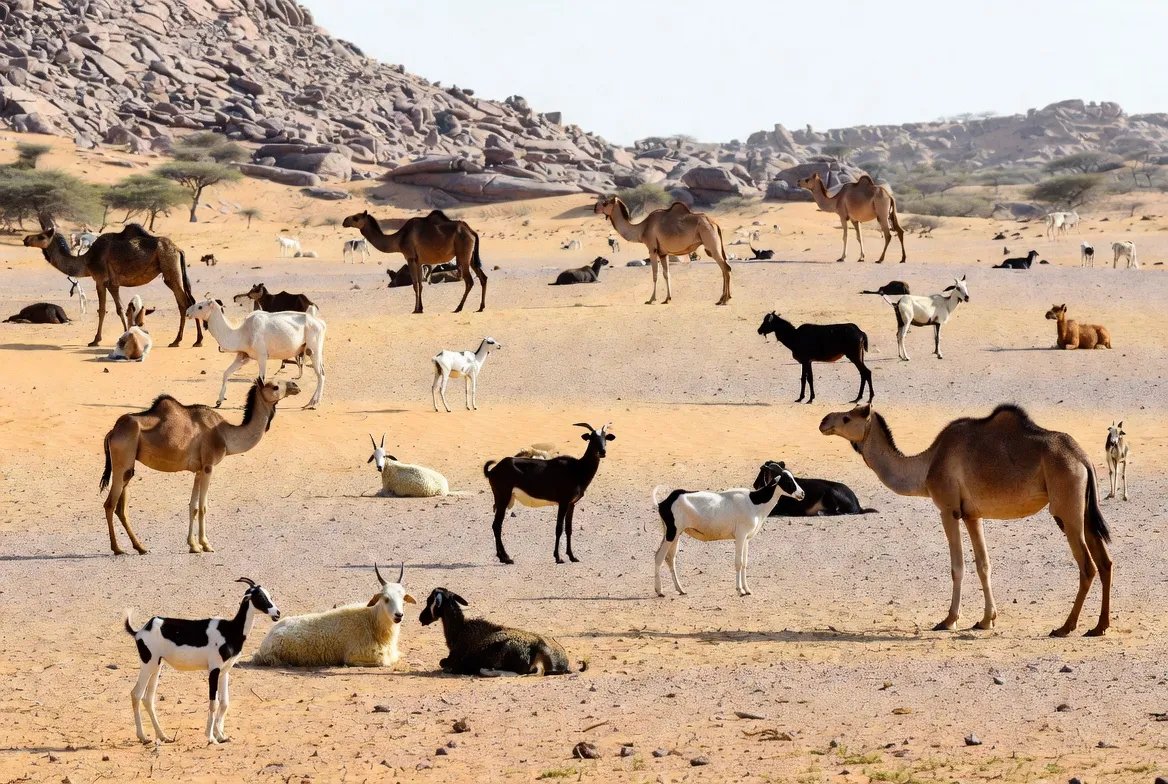
The Thar Desert is a rich, living landscape — a mosaic of dunes, grasslands, salt pans, and sacred village groves that supports 60+ species from the critically endangered Great Indian Bustard to chinkara, blackbuck, and desert reptiles. This guide shows where to see them (Desert National Park, Tal Chhapar, waterholes), explains the threats they face, and offers practical travel, photography,y and conservation actions you can take.
Why Thar wildlife matters
The Thar is a transitional biome — a grassland–desert mosaic — that supports species adapted to openness, temperature extremes, and sparse water. Conserving the Thar protects not only charismatic megafauna (the Great Indian Bustard) but a network of ecological services: soil stabilisation by sewan grass (Lasiurus sindicus), pollination provided by insects, and pastoral livelihoods sustained by grazing cycles. Social-ecological systems (villages, pastoralists, sacred orans) are co-managers — their cultural norms matter for biodiversity persistence.
Location & geography — spatial tokens and site entities
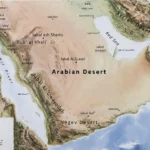
Geographic scope
- Thar Desert / Great Indian Desert (primary region)
- Rajasthan (a major Indian state), parts of Gujarat, Haryana, and Punjab (adjacent states)
- Pakistan (eastern provinces overlap)
- Key access towns: Jaisalmer, Jodhpur, Bikaner, Barmer
Important protected area — entity record:
- Desert National Park (DNP), Jaisalmer — ~3,000 km²; contains dunes, interdunal plains, salt pans, and rocky patches.
Other site entities:
- Tal Chhapar Wildlife Sanctuary (blackbuck grasslands)
- Local orans (village sacred groves)
- Pokhran, Barmer pockets (GIB priority pockets)
Climate & seasonal patterns — temporal tokens and user advice
Seasons & timing
- Summer: April–June — extreme heat (often exceeding 40–45°C).
- Monsoon: June–September — erratic precipitation, patchy greening.
- Winter: October–March — cooler days, cold nights; peak visitor comfort.
Behavioral impacts
- Water scarcity in summer concentrates animals at waterholes → good for waterhole surveys (but physically demanding for people).
- Winter sees the highest overall bird activity and comfortable conditions for visitors.
Visitor tip (slot filling): Best months to visit: October–March (comfort & sightings); May–June (full-moon waterhole counts — high animal aggregation but extreme heat).
Landscape features and their fauna affinities — ontology mapping
Map landscape types to typical species or guilds — think of this as a domain ontology with property links.
- Dunes (mobile & fixed): preferred by sandgrouse, certain lizards, and some small mammals.
- Rocky outcrops/mesas: reptiles (agama, geckos), small carnivores, and perching raptors.
- Salt pans (when wet): attract shorebirds, waders, migratory flocks.
- Orans (sacred grove patches): act as biodiversity stepping stones — birds, bats, insects, water-dependent mammals.
- Interdunal grass patches and seepage grasslands: key for grazers like chinkara and blackbuck.
This mapping is useful for readers and for machine extraction (entity: habitat relationships).
Flora — key plant entities & functional roles
Keystone tree: Prosopis cineraria (khejri) — structural provider: shade, nest sites, fodder, soil stability.
Other woody trees: Tecomella undulata (rohida), Ziziphus spp., Salvadora spp.
Grasses: Lasiurus sindicus (sewan) — critical for grazing herbivores.
Shrubs & succulents: provide browse and microhabitat.
Functional roles (relation triples): (khejri —supports→ insects & birds), (sewan —supports→ grazers). For SEO, these phrases provide topical depth.
Fauna — entity inventory & quick snapshot table
Below is a short entity table you can embed as HTML. (For the website, convert to an accessible table component; for data feeds, export as CSV.)
| Common name | Scientific name | Best sites/microhabitat | IUCN / short status |
| Great Indian Bustard (GIB) | Ardeotis nigriceps | DNP & priority pockets; open grassland | Critically Endangered |
| Chinkara (Indian gazelle) | Gazella bennettii | DNP, Khuri, village orans (grass/scrub) | Least Concern |
| Blackbuck | Antilope cervicapra | Tal Chhapar (open grassland) | Near Threatened (regional) |
| Indian desert fox | Vulpes vulpes pusilla / Vulpes bengalensis | Scrub, burrows; active at night/dawn | Least Concern (locally rare) |
| Desert cat | Felis silvestris ornata | Rocky patches, camera-trap hotspots | Near Threatened / data-limited |
| Spiny-tailed lizard | Uromastyx spp. | Sandy tracts | Regionally important |
| Saw-scaled viper | Echis carinatus | Dry rocky/sandy areas; venomous | Locally common |
| Vultures & raptors (various) | multiple | DNP, Tal Chhapar, orans | Many species threatened |
Spotlight species — entity profiles
Each profile below is a mini-entity document: name, ontology (class: bird/mammal), status, behavior, threats, and observation tips.
Great Indian Bustard (GIB) — Ardeotis nigriceps
- Class: Ground-dwelling bird; grassland specialist.
- Status: Critically Endangered.
- Behavioural notes: Lek-like displays (exploded lek), long-range Movements in search of breeding grounds and water.
- Major threats: Overhead powerlines (collision mortality), habitat loss (conversion to agriculture, poorly sited renewables), disturbance.
- Conservation actions: Captive breeding, egg-replacement, GPS telemetry to map flight paths, targeted power-line mitigation (undergrounding or rerouting).
- Observation tips: Early morning drives in DNP and surrounding priority pockets; waterhole surveys and full-moon counts increase the probability of detection.
Chinkara — Gazella bennettii
- Class: Antelope/gazelle.
- Status: Least Concern (but locally vulnerable where dogs and habitat fragmentation are issues).
- Behaviour: Crepuscular (dawn/dusk) activity, swift leaps, uses scrubland and/or orans.
- Observation tips: Dawn/dusk in DNP, Khuri, and village orans.
Blackbuck — Antilope cervicapra
- Class: Antelope.
- Status: Near Threatened (in some regions).
- Behaviour: Males display spectacular leaps; prefers open grasslands such as Tal Chhapar.
- Observation tips: Morning drives at Tal Chhapar, field edges, and community pastures.
Indian desert fox — Vulpes vulpes pusilla
- Class: Small canid.
- Status: Least Concern (but locally uncommon).
- Behaviour: Nocturnal/crepuscular; large ears for heat dissipation; digs burrows.
- Observation tips: Night surveys, listening for calls at dusk; reduce dog competition to increase sightings.
Desert cat — Felis silvestris ornata
- Class: Small felid.
- Status: Poorly known in many areas; sightings are rare.
- Behaviour: Secretive, primarily nocturnal; often recorded through camera traps.
- Observation tips: Camera trapping and low-human-disturbance areas produce the best records.
Where to see Thar wildlife — site protocols & timing
Desert National Park (DNP), Jaisalmer
- Role: Largest reserve for Thar fauna; dunes, salt pans, rocky areas.
- How to visit: Obtain permits, hire a licensed local guide, and respect park rules.
- Timing: Early morning drives yield mammals; mid-morning for bird activity; dusk for crepuscular species.
Waterhole / full-moon surveys
- Purpose: 24-hour waterhole counts (often held near full moons in hot months) — animals aggregating at water produce high detection rates.
- Logistics: These are strenuous for humans (heat, isolation) but highly productive for data. Coordinate with forest staff for participation.
Tal Chhapar Wildlife Sanctuary
- Focus: Open grassland and raptors; blackbuck concentrations.
- Visitor protocol: Guided drives and walkable observation points.
Village orans & community conserved areas
- Role: Vital refugia for local biodiversity due to cultural protection.
- Best practice: Engage with local custodians, respect cultural rules, and consider community benefit (tourism revenue sharing).
Pokhran & Barmer pockets
- Note: Scattered but important for certain bustard and raptor records — check with local forest offices for the latest permissions and sighting reports.
Best seasons & daily schedule
- Best months: October–March for comfortable wildlife viewing; May–June for unique waterhole aggregations (full-moon surveys).
- Daily timing: Dawn/dusk for mammals; mid-morning for many birds; midday to be avoided by humans.
Threats — threat taxonomy and mitigation priorities
Threat taxonomy (ranked by impact on GIB and open-country fauna):
- Power lines & transmission infrastructure (high impact):
- Mechanism: Collision mortality; lines fragment flight paths.
- Mitigation: Undergrounding in priority pockets, visibility enhancements (marker spheres), and rerouting lines away from flight corridors.
- Poorly sited renewable energy (solar/wind) (high-medium):
- Mechanism: Habitat loss and fragmentation of grassland; displacement of species.
- Mitigation: Smart siting using ecological data, environmental impact assessments, and offset programs.
- Habitat conversion to agriculture / land-use change (medium):
- Mechanism: Loss of open grassland required by bustards and gazelles.
- Mitigation: Protect large contiguous grasslands, incentivize conservation-compatible land uses.
- Free-ranging dogs & disease (medium):
- Mechanism: Predation and disturbance of native fauna; disease transmission to wild carnivores.
- Mitigation: Community-based dog control, sterilisation programs, and vaccination.
- Poaching & disturbance (variable):
- Mechanism: Illegal take, disturbance during breeding seasons.
- Mitigation: Strengthen enforcement, community engagement, and awareness.
Why power lines are especially severe: Large ground-dwelling birds have a flight and visual ecology that makes them vulnerable to thin, fast, and low-hanging lines — they may not detect lines at the last instant. For this reason, experts advocate undergrounding or rerouting in GIB priority landscapes.
Conservation responses & success signals
Core program areas:
- Monitoring & data collection: Waterhole counts, camera trap networks, and GPS telemetry provide baseline and trend data.
- Captive breeding & egg-replacement: Augments recruitment; used alongside habitat protection.
- Powerline mitigation: Strategic rerouting and undergrounding in priority pockets.
- Legal & policy advocacy: Expert panels, judicial interventions, and planning guidelines that restrict risky infrastructure.
- Community engagement: Support for orans, livestock management, and alternative livelihoods to reduce pressure on habitats.
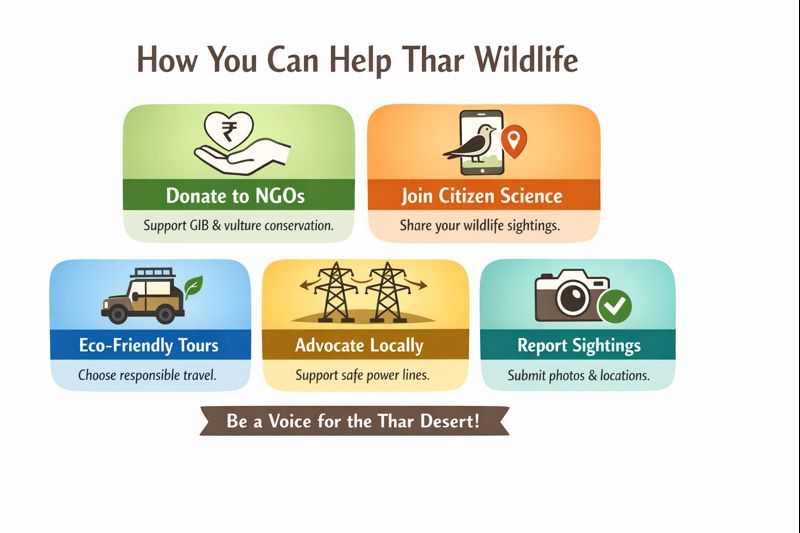
- Citizen science & awareness: Encourage iNaturalist uploads, local reporting, and school programs.
Recent wins (examples of positive signals): Establishment of waterhole census programs, targeted GPS studies that inform planning, and successful community-driven protection of sacred groves. These are cumulative wins: monitoring reveals trends; community action reduces local threats; targeted infrastructure fixes reduce mortality.
Conservation map idea
For your website c, create an interactive map layer system:
- Layer 1: GIB priority pockets (polygons).
- Layer 2: Known waterholes & monitoring sites (points).
- Layer 3: Overhead transmission lines & substations (polyline).
- Layer 4: Community conserved orans and villages (points with metadata).
- Layer 5: Renewable energy sites (existing & proposed) — overlay impact risk.
Add pop-ups with quick facts and links to supporting reports. Provide a downloadable KMZ/GeoJSON for researchers and planners. This map will be an advocacy asset (and a lead-generation hook if paired with a downloadable brief).
Practical travel guide & wildlife photography
Permits & guides: Always hire licensed local guides in DNP — they know road conditions, animals’ movement patterns, and permit rules.
Transport & safety checklist: High-clearance vehicles, 4×4 capability for dunes, adequate fuel reserves, abundant drinking water, sun protection (hut/umbrella), first aid kit, and phone/satellite communications.
Photography kit guidance:
- Birds: 300mm+ recommended; 100–400mm zoom is flexible.
- Mammals: 200–400mm depending on proximity.
- Stabilisation: Beanbag or vehicle support; fast shutter speeds for movement; higher ISO in low light.
- Behavior: Dawn and dusk produce better light and animal activity.
Ethical guidelines: Keep distance, avoid nest disturbance (critical for GIB), avoid off-track driving, obey forest staff. Photography is about respect — maintain species welfare over personal shots.
Where to stay: Jaisalmer has a range of accommodations; prefer operators who practise low-impact tourism, share revenue with communities, and follow reserve rules.
Field logistics & survival tips for researchers
Heat & scheduling: Work early morning or late evening; rest midday. Use sun-protective clothing and schedule water breaks.
Water & logistics: Carry water purification options; plan resupply; coordinate with forest staff for remote access.
Safety: Be snake-aware (saw-scaled viper present), ensure vehicle support & towing, inform forest offices of field routes and timings.
Data collection best practice: Standardise data forms, use GPS-enabled devices with backup batteries, store photos/records with metadata (date, time, coordinates).
Interesting natural history notes
- GIB males display in an “exploded lek” — multiple separate display spots rather than a single crowded lek.
- Sandgrouse males and females soak their belly feathers to transport water to chicks.
- Village orans protect biodiversity by maintaining trees and ponds; their cultural protections provide conservation co-benefits.
Quick 3-day Thar wildlife trip
| Day | Morning | Afternoon | Evening |
| Day 1 | Arrive Jaisalmer — meet guide, permit formalities | Drive toward DNP — dunes & salt pans | Sunset dune watch; brief night spotlighting (permitted) |
| Day 2 | Early DNP drive — chinkara, waterholes, GIB pockets | Visit the village orans & community reserves | Full-moon waterhole watch (seasonal) |
| Day 3 | Tal Chhapar — blackbuck & raptors | Short cultural visit; local handicrafts | Depart Jaisalmer |
Always pre-check permissions and seasonal access with the rest department.
Pros & Cons
Pros:
- Unique biodiversity (GIB, chinkara, desert fox).
- Community-based conservation models (Bishnoi villages) create social buy-in.
- High potential for specialist wildlife tourism and conservation-focused visitation.
Cons:
- Major threats like overhead power lines and poorly sited renewables.
- Weather variability — animal visibility fluctuates with rainfall.
- Some priority pockets have limited infrastructure and require permits.
Environmental policy watchlist
Power-line mitigation & undergrounding: Ongoing debates and policy proposals advocate undergrounding/ rerouting in GIB priority landscapes.
Renewable siting & landscape planning: Balance between climate goals and habitat protection — careful environmental planning, situational mitigation, and offsetting are essential.
Community-centric programs: Strengthening orans, dog-control, and community livelihood support remains a practical pathway for durable conservation outcomes.
FAQs
A: No. The Great Indian Bustard is Critically Endangered but not extinct. Small breeding populations remain in parts of Rajasthan and Gujarat. Conservation steps like captive breeding and waterhole surveys are active. Continued protection of priority pockets, mitigation of powerline risks, and community engagement are essential to sustain and recover these populations.
A: The Desert National Park (Jaisalmer) is the main protected area. Tal Chhapar is great for blackbuck and raptors. Village orans and community reserves can be good local spots; always coordinate with local guides and forest departments for access and current conditions.
A: October–March for general comfort and bird activity. May–June (full-moon waterhole surveys) can show many animals b, but it is hot and physically demanding. For photography and general travel comfort, winter months (November–February) are ideal.
A: Yes. Ground-dwelling birds like GIB are very vulnerable to collisions with overhead power lines. Experts recommend undergrounding or careful routing of lines in key areas, improving line visibility, and avoiding siting linear infrastructure in flight corridors and priority pockets.
Conclution
The Thar is an ecological tapestry worth protecting: conserving open grasslands, safer powerline planning, and community stewardship will help species like the Great Indian Bustard survive. Join monitoring efforts, support community-led Conservation, and download the species checklist to stay informed and take action.